
Stuffed Turkey Breast Roulade with Cranberry Stuffing
The first clue that the stuffing is ready is the way the bread cubes turn glossy as they soak up the warm broth. They should hold their shape rather than…
Tip: save now, cook later.The first clue that the stuffing is ready is the way the bread cubes turn glossy as they soak up the warm broth. They should hold their shape rather than collapse into a paste. That balance matters in Stuffed Turkey Breast Roulade with Cranberry Stuffing, because the filling needs to stay tucked inside while the turkey roasts.
I let the stuffing cool before it goes anywhere near the turkey. Warm filling can soften the meat while you’re trying to roll it, and it’s harder to spread in an even layer. Once it’s cool, the turkey is easier to shape and the cranberry-studded center stays where you put it.
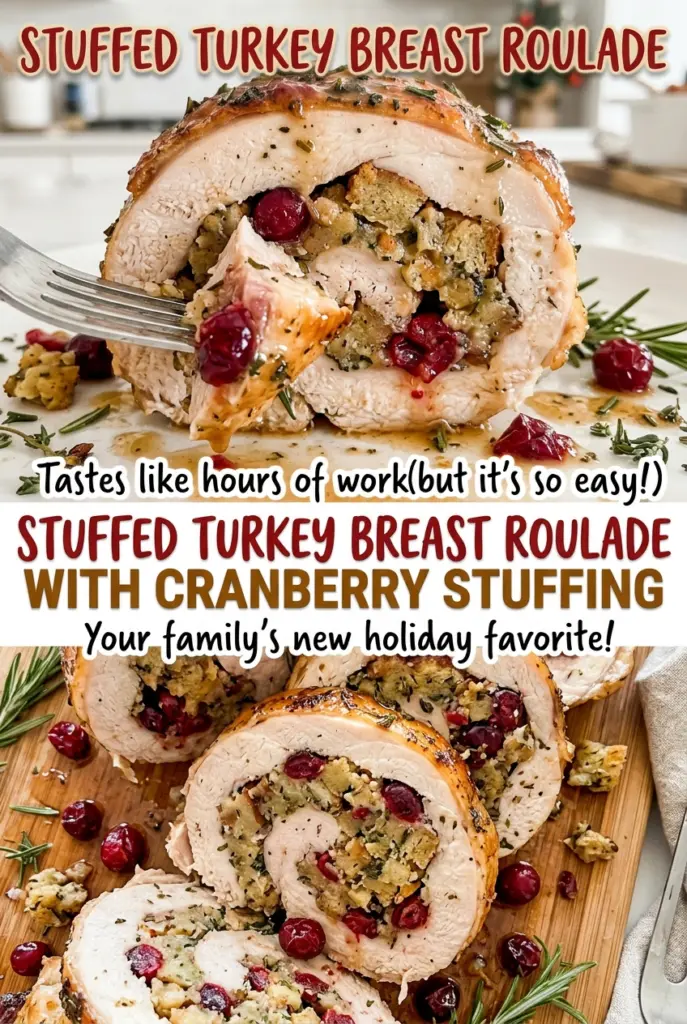
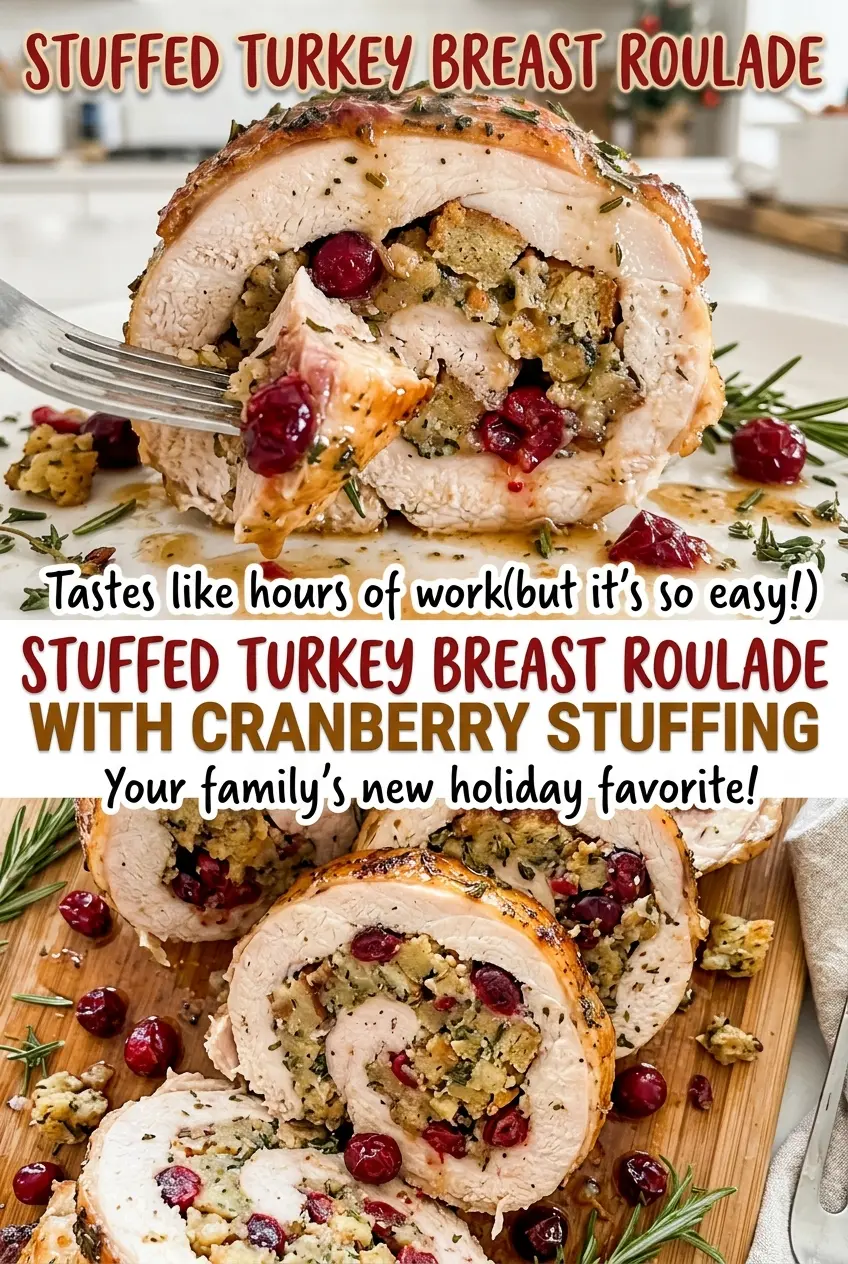
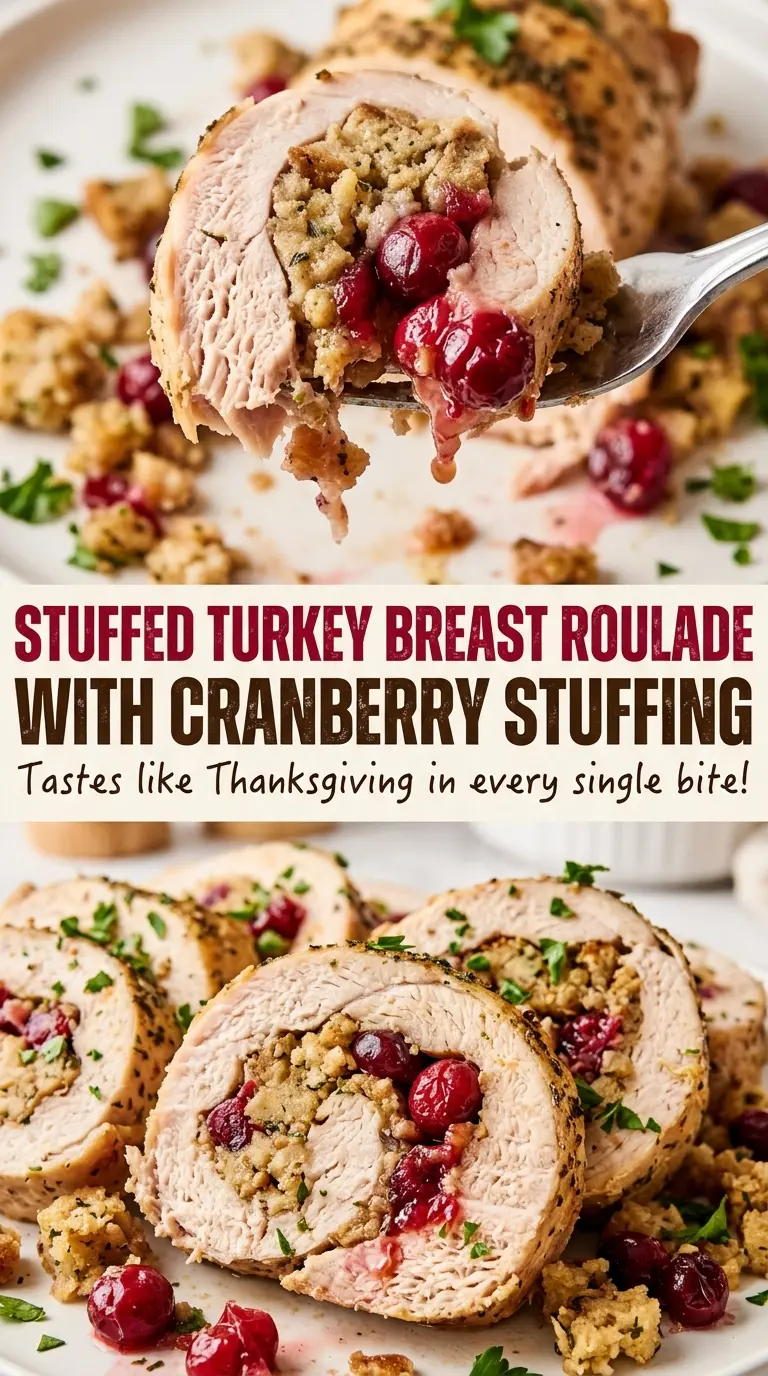
The finished roulade slices into neat rounds with a savory bread center and little bursts of tart cranberry. Give it a proper rest before slicing, and you’ll have tender turkey with the filling still nestled inside.
Kitchen Note
Let the stuffing cool on a plate for the full 15 to 20 minutes before spreading it over the turkey. If it’s still warm, it feels softer and harder to roll neatly; cooled stuffing is much easier to handle.
Save this cranberry-stuffed turkey roulade for a dinner that deserves tidy slices, tender turkey, and a tart, savory center.
Why the One-Inch Border Keeps the Stuffing Inside
A roulade has a built-in weak spot: the long seam where the turkey meets itself. Spread the stuffing all the way to the edges and it gets pushed out as you roll, leaving the center skimpy and the pan full of loose bread. Leaving a one-inch border gives the filling room to shift without spilling over the sides.
The shape of the turkey matters just as much as the border. Cutting the breast open like a book and pounding it to an even thickness helps the meat roll without a thick lump at one end and a thin flap at the other. That even layer also gives the stuffing a consistent place to sit. Roll from a long side, keep the seam underneath, and tie the roulade at regular intervals so it holds its shape in the oven. If it isn’t perfectly uniform, don’t try to force the meat into a tight knot; steady, even rolling is more useful than squeezing the filling out. The result should be a compact log with the filling enclosed and the seam resting against the rack.
What the Bread, Broth, and Cranberries Each Bring
- Day-old bread — Slightly dry cubes absorb the broth without immediately turning mushy. Use a plain, sturdy loaf; heavily seasoned bread can compete with the sage and cranberry. Fresh, soft bread is the swap most likely to make the filling pasty.
- Dried cranberries — Their concentrated tart-sweet flavor cuts through the savory turkey and herbs. A standard grocery-store bag works well here; there’s no need to seek out a specialty variety.
- Chicken broth — The broth moistens the bread while adding savory depth. A familiar, good-tasting carton is fine; a strongly flavored broth can take over the mild herbs.
- Sage and thyme — Dried herbs distribute evenly through the small amount of stuffing and keep the filling’s flavor balanced. Keep them dry and fragrant; if the herbs smell faint in the jar, their flavor will be faint in the finished roulade, too.
- Boneless, skinless turkey breast — This shape can be opened, pounded flat, filled, and rolled. Choose the specified boneless cut rather than a bone-in breast, which won’t form the same even sheet for rolling.
- Unsalted butter, onion, and celery — Butter gives the softened vegetables a rounded base, while finely diced onion and celery blend into the stuffing instead of making large pockets. Ordinary unsalted butter is a good choice because the recipe’s seasoning stays under your control.
Build the Stuffing First, Then Roll and Roast
Soften the Vegetables and Moisten the Bread
Melt the butter in a 10-inch skillet over medium heat, then cook the finely diced onion and celery for 5–7 minutes, until softened. Stir in the dried cranberries, sage, thyme, and chicken broth, and bring the mixture to a simmer. Pour it over the bread cubes and toss until the bread is evenly moistened. Spread the stuffing on a plate and let it cool for 15–20 minutes before using it.
Open the Breast to an Even Layer
Heat the oven to 375°F and set a rack in a 9×13-inch roasting pan. Lay the turkey breast on a cutting board and cut horizontally through its thickest side, stopping just short of the opposite edge, then open it like a book. Cover the meat with plastic wrap and pound it to an even 1/2-inch thickness. Season both sides with the kosher salt and black pepper; pounding unevenly can leave thick spots that cook at a different pace.
Fill, Roll, and Tie the Roulade
Spread the cooled stuffing over the turkey, leaving a one-inch border around the edges. Roll it up from a long side, then secure the roll with kitchen twine at 1 1/2-inch intervals. Set it seam-side down on the rack and rub the outside with olive oil. If the seam turns upward while you move the roulade, turn it back down before it goes into the oven.
Roast Until Both Centers Reach Temperature
Roast for 60–75 minutes, checking the thickest part of the turkey and the center of the stuffing with a thermometer. Both readings need to reach 165°F; checking only the meat can miss a cooler pocket in the filling. If one spot hasn’t reached the target, continue roasting and check again. Rest the roulade for 15 minutes, then remove the twine and slice.
Three Simple Ways to Adapt the Filling
Make the stuffing dairy-free
Replace the butter with the same volume of olive oil when softening the onion and celery. The stuffing will lose a little buttery richness, but the vegetables still soften and the bread still takes up the broth.
Go savory and leave out the cranberries
Omit the dried cranberries for a less sweet filling where the sage, thyme, and softened vegetables come forward. The stuffing will have fewer tart bites, but it still rolls and roasts the same way.
Use day-old whole-grain bread
Cut a sturdy whole-grain loaf into the same 1/2-inch cubes and use it in place of the plain bread. It brings a nuttier, more robust taste and a slightly heartier texture; keep the cubes day-old so they absorb the broth without becoming soggy.
Storage and Reheating
- Refrigerator: Refrigerate leftover slices in an airtight container within 2 hours and use them within 3–4 days. The bread stuffing softens as it sits.
- Freezer: Freeze cooled slices in a tightly sealed freezer-safe container for up to 2–3 months for best quality. The turkey holds up well, though the stuffing may be softer after thawing.
- Reheating: Cover slices and microwave at medium power, turning them once, just until steaming hot throughout. Long, high-power reheating dries the turkey before the center warms evenly.
Questions That Come Up When Making a Turkey Roulade
Stuffed Turkey Breast Roulade with Cranberry Stuffing
Ingredients
Equipment
Method
- Melt the butter in a 10-inch skillet over medium heat.
- Add the onion and celery and cook for 5–7 minutes, until softened.
- Stir in the cranberries, sage, thyme, and broth, and bring to a simmer.
- Pour the mixture over the bread cubes in a bowl and toss to combine.
- Spread the stuffing on a plate to cool for 15–20 minutes.
- Heat the oven to 375°F and place a rack in a 9x13-inch roasting pan.
- Lay the turkey breast on a cutting board and cut horizontally through the thickest side, stopping just short of the other edge; open it like a book.
- Cover the turkey with plastic wrap and pound to an even 1/2-inch thickness.
- Season both sides with the salt and pepper.
- Spread the cooled stuffing over the turkey, leaving a 1-inch border.
- Roll the turkey up from a long side, secure it with kitchen twine at 1 1/2-inch intervals, and set it seam-side down on the rack.
- Rub the outside with the olive oil.
- Roast for 60–75 minutes, until a thermometer inserted into the thickest part of the turkey and the center of the stuffing reads 165°F.
- Rest the roulade for 15 minutes, then remove the twine and slice.