
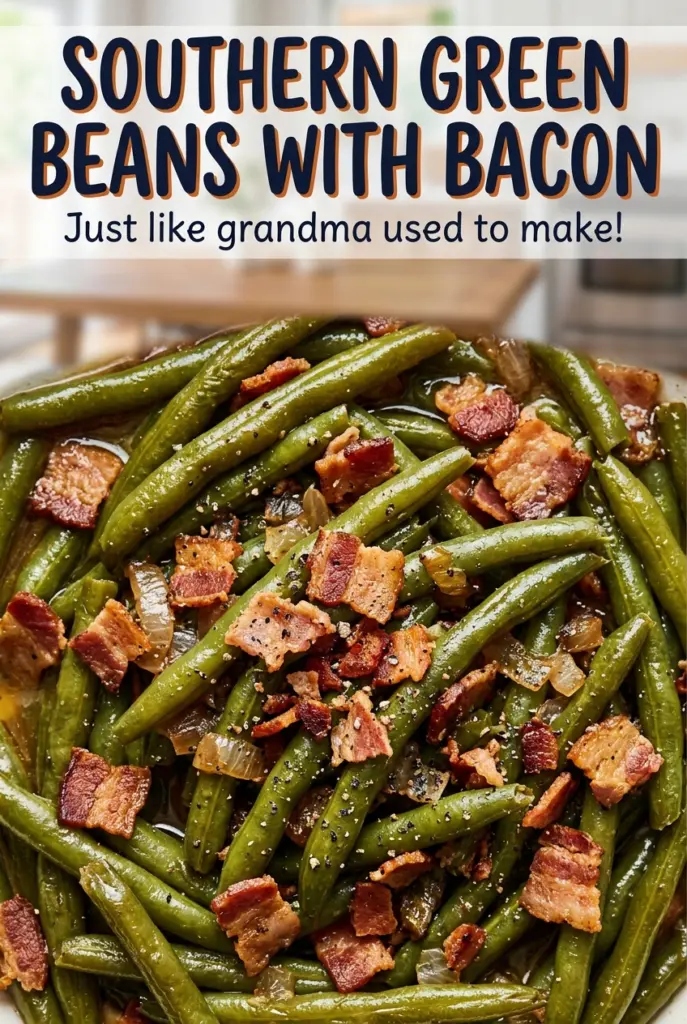
Southern Green Beans with Bacon
The bacon starts popping in the Dutch oven before the onion even hits the pot, and that first layer of smoky drippings sets up the whole dish. I used to…
Tip: save now, cook later.The bacon starts popping in the Dutch oven before the onion even hits the pot, and that first layer of smoky drippings sets up the whole dish. I used to expect green beans to stay bright and crisp, but these Southern green beans with bacon are meant to turn tender all the way through, with broth and onion seasoning every bite.
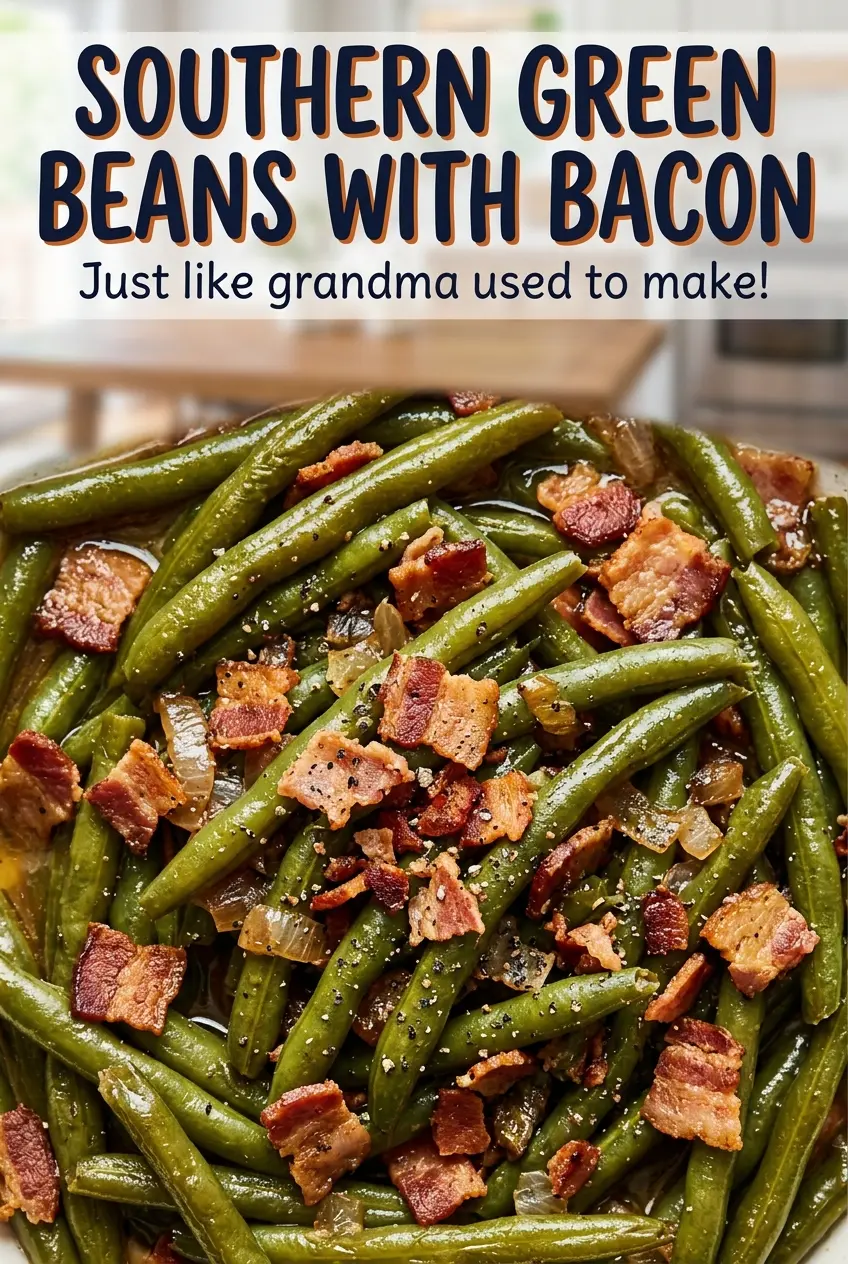
Fresh beans can handle a longer, gentler cook than a quick sauté, which is why this version simmers them covered rather than rushing them over high heat. The bacon goes back in at the end, so you get its crisp, salty edges alongside beans that have softened in the broth. It’s a cozy side with a spoonable bit of cooking liquid at the bottom of the pot.
Kitchen Note
Leave just one tablespoon of bacon drippings in the pot after the bacon comes out. That small amount is enough to cook the onion without making the beans greasy.
Save these Southern green beans with bacon for a tender, savory side with crisp bacon folded in at the end.
Why These Green Beans Should Turn Tender, Not Stay Crisp
Many green bean sides are cooked quickly to preserve a snap. This pot goes in the opposite direction: the beans simmer covered in broth until they’re very tender. That longer cook lets the onion and bacon-seasoned liquid work its way into the beans instead of leaving them tasting like a separate vegetable beside a topping.
The texture is the point, not a sign that you’ve overcooked the dish. A bean should give easily when you bite it, without the squeaky resistance of a barely cooked one. Keep the pot at a low simmer rather than a rolling boil; a steady, gentle heat cooks the beans through while the covered pot holds in moisture. The broth also gives the beans something savory to cook in, so the bottom of the pot shouldn’t be treated like a dry sauté pan. This approach is especially useful when you want the beans soft enough to take on the flavor around them.
Why Fresh Beans, Smoky Bacon, and Low-Sodium Broth Matter

- Fresh green beans — Fresh beans hold their shape through the covered simmer while becoming tender. Trim the ends before cooking, and choose beans that feel firm rather than limp. Frozen beans can soften more quickly, so fresh is the better choice for this particular long simmer.
- Bacon — Bacon brings both smoky flavor and the drippings used to soften the onion. Regular sliced bacon is a dependable choice; the important cue is that the pieces are crisp before you lift them out. The bacon goes back in at the finish, where its texture contrasts with the soft beans.
- Yellow onion — Diced onion softens into the cooking liquid and adds a mild savory sweetness. A white onion works in the same amount if that’s what you have, though its flavor is a little sharper. Cut it into a small, even dice so it softens at a similar pace.
- Low-sodium chicken broth — Broth gives the beans a savory base without making the finished pot too salty once the bacon is added. Water can replace it in the same amount, but the result will taste less rounded. Starting with low-sodium broth also gives you more control over the saltiness.
Building the Pot in Layers Before the Slow Simmer
Render the Bacon Until Crisp
Cook the chopped bacon in a 5-quart Dutch oven over medium heat until crisp, about 6 to 8 minutes. The pieces should look browned and feel firm, not pale and floppy. Transfer them to a paper towel-lined plate, then leave one tablespoon of drippings in the pot. If the bacon is still soft, give it a little more time before taking it out; it won’t crisp up once it’s simmering with the beans.
Soften the Diced Onion
Add the diced onion to the reserved drippings and cook, stirring, for about 5 minutes. It should look softened and slightly translucent, with no hard raw-looking centers. Stir as it cooks so the small pieces don’t catch on the bottom of the Dutch oven. If the onion begins browning quickly, lower the heat; the goal here is softness, not a deep sear.
Simmer the Beans Gently in Broth
Add the trimmed green beans, chicken broth, salt, and black pepper to the pot. Bring the liquid to a boil, then cover the Dutch oven and turn the heat to low for a gentle simmer. Cook until the beans are very tender, about 30 to 40 minutes. If the liquid is boiling hard under the lid, reduce the heat so the beans cook steadily rather than being knocked around by vigorous bubbling.
Fold the Bacon Back In
Stir the cooked bacon into the beans just before serving. This brings the smoky pieces through the pot without asking them to spend the whole simmer in liquid. Taste a bean with a little bacon and broth together; that gives you a better sense of the finished seasoning than tasting the broth alone. Serve while warm, with some of the cooking liquid clinging to the beans.
Three Ways to Change the Finish Without Losing the Tender Beans
Make a vegetarian pot
Leave out the bacon and use vegetable broth instead of chicken broth. Cook the onion in a tablespoon of neutral oil in place of the bacon drippings, then simmer the beans the same way. The finished dish will be lighter and less smoky, with the onion and broth doing more of the seasoning work.
Keep the bacon crisp on top
For a clearer crisp-versus-tender contrast, don’t stir all the bacon into the pot. Spoon the beans into a serving dish and scatter the crisp bacon over them just before serving. You’ll still get bacon flavor in each bite, but the pieces won’t soften as much in the broth.
Go lighter on added salt
Skip the measured salt and keep the low-sodium broth. Bacon still contributes salt as it cooks, so this version lets its seasoning come through without adding more at the start. The beans will taste a little less seasoned, so taste them with a piece of bacon before deciding whether you want to add salt at the table.
Storage and Reheating
- Refrigerator: Store leftovers in an airtight container for 3 to 4 days. The beans will soften a little more, and the bacon won’t stay crisp.
- Freezer: Freeze in an airtight, freezer-safe container for up to 2 to 3 months for best quality. Thaw overnight in the refrigerator; the beans will be softer after freezing.
- Reheating: Warm gently in a covered saucepan over low heat, stirring occasionally, until the leftovers reach 165°F. Don’t crank the heat to bring them up quickly, because the beans can break down before the center is hot.
Questions That Come Up While the Beans Simmer
Southern Green Beans with Bacon
Ingredients
Equipment
Method
- Cook the bacon in a 5-quart Dutch oven over medium heat until crisp, 6 to 8 minutes.
- Transfer the bacon to a paper towel-lined plate.
- Leave 1 tablespoon of bacon drippings in the pot.
- Add the onion and cook, stirring, until softened, about 5 minutes.
- Add the green beans, chicken broth, salt, and black pepper, then bring to a boil.
- Cover and simmer over low heat until the beans are very tender, 30 to 40 minutes.
- Stir in the cooked bacon.
- Serve.
