
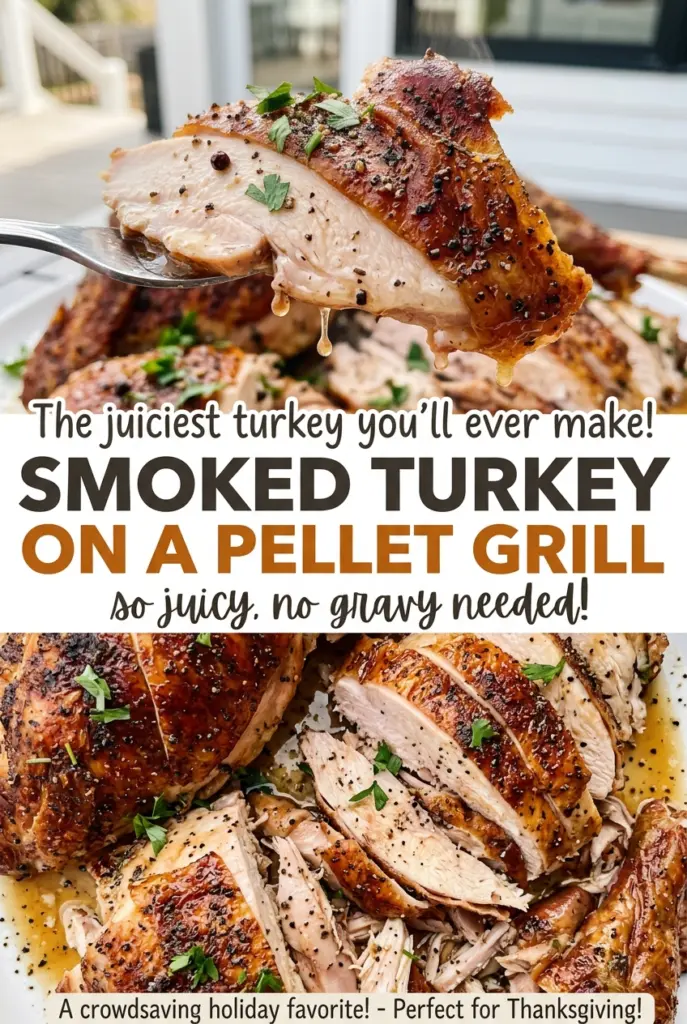
Smoked Turkey on a Pellet Grill
When the turkey goes onto the pellet grill, the seasoned butter starts melting under the skin while the smoke works its way into the meat. I like this approach for…
Tip: save now, cook later.When the turkey goes onto the pellet grill, the seasoned butter starts melting under the skin while the smoke works its way into the meat. I like this approach for a whole bird because the butter stays close to the breast and thighs instead of sliding off the outside as the turkey cooks. For a 12- to 14-pound turkey that serves ten, the result is a deeply seasoned centerpiece without a complicated brine or a long ingredient list.
This version starts with an unbrined, fully thawed turkey and a simple butter mixture seasoned with kosher salt, black pepper, garlic powder, paprika, and dried thyme. Loosening the skin gives that butter a place to coat the meat directly, while some spread over the outside seasons the surface too. Cooking at 325°F keeps the method straightforward: the grill provides the smoke, and the thermometer—not guesswork—tells you when the bird is ready. After a proper rest, the breast slices stay juicy and the skin carries a savory, smoky finish.
Kitchen Note
Go slowly when you loosen the skin over the breast and thighs. A gentle hand gives you room to spread the butter underneath without tearing the skin that helps hold it in place.
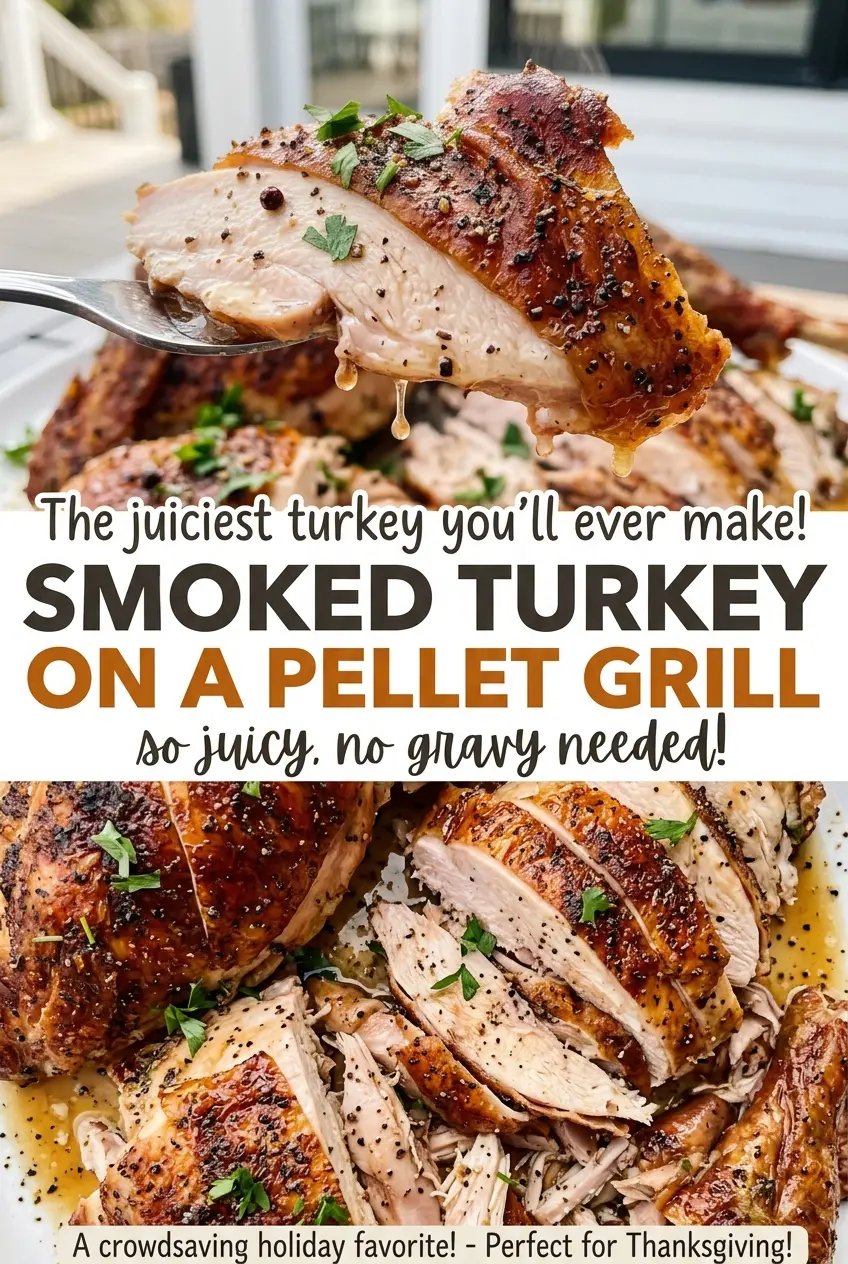
Save this smoked turkey on a pellet grill for a hands-off centerpiece with seasoned butter tucked under the skin and smoky flavor in every slice.
Why a Pellet-Grill Turkey Does Better at 325°F Than at a Low Smoke Setting
It’s easy to assume that a smoked turkey should cook at the lowest temperature your grill can manage. For this whole bird, that isn’t the approach. At 325°F, the turkey cooks steadily while still picking up smoke, and the time in the grill stays manageable for a 12- to 14-pound bird. This is a roast with smoke in the mix, not an all-day low-temperature cook.
That distinction also explains why the thermometer matters more than a single time estimate. The turkey may take anywhere from 3 to 4 1/2 hours, depending on the bird and grill, so treating the shorter end of the range as a promise can leave the center undercooked. At the other end, cooking by the clock alone can take the breast past its best point. Think of the time as a window for planning; the temperature in both the breast and thigh is the decision point.
Keep the grill at the recipe’s temperature rather than turning it down to chase a heavier smoke flavor. The pellets supply the smoke character, while a steady cooking temperature gives you a dependable way to finish the bird.
Why the Unbrined Turkey and Softened Butter Matter
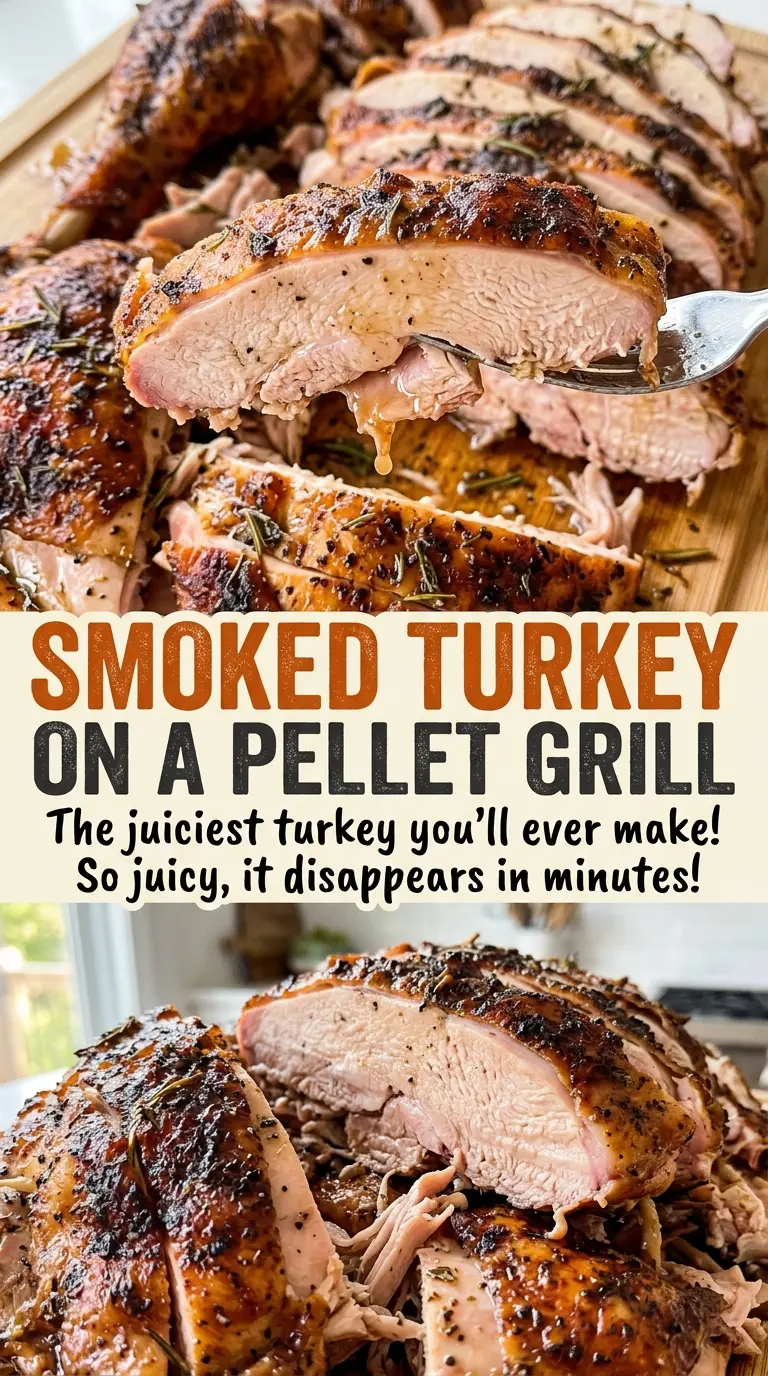
- Unbrined whole turkey — Starting with an unbrined bird gives you control over the seasoning, since the butter mixture already contains kosher salt. Check that the turkey is fully thawed and that the giblets have been removed before you begin. A fully thawed bird is easier to season evenly and matches the timing for this method.
- Softened unsalted butter — Soft butter blends easily with the dry seasonings and spreads under the skin without needing to melt it first. Unsalted butter lets the kosher salt do the seasoning rather than leaving the salt level to a salted butter brand. Let it soften until it yields to a spoon but still holds its shape.
- Kosher salt and black pepper — These give the turkey its basic savory seasoning. Kosher salt is the choice here; different salt types have different crystal sizes, so swapping by volume can change how salty the bird tastes.
- Garlic powder, paprika, and dried thyme — These season the butter with savory, gently earthy notes and distribute more evenly when stirred into softened butter than when sprinkled separately over a large bird. Dried thyme is convenient here because it mixes into the butter without adding moisture.
- Pellets of your choice — The pellets are the source of the smoke, so choose a type or blend whose smoke character you enjoy. Keep the grill temperature the same regardless of your pellet choice; the seasoning butter is what gives the turkey its familiar savory flavor.
How to Get Seasoned Butter Under the Skin and Smoke the Turkey Evenly
Dry and Position the Bird
Pat the fully thawed turkey dry with paper towels, then tuck the wing tips behind the bird. The outside should feel dry rather than slick, which makes it easier to spread butter over the skin. Preheat the pellet grill to 325°F with the pellets you’ve chosen. Get the grill up to temperature before the turkey goes on so it starts cooking in a steady environment.
Mix the Seasoned Butter
Stir the softened butter, kosher salt, black pepper, garlic powder, paprika, and dried thyme together in a small bowl. Keep mixing until the seasonings are spread throughout the butter instead of sitting in one concentrated patch. If the butter is too firm to stir, give it a little more time at room temperature; melted butter is harder to keep in an even layer under the skin. Set the bowl within reach before you loosen the skin.
Season Beneath the Skin and Outside
Carefully loosen the skin over the breast and thighs, working enough space to reach both areas. Spread the seasoned butter under the skin, then coat the outside of the turkey with what remains. Take care to distribute it across the bird rather than leaving one thick mound in a single spot. This two-layer seasoning puts butter against the meat and on the surface at the same time.
Smoke, Check, and Rest
Set the turkey breast-side up directly on the grill grate. Smoke it for 3 to 4 1/2 hours, checking the thickest part of the breast and the innermost thigh with a meat thermometer; the probe must not touch bone. The turkey is ready when both readings reach 165°F. Transfer it to a cutting board, tent it loosely with foil, and let it rest for 30 minutes before carving so the juices have time to settle.
Three Practical Ways to Change the Smoke or Seasoning
Use a Dairy-Free Butter Alternative
For a dairy-free version, replace the unsalted butter with the same amount of dairy-free butter. Choose a plain, spreadable product so it mixes with the seasonings and can be worked under the skin; a strongly flavored or very soft spread may change the seasoning or be harder to handle.
Make the Paprika More Smoke-Forward
Swap the regular paprika for smoked paprika, keeping the same amount. It deepens the smoky aroma of the seasoning without changing the buttering method. Since the pellet grill already adds smoke, this version tastes more assertive than the original.
Let Your Pellet Choice Set the Smoke Character
Choose a pellet or blend with a lighter or more pronounced smoke character to suit your taste. The smoke will shift, but the butter seasoning stays the same. Keep the grill at 325°F so you aren’t changing the cooking method along with the flavor.
Storage and Reheating
- Refrigerator: Refrigerate carved turkey in a covered container within 2 hours and use it within 3 to 4 days. The breast meat may firm up as it chills.
- Freezer: Freeze carved portions in an airtight freezer container or tightly wrapped package for up to 2 to 6 months for best quality. Thaw frozen portions in the refrigerator.
- Reheating: Warm only the portions you need, covered, in the oven or microwave until they reach 165°F throughout. Gentle, covered reheating helps keep the breast from drying; repeated reheating makes it tougher.
Questions I Get Asked About Pellet-Grill Turkey
Smoked Turkey on a Pellet Grill
Ingredients
Equipment
Method
- Pat the turkey dry with paper towels.
- Tuck the wing tips behind the bird.
- Preheat the pellet grill to 325°F with the pellets of your choice.
- Stir the butter, salt, pepper, garlic powder, paprika, and thyme together in a small bowl.
- Carefully loosen the skin over the breast and thighs.
- Spread the seasoned butter under the skin and over the outside of the turkey.
- Set the turkey breast-side up directly on the grill grate and smoke for 3 to 4 1/2 hours, until a meat thermometer reads 165°F in the thickest part of the breast and the innermost thigh without touching bone.
- Transfer the turkey to a cutting board and loosely tent it with foil.
- Rest for 30 minutes before carving.
