
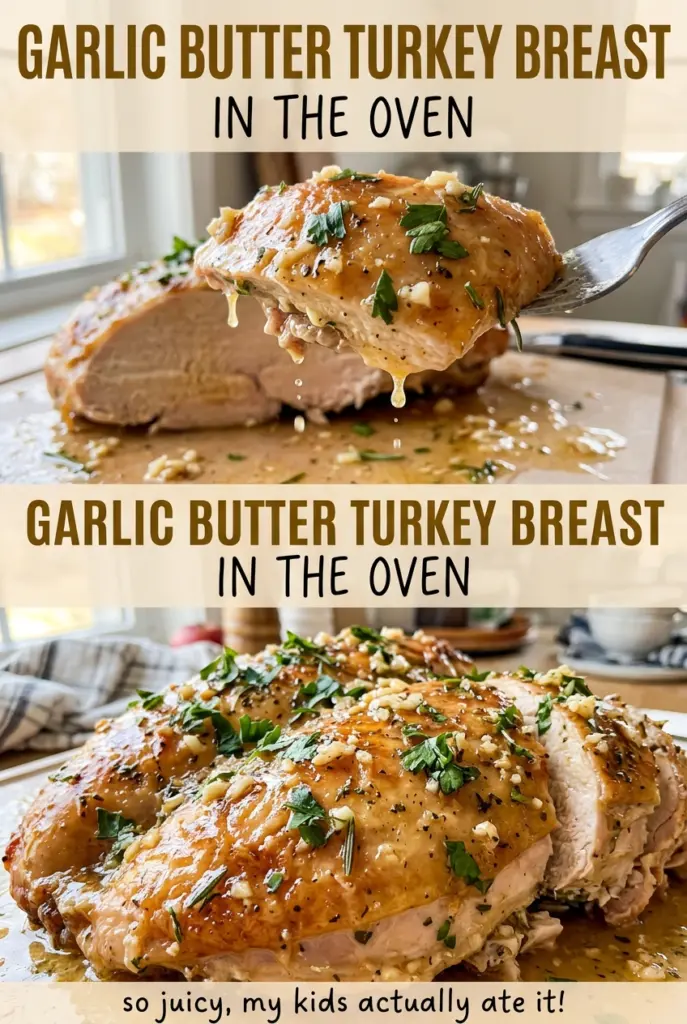
Garlic Butter Turkey Breast in the Oven
When softened butter meets damp turkey skin, it tends to slide around instead of coating the breast evenly. I learned to take the extra moment to pat the skin dry…
Tip: save now, cook later.When softened butter meets damp turkey skin, it tends to slide around instead of coating the breast evenly. I learned to take the extra moment to pat the skin dry first; then the garlic and herbs stay where I put them, and the skin roasts with a more even golden color. That small bit of attention makes this garlic butter turkey breast feel manageable, even if you don’t roast a whole bird often.
This version keeps the seasoning straightforward: garlic, rosemary, and thyme mixed into softened butter, with some tucked right under the skin. The butter under the skin seasons the meat directly, while the layer on top flavors the skin. A bone-in, skin-on breast gives you both that protective layer and a clear place to check the thickest part for doneness. The result is tender turkey with fragrant herbs and buttery, savory skin.
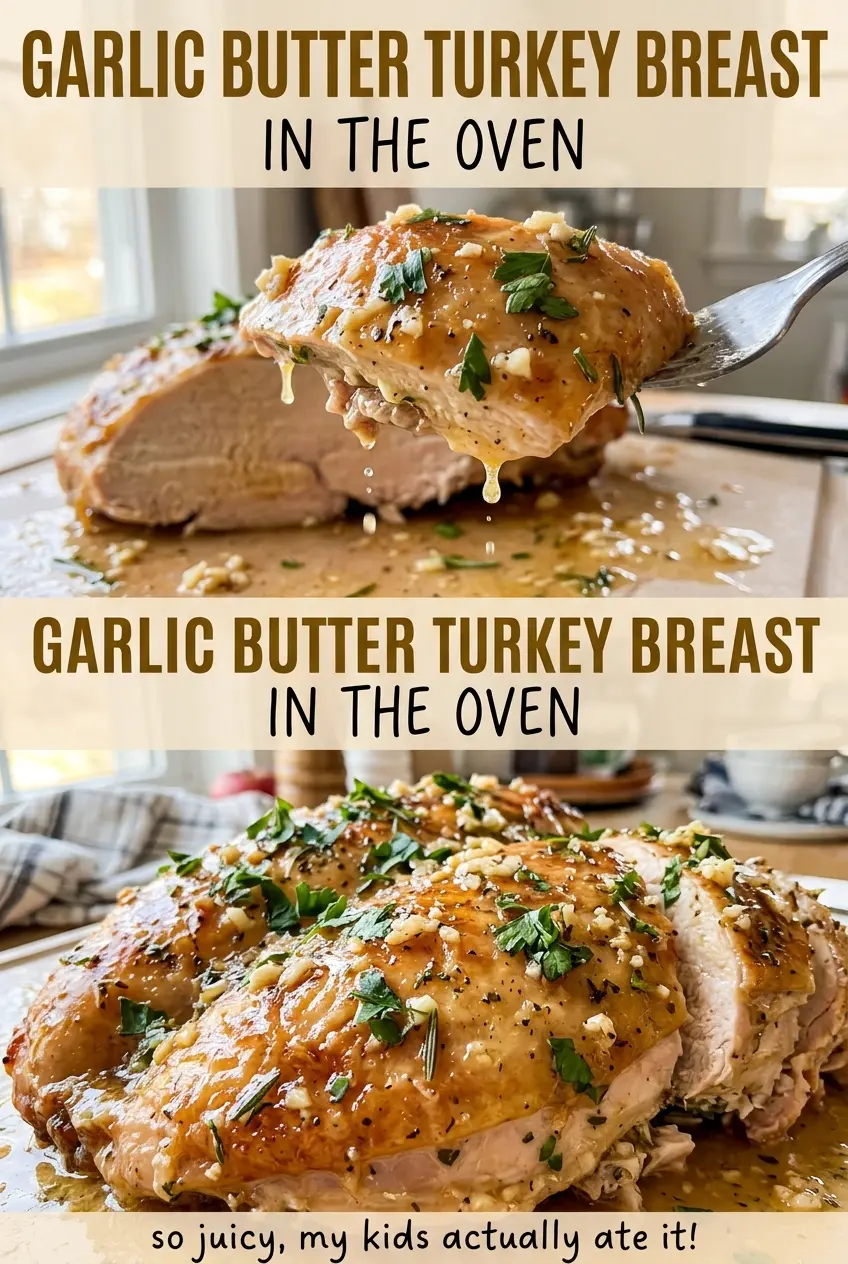
Kitchen Note
Loosen the skin gently with your fingers rather than pulling hard at it. If it resists, work slowly; keeping the skin intact gives the herb butter room to sit underneath and keeps the breast covered as it roasts.
Save this garlic butter turkey breast for a roast with rosemary, thyme, and golden herb butter tucked under the skin.
Why a Turkey Breast Can Read Done Before the Meat Is
A thermometer reading is only useful if the probe is in the meat, not touching bone. With a bone-in breast, the thickest section sits close to the rib area, so it’s easy to angle the probe too far and get a misleading result. I insert an instant-read thermometer into the thickest part of the breast and keep its tip clear of the bone. That gives me a reading from the portion that takes longest to cook.
Don’t choose a spot just because it’s easy to reach from the top. Slide the thermometer in from the side if that gives you a better angle, and check more than one thick area if the breast is uneven. The center of the meat should be the deciding point, not the color of the skin or how long the pan has been in the oven. This is especially useful with a breast rather than a whole turkey: there’s less meat to buffer against overcooking, so a good reading helps you avoid leaving it in longer than it needs.
The specified 165°F endpoint is the target for the thickest meat. If your probe touches bone, reposition it before making a decision; don’t let a number from the wrong spot send the turkey back into the oven unnecessarily.
Why Softened Butter and Fresh Herbs Matter Here
- Bone-in, skin-on turkey breast — The skin holds the butter against the meat and becomes the top layer of the roast, while the bone is part of the specific cut and size used here. Choose a breast that is fully thawed before it goes into the oven; a frozen or boneless cut won’t cook on the same schedule.
- Softened unsalted butter — Soft butter blends easily with minced garlic and chopped herbs, then spreads without needing to melt it. Unsalted butter gives you control over the seasoning from the kosher salt. If it’s cold and firm, it will be difficult to mix and to work beneath the skin; let it soften until it yields when pressed.
- Fresh garlic — Minced cloves distribute through the butter, so each area gets some garlic rather than a few large pieces. Chop it finely; coarse pieces are harder to spread evenly over and under the skin.
- Fresh rosemary and thyme — Rosemary brings a woodsy aroma, while thyme gives the butter a softer herbal note. Fresh leaves and finely chopped rosemary blend into the butter neatly. Dried herbs don’t have the same texture or freshness, so I use the fresh herbs listed for this version.
- Kosher salt and black pepper — They season the turkey and balance the richness of the butter. Keep the salt measurement in mind if choosing a different kind of butter; salted butter can make the finished breast noticeably saltier.
How to Get Herb Butter Under the Skin and Keep the Breast Juicy
Set Up the Breast and Roasting Pan
Heat the oven to 350°F and set the turkey breast skin side up in a 9×13-inch roasting pan. Pat the skin and exposed surface dry with paper towels before adding the butter. Dry skin gives the mixture a better surface to cling to instead of letting it slide over moisture. Keep the breast positioned skin side up so the buttered skin is exposed as it roasts.
Mix the Garlic-Rosemary Butter
Stir the softened butter with the minced garlic, kosher salt, black pepper, finely chopped rosemary, and thyme leaves in a small bowl. Work the mixture until the herbs and garlic look evenly distributed through the butter, without streaks of plain butter left behind. If the butter is too cold, it will clump rather than spread; if it’s melted, it will run off the turkey. The soft, spreadable texture makes the next step much easier.
Season Beneath the Skin and Across the Top
Gently loosen the skin over the breast and spread some of the herb butter underneath it. Use your fingers to move the butter across the meat in an even layer, then rub the remaining mixture over the skin. Keep the surface covered rather than leaving one thick mound of butter in a single spot. The under-skin layer seasons the breast itself, while the outside layer gives the skin its garlic-herb coating.
Roast, Check the Thickest Area, and Rest
Roast for 1 1/2 to 2 hours, checking the thickest part of the breast with an instant-read thermometer and keeping the probe away from bone. The breast is ready when that spot reaches 165°F. If the skin browns too quickly before the meat is ready, tent the pan loosely with foil so the top is shielded while roasting continues. Transfer the turkey to a cutting board and let it rest for 15 to 20 minutes before carving.
Two Ways to Change the Carve Without Changing the Herb Butter
Cut thin slices for a roast platter
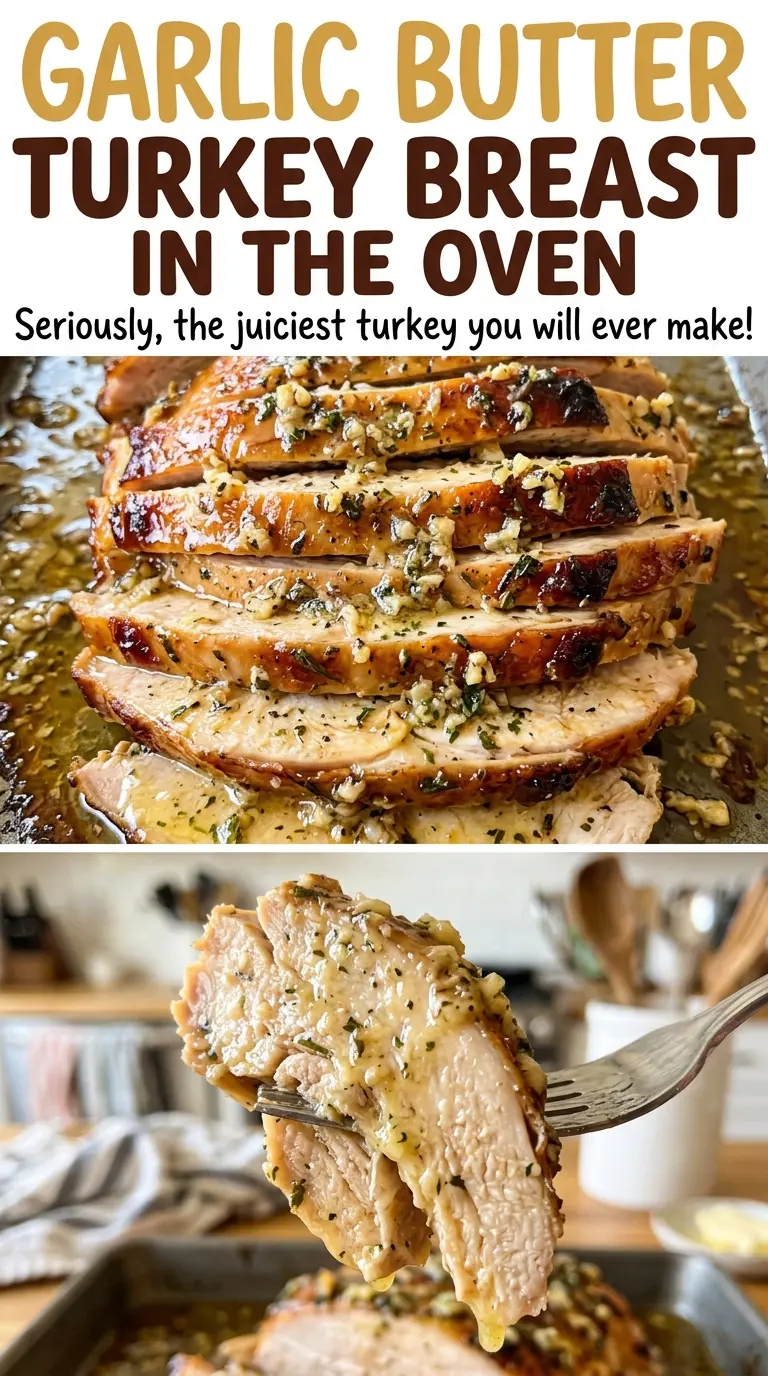
After the breast has rested, carve thinner slices for a platter where each portion gets a little skin and meat together. This gives you more even, easy-to-serve pieces, though very thin slices cool faster than thicker cuts. Keep the skin attached where possible so its roasted garlic-herb coating stays with each slice.
Carve thicker portions for a substantial plate
For larger, more substantial portions, carve thicker slices from the breast instead of shaving off thin pieces. Thick slices show off the juicy center and make the skin easier to keep intact on each portion. This doesn’t change the roast itself; it changes the final texture and look on the plate.
Storage and Reheating
- Refrigerator: Refrigerate leftover turkey within 2 hours and keep it covered for 3 to 4 days. The skin softens in the refrigerator, but the meat remains useful for another meal.
- Freezer: Freeze carved portions in an airtight freezer-safe container for up to 4 months for best quality. Thaw them in the refrigerator before reheating.
- Reheating: Reheat covered portions gently in the oven or microwave until they reach 165°F. Avoid prolonged uncovered heating, which dries the lean breast meat before the center is hot.
Questions That Come Up With This Bone-In Turkey Breast
Garlic Butter Turkey Breast in the Oven
Ingredients
Equipment
Method
- Heat the oven to 350°F.
- Place the turkey breast, skin side up, in a 9x13-inch roasting pan.
- Pat the turkey dry with paper towels.
- Mix the softened butter, garlic, salt, pepper, rosemary, and thyme in a small bowl.
- Gently loosen the skin over the breast.
- Spread some of the butter mixture underneath the skin.
- Rub the remaining mixture over the skin.
- Roast for 1 1/2 to 2 hours, until the thickest part of the breast registers 165°F on an instant-read thermometer without touching bone.
- Tent loosely with foil if the skin browns too quickly.
- Transfer the turkey to a cutting board and rest for 15 to 20 minutes before carving.
