
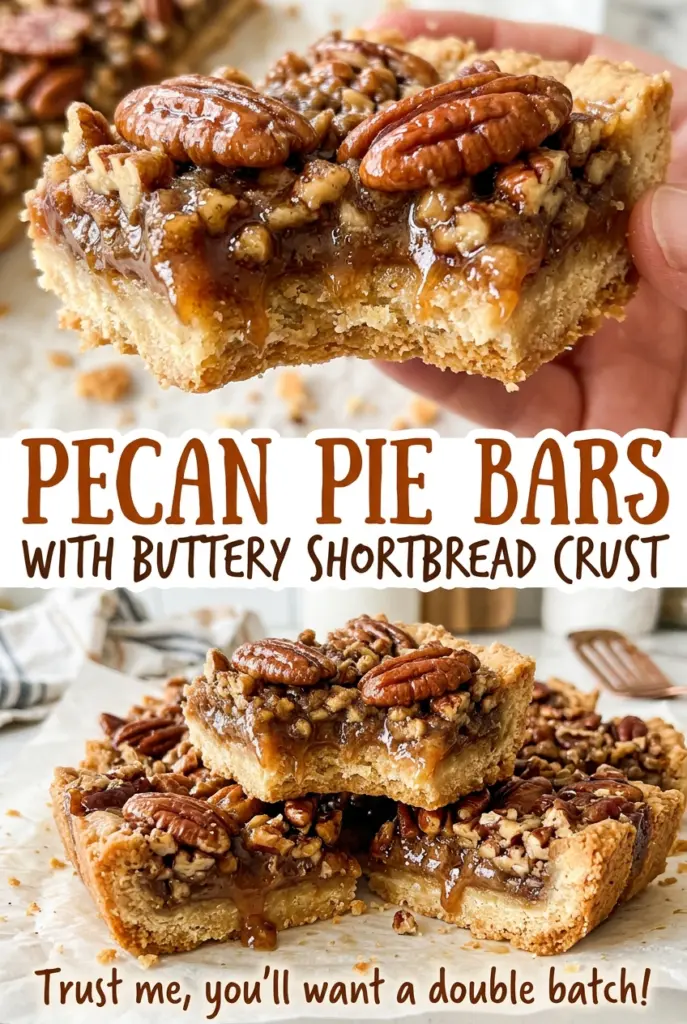
Pecan Pie Bars with Buttery Shortbread Crust
The shortbread edges should be just turning golden when the first bake is done, while the middle still looks pale. That crust goes straight into the second bake under the…
Tip: save now, cook later.The shortbread edges should be just turning golden when the first bake is done, while the middle still looks pale. That crust goes straight into the second bake under the pecan filling, so there’s no waiting around between layers. I make these Pecan Pie Bars with Buttery Shortbread Crust when I want the sticky, brown-sugar filling of pecan pie in neat squares that are easy to serve.
The crust is a simple flour-and-butter base, but pressing it firmly and evenly matters: a thin spot can leave a fragile corner, while a thick spot changes the balance between crisp shortbread and soft filling. The pecan layer is whisked smooth in one bowl, then poured over the hot crust. Once the pan has cooled completely, the filling holds together in rich, tender bars with pecans in every bite.
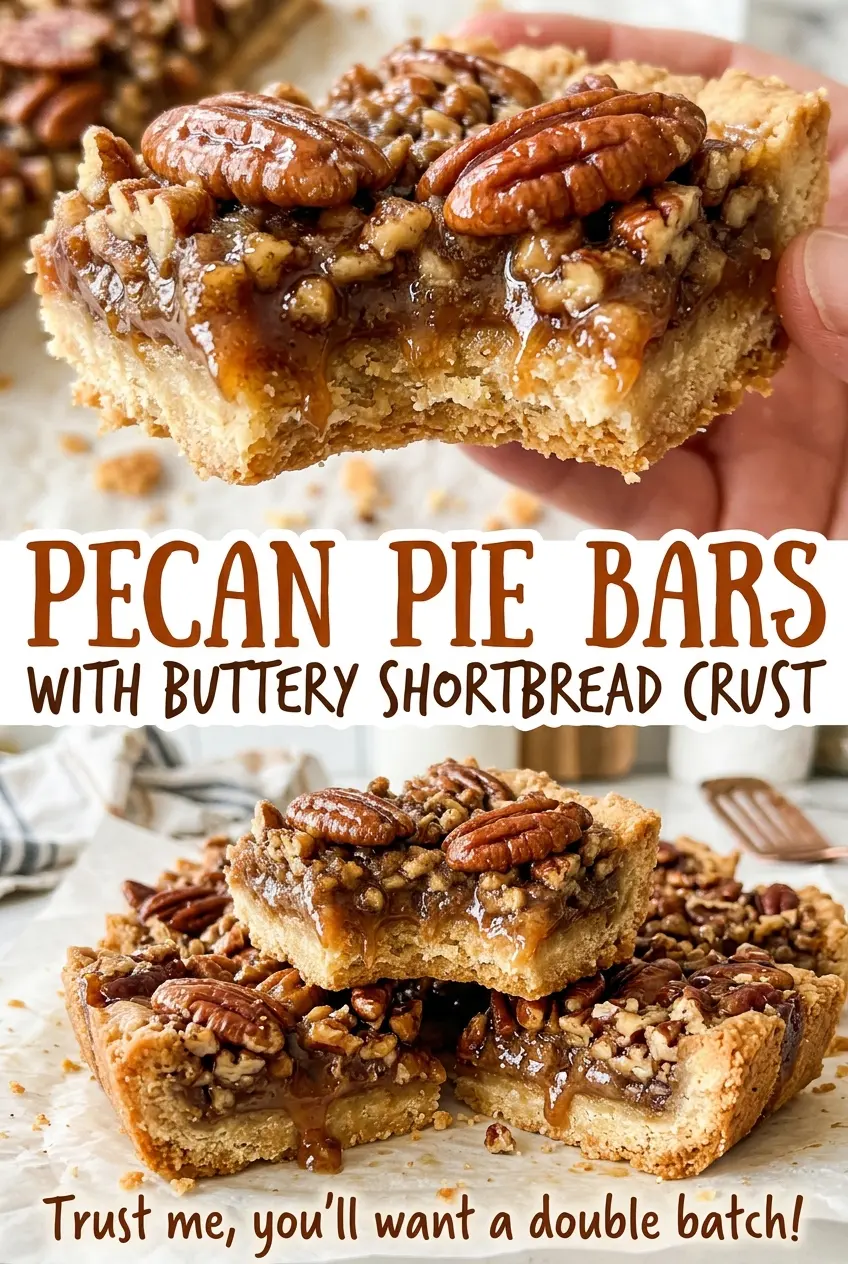
Kitchen Note
Let the bars cool completely in the pan before lifting them out. The filling looks softer while warm, and slicing too early can drag the pecans through the cut instead of giving you clean edges.
Save these pecan pie bars with buttery shortbread crust for a bake that cuts into tidy squares with a rich, tender pecan center.
Why the Shortbread Needs Its Own Bake Before the Pecan Filling
The crust isn’t just a base to hold the filling. It needs a head start in the oven so the flour-and-butter layer has time to bake through before the moist pecan mixture covers it. If you skip that first bake, the bottom can stay pale and soft beneath the filling instead of holding its shortbread texture.
Pouring the filling over the crust while it’s still hot keeps the two layers in contact through the second bake. The edges of the filling set first; the center needs to reach 160°F to finish setting. Don’t judge the texture while the pan is hot. The filling firms as it cools, and the bars become easier to lift and portion once the whole pan has cooled.
That contrast is what makes the bars satisfying: a firm, buttery base under a smooth, sweet filling, with chopped pecans scattered through it. The crust and filling each get the time they need without turning this into a fussy project.
What the Syrup, Butter, and Pecans Each Bring to the Bars
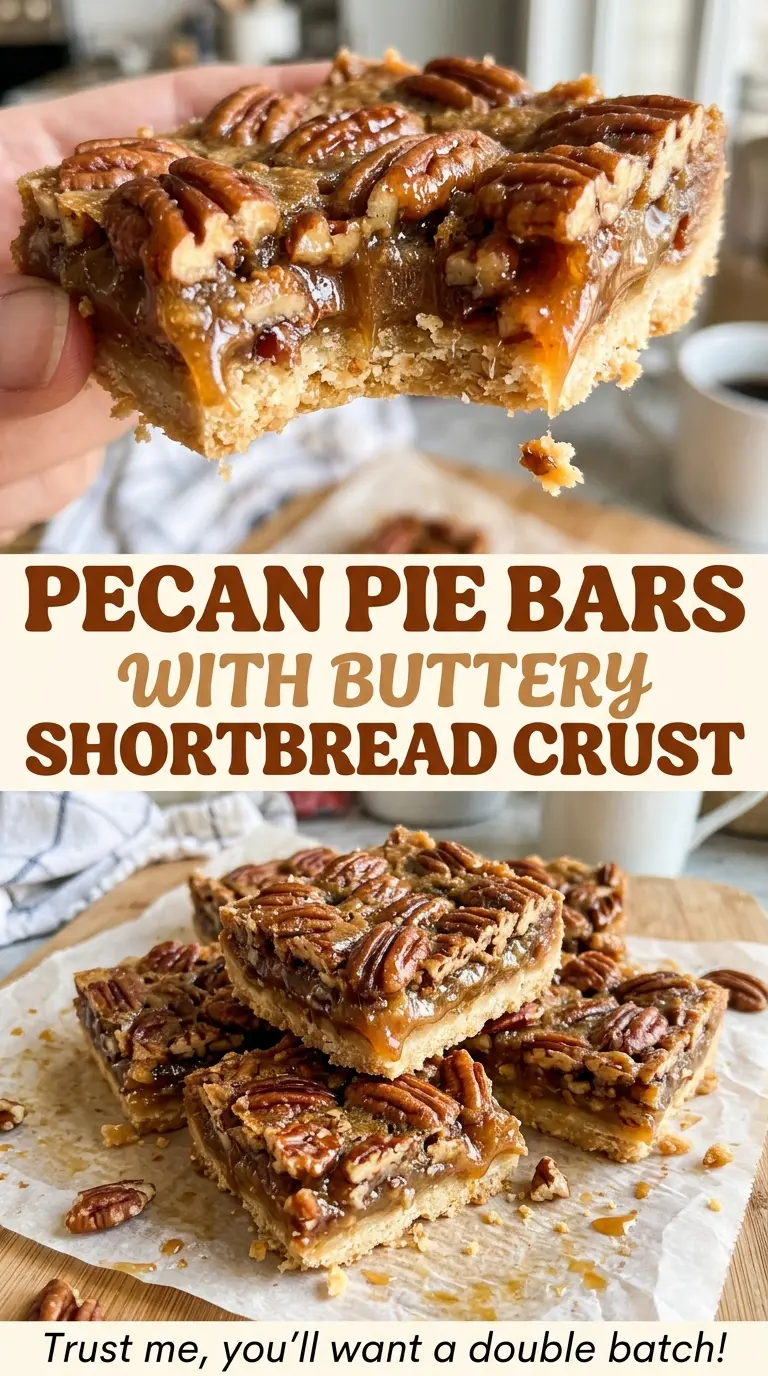
- All-purpose flour, granulated sugar, and salt — Flour gives the crust its structure, while granulated sugar sweetens it without adding the moisture of brown sugar. Ordinary all-purpose flour works well here; the important part is mixing it evenly with the softened butter so the crust bakes as one layer. A cup-for-cup gluten-free baking blend is the most practical flour replacement, though the shortbread may be more delicate.
- Unsalted butter — Butter gives the shortbread its rich taste and tender, crumbly texture. Use it softened for the crust so it cuts through the dry ingredients evenly; melted butter won’t give the same crumb. In the filling, melted butter adds richness without making the mixture difficult to whisk.
- Light corn syrup and light brown sugar — The syrup gives the filling its cohesive, glossy set, while brown sugar brings a gentle molasses note. Keep the syrup for the most reliable pecan-pie texture; another thin liquid sweetener won’t behave exactly the same way. Dark brown sugar can replace light brown sugar in equal measure for a deeper molasses flavor.
- Large eggs and vanilla extract — The eggs help the filling set as it bakes, and vanilla rounds out the sweetness. Stick with large eggs so the filling has the right balance of liquid and structure. There’s no need for a premium vanilla here; a standard pure or imitation extract both provide the familiar aroma.
- Chopped pecans — Chopped pieces distribute through the filling and make the bars easier to portion than a topping of whole halves. Freshly chopped pecans have the clearest nutty flavor, but packaged chopped pecans are convenient if they smell fresh and taste crisp rather than stale.
Building the Layers Without Overbaking the Shortbread
Mixing a Fine, Even Shortbread Crumb
Heat the oven to 350°F and line a 9×13-inch pan with parchment paper, leaving an overhang on two sides. Stir together the flour, granulated sugar, and salt in a large bowl, then cut in the softened butter until the mixture is evenly crumbly. You’re looking for small, consistent crumbs rather than a smooth dough. If the butter is still in large lumps, keep working it through the flour before pressing the mixture into the pan.
Pressing and Prebaking the Crust
Press the crumb mixture firmly and evenly across the bottom of the prepared pan. Take a moment to check the corners; thinner patches bake faster and can leave weak spots under the filling. Bake for 18–20 minutes, until the edges are lightly golden. The center will look lighter than the edges, which is expected at this stage.
Whisking the Filling Until Smooth
In a medium bowl, whisk together the corn syrup, brown sugar, eggs, melted and slightly cooled butter, vanilla, and salt. Keep whisking until the mixture looks smooth, with no streaks of egg or clumps of brown sugar. Stir in the chopped pecans once the liquid is combined. This order helps the pecans spread throughout the filling instead of gathering in one spot.
Pouring the Filling Over the Hot Crust
Pour the pecan mixture over the hot crust and spread it evenly across the pan. Work carefully so you don’t shift the shortbread while the filling flows over it. Return the pan to the 350°F oven and bake for 30–35 minutes. The edges should be set, and the center should reach 160°F.
Cooling Before You Portion
Set the pan aside and let the bars cool completely in the pan, about 2 hours. The filling is softest while warm, so give it time to firm before lifting the slab by the parchment overhang. Cut the cooled slab into 24 bars. If the center still feels warm, wait a little longer rather than rushing the cuts.
Three Small Changes That Give These Bars a Different Character
Use Dark Corn Syrup for a Deeper Filling
Replace the light corn syrup with dark corn syrup in the same amount. The filling keeps its familiar cohesive texture but tastes more robust, with a stronger molasses-caramel note.
Choose Dark Brown Sugar for More Molasses
Swap in dark brown sugar for the light brown sugar without changing the amount. It brings a more pronounced molasses flavor, which stands out against the buttery crust.
Make the Shortbread Gluten-Free
Use a cup-for-cup gluten-free baking flour in place of the all-purpose flour. The crust may be a little more delicate when cut, but the pecan filling stays the same; press the crust firmly and evenly into the pan.
Storage and Reheating
- Refrigerator: Refrigerate in an airtight container within 2 hours and keep for 3–4 days. The crust softens slightly as the filling chills.
- Freezer: Freeze in an airtight container with parchment between layers for up to 2 months. Thaw overnight in the refrigerator.
- Reheating: These bars are best at room temperature, so let chilled bars sit briefly before serving. Microwaving can make the syrupy filling too soft and hot.
Questions That Come Up When Baking Pecan Pie Bars
Pecan Pie Bars with Buttery Shortbread Crust
Ingredients
Equipment
Method
- Heat the oven to 350°F.
- Line a 9x13-inch baking pan with parchment paper, leaving an overhang on two sides.
- Mix the flour, granulated sugar, and salt in a large bowl.
- Cut in the softened butter until the mixture is evenly crumbly.
- Press the mixture firmly and evenly into the prepared pan.
- Bake for 18-20 minutes, until the edges are lightly golden.
- Whisk the corn syrup, brown sugar, eggs, melted butter, vanilla, and salt in a medium bowl until smooth.
- Stir in the pecans.
- Pour the filling over the hot crust.
- Bake for 30-35 minutes, until the edges are set and the center reaches 160°F.
- Cool completely in the pan, about 2 hours.
- Lift out using the parchment.
- Cut into 24 bars.