
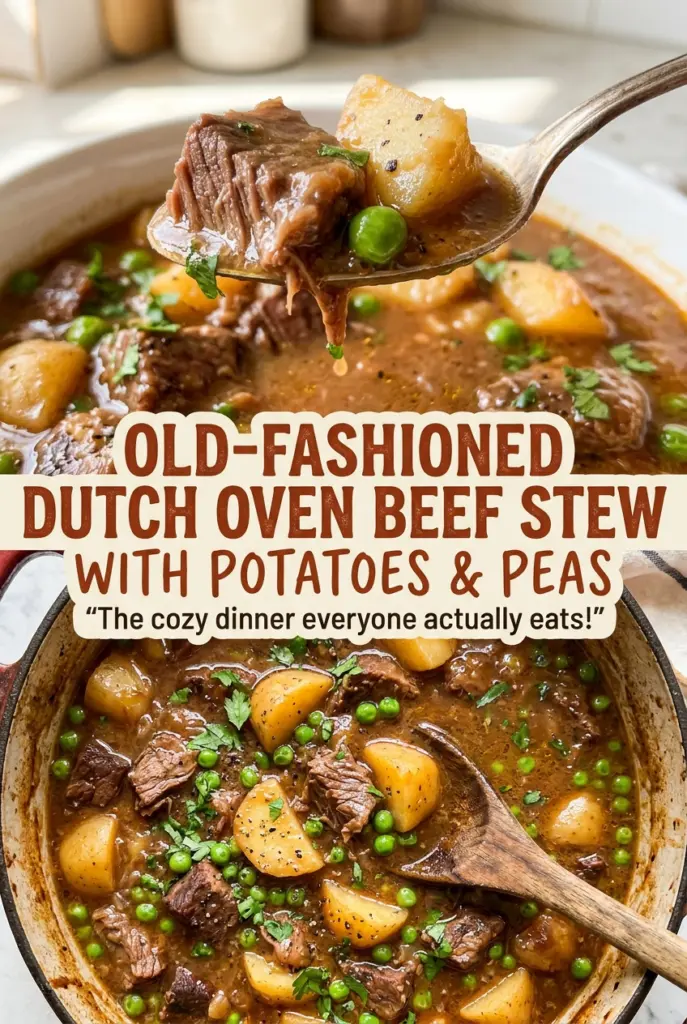
Old-Fashioned Dutch Oven Beef Stew with Potatoes and Peas
The first spoonful of this stew tells you how the afternoon went: beef that gives easily to a fork, carrots that are tender without collapsing, and a broth darkened by…
Tip: save now, cook later.The first spoonful of this stew tells you how the afternoon went: beef that gives easily to a fork, carrots that are tender without collapsing, and a broth darkened by everything that cooked in the Dutch oven. I wanted an old-fashioned beef stew with real depth, but not potatoes that had dissolved into the gravy by the time the meat was ready.
That’s why the beef gets a long, covered stretch in the oven before the carrots and Yukon Gold potatoes go in. The chuck has time to turn tender, while the vegetables keep their shape through the shorter second bake. A little flour on the beef helps give the broth body, and the browned bits loosen into it when the broth is added. The result is a hearty Dutch oven beef stew with potatoes and peas, ready for a slow evening at the table.
Kitchen Note
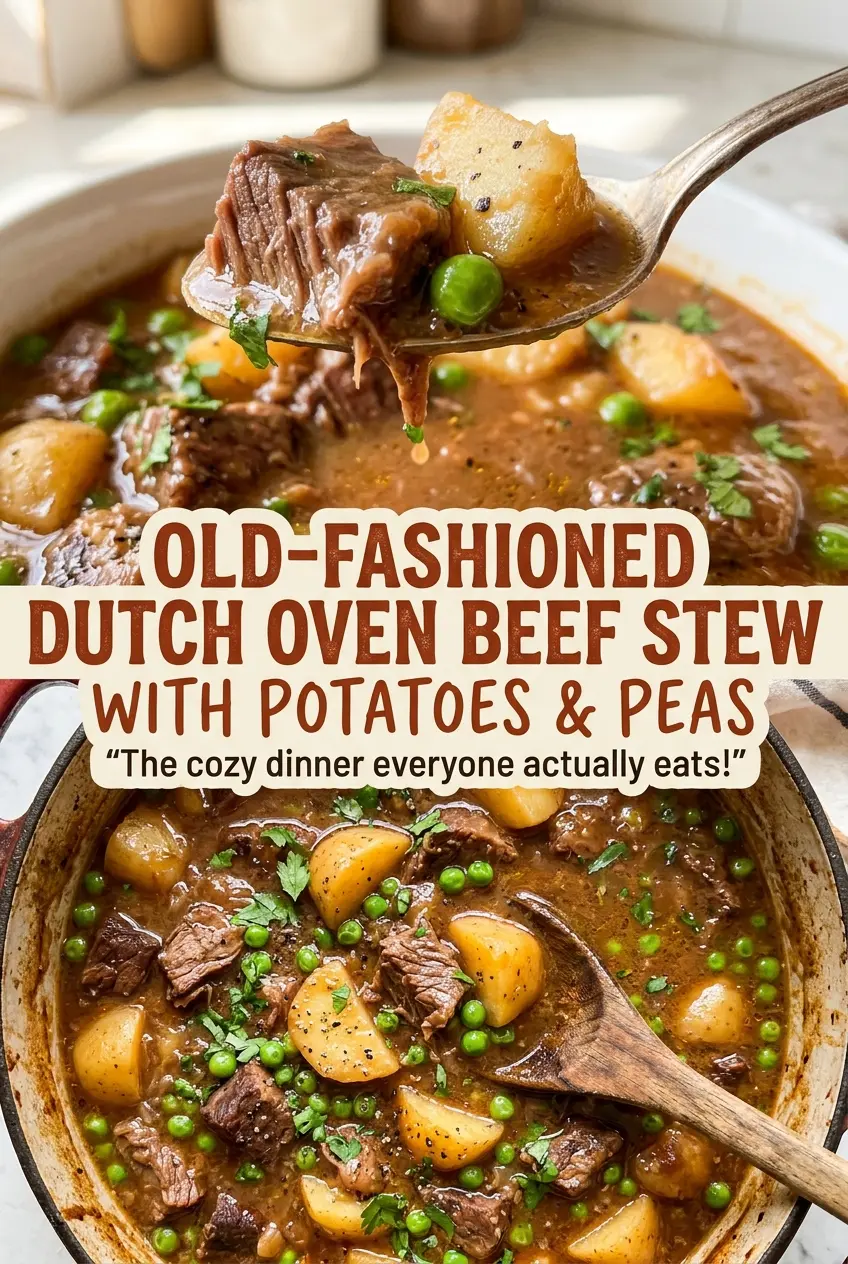
A 6-quart Dutch oven gives the beef enough room to brown in batches and still has space for the broth and vegetables. If the pot is crowded, the beef releases moisture and steams instead of developing those browned edges.
Save this old-fashioned Dutch oven beef stew for a cozy dinner, with fork-tender chuck, potatoes, carrots, and peas in a rich broth.
Why the Potatoes Wait Until the Beef Has Braised
Beef chuck and potatoes don’t need the same amount of time in the oven. Chuck has connective tissue that softens during a long, gentle braise; potatoes turn tender much sooner. If both go into the pot at the beginning, the meat may still need more time just as the potatoes start breaking apart.
This stew gives the beef its own covered stretch first, then adds the carrots and Yukon Golds for the final bake. That staggered timing keeps the vegetables recognizable in the bowl instead of blending them into the broth. It also gives the carrots and potatoes time to pick up the savory liquid without asking them to withstand the full braise.
Use the fork-tender cue rather than relying on the clock alone. The vegetables should be tender when pierced, and the beef should yield easily; chuck pieces can vary a little in size and tenderness. The final simmer with the peas is short, just long enough to heat them through without turning them soft and dull.
What Chuck, Yukon Golds, and the Broth Bring to This Stew
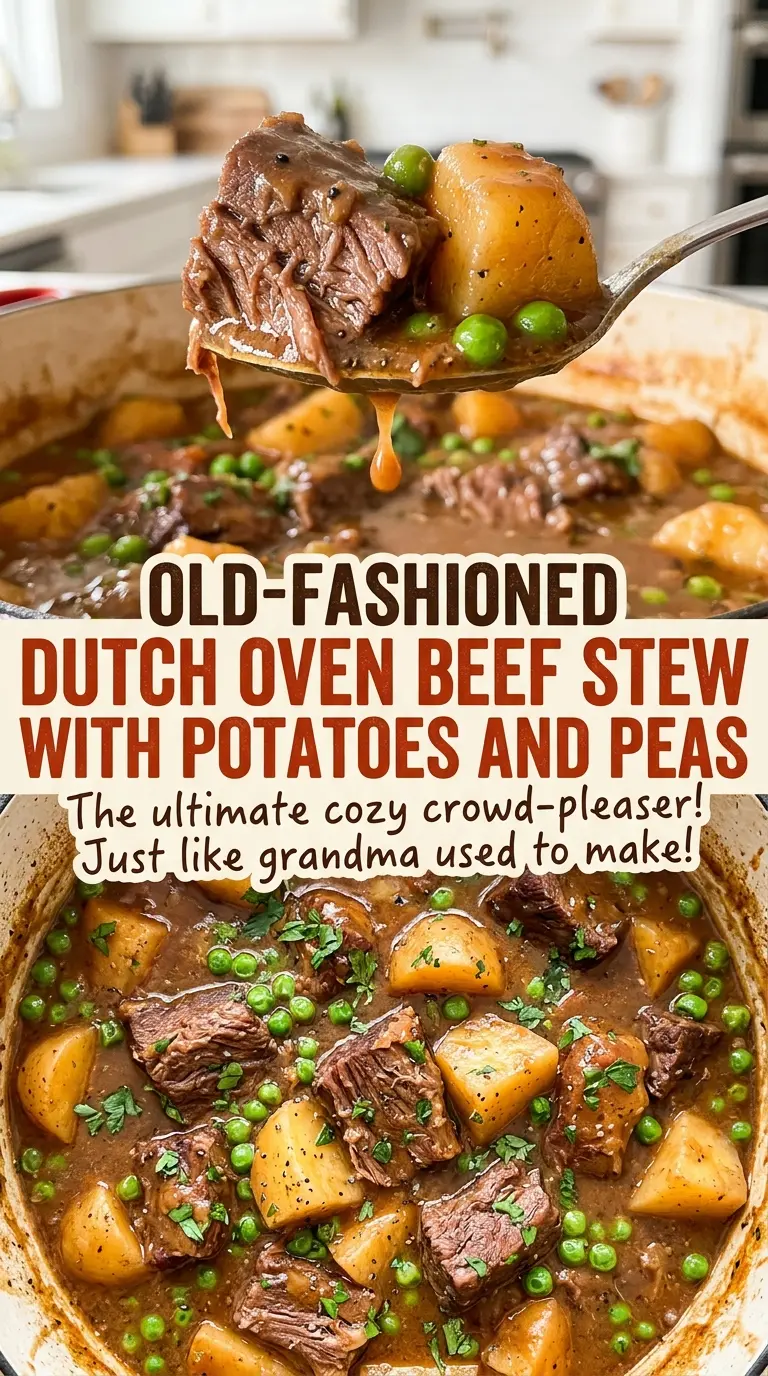
- Beef chuck — Chuck roast has the connective tissue that becomes tender during a long braise, giving the stew its classic soft, meaty texture. Buy a roast and cut it into even cubes so the pieces cook at a similar pace; pre-cut stew meat can come from mixed cuts and may not turn tender as consistently.
- All-purpose flour — The light coating helps the beef brown and lends body to the broth as the stew cooks. Keep the coating even rather than piling flour on, which can leave pale patches on the meat.
- Yukon Gold potatoes — Their creamy texture and ability to hold their shape suit a stew with a long oven braise. Russets tend to break down more, so the broth will become thicker and the potato pieces less distinct if you substitute them.
- Carrots and frozen peas — Fresh carrots hold up to the oven time and bring sweetness to the savory broth. Frozen peas are convenient for the last-minute finish; add them straight from the freezer so they heat through without needing a separate thaw.
- Beef broth, tomato paste, and Worcestershire — These build a deep, savory base. A broth you enjoy on its own is worth choosing here; the tomato paste adds concentrated richness, while Worcestershire brings a tangy, savory edge that plain broth doesn’t quite supply.
- Onion, garlic, thyme, and bay leaves — The onion softens into the base, while garlic and dried thyme round it out. The bay leaves infuse the braise as it cooks, but take them out before serving so they don’t end up in anyone’s bowl.
Building the Braise Before the Vegetables Go In
Brown the Flour-Coated Beef
Heat the oven to 325°F, then pat the beef dry and toss it with the flour, 1 teaspoon of the kosher salt, and the black pepper. Brown it in a 6-quart Dutch oven over medium-high heat, using 1 tablespoon of oil for the first batch and adding another tablespoon before each remaining batch. Work in three batches and turn the pieces so they develop color on more than one side; the total browning takes about 8–10 minutes. Transfer each batch to a plate instead of piling it back into the pot.
Soften the Onion and Make the Broth Base
Cook the chopped onion over medium heat, stirring occasionally, until softened, about 5 minutes. Stir in the minced garlic and tomato paste for 1 minute; the paste should coat the onion and smell fragrant, not scorched. Pour in the beef broth and Worcestershire, scraping the browned bits from the bottom of the pot as the liquid loosens them. Add the thyme, bay leaves, remaining salt, and beef, then bring the pot to a simmer.
Braise the Beef, Then Add the Vegetables
Cover the Dutch oven and bake for 1 hour 45 minutes. Stir in the carrots and potatoes, cover again, and return the pot to the oven for 45–60 minutes. The beef is ready when a fork slips into a cube easily, and the vegetables should be tender when pierced. If the beef still feels firm, keep baking until it yields rather than serving it while chewy.
Finish with Peas and a Short Rest
Set the Dutch oven on the stovetop and stir in the frozen peas. Simmer until they’re hot, about 3–5 minutes, then remove the bay leaves. Let the stew rest uncovered for 10 minutes before serving. That brief pause gives the bubbling broth a chance to settle while you get the bowls ready.
Three Ways to Adapt This Dutch Oven Beef Stew
Make It Gluten-Free
Use a cup-for-cup gluten-free all-purpose flour blend in place of the regular flour, and choose gluten-free beef broth and Worcestershire sauce. The coating may brown a little differently depending on the blend, but the stew still gets its flavor from the browned beef and long braise.
Add a More Earthy, Savory Note
Cook sliced cremini mushrooms with the onion until softened, then stir in the garlic and tomato paste. The mushrooms deepen the savory base and make the stew feel even heartier, though they’ll add a softer texture alongside the carrots and potatoes.
Trade Some Carrots for Parsnips
Replace some of the carrots with peeled parsnips cut into similar-sized pieces. They cook alongside the other vegetables and bring a sweeter, earthier note, while keeping the familiar stew texture.
Storage and Reheating
- Refrigerator: Store in an airtight container for 3–4 days. The potatoes may soften a little as they sit in the broth.
- Freezer: Freeze in airtight containers for up to 3 months. The stew freezes well, though thawed potatoes may have a softer texture.
- Reheating: Thaw frozen stew overnight in the refrigerator, then warm it gently on the stovetop, stirring now and then, until it reaches 165°F. Avoid boiling it hard, which can break up the potatoes and beef.
Questions That Come Up While the Stew Braises
Old-Fashioned Dutch Oven Beef Stew with Potatoes and Peas
Ingredients
Equipment
Method
- Preheat the oven to 325°F.
- Pat the beef dry, then toss it with the flour, 1 teaspoon of the salt, and the black pepper until evenly coated.
- Heat 1 tablespoon of the oil in a 6-quart Dutch oven over medium-high heat.
- Brown the beef in 3 batches, adding 1 tablespoon of oil before each of the remaining batches, about 8–10 minutes total, then transfer the beef to a plate.
- Add the onion to the Dutch oven and cook over medium heat, stirring occasionally, until softened, about 5 minutes.
- Stir in the garlic and tomato paste and cook for 1 minute.
- Pour in the beef broth and Worcestershire sauce, scraping up the browned bits.
- Stir in the thyme, bay leaves, remaining 1/2 teaspoon salt, and beef, then bring to a simmer.
- Cover the Dutch oven and bake for 1 hour 45 minutes.
- Stir in the carrots and potatoes.
- Cover and bake for 45–60 minutes, until the beef is fork-tender and the vegetables are tender.
- Stir in the peas and simmer on the stovetop until hot, about 3–5 minutes.
- Remove the bay leaves.
- Let the stew rest uncovered for 10 minutes before serving.