
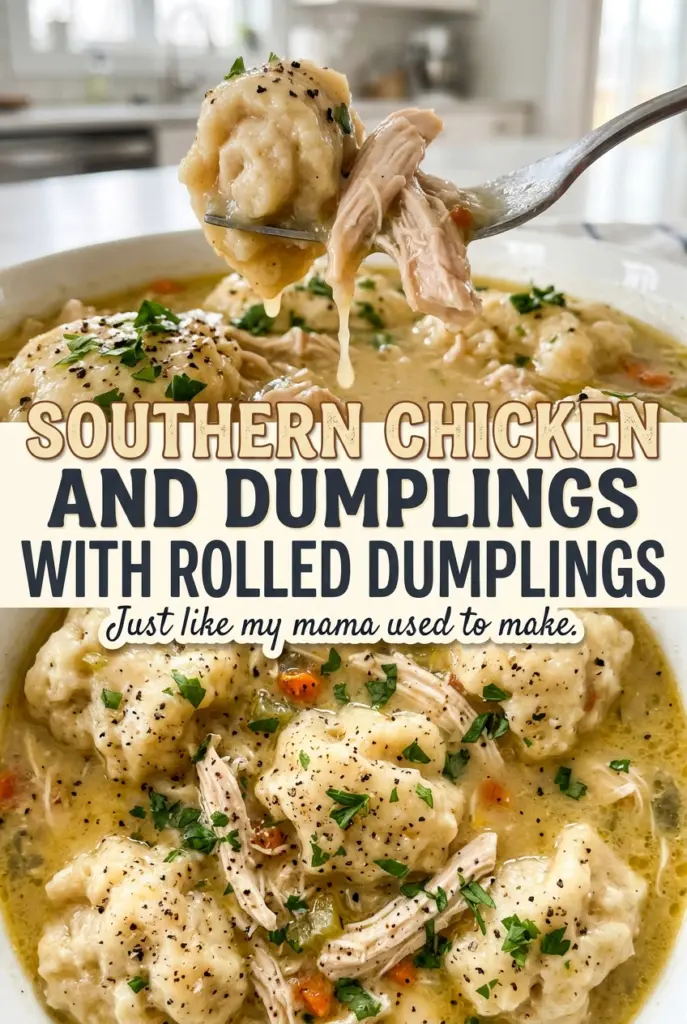
Southern Chicken and Dumplings from Scratch with Rolled Dumplings
The broth starts out clear, then turns gently cloudy as the dumplings cook, picking up just enough body to cling to every strip. That’s the moment I look for in…
Tip: save now, cook later.The broth starts out clear, then turns gently cloudy as the dumplings cook, picking up just enough body to cling to every strip. That’s the moment I look for in Southern chicken and dumplings from scratch: a tender dumpling, a spoonful of shredded chicken, and broth that feels comforting without being heavy.
Rolled dumplings are different from the soft, puffy kind dropped by spoonfuls. This dough gets rolled thin and cut into strips, so each piece has a tender bite and cooks right in the seasoned chicken broth. I use bone-in, skin-on thighs to build that broth, then remove the skin and bones before the chicken goes back into the pot. The dumplings are made from pantry staples, and the flour on their surface helps the broth thicken as they simmer. Keep the dough soft, handle it lightly, and the pot fills with tender strips instead of dense, tough dumplings.
Kitchen Note
Roll the dough to about 1/8 inch thick so the strips cook through without turning bulky. Use only enough of the reserved flour to keep the work surface from sticking; too much clinging flour makes the dough harder to handle.
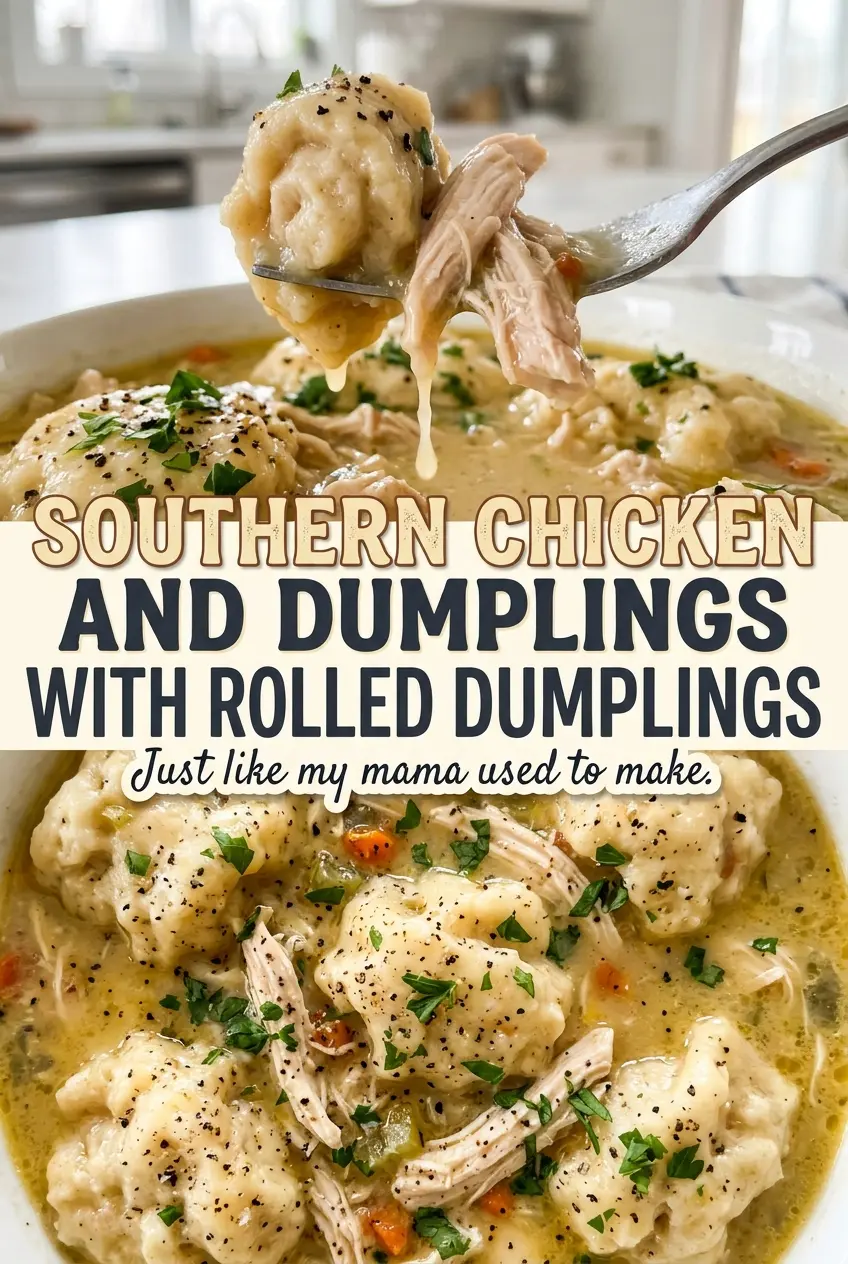
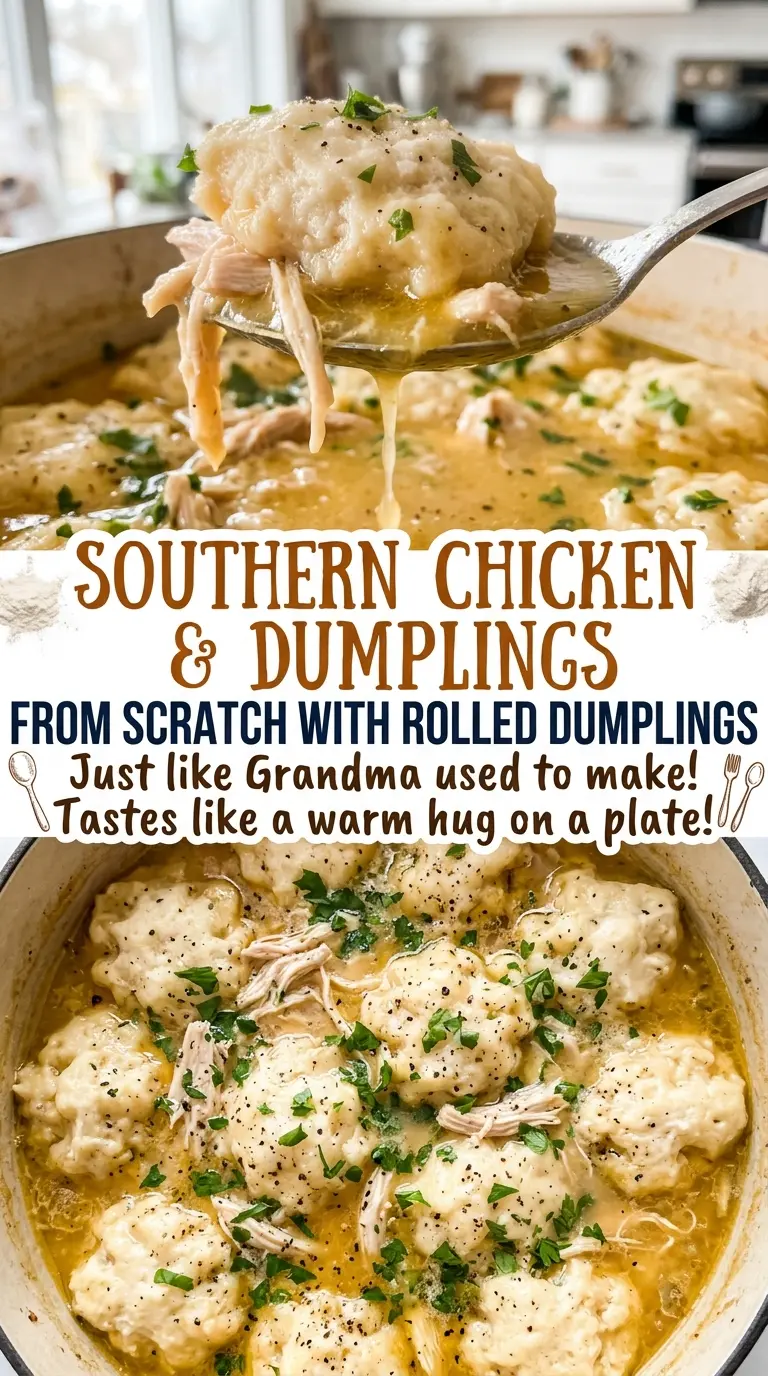
Save these Southern chicken and dumplings for a cozy supper: tender rolled strips, shredded chicken, and broth that thickens right in the pot.
Why These Dumplings Thicken the Broth Without a Roux
There’s no separate flour-and-fat mixture to cook before the broth is ready. Instead, the rolled strips go straight into the simmering liquid, carrying a light dusting of flour with them. As the dumplings cook, that flour disperses through the broth and gives it body. It’s a small detail, but it’s why the pot turns creamy-looking without cream or a thickener stirred in at the end.
That natural thickening depends on a gentle hand. Add the strips a few at a time and stir carefully so they don’t clump together or tear. Keep the pot uncovered while they simmer; the broth reduces slightly as the dumplings soften. If you add all the strips in one pile, they’re more likely to stick to each other, and the flour won’t distribute as evenly. The finished broth should be thicker than it was before the dumplings went in, while still loose enough to ladle easily. It’s a simple, old-fashioned way to get a hearty bowl from chicken broth, flour, and a little patience.
What Gives Rolled Dumplings Their Tender Bite
- Bone-in, skin-on chicken thighs — The bones and skin enrich the broth while the thighs stay moist through the simmer. The skin and bones come out before serving, so there’s no need to fuss over trimming the chicken first.
- Low-sodium chicken broth — It gives you more control over the seasoning, since salt is added separately. A good-tasting broth matters here because it becomes the base for both the chicken and dumplings.
- Onion, celery, and bay leaf — They gently season the broth while the chicken cooks, then get strained out. Cut the celery into large pieces and quarter the onion so they’re easy to remove with the bay leaf.
- All-purpose flour and baking powder — All-purpose flour makes a dough that can be rolled into strips, while baking powder gives those strips a little lift. Keep the reserved flour for rolling separate from the flour mixed into the dough.
- Chilled vegetable shortening — Cold shortening cuts into the flour as small, coarse crumbs, helping the dumplings stay tender. Keep it chilled until you’re ready to work it in.
- Whole milk — Milk brings the dough together into a soft consistency. Stir it in just until the flour is moistened and the dough forms; a smooth, heavily worked dough isn’t the goal.
The Order That Keeps the Chicken Tender and Dumplings Separate
Simmer the Thighs, Then Strain the Broth
Combine the chicken, broth, quartered onion, celery, bay leaf, 1 teaspoon of the salt, and the pepper in a 6-quart pot. Bring everything to a boil over medium-high heat, then lower the heat to maintain a gentle simmer and cover the pot. Cook for 35–45 minutes, until the thickest part of the chicken reaches 165°F. Transfer the thighs to a plate, strain the broth into a heatproof bowl, discard the vegetables and bay leaf, and return the broth to the pot.
Make a Soft Dough and Cut the Strips
While the chicken cools enough to handle, whisk the flour for the dough with the baking powder and remaining salt. Cut in the chilled shortening with a pastry cutter or your fingertips until the mixture looks like coarse crumbs. Stir in the milk only until a soft dough forms, then roll it on a lightly floured surface to about 1/8 inch thick. Cut the dough into 1-inch-wide strips, using the reserved flour as needed to prevent sticking.
Simmer the Dumplings Before Returning the Chicken
Bring the strained broth to a gentle boil and add the dumpling strips a few at a time, stirring gently as you go. Once they’re all in, reduce the heat to maintain a gentle simmer and cook uncovered for 15–18 minutes. Stir gently once or twice, watching for tender dumplings and broth that has thickened. Stir in the shredded chicken and simmer for 3–5 minutes, until the chicken is hot throughout.
How to Adjust the Pot for Dairy-Free or Milder Flavor
Make the dumplings dairy-free
Replace the whole milk with the same amount of unsweetened, plain dairy-free milk. The shortening is already dairy-free, so the dough still has the fat it needs; the dumplings may have a slightly different flavor depending on the milk you choose.
Leave out the celery
If celery isn’t welcome at your table, omit the two stalks and cook the chicken with the onion and bay leaf. The broth will lose a little of its familiar aromatic depth, but the chicken and rolled dumplings still make a complete, satisfying pot.
Keep the broth pepper-free
Omit the black pepper if you want a gentler, less peppery broth. The onion, celery, and bay leaf still season the cooking liquid, so the bowl won’t taste plain.
Storage and Reheating
- Refrigerator: Store covered for 3–4 days. The dumplings will continue to absorb broth, so they’ll be softer and the leftovers thicker.
- Freezer: Freeze portions in airtight containers for up to 2–3 months. The dumplings soften after thawing, but the chicken and broth freeze well.
- Reheating: Warm gently in a covered saucepan over low heat, stirring carefully until hot throughout. Avoid a hard boil, which can break up the dumplings.
Questions That Come Up While Making Rolled Dumplings
Southern Chicken and Dumplings from Scratch with Rolled Dumplings
Ingredients
Equipment
Method
- In a 6-quart pot, combine the chicken, broth, onion, celery, bay leaf, 1 teaspoon of the salt, and the pepper; bring to a boil over medium-high heat.
- Reduce the heat to maintain a gentle simmer, cover, and cook for 35–45 minutes, until the chicken reaches 165°F at its thickest part.
- Transfer the chicken to a plate.
- Strain the broth into a heatproof bowl, discard the vegetables and bay leaf, then return the broth to the pot.
- When the chicken is cool enough to handle, discard the skin and bones and shred the meat; set it aside.
- In a medium bowl, whisk together 2 cups of the flour, the baking powder, and the remaining 1/2 teaspoon salt.
- Cut in the shortening with a pastry cutter or your fingertips until the mixture has coarse crumbs.
- Stir in the milk just until a soft dough forms.
- Lightly flour a work surface with some of the reserved flour, roll the dough about 1/8 inch thick, and cut it into 1-inch-wide strips; use the remaining reserved flour as needed to prevent sticking.
- Bring the broth to a gentle boil, then add the dumpling strips a few at a time, stirring gently so they do not stick together.
- Reduce the heat to maintain a gentle simmer and cook uncovered for 15–18 minutes, stirring gently once or twice, until the dumplings are tender and the broth has thickened.
- Stir in the shredded chicken and simmer for 3–5 minutes, until the chicken is hot throughout.