
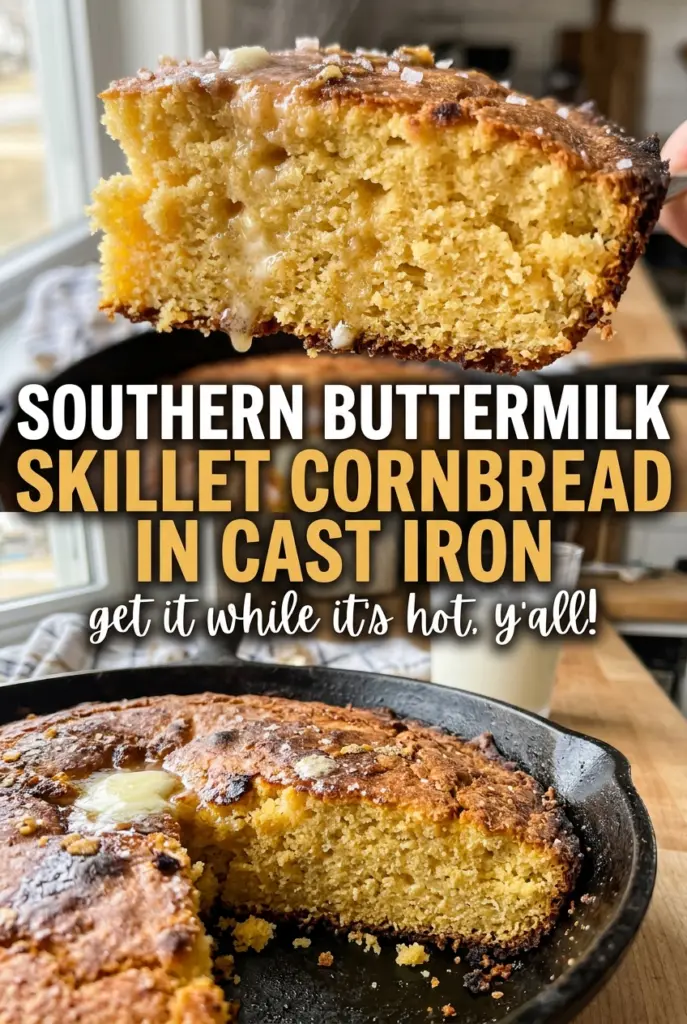
Southern Buttermilk Skillet Cornbread in Cast Iron
The first thing I notice when cornbread comes out of the oven is the edge: it should be deeply golden where the batter met the hot cast iron, not pale…
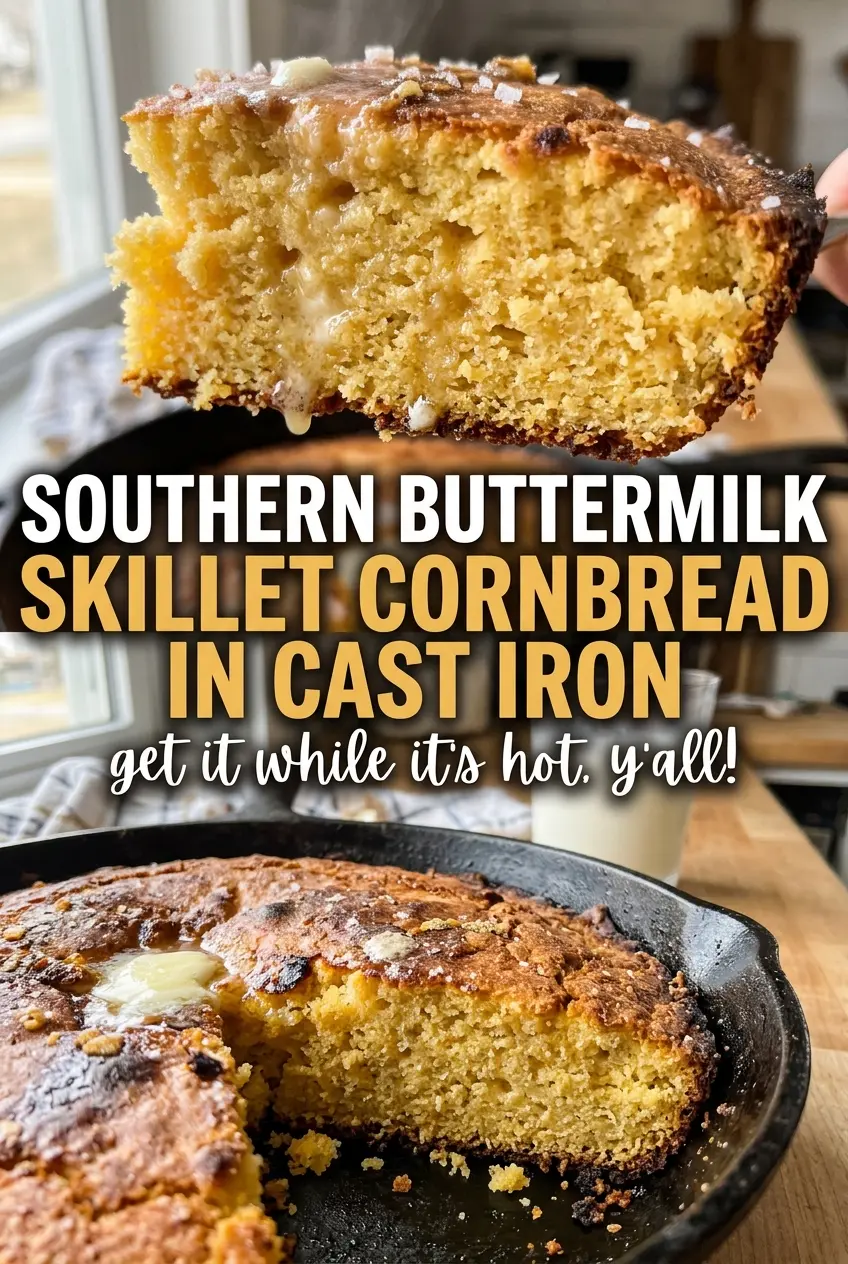
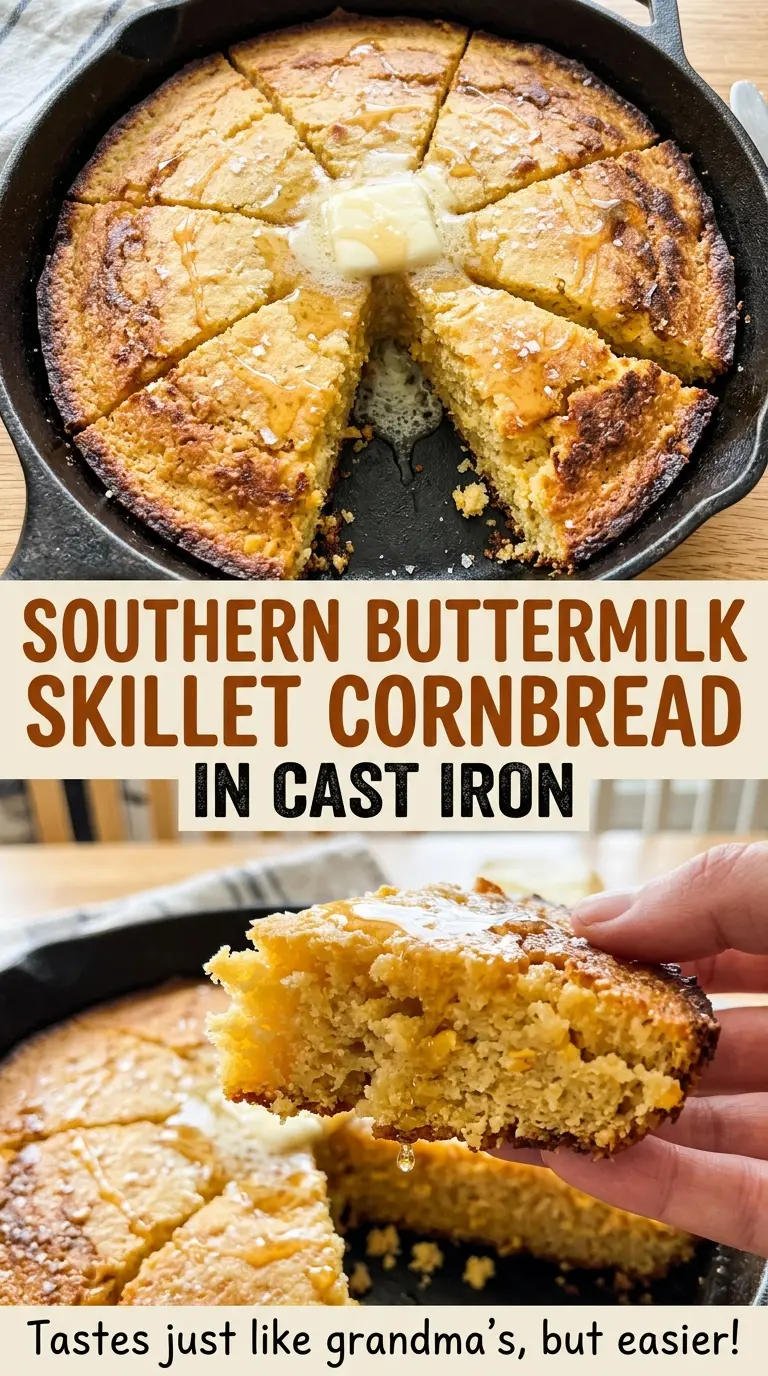
Tip: save now, cook later.The first thing I notice when cornbread comes out of the oven is the edge: it should be deeply golden where the batter met the hot cast iron, not pale and soft all the way around. This Southern buttermilk skillet cornbread is the kind I want to cut into generous wedges, with a browned outside and a tender middle that still tastes of corn.
I like how little fuss the batter needs. The dry ingredients go in one bowl, the egg and buttermilk in another, and the two meet with just a few turns of the spoon. It’s a useful reminder that cornbread batter doesn’t need to look perfectly smooth to bake up well.
The cast-iron skillet does the other part of the work. It heats while the oven preheats, then the batter goes straight into the oiled pan, where the edges begin setting before the center has finished baking. The result is a simple, sturdy skillet cornbread with a crisp rim and soft, warm slices.
Kitchen Note
Let the melted butter cool until it’s warm rather than hot before whisking it into the egg and buttermilk. That little pause keeps the wet mixture smooth and prevents the egg from getting a head start in the bowl.
Save this Southern buttermilk skillet cornbread for its golden cast-iron edges and tender, corn-rich center.
Why the Empty Skillet Has to Heat Before the Batter
Cast iron needs time to heat through, not just a quick minute on the burner. Putting the skillet in the oven as it preheats gives the whole pan time to warm, so the batter meets an evenly heated surface instead of a warm center and cooler sides. That contact is what helps the bottom and edges brown while the middle stays tender.
The order matters when you add the oil, too. It goes into the hot skillet just before the batter, then gets swirled across the bottom. Oil sitting in the pan through the entire preheating period can get too hot and smoke; adding it after you remove the skillet keeps the coating fresh for the batter. Use oven mitts and move deliberately—the handle is hot along with the rest of the pan.
Once the batter is in, spread it evenly so the middle and edges bake at a similar pace. Look for a golden top and edges that have pulled away from the iron rather than relying only on the clock. The skillet gives you a crisp, browned border that a cold pan can’t produce in the same way.
What Cornmeal, Buttermilk, and Flour Each Bring to the Skillet
- Yellow cornmeal — This is where the cornbread gets its corn flavor and familiar color. A fresh bag should smell pleasantly of corn rather than stale or oily. The grind affects the crumb: finer cornmeal gives a more even slice, while a coarser grind feels more rustic and textured.
- All-purpose flour — Cornmeal alone can make a slice sandy and fragile. Flour gives the crumb enough structure to hold together when you cut it, without turning the bread into a soft, cake-like square. For a gluten-free adaptation, use a cup-for-cup gluten-free flour blend in place of the all-purpose flour; the crumb may be a little more delicate.
- Buttermilk — Its tang balances the corn and its acidity works with the baking soda to help the batter rise. Plain kefir can stand in at the same volume if that’s what you have; it brings a similar tang and acidity. Regular milk won’t give quite the same lift or flavor.
- Unsalted butter — Melted butter gives the cornbread a rounded, rich taste. Unsalted butter lets the kosher salt stay in control, and there’s no need to buy a specialty brand; fresh butter that tastes clean is what matters.
- Egg — The egg helps bind the cornmeal and flour into slices that hold their shape. Use a large egg, as written, so the wet-to-dry balance stays consistent.
The Order That Gives This Cornbread a Set Crust and Tender Center
Heat the Cast-Iron Skillet
Set a 10-inch cast-iron skillet in the oven, then preheat the oven to 425°F. Keep the skillet in the oven as it heats; it should be fully hot when the batter is ready. This stage needs no added oil yet, so the skillet can heat without the oil smoking.
Whisk the Dry and Wet Mixtures
In a large bowl, whisk together the cornmeal, flour, baking powder, baking soda, and kosher salt until the dry mixture looks even. In a medium bowl, whisk the egg and buttermilk, then whisk in the melted, slightly cooled butter. Mixing the wet and dry ingredients separately helps distribute the leavening before the batter comes together.
Stir Gently and Fill the Hot Pan
Pour the buttermilk mixture into the cornmeal mixture and stir just until combined. A few small lumps are fine; keep stirring until the batter is completely smooth and you risk a tougher texture. Carefully take the hot skillet from the oven, add the vegetable oil, and swirl it over the bottom before pouring in the batter and spreading it evenly.
Bake Until the Edges Release
Bake for 20 to 25 minutes, until the top is golden brown and the edges pull away from the skillet. If the top is still pale and the edges are firmly against the pan, give it more time within that range rather than pulling it early. Rest the cornbread for 10 minutes before slicing, which gives the soft center a chance to settle into neat wedges.
Two Useful Swaps for a Different Skillet Cornbread
Use White Cornmeal for a Milder Corn Flavor
Replace the yellow cornmeal with the same measured quantity of white cornmeal. The cornbread will have a paler crumb and a slightly milder corn flavor, while the buttermilk and browned skillet edges still give it its familiar tangy, toasted character.
Make a Gluten-Free Version
Swap the all-purpose flour for a cup-for-cup gluten-free flour blend, keeping the quantity the same. Use cornmeal labeled gluten-free if cross-contact is a concern. The flavor stays close to the original, though the slices may be a little more tender and need a gentle hand when cut.
Storage and Reheating
- Refrigerator: Keep leftover cornbread covered in the refrigerator for 3 to 4 days. The crumb will dry a little as it sits, so cover it well.
- Freezer: It freezes well for up to 2 months. Wrap individual slices tightly, then place them in an airtight freezer container or bag.
- Reheating: Warm slices in a 300°F oven, wrapped in foil, until heated through. Unwrapped slices can dry out at the edges before the center is warm.
Questions About Buttermilk Skillet Cornbread
Southern Buttermilk Skillet Cornbread in Cast Iron
Ingredients
Equipment
Method
- Place a 10-inch cast-iron skillet in the oven and preheat to 425°F.
- Whisk together the cornmeal, flour, baking powder, baking soda, and salt in a large bowl.
- Whisk the egg and buttermilk together in a medium bowl.
- Whisk the melted butter into the egg and buttermilk mixture.
- Pour the buttermilk mixture into the cornmeal mixture and stir just until combined; a few small lumps are fine.
- Carefully remove the hot skillet from the oven and add the vegetable oil.
- Swirl the oil to coat the bottom of the skillet.
- Pour in the batter and spread it evenly.
- Bake for 20 to 25 minutes, until the top is golden brown and the edges pull away from the skillet.
- Rest for 10 minutes before slicing.