
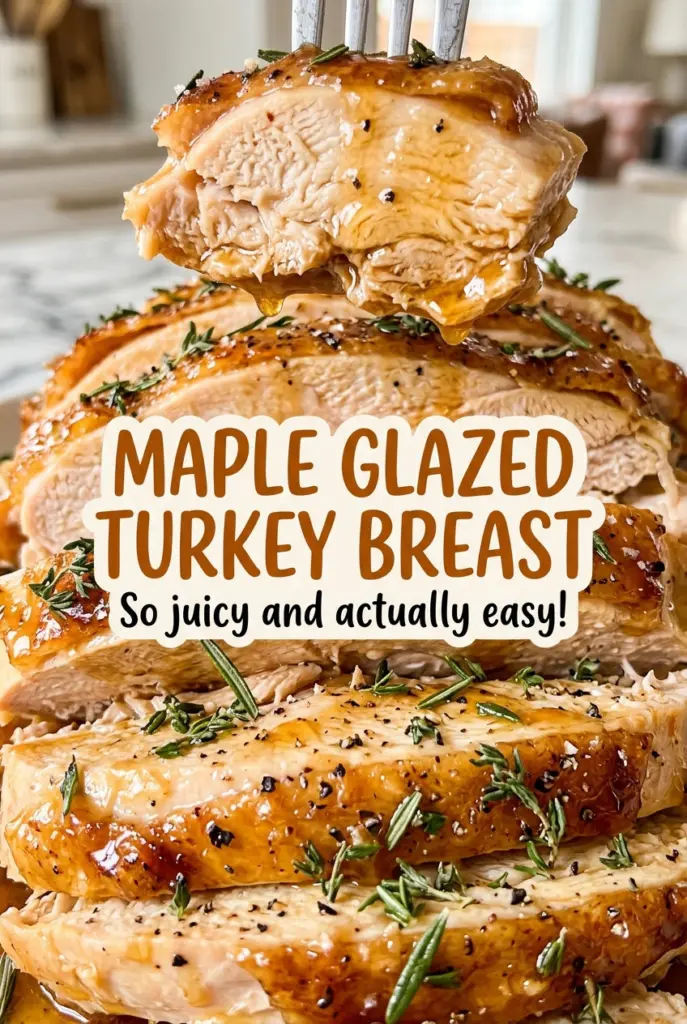
Maple Glazed Turkey Breast
The maple glaze starts to darken long before the turkey is done if it goes on too early. I wait until the breast is nearly roasted, then brush on the…
Tip: save now, cook later.The maple glaze starts to darken long before the turkey is done if it goes on too early. I wait until the breast is nearly roasted, then brush on the glaze in two layers so it turns glossy without burning. That timing is what makes this Maple Glazed Turkey Breast feel special without asking you to babysit the oven.
A bone-in, skin-on breast gives you a generous roast for eight, and the rack lets hot air circulate around it. The maple syrup brings sweetness, while Dijon and apple cider vinegar keep the glaze from tasting one-note. I like how the thyme threads through both without taking over.
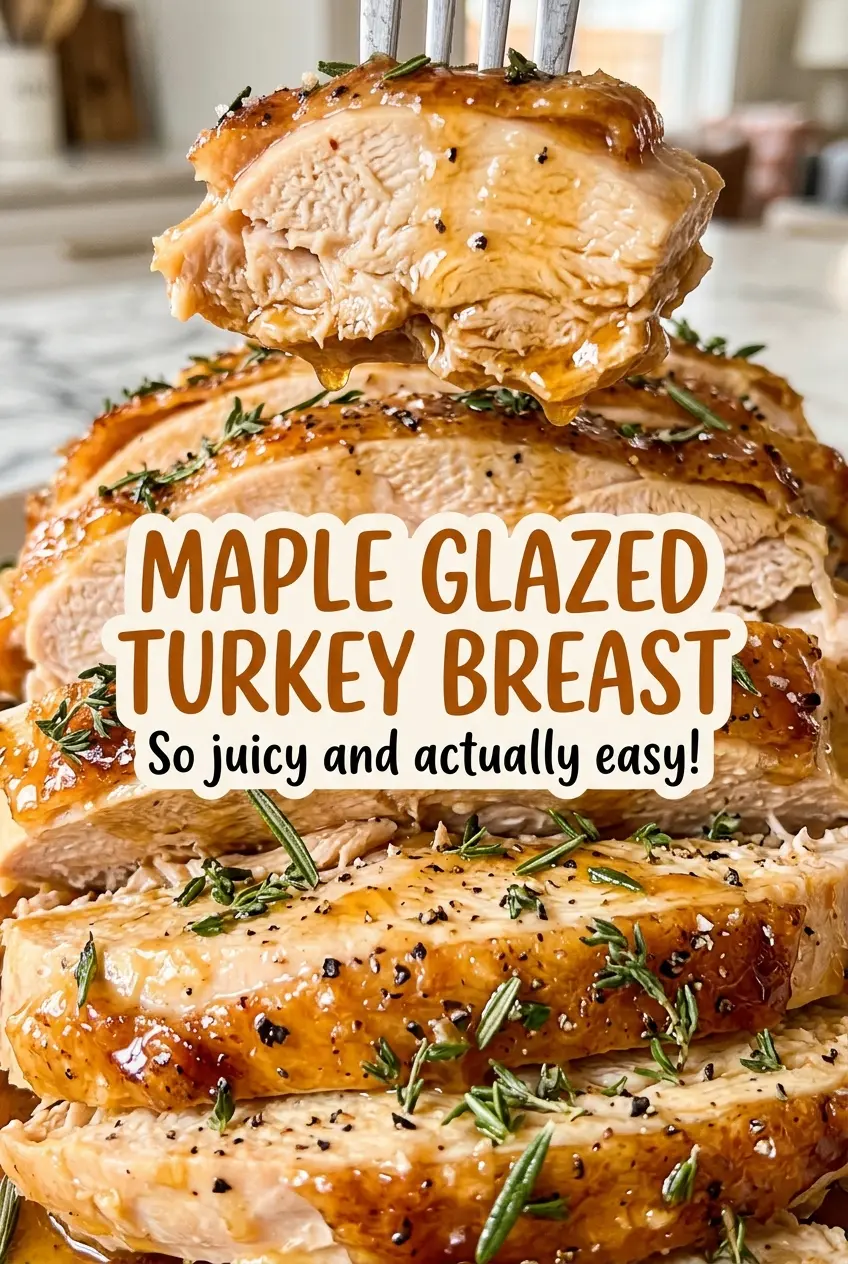
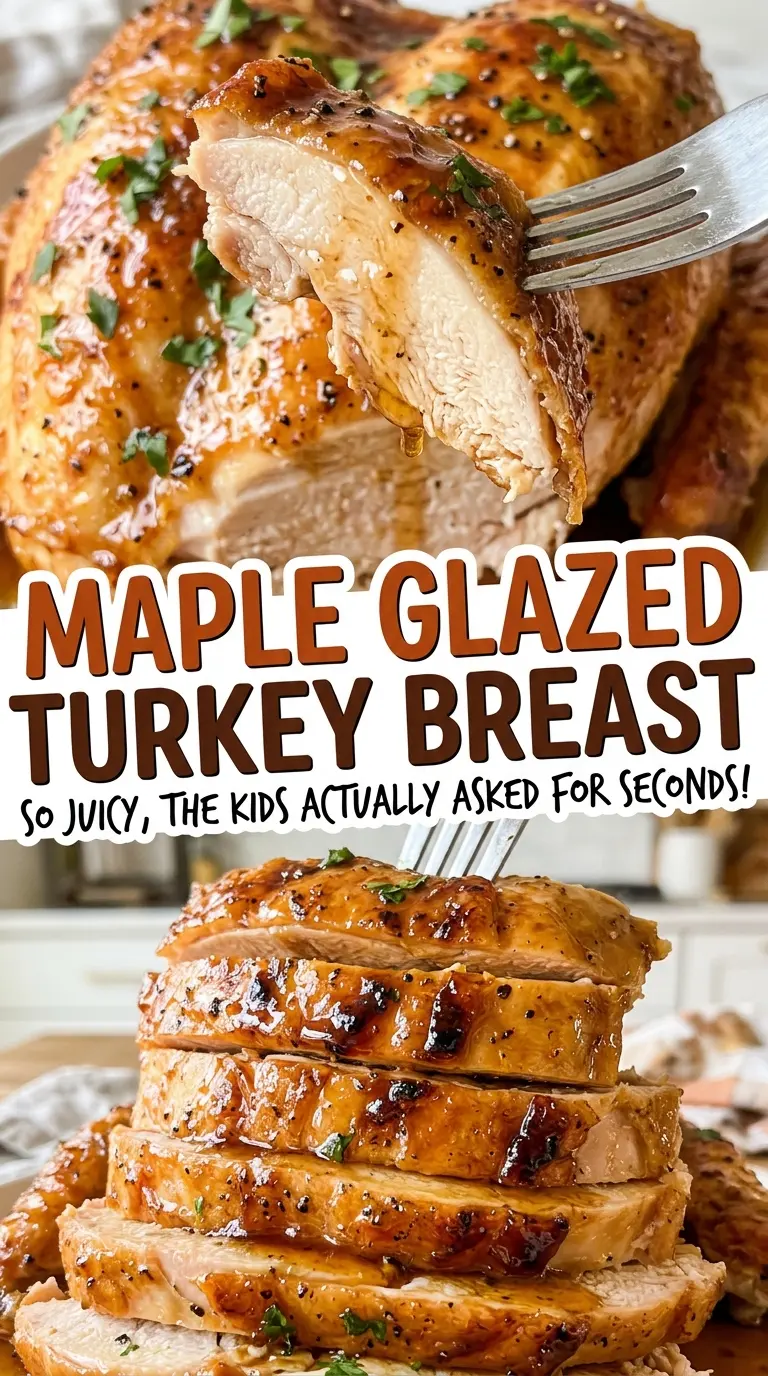
Give the turkey time to rest before carving; the slices stay easier to handle, and the skin keeps its lacquered finish. On the platter, the meat is tender and savory beneath a thin, sweet-tangy glaze.
Kitchen Note
Put the thermometer into the thickest part of the breast, but keep the tip away from the bone. A reading against bone won’t tell you the temperature of the meat accurately.
Save this Maple Glazed Turkey Breast for a roast with a glossy maple-Dijon finish and juicy slices beneath the skin.
Why Maple Glaze Belongs Near the End of the Roast
Maple syrup is full of sugar, which is exactly what gives the finished skin its shiny, concentrated coating. It also means the glaze can darken faster than the turkey cooks. Brushing it on from the start leaves the sweet coating exposed to oven heat for the entire roast, and it can go from deep golden to too dark before the meat is ready.
Waiting until the breast has already roasted most of the way through gives the glaze a shorter turn in the oven. The first brush-on layer gets a chance to cling to the skin, and the second adds another fresh coat near the finish. Dijon mustard and cider vinegar balance the maple, so the surface tastes sweet and tangy rather than like straight syrup. If the glaze starts darkening faster than you want, loosely tent the turkey with foil; don’t wrap it tightly, since you want the skin exposed rather than steamed.
What Maple, Dijon, and Butter Each Bring to the Glaze
- Bone-in, skin-on turkey breast — The bone helps anchor this roast’s shape, and the skin gives the glaze a surface to coat. Buy it fully thawed, as the center needs to roast evenly alongside the outside.
- Olive oil — A light coating helps the salt and pepper adhere to the skin. A basic olive oil works well here; there’s no need to use an expensive finishing oil.
- Kosher salt and black pepper — Salt seasons the meat beneath the skin, while pepper brings a little warmth to balance the sweet glaze. Kosher salt is easy to spread evenly by hand.
- Unsalted butter — Butter gives the glaze a rounded, rich finish. Unsalted butter keeps the seasoning in your control, and it melts smoothly into the maple mixture.
- Pure maple syrup — Its woodsy sweetness is the center of this glaze. Pure maple syrup has a cleaner, more complex taste than pancake syrup, which is usually sweeter and can bring a different texture.
- Dijon mustard and apple cider vinegar — Dijon adds savory sharpness, and vinegar cuts through the syrup’s sweetness. Both help the glaze taste balanced rather than candy-sweet.
- Dried thyme — Thyme gives the glaze a gentle herbal note that suits turkey. Dried leaves disperse easily through the warm butter and syrup.
Roasting the Breast Before the Maple Goes On
Set Up the Turkey for an Even Roast
Heat the oven to 325°F and set a rack inside a 9×13-inch roasting pan. Pat the thawed turkey breast dry, then place it skin side up on the rack. Rub the olive oil over the skin and season with kosher salt and black pepper. Drying the surface first keeps it from starting out damp beneath the oil.
Roast Until the Breast Is Nearly There
Roast the turkey uncovered until the thickest part reaches 145°F, which takes about 1 1/4 to 1 3/4 hours. Check the temperature in the thickest meat, not against the bone. The time is a useful window, but the thermometer reading is what tells you when to move on. While the turkey roasts, make the glaze so it’s ready when the breast reaches that point.
Simmer a Smooth Maple-Dijon Glaze
Melt the butter in a small saucepan over medium-low heat. Stir in the maple syrup, Dijon mustard, apple cider vinegar, and dried thyme, then simmer the mixture for 2 minutes. Keep the heat moderate so the butter melts gently and the syrup doesn’t catch on the bottom. Stir until the ingredients look evenly combined.
Brush in Two Coats, Then Rest
When the turkey reaches 145°F, brush half the glaze over the skin and return the pan to the oven for 15 minutes. Brush on the remaining glaze and continue roasting until the thickest part reaches 165°F, about 10 to 20 minutes more. If the glaze begins darkening too quickly, loosely tent the breast with foil. Rest it loosely covered for 15 to 20 minutes before carving.
Two Easy Ways to Change the Glaze Without Losing Its Balance
Make the glaze dairy-free
Use an equal amount of unsalted plant-based butter in place of the butter. It melts into the maple mixture and keeps the glaze cohesive, though the finish will taste a little less buttery.
Leave out the thyme for a cleaner maple finish
Omit the dried thyme from the glaze and keep the other ingredients the same. The maple, mustard, and vinegar come through more clearly, with less of the earthy herbal note.
Storage and Reheating
- Refrigerator: Store carved turkey in an airtight container for 3 to 4 days. The skin softens in the fridge, but the meat stays tender when covered.
- Freezer: Freeze carved portions in an airtight freezer-safe container for up to 2 to 3 months. Thaw them in the refrigerator before reheating.
- Reheating: Arrange slices in a baking dish with a small splash of water, cover, and warm in a 300°F oven until hot throughout. Leaving the dish uncovered or using high heat dries the breast quickly.
Questions That Come Up When Roasting a Turkey Breast
Maple Glazed Turkey Breast
Ingredients
Equipment
Method
- Preheat the oven to 325°F and set a rack in a 9x13-inch roasting pan.
- Pat the turkey dry and place it skin side up on the rack.
- Rub the turkey with the olive oil, salt, and pepper.
- Roast uncovered until the thickest part of the breast reaches 145°F, about 1 1/4 to 1 3/4 hours; insert the thermometer away from the bone.
- While the turkey roasts, melt the butter in a small saucepan over medium-low heat.
- Stir in the maple syrup, Dijon mustard, apple cider vinegar, and thyme, and simmer for 2 minutes.
- When the turkey reaches 145°F, brush half of the glaze over the skin and return the pan to the oven for 15 minutes.
- Brush the remaining glaze over the skin and roast until the thickest part reaches 165°F, about 10 to 20 minutes; tent loosely with foil if the glaze begins to darken too quickly.
- Rest the turkey loosely covered for 15 to 20 minutes before carving.