
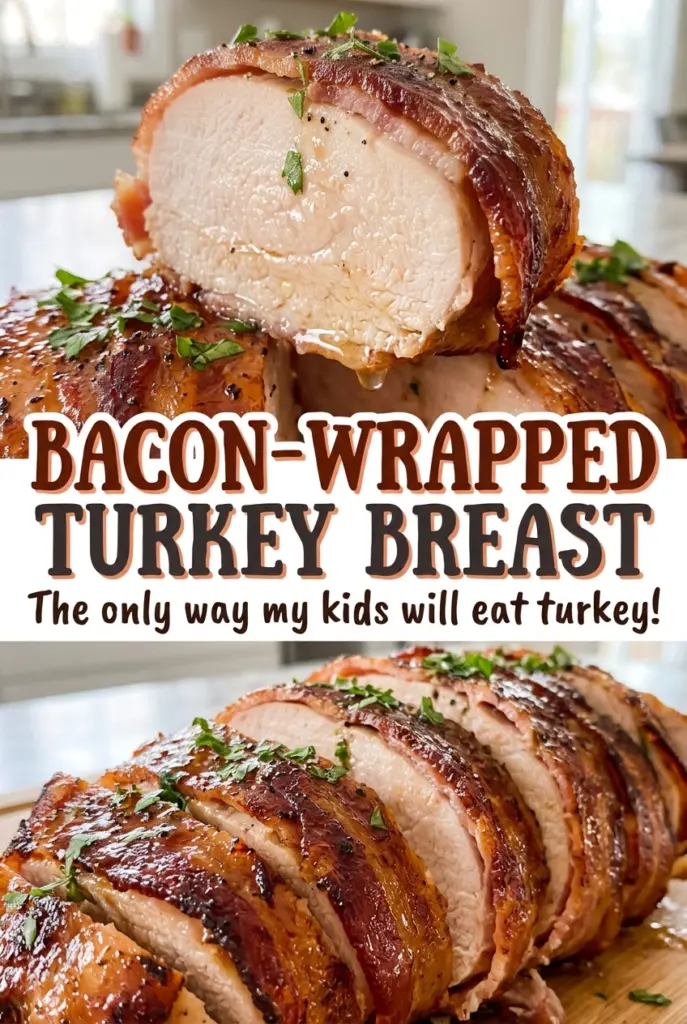
Bacon-Wrapped Turkey Breast
The bacon begins to brown well before the center of the turkey is ready, which is the part that can make this roast feel a little uncertain. I watch the…
Tip: save now, cook later.The bacon begins to brown well before the center of the turkey is ready, which is the part that can make this roast feel a little uncertain. I watch the color, but I don’t let it make the decision for me: a thermometer tells me when the thickest part has reached 165°F. That way, this bacon-wrapped turkey breast comes out cooked through without leaving it in the oven just to chase a darker crust.
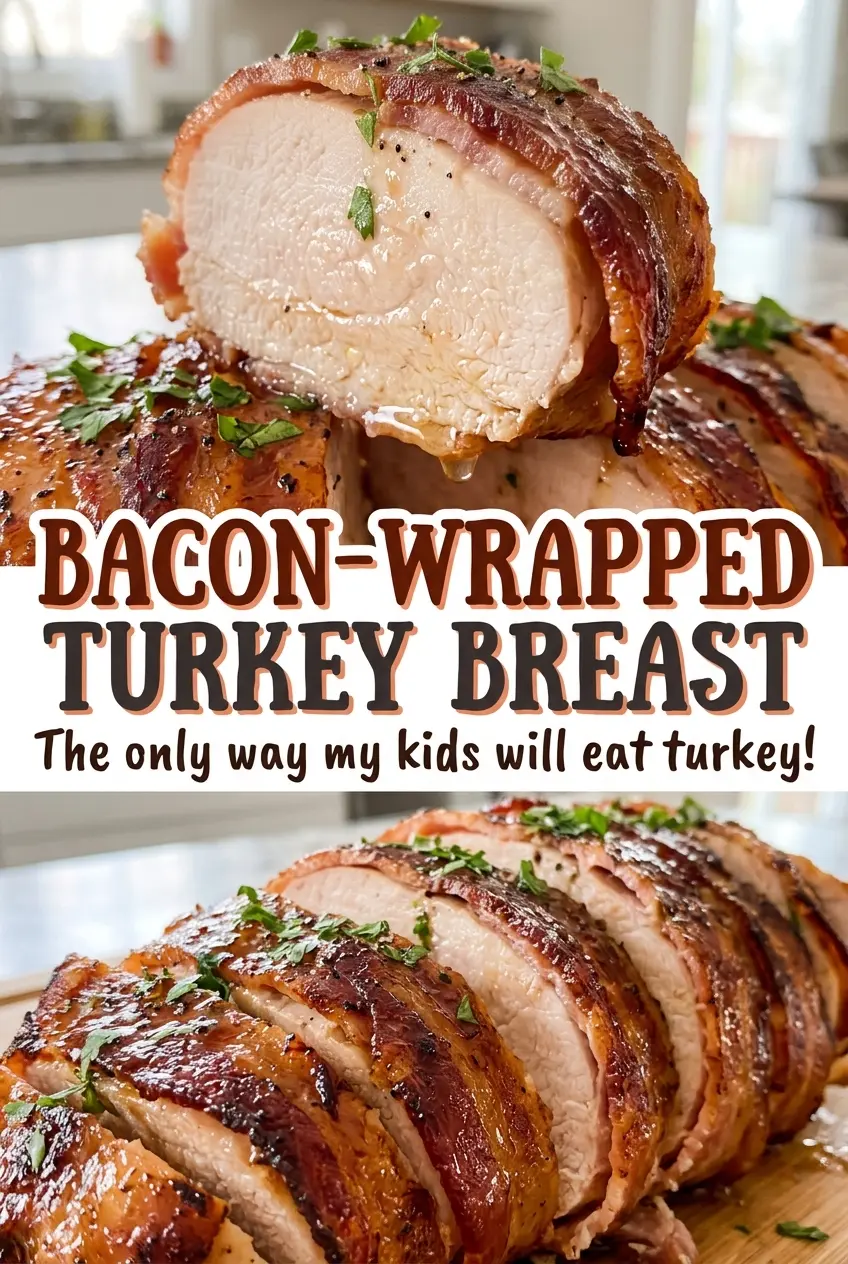
Softened butter gives the seasonings something to cling to, and overlapping the bacon keeps the roast covered as it cooks. I tuck the bacon ends underneath and set the roast seam-side down on a rack, so it stays in place while the turkey cooks. After a short rest, the bacon cuts neatly and the turkey slices cleanly for the table.
Kitchen Note
Let the butter soften until it spreads easily, but don’t melt it. Soft butter coats the turkey evenly, so you won’t have to tug at the surface while rubbing on the seasonings.
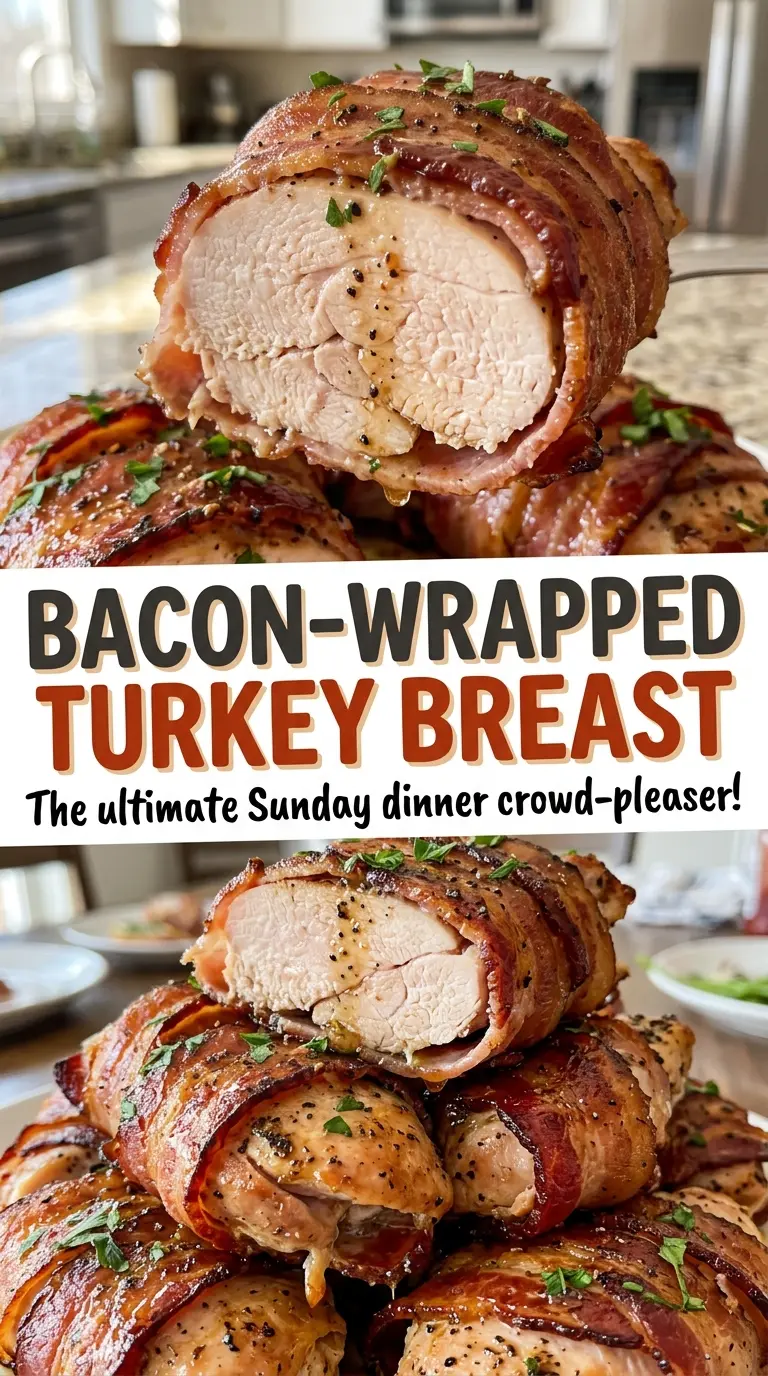
Save this bacon-wrapped turkey breast for a roast with browned bacon, savory thyme, and a juicy center.
Why the Bacon Can Look Ready Before the Turkey Is
Bacon color is a useful cue for the outside of the roast, but it can’t tell you what’s happening in the center. The slices are exposed to the hot oven and can turn deeply browned while the thickest part of the turkey still needs more time. If you wait for the turkey to be ready by judging the bacon alone, you’re guessing at doneness.
I use the thermometer reading in the thickest part as the deciding cue. If the bacon has already browned or is getting too dark before the turkey reaches 165°F, loosely tent the roast with foil and let it keep cooking. The foil slows further browning while the center finishes. Check the temperature after 50 minutes, then keep an eye on both the bacon and the thermometer reading as the roast approaches doneness.
This is also why a rack matters here: the roast sits above the bottom of the pan instead of resting in its drippings. You get a more even roast all around, and the bacon has room to brown rather than sitting against the pan.
What the Butter, Thyme, and Bacon Each Bring to This Roast
- Boneless, skinless turkey breast roast — A thawed roast with the netting removed gives you an even surface to butter, season, and wrap. Pat it dry before seasoning; a damp surface makes it harder to coat evenly. The boneless shape is also what this roasting time is built around, so I wouldn’t swap in a bone-in breast and expect the same timing.
- Unsalted butter — Softened butter carries the seasonings across the outside of the turkey and helps them stay in place while you wrap it. Unsalted butter lets the kosher salt remain the only added salt in the seasoning. I use it softened rather than melted for an even coating.
- Garlic powder and dried thyme — Both season the turkey directly under the bacon, where their savory flavor has time to settle into the roast. Dried thyme is handy here because it spreads evenly over the buttered surface without needing extra chopping or prep.
- Bacon — Overlapping slices cover the turkey and tuck underneath to hold the wrap together. Use slices that bend around the roast without tearing; a specialty bacon isn’t necessary. The bacon brings its own salt, which is another reason to keep the seasoning measured rather than adding extra salt by eye.
How to Wrap the Roast and Roast It Without Guessing
Set Up the Rack and Roasting Pan
Heat the oven to 400°F and set a wire rack inside a 9×13-inch roasting pan. The rack keeps the turkey raised above the pan as it roasts. Have the thawed turkey breast out of its netting and patted dry before you start seasoning. A dry surface is easier to coat without the butter sliding around.
Coat the Turkey in Butter and Seasoning
Rub the softened butter over the turkey breast, covering the outside in a thin, even layer. Sprinkle on the kosher salt, black pepper, garlic powder, and dried thyme so the seasoning is distributed across the roast rather than gathered in one spot. If the butter is too firm, it will drag at the surface; give it more time to soften instead of melting it. A lightly seasoned, evenly coated exterior is what you want before the bacon goes on.
Overlap the Bacon and Tuck the Ends
Lay the bacon slices over the turkey with their edges overlapping, then tuck the ends underneath the roast. Place it seam-side down on the rack so the bacon stays held against the turkey as it cooks. Check that the sides are covered and that no loose ends are sticking out. The overlapping wrap gives you a more continuous bacon layer than laying the slices side by side without overlap.
Roast Until the Center Reaches Temperature
Roast for 55 to 75 minutes, checking after 50 minutes. Look for browned bacon, then check the thickest part of the turkey with a thermometer; it needs to reach 165°F. If the bacon darkens before the center is ready, loosely tent the roast with foil and continue cooking. Transfer it to a cutting board and let it rest for 15 minutes before slicing.
Two Small Changes That Stay Within the Tested Roast
Choose lighter or fuller bacon coverage
Use 10 slices for a little less bacon on the outside, or up to 12 for more coverage around the roast. Keep the slices overlapping either way and tuck their ends underneath; the more covered version gives you more bacon in each slice, while the lighter wrap lets more of the seasoned turkey show.
Use either size in the roast’s tested range
A 2 1/2-pound roast gives you a slightly smaller centerpiece than a 3-pound one, while keeping the same seasoning and wrapping approach. The smaller roast may finish sooner, so use the thermometer rather than assuming it needs the full roasting time. The result is the same bacon-wrapped, thyme-seasoned turkey in a more modest size.
Storage and Reheating
- Refrigerator: Store leftovers covered for 3 to 4 days. The bacon will soften in the refrigerator, and the turkey may be a little less juicy after slicing.
- Freezer: Freeze sliced or whole leftovers in an airtight container or well-sealed freezer bag for up to 2 to 3 months. Thaw in the refrigerator before reheating for more even warming.
- Reheating: Warm slices covered in the microwave in short bursts, checking that they’re hot throughout. Avoid heating them uncovered for a long stretch; that dries out the lean turkey before the bacon can regain any crispness.
Questions I Get Asked About Bacon-Wrapped Turkey Breast
Bacon-Wrapped Turkey Breast
Ingredients
Equipment
Method
- Heat the oven to 400°F and set a wire rack inside a 9x13-inch roasting pan.
- Rub the softened butter over the turkey breast, then season it evenly with the kosher salt, black pepper, garlic powder, and dried thyme.
- Wrap the turkey with overlapping bacon slices, tucking the ends underneath, and place it seam-side down on the rack.
- Roast for 55 to 75 minutes, checking after 50 minutes, until the bacon is browned and the thickest part of the turkey reaches 165°F; loosely tent with foil if the bacon darkens before the turkey is done.
- Transfer the turkey to a cutting board and rest for 15 minutes before slicing.