
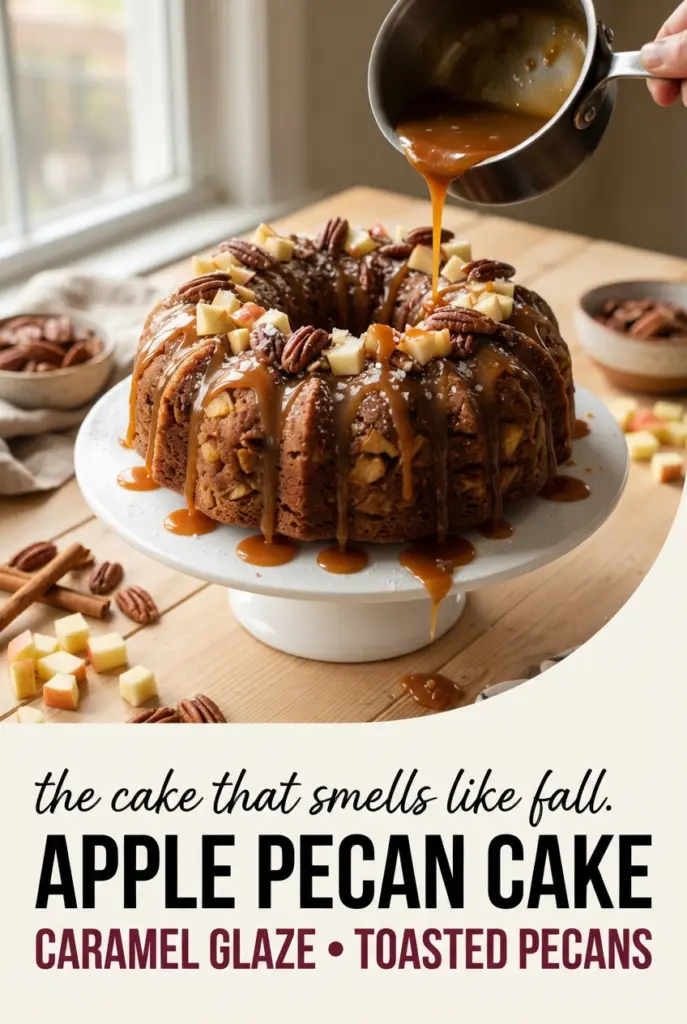
Apple Pecan Cake with Caramel Glaze
Apple pecan cake has a way of disappearing faster than almost any other Bundt cake on the table, and this version earns that kind of attention. The crumb stays soft…
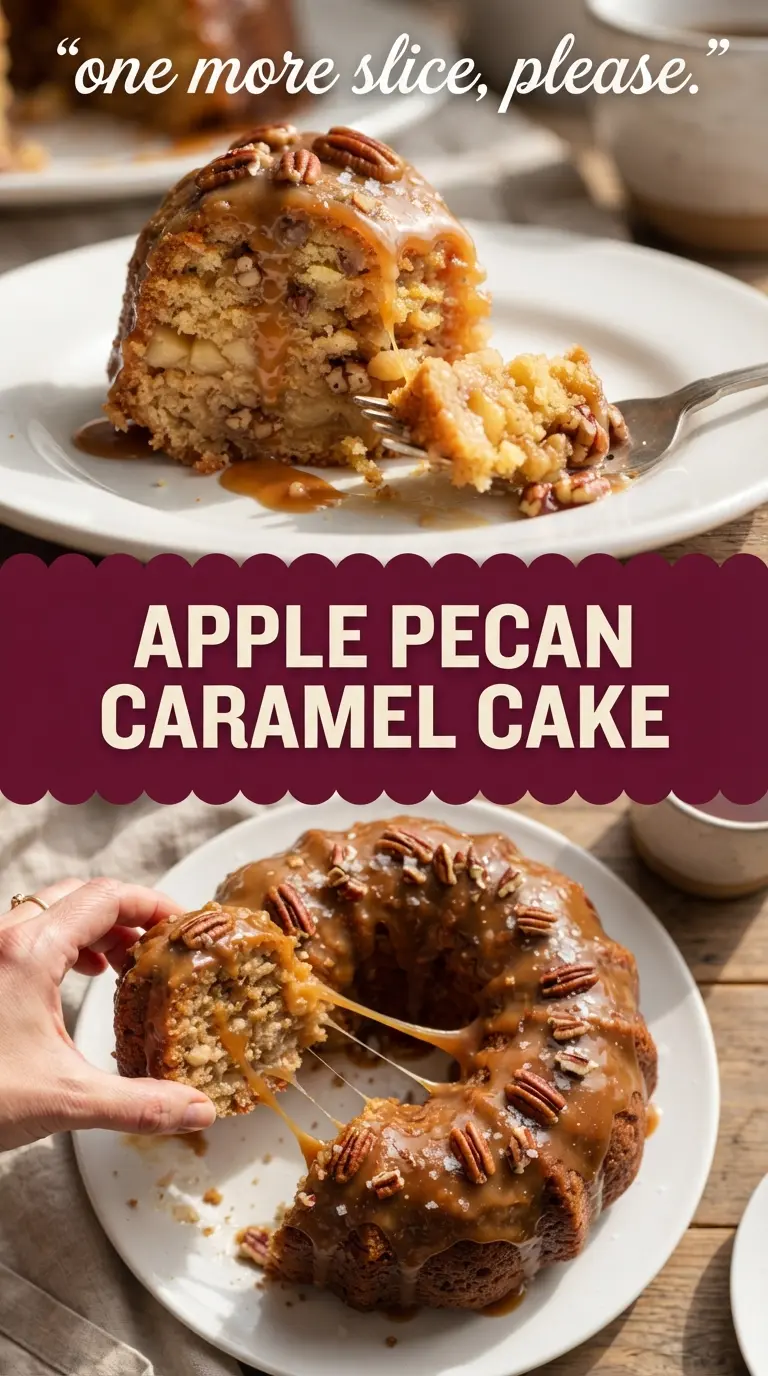
Tip: save now, cook later.Apple pecan cake has a way of disappearing faster than almost any other Bundt cake on the table, and this version earns that kind of attention. The crumb stays soft and moist for days thanks to the apples and oil, while the toasted pecans give every slice a little crunch. Then the warm caramel glaze sinks into the ridges and sets into a thin, glossy shell that cracks just slightly when you cut into it.
What makes this cake work is the balance. Granny Smith apples hold their shape and bring enough tartness to keep the cake from tasting heavy. Brown sugar goes into both the batter and the glaze, which gives the whole cake a deeper, almost butterscotch-like note instead of a plain sweet finish. I also like the apples diced fine, not chunky, because they melt into the crumb better and keep the cake sliceable.
Below, I’ll walk through the part that matters most: how to keep the Bundt from sticking, how to know when the glaze has cooked long enough, and what changes if you want to swap nuts or make the cake ahead.
The glaze set up into that thin, crackly layer I was hoping for, and the apples kept the cake super moist even on day three. My pan released cleanly too, which never happens with Bundts for me.
Save this apple pecan Bundt cake for the days when you want a moist, spiced dessert with a caramel glaze that soaks into every slice.
The Bundt Pan Is the Real Make-or-Break Here
With a cake this moist, the pan does more work than the oven. The apples and brown sugar make the crumb tender enough that any missed spot in the pan will turn into a broken edge when you unmold it. That’s why this recipe needs a thorough coat of grease and flour, especially in the center tube and every ridge.
The other thing that trips people up is underbaking a dense fruit cake because the top looks done before the middle is set. The batter here is thick, and the apples add moisture as they bake, so the skewer test matters more than color. Pull it when you get a few moist crumbs, not wet batter. If the skewer comes out clean, it’s already on the edge of overbaking.
- Grease the pan first, then dust it with flour so the coating reaches into the grooves.
- Let the cake rest 15 minutes before turning it out. Any shorter and it can tear; any longer and the sugar can glue it to the pan.
- Use room-temperature eggs so the batter emulsifies smoothly with the oil instead of looking streaky.
What Each Ingredient Is Actually Doing in This Cake
- Granny Smith apples — These stay a little firm even after baking, so the cake doesn’t turn mushy. If you use a sweeter apple, the cake will still work, but the flavor gets flatter and the crumb can soften more quickly. Dice them finely so they disappear into the batter instead of sinking.
- Vegetable oil — Oil keeps this cake tender long after it cools, which is why it still tastes moist on day two or three. Melted butter won’t give the same plush crumb here. If you want to swap, use another neutral oil with a mild flavor.
- Light brown sugar — It adds moisture and a caramel note that plain white sugar can’t match. The brown sugar in the glaze is what gives it that deep glossy finish. Pack it firmly when measuring so the cake and glaze don’t end up too thin.
- Toasted pecans — Toasting matters. Raw pecans taste muted, but toasted pecans bring a warm, nutty crunch that holds up in the soft crumb. If you skip the toast, the cake still works, but the flavor drops off fast.
Building the Batter and Cooking the Glaze at the Right Moment
Mix the dry ingredients first
Whisk the flour, baking soda, cinnamon, nutmeg, and salt before anything else so the spices don’t clump and the leavening disperses evenly. This cake is thick, and uneven mixing shows up as bitter pockets or a streaky crumb. You don’t need to overwork it; just get everything evenly combined.
Fold the flour in gently
Once the dry ingredients go into the oil and sugar mixture, switch to a spatula and stop as soon as the flour disappears. The batter will look stiff before the apples go in, and that’s normal. If you beat it hard, the cake turns tight instead of tender, and the pecans won’t have room to stay evenly distributed.
Watch the glaze for gloss, not just bubbles
The caramel glaze needs the full boil so the sugar dissolves and thickens properly. After three minutes, it should look glossy and slightly syrupy, not grainy or thin. If you pull it too early, it runs right off the cake; if you cook it too long, it turns sticky and hard instead of setting into that thin shell on top.
Pour while everything is warm
Warm cake plus warm glaze is the combination that lets the glaze sink into the ridges instead of sitting in a puddle. Pour slowly and keep moving around the cake so it drapes evenly. If the cake cools completely first, the glaze starts setting before it can settle into the surface.
Three Ways to Adjust This Cake Without Losing What Makes It Good
Make it gluten-free with a cup-for-cup flour blend
Use a good 1:1 gluten-free baking blend in place of the all-purpose flour. The cake will still be moist and rich, though the crumb may be a little more delicate when you slice it. Let it cool fully before unmolding so it has time to set.
Swap the pecans for walnuts or leave them out entirely
Walnuts bring a sharper, slightly bitter edge, while pecans stay sweeter and softer in flavor. If you leave the nuts out, the cake will still bake up well, but it loses some of its texture and the top will feel a little simpler. Toast whatever nut you use for the best flavor.
Make the glaze dairy-free with coconut cream
Use full-fat coconut cream in place of the heavy cream. The glaze will still thicken and coat the cake, but it picks up a faint coconut note and won’t taste exactly like classic caramel. It’s the best dairy-free swap if you want the glaze to keep its body.
Storage and Reheating
- Refrigerator: Keep covered for up to 5 days. The cake stays moist, though the glaze softens a little after the first day.
- Freezer: Freeze unfrosted or glazed slices wrapped tightly for up to 2 months. Thaw at room temperature so the glaze doesn’t sweat too much.
- Reheating: Warm individual slices for 10 to 15 seconds in the microwave. Don’t overheat it or the glaze turns sticky and the cake loses that tender texture.