
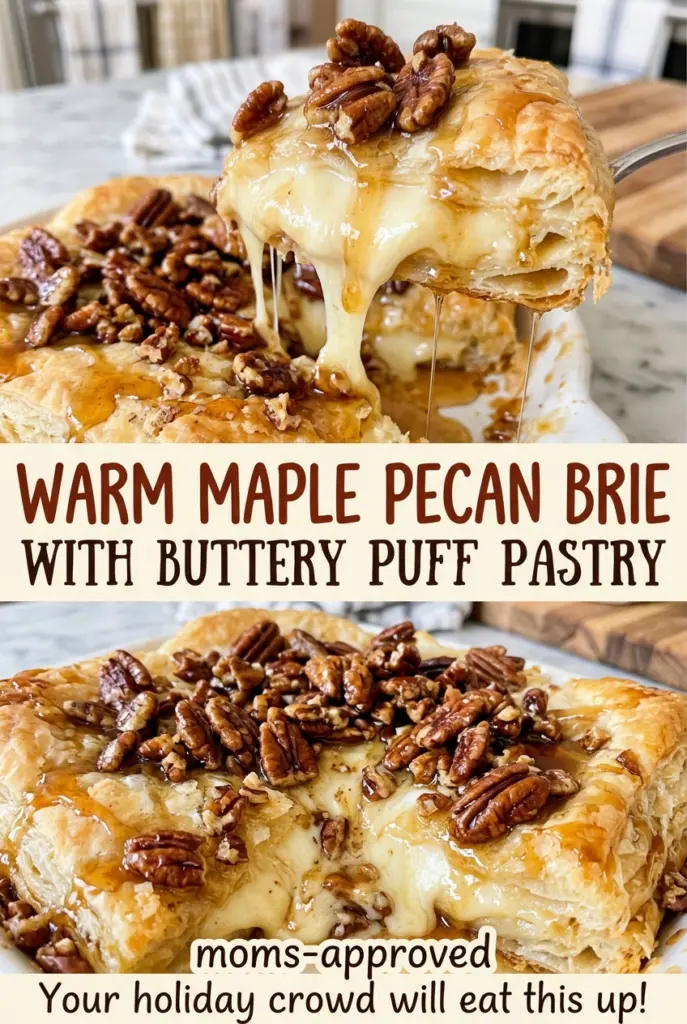
Warm Maple Pecan Brie with Buttery Puff Pastry
The pastry can look beautifully sealed before it goes into the oven, then spring a little opening at the folds as the Brie softens. I learned to pleat the edges…
Tip: save now, cook later.The pastry can look beautifully sealed before it goes into the oven, then spring a little opening at the folds as the Brie softens. I learned to pleat the edges instead of stretching the dough tight; those small folds give the pastry room to puff while keeping the maple-pecan topping tucked over the cheese. That’s what makes this warm maple pecan Brie with buttery puff pastry easy to bring to the table without a puddle of melted Brie on the baking sheet.
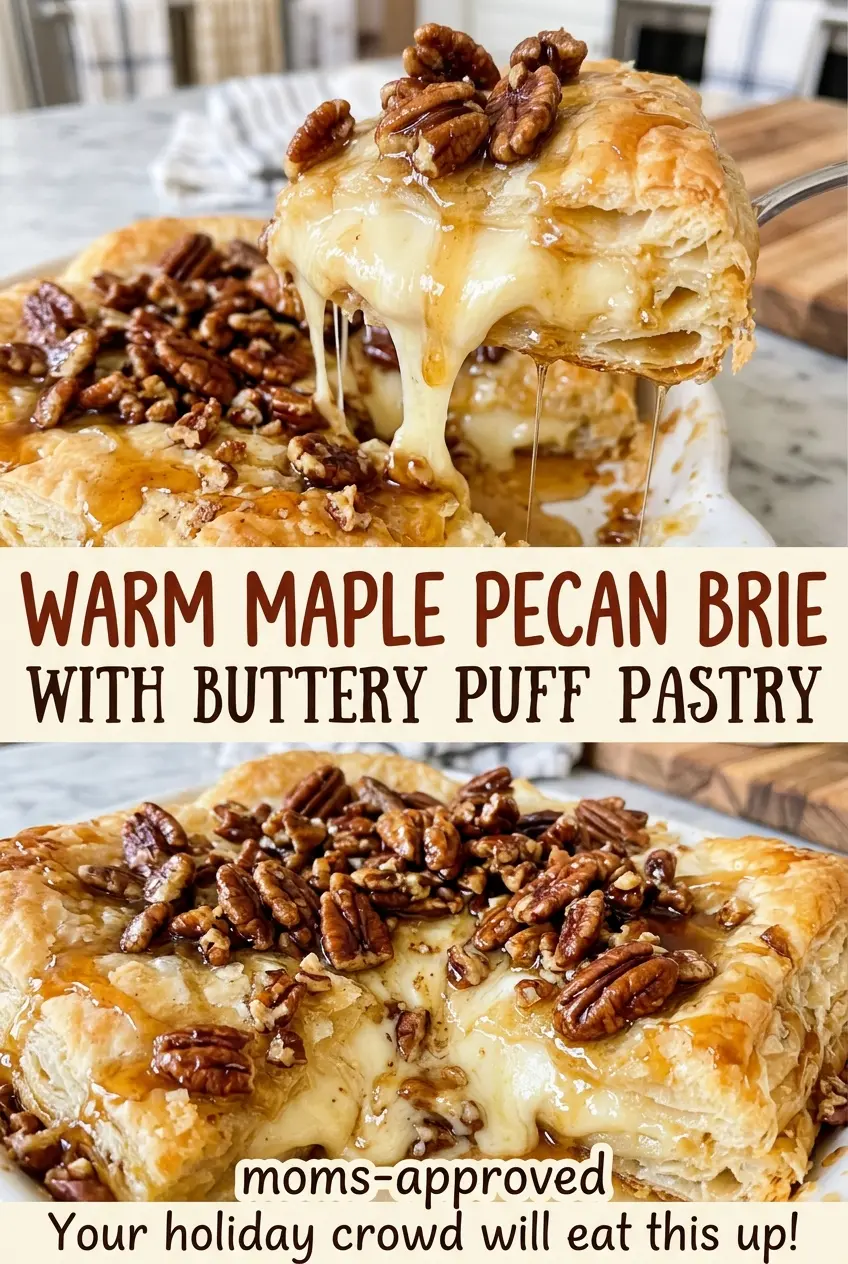
The topping gets a short turn in a skillet before it ever touches the pastry. Toasting the pecans in butter brings out their aroma, and the maple syrup and brown sugar cook down into a glossy coating that clings to the nuts instead of running straight into the dough. Spoon it over a chilled Brie wheel, wrap it in thawed pastry, and bake until the outside is deep golden. The center turns soft and spoonable beneath the crisp, buttery layers.
Kitchen Note
Brush the egg wash over the pastry without letting it pool in the pleats. A thin, even coat gives the folds a more uniform golden finish.
Save this warm maple pecan Brie for a golden, flaky appetizer with a soft center and buttery pastry.
Why the Maple-Pecan Topping Goes on Before the Pastry Is Wrapped
Putting the topping on the Brie first does more than make assembly convenient. The nuts sit against the cheese under the pastry, so each cut brings together creamy Brie, sweet maple, and toasted pecans instead of leaving all the topping on the outside. Cooking the mixture first also gives the sugar time to dissolve into the syrup and butter. Raw sugar sprinkled over the cheese wouldn’t coat the pecans in the same glossy, cohesive way.
There’s a balance to the filling, too. An 8-ounce wheel gives the pastry a substantial center without requiring an oversized sheet of dough, and the topping adds sweetness and crunch without changing the Brie into a dessert filling. Keep the cheese in one piece while you wrap it. Cutting it open or spreading it out would make the filling harder to contain once it softens.
This is a good appetizer to serve warm, when the Brie is soft enough to scoop but the pastry still has crisp edges. Letting it settle after baking helps the layers and filling hold together when you bring it to the table; cut or scoop into the center rather than pressing down hard on the pastry shell.
What the Brie, Pastry, and Maple Each Bring to the Center
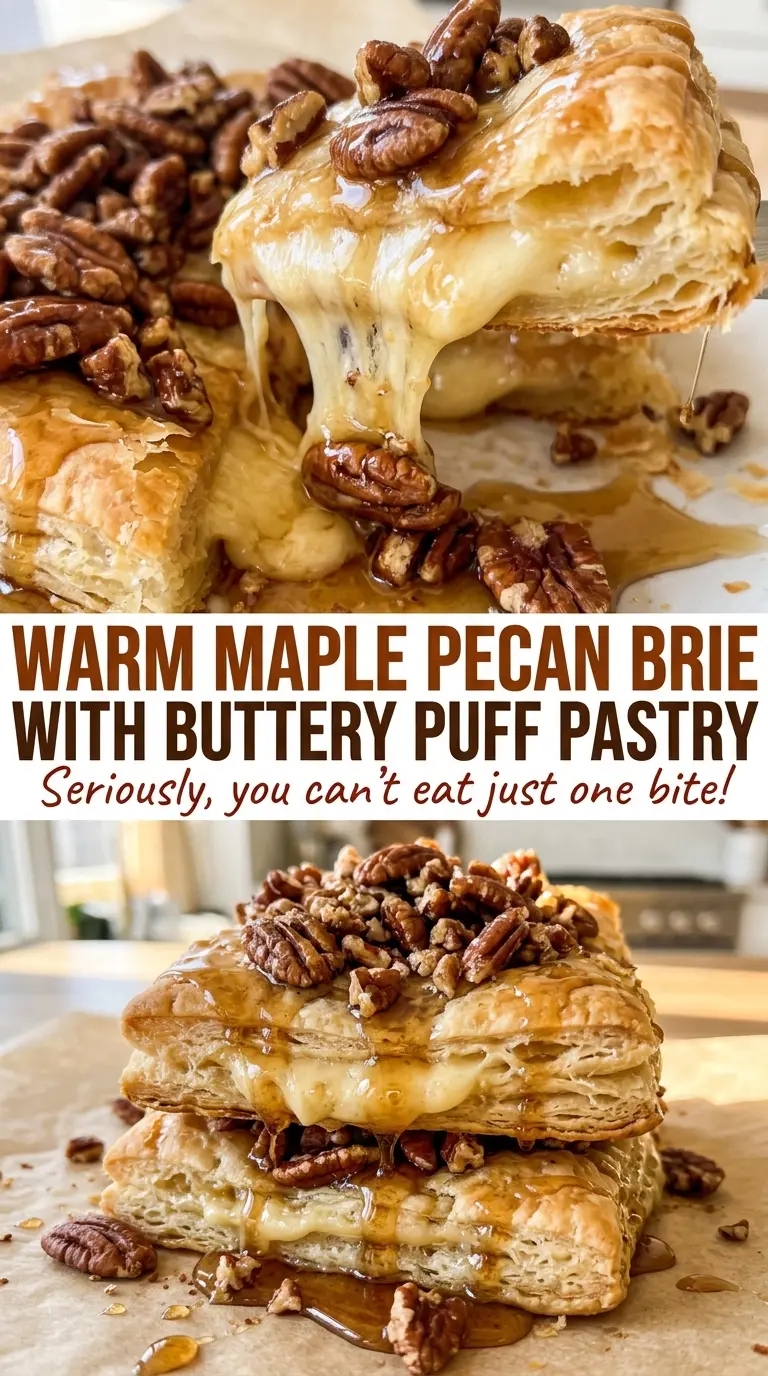
- Brie — An 8-ounce wheel gives you a creamy center that softens under the pastry while staying contained by its rind. Choose a wheel that feels intact rather than already bulging or split. Leave the rind on; it’s edible and helps the wheel keep its shape. For a gluten-free adaptation, use a gluten-free puff pastry sheet large enough to enclose the wheel, following that pastry’s thawing directions.
- Puff pastry — Frozen pastry from a 17.3-ounce package is convenient, and a standard sheet wraps around the Brie without making a separate dough. Thaw it until it unfolds without cracking, but keep it cool enough to handle; pastry that gets warm and sticky is harder to pleat and seal. Brand matters less than starting with an intact sheet.
- Pecans — Chopped pecans toast quickly and bring a buttery crunch that stands up to the soft cheese. Fresh nuts taste sweeter and less stale, but they don’t need to be an expensive specialty variety. Chopped walnuts work in the same amount if pecans aren’t available; they give the topping a slightly earthier taste.
- Pure maple syrup and light brown sugar — Maple syrup gives this topping its distinct woodsy sweetness, while brown sugar helps it thicken and cling to the nuts. Use pure maple syrup rather than pancake syrup for a cleaner maple flavor. Dark brown sugar can replace light brown sugar in the same amount, with a deeper molasses note.
- Unsalted butter and egg — Butter coats the pecans as they toast, and the beaten egg mixed with water helps the pastry brown. Salted butter works if that’s what you have; the topping will taste a little saltier. If you’re out of egg, brush the pastry with milk instead, knowing it will brown less deeply and won’t have quite the same sheen.
Build the Topping, Seal the Brie, and Bake Until Deep Gold
Toast the Pecans in Butter
Melt the butter in an 8-inch skillet over medium heat, then stir in the chopped pecans. Cook them for 2 to 3 minutes, stirring so they toast evenly rather than sitting in one spot. They’re ready when they smell fragrant; don’t wait for them to turn dark, since the nuts will continue cooking briefly in the hot pan. Stir in the maple syrup and brown sugar, then simmer for 1 minute until the mixture looks glossy and slightly thickened.
Cool the Topping Before It Meets the Pastry
Transfer the topping to a bowl and let it cool for 10 minutes. This gives the mixture a chance to settle and makes it easier to spoon over the Brie without handling a hot skillet beside the pastry. While it cools, heat the oven to 400°F and line a rimmed baking sheet with parchment paper. Keep the topping together in the bowl so it’s ready to place in the center.
Wrap the Brie Without Stretching the Dough
Set the thawed puff pastry on the prepared baking sheet and place the chilled Brie in its center. Spoon the cooled topping over the wheel, then bring the pastry up and over the Brie. Pleat the edges and pinch them together to seal; if you pull the sheet tight, the pastry has less room to puff and the folds are more likely to separate. Beat the egg with the water and brush the mixture over the pastry.
Bake for Color, Then Let the Brie Settle
Bake for 25 to 30 minutes, until the pastry is puffed and deep golden brown. A pale surface usually needs more time; look at the folds as well as the top so you don’t pull it out while the tucked edges are still underbaked. Move the baking sheet carefully, since the filling will be soft inside the shell. Rest the Brie for 10 minutes before serving.
Easy Changes for Different Nuts, Sweetness, and Dietary Needs
A Gluten-Free Pastry Shell
Use one sheet of gluten-free puff pastry that’s large enough to wrap the Brie, and thaw it according to the package directions. The pastry may be more delicate to fold, so pinch the seams gently instead of tugging them into place. Bake until puffed and deep golden; gluten-free brands can brown at a different pace.
A Honey-Sweetened Topping
Replace the maple syrup with the same amount of honey and cook it with the brown sugar as usual. Honey makes the topping taste more floral and less distinctly maple, while still giving the pecans a glossy coating. Keep the simmer brief so the mixture doesn’t become stiff as it cools.
A More Savory, Woodsy Finish
Stir a little finely chopped fresh rosemary into the warm topping after it comes off the heat. Its piney aroma cuts through the sweetness and pairs naturally with the toasted pecans and rich Brie. Start with a small pinch; too much rosemary can take over the delicate maple flavor.
Storage and Reheating
- Refrigerator: Refrigerate leftovers within 2 hours and keep them covered for 3 to 4 days. The pastry softens as it sits, though the filling stays creamy.
- Freezer: Freezing baked leftovers isn’t recommended; thawed pastry loses its crisp layers and the Brie can turn grainy.
- Reheating: Warm leftover portions in a 300°F oven until heated through. The microwave is faster but softens the pastry, so it’s not the best choice when you want the outside to stay crisp.
The Questions That Come Up Before Baking Brie in Pastry
Warm Maple Pecan Brie with Buttery Puff Pastry
Ingredients
Equipment
Method
- Melt the butter in an 8-inch skillet over medium heat.
- Add the pecans and cook, stirring, for 2 to 3 minutes until fragrant.
- Stir in the maple syrup and brown sugar and simmer for 1 minute until glossy and slightly thickened.
- Transfer the topping to a bowl and cool for 10 minutes.
- Heat the oven to 400°F.
- Line a rimmed baking sheet with parchment paper.
- Place the puff pastry on the prepared baking sheet and set the Brie in the center.
- Spoon the cooled topping over the Brie.
- Fold the pastry over the Brie and topping, pleating and pinching the edges to seal.
- Beat the egg with the water.
- Brush the egg mixture over the pastry.
- Bake for 25 to 30 minutes until the pastry is puffed and deep golden brown.
- Rest for 10 minutes before serving.