
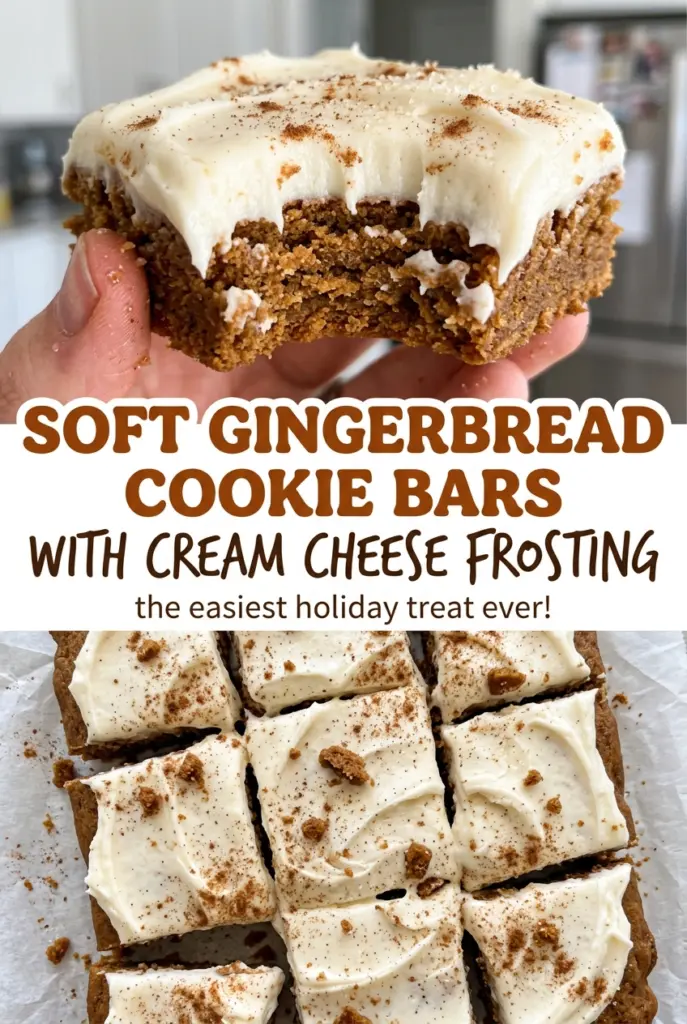
Soft Gingerbread Cookie Bars with Cream Cheese Frosting
The dough for these bars lands in the 9x13-inch pan as a thick, sticky layer, not a pourable batter. I press it into the corners with a spatula, then let…
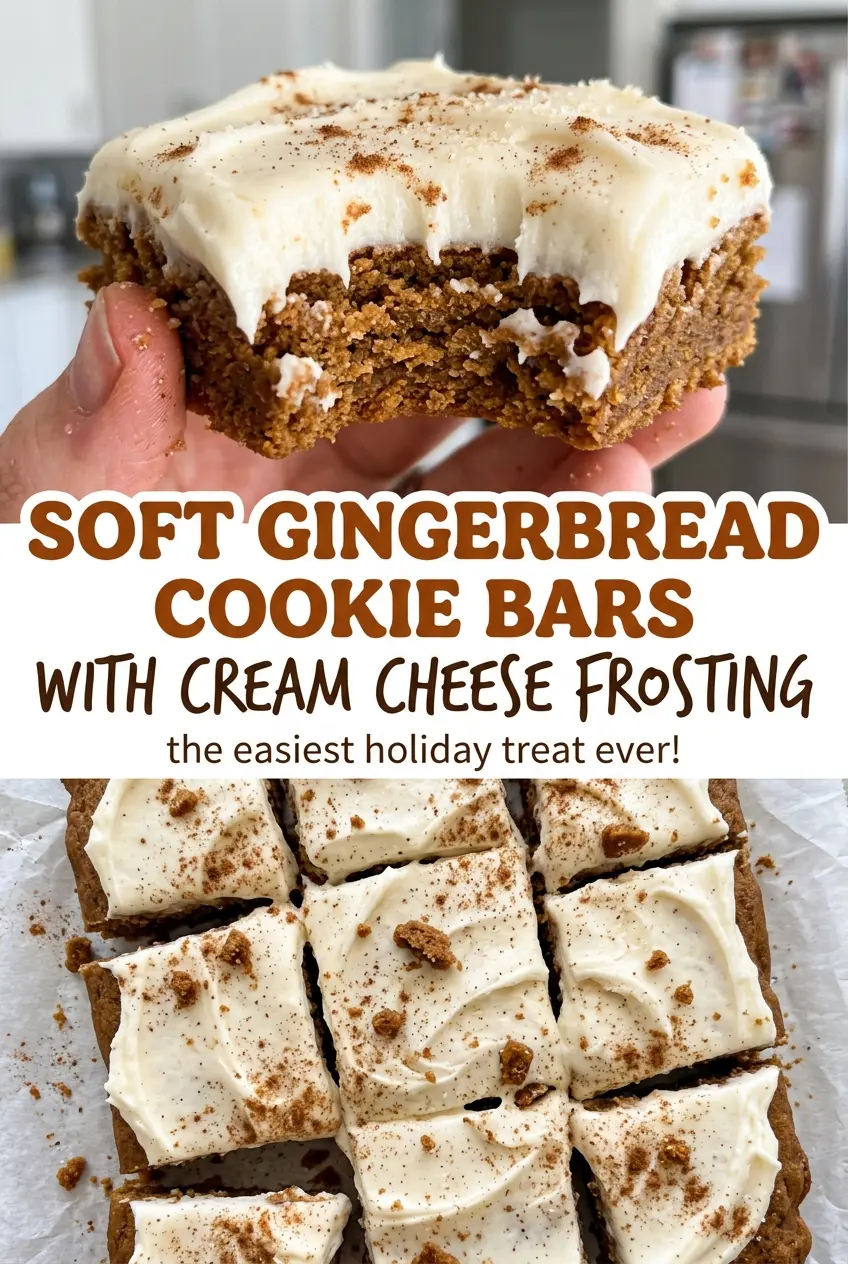
Tip: save now, cook later.The dough for these bars lands in the 9×13-inch pan as a thick, sticky layer, not a pourable batter. I press it into the corners with a spatula, then let the oven turn it into a soft gingerbread slab that’s easy to frost and slice. These soft gingerbread cookie bars bring the warm spice of gingerbread without rolling or cutting individual cookies.
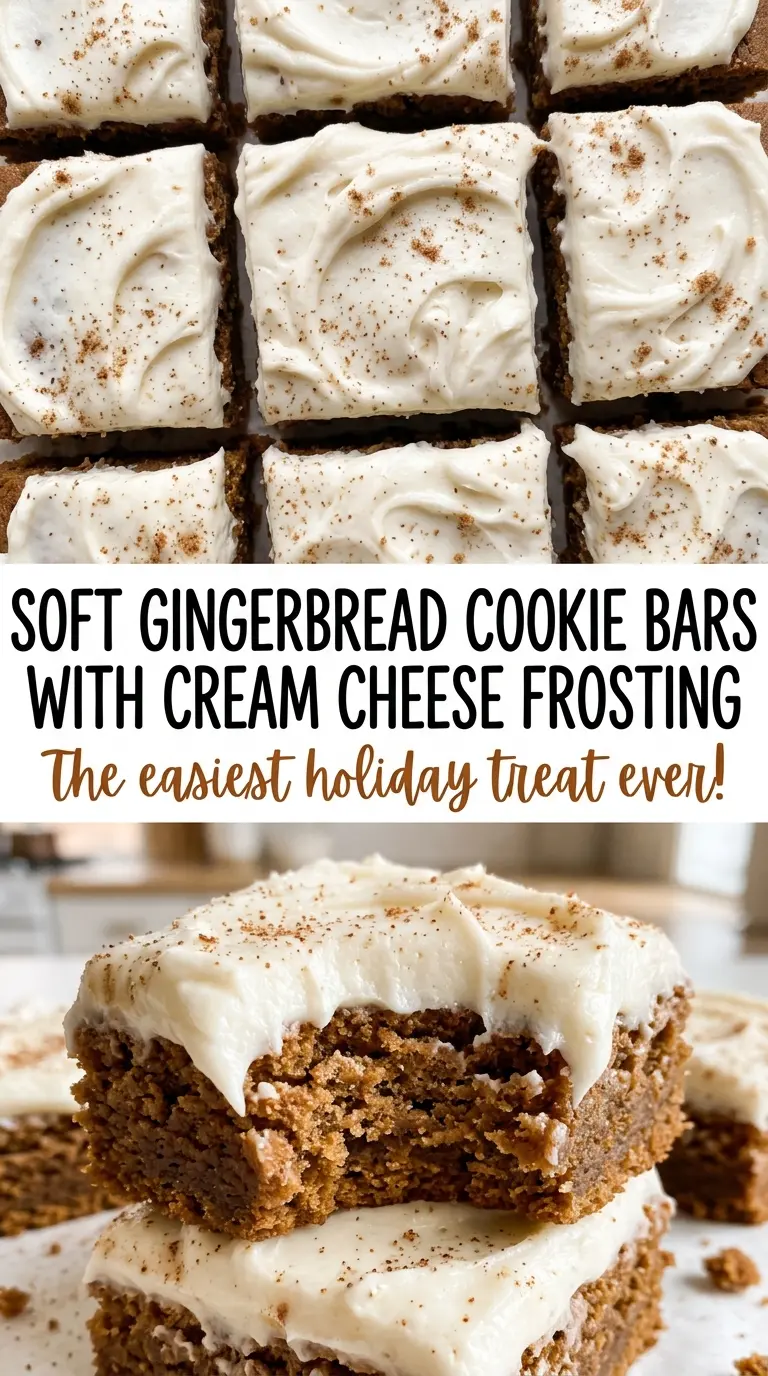
Molasses gives the bars their deep gingerbread flavor, while brown sugar keeps the crumb tender. The cream cheese frosting adds a cool, tangy contrast, and spreading it over one cooled slab is much less fussy than frosting cookies one by one. Each square has a soft middle beneath a smooth layer of frosting.
Kitchen Note
Don’t wait for a completely clean toothpick. A few moist crumbs are the cue to pull the pan; the bars stay softer than they will if you keep baking until the tester is dry.
Save these soft gingerbread cookie bars for a bake when you want cozy spice, tender squares, and a smooth cream cheese frosting.
Why Molasses Makes These Bars Tender, Not Crisp
Gingerbread flavor doesn’t come from the spices alone. Unsulfured molasses brings a deep, slightly bittersweet note and contributes moisture to the dough; packed brown sugar adds its own caramel-like flavor and helps keep the baked bars soft. Together, they make a bar with a richer, more tender bite than a dry, crisp ginger cookie.
The pan format matters, too. The dough is spread as one even layer, so you get a substantial soft center instead of the thin edges and varied sizes that come with individual cookies. That thick dough is supposed to feel firm and sticky when you spread it. It doesn’t need to pour or flow like cake batter, and adding liquid to loosen it would throw off the texture. Keep the dough in the 9×13-inch pan and spread it evenly for bars that bake at a consistent thickness.
What Molasses, Brown Sugar, and Cream Cheese Bring to the Pan
- Unsulfured molasses — This is the strongest defining flavor in the bars, so use the unsulfured kind rather than a darker, more bitter style. A standard grocery-store bottle works well; there’s no need to seek out a specialty brand. Measure it carefully, since it adds both flavor and moisture.
- Light brown sugar — Packed brown sugar gives the dough a mellow caramel note that pairs with the molasses. Keep it light brown for the balanced flavor here; darker brown sugar would make the molasses character more pronounced.
- Ground ginger, cinnamon, and cloves — Ginger leads, cinnamon rounds out the spice, and cloves add a little depth. Fresh, fragrant spices make a noticeable difference in a recipe built around warm spice, while a regular store brand is fine if the jars still smell lively.
- Unsalted butter — Softened butter creams with the sugar and helps give the bars their tender structure. It should yield when pressed but not look oily or melted. Unsalted butter also lets the measured salt stay in balance.
- Cream cheese and powdered sugar — Cream cheese gives the frosting its gentle tang, while powdered sugar makes it thick enough to spread. Use both softened butter and softened cream cheese for a smoother frosting; cold cream cheese is more likely to leave small lumps.
- Egg and vanilla — The egg brings the dough together, and vanilla rounds out the molasses and spice. Use a large egg, as listed, and add the vanilla with the wet ingredients so it distributes evenly.
From Thick Dough to Frosted Gingerbread Squares
Whisk the spices through the flour
Heat the oven to 350°F and line a 9×13-inch baking pan with parchment, leaving overhang on two opposite sides. Whisk the flour, baking soda, ginger, cinnamon, cloves, and salt in a medium bowl until the spices look evenly distributed. Breaking up any little clumps now helps avoid pockets of baking soda or spice in the finished bars.
Cream the butter and brown sugar
Beat the softened butter and packed light brown sugar in a large bowl with an electric mixer on medium speed for about 2 minutes. The mixture should look lighter and fluffy rather than dense and greasy. Beat in the egg, molasses, and vanilla until they’re combined. If the mixture looks a little uneven while you add the molasses, keep beating until it comes together.
Mix and spread the dough
Add the flour mixture in two additions, mixing on low after each one. Stop as soon as no dry streaks remain; continuing to beat after the flour disappears can make the bars tougher. The dough will be thick. Spread it evenly in the prepared pan, working it into the corners without packing it down hard.
Bake, then cool the slab completely
Bake for 20 to 24 minutes, until the top is set. The center should no longer look wet, but the bars are meant to stay soft rather than bake until firm all the way through. Let the pan cool completely, about 1 1/2 hours, before lifting the slab out by the parchment overhang. Frosting a warm slab will soften the frosting and make it harder to spread neatly.
Beat the frosting and finish the bars
Beat the softened cream cheese and butter in a medium bowl until smooth. Add the powdered sugar gradually, beating until smooth after it’s incorporated, then beat in the vanilla. Spread the frosting evenly over the cooled slab. Cut into 24 pieces once the frosting is in place, using the parchment to keep the bars steady as you work.
Three Simple Ways to Adjust the Gingerbread Bars
A gluten-free pan of bars
Replace the all-purpose flour with the same amount of a cup-for-cup gluten-free baking blend made for baking. The bars may be a little more delicate, so let the slab cool fully before lifting it from the pan. The gingerbread flavor and cream cheese topping stay much the same.
A gentler spice finish
Leave out the ground cloves if you prefer a milder gingerbread flavor. The ginger and cinnamon will still come through, but the bars lose the deeper, slightly peppery edge that cloves bring.
A lighter frosting layer
For a less sweet finish, spread a thinner layer of the prepared frosting over the slab and keep any extra covered in the refrigerator. You’ll get more gingerbread in each bite and a less prominent cream cheese finish.
Storage and Reheating
- Refrigerator: Store frosted bars in an airtight container for up to 4 days. The frosting firms up when chilled.
- Freezer: Freeze the unfrosted slab, wrapped tightly, for up to 2 months. Thaw it in the refrigerator before frosting and cutting.
- Reheating: These bars don’t need reheating. Let a piece soften briefly at room temperature if you prefer a softer bite; microwaving can make the frosting runny.
Questions That Come Up Before the First Batch
Soft Gingerbread Cookie Bars with Cream Cheese Frosting
Ingredients
Equipment
Method
- Heat the oven to 350°F.
- Line a 9x13-inch baking pan with parchment paper, leaving overhang on two opposite sides.
- Whisk the flour, baking soda, ginger, cinnamon, cloves, and salt in a medium bowl.
- Beat the softened butter and brown sugar in a large bowl with an electric mixer on medium speed until light and fluffy, about 2 minutes.
- Beat in the egg, molasses, and vanilla until combined.
- Add the flour mixture in two additions, mixing on low just until no dry streaks remain.
- Spread the thick dough evenly in the prepared pan.
- Bake for 20 to 24 minutes, until the top is set and a toothpick inserted in the center comes out with a few moist crumbs.
- Cool completely in the pan, about 1 1/2 hours.
- Lift the bars out using the parchment overhang.
- Beat the cream cheese and softened butter in a medium bowl until smooth.
- Add the powdered sugar gradually and beat until smooth.
- Beat in the vanilla.
- Spread the frosting evenly over the cooled bars.
- Cut into 24 pieces.