
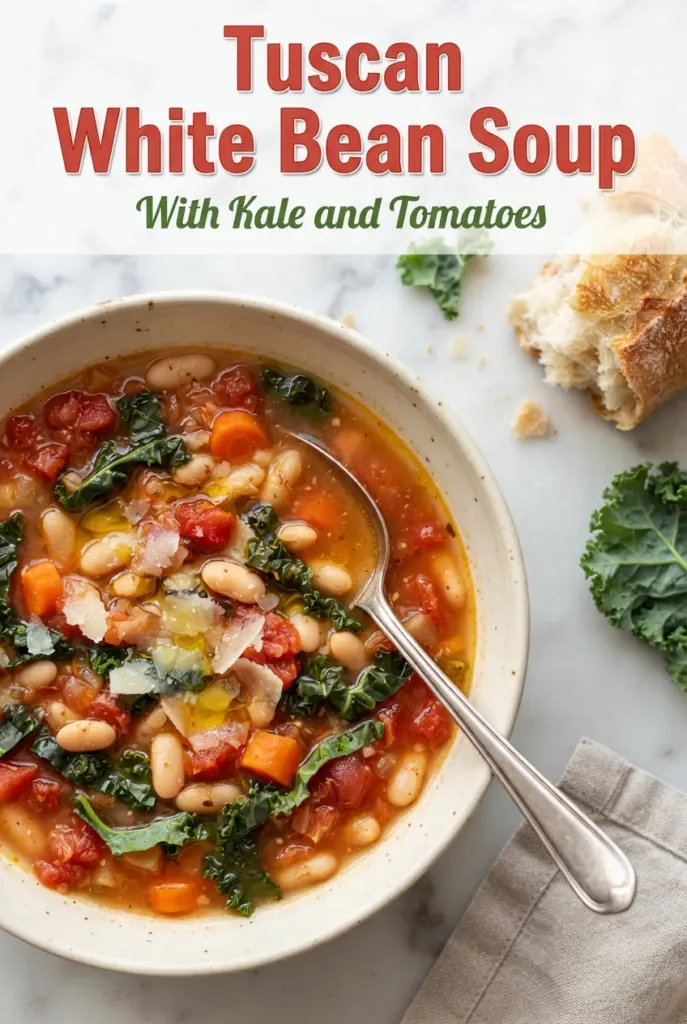
Tuscan White Bean Soup
Creamy cannellini beans, tender greens, and a brothy tomato base give Tuscan white bean soup the kind of comfort that still feels light enough for any night of the week.…
Tip: save now, cook later.Creamy cannellini beans, tender greens, and a brothy tomato base give Tuscan white bean soup the kind of comfort that still feels light enough for any night of the week. The best bowls have a little texture from the beans, a savory backbone from the Parmesan rind, and a bright finish from lemon that keeps the whole pot from tasting flat. It’s the sort of soup that tastes like it simmered all afternoon, even though most of the work happens in one pot.
What makes this version worth keeping is the way the flavor gets built in layers. The onion, carrots, and celery cook until sweet and soft before the garlic and Italian seasoning go in, which keeps the soup from tasting raw or harsh. Then the beans, tomatoes, broth, and rind simmer together long enough for the broth to pick up body without turning heavy. A quick mash of a few beans near the end gives the soup a creamier texture without adding cream.
Below you’ll find the small details that matter most: how to keep the greens tender instead of dull, why the lemon goes in at the end, and the easiest way to make the broth taste deeper if your Parmesan rind is on the small side.
The broth had so much depth from the Parmesan rind, and mashing a few beans made it creamy without getting heavy. My husband went back for seconds and asked if there was enough left for lunch tomorrow.
Tuscan white bean soup is even better the next day, so pin it now for a brothy, cozy dinner that reheats beautifully.

The Reason This Soup Tastes Like It Simmered Longer Than It Did
The biggest mistake with bean soup is rushing the base. If the onion, carrot, and celery never soften fully, the broth tastes thin and the vegetables keep their sharp edge. Give them time until the onion turns translucent and the carrots lose their raw crunch; that gentle sweetness is what makes the finished soup taste rounded instead of flat.
The other thing that matters is using the Parmesan rind correctly. Drop it into the pot early so it has time to perfume the broth, but don’t rely on it alone to season the soup. It adds depth and a savory, almost nutty finish, while the lemon and salt at the end keep the whole pot awake.
- Cannellini beans — These break down into a naturally creamy broth when you mash a few at the end. Great Northern beans work too, but cannellini are a little softer and smoother.
- Parmesan rind — This is the quiet backbone of the soup. If you don’t have one, a spoonful of finely grated Parmesan stirred in at the end helps, but it won’t give the same simmered depth.
- Kale — Add it near the end so it stays tender and green. Lacinato kale holds up best, but curly kale works if that’s what you have.
- Lemon juice — This isn’t optional if you want the soup to taste finished. It lifts the broth and keeps the beans from tasting heavy.
Building the Broth Before the Beans Take Over
Softening the Aromatics
Warm the olive oil first, then cook the onion, carrots, and celery over medium heat until the onion is translucent and the carrots have softened at the edges. You’re looking for a gentle sizzle, not browning; if the vegetables start to color hard, the soup can turn a little muddy instead of clean and brothy. Stir in the garlic, Italian seasoning, and red pepper flakes just long enough for the garlic to smell fragrant.
Letting the Pot Simmer Into Itself
Add the tomatoes, beans, broth, Parmesan rind, and bay leaf, then bring everything up to a boil before lowering it to a steady simmer. This is the part where the soup starts tasting like one thing instead of a list of ingredients. Give it about 20 minutes so the broth takes on the rind’s savory flavor and the tomatoes lose their sharp edge. If the simmer is too hard, the beans can start breaking apart too soon.
Finishing With Texture and Brightness
Pull out the bay leaf and rind, then mash a few beans against the side of the pot to thicken the broth slightly. Stir in the kale and cook just until it turns tender and darker green; overcooked kale gets drab and bitter. Finish with lemon juice, salt, and black pepper after the heat has done its work, because acid tastes brighter when it’s not boiled away.
How to Adapt This for Different Kitchens and Diets
Make It Dairy-Free Without Losing Depth
Skip the Parmesan rind and finish with a little extra salt plus a drizzle of good olive oil. The soup will still be hearty and satisfying, but it will lean more herbal and tomato-forward instead of savory and cheesy. If you want a deeper base, add a splash of soy sauce or a spoonful of white miso to the broth.
Use Swiss Chard or Spinach Instead of Kale
Swiss chard is the closest swap if you want something tender but still sturdy. Spinach works too, but it wilts fast and disappears into the broth, so add it at the very end and serve right away. Both are softer than kale, so the soup will feel lighter and less rustic.
Make It Heartier With Sausage or Chicken
Brown sliced Italian sausage or shredded cooked chicken before the aromatics, then build the soup in the same pot. The meat adds richness and turns the soup into a fuller dinner, but it will cover some of the delicate bean-and-herb flavor. Keep the lemon at the end so the broth still tastes balanced.
Storage and Reheating
- Refrigerator: Store in an airtight container for up to 4 days. The beans will continue to soften and the broth will thicken a bit as it sits.
- Freezer: This soup freezes well for up to 3 months. Cool it completely first, then leave a little space at the top of the container for expansion.
- Reheating: Warm gently on the stove over medium-low heat with a splash of broth or water if needed. Don’t boil it hard, or the kale will overcook and the beans can turn pasty.
Answers to the Questions Worth Asking
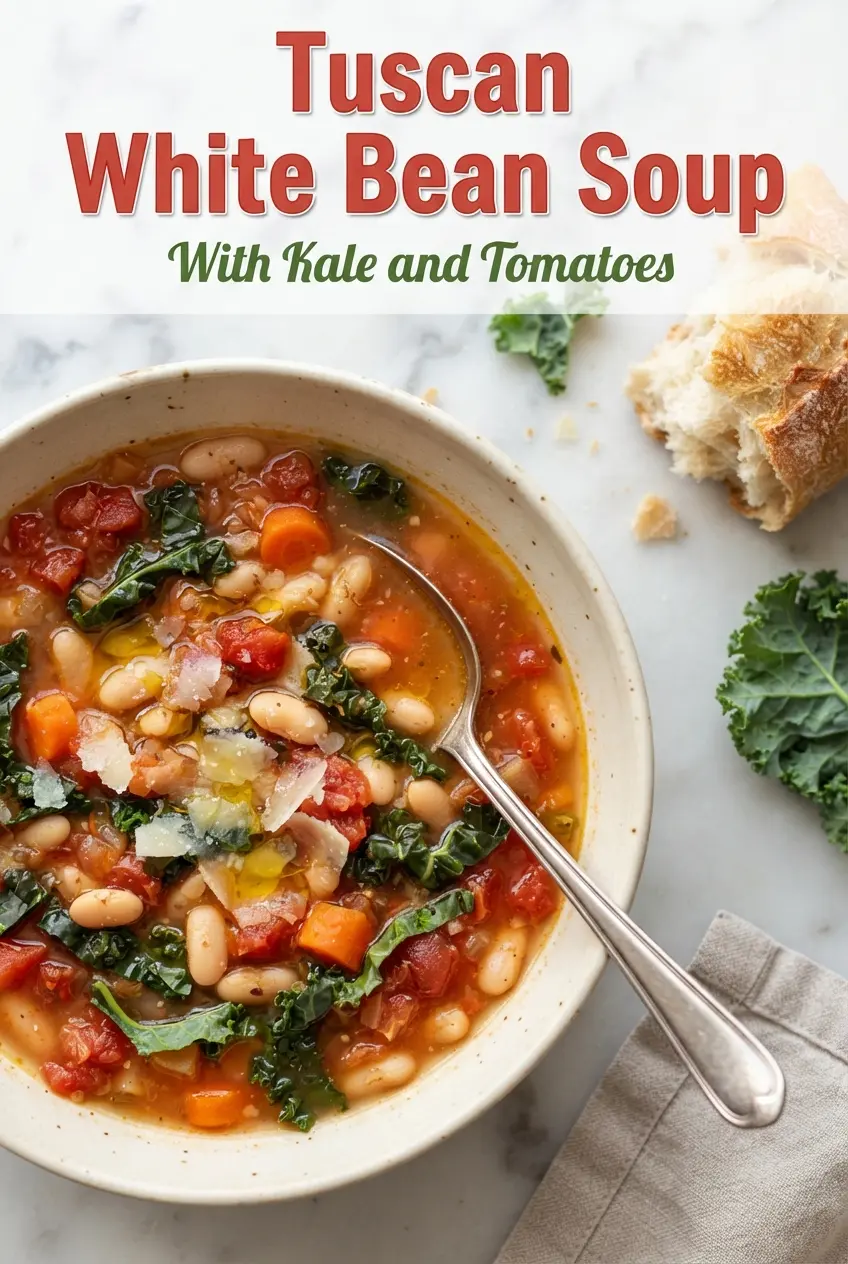
Tuscan White Bean Soup
Ingredients
Equipment
Method
- Heat the olive oil in a large pot over medium heat until shimmering, about 30 seconds. The oil should look loose and glossy, not smoky.
- Add the onion, carrots and celery and cook for 6 to 7 minutes. Stir often until the vegetables soften and the onion looks translucent.
- Stir in the garlic, Italian seasoning and red pepper flakes and cook for 1 minute. The garlic should smell fragrant without browning.
- Add the tomatoes, cannellini beans, broth, Parmesan rind and bay leaf. Scrape the bottom of the pot so browned bits release into the broth.
- Bring to a boil, then simmer for 20 minutes. Look for steady small bubbles that gently break the surface.
- Mash a few beans against the side of the pot to thicken the broth slightly. The soup should look a bit creamier and thicker where the beans were mashed.
- Stir in the kale and simmer for 5 minutes, until tender. The kale should turn bright green and soften but not become mushy.
- Remove the Parmesan rind and bay leaf. Skim them out and discard so the soup stays smooth.
- Stir in the lemon juice, salt and pepper and serve immediately. Taste and ensure the seasoning balances the broth before plating.
- Serve each bowl with grated Parmesan cheese and crusty bread. Add the cheese to the hot soup so it melts slightly.