
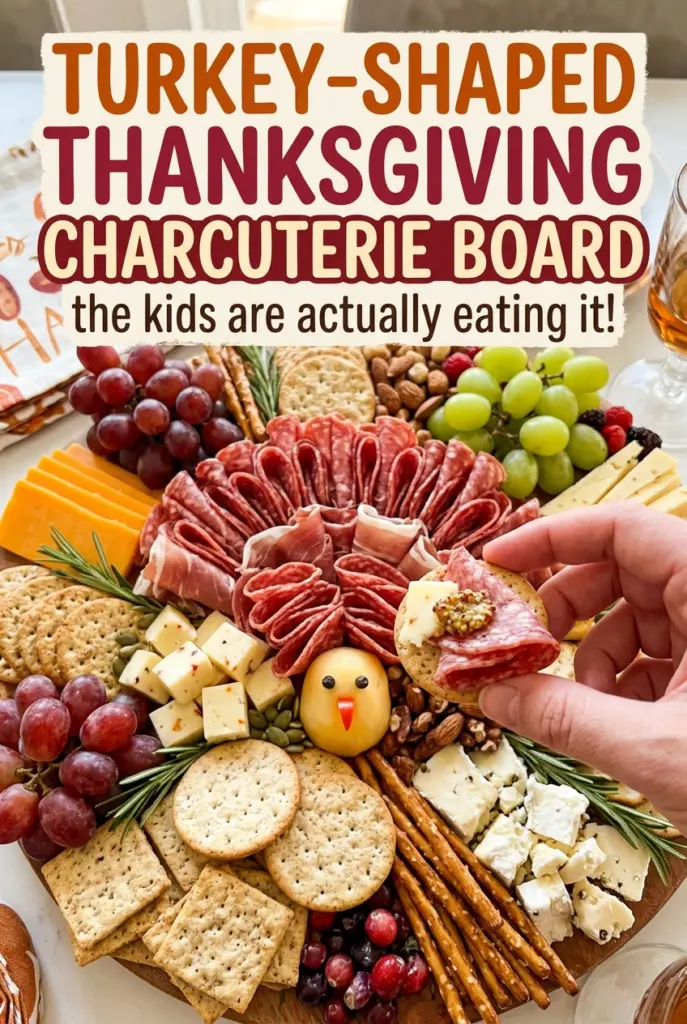
Turkey-Shaped Thanksgiving Charcuterie Board
The pear half is what makes this board read as a turkey: turn its narrow end upward, and it becomes the body with a natural place for the face. Point…
Tip: save now, cook later.The pear half is what makes this board read as a turkey: turn its narrow end upward, and it becomes the body with a natural place for the face. Point it the other way and the little cheddar beak has nowhere to go. I build this turkey-shaped Thanksgiving charcuterie board around that pear, then let the salami and cheddar form a fan behind it.
The second pear half earns its place, too. Slicing it for the board keeps the fruit from going to waste and gives you another pale, fresh bite among the crackers, grapes, apricots, and almonds. I keep the cheddar chilled while shaping the beak and feathers, which helps the triangles hold their edges as I tuck them into the salami.
With the turkey centered on an 18×12-inch board, there’s room for eight servings without crowding the tail. A few carrot sticks become the feet, and a split dried cranberry gives the face its wattle. The finished board is a cheerful mix of savory salami, sharp cheddar, crisp crackers, and fruit.
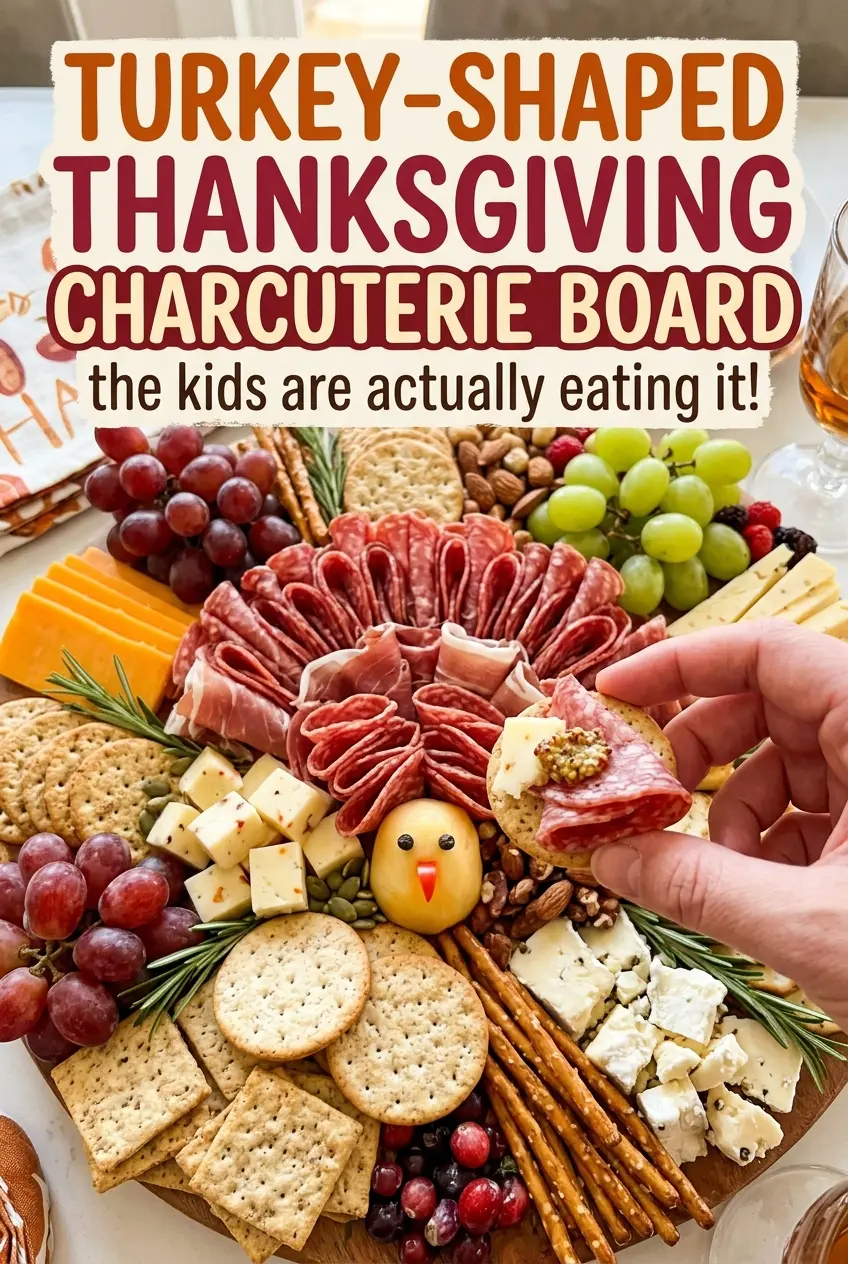
Kitchen Note
Split the dried cranberry before you place it, then use just one piece beside the cheddar beak. A small wattle reads clearly on the pear without taking over the face.
Save this turkey-shaped Thanksgiving charcuterie board for a festive centerpiece with a pear body, salami feathers, and easy-to-share snacks.
The Pear’s Shape Sets the Scale for the Whole Turkey
It’s easy to focus on the salami fan because it takes up the most room, but the pear is the piece that makes the arrangement legible. Its broad cut side gives the body a stable base, while the narrow end points toward the face. That contrast gives the turkey a clear direction before you add any features.
Think of the tail as a frame around the pear, not a second centerpiece. The salami forms a semicircle behind the body, and the cheddar triangles add a light outline between the darker slices. Once that silhouette is in place, the other ingredients can fill the board’s open areas. Leave the tail visible as you add them; a few gaps around the fruit look better than a cracker or grape hiding the feathers. The 18×12-inch board gives the body and fan room to read as one design while still holding the snacks for eight.
Why the Pear, Cheddar, and Salami Give This Board Its Shape
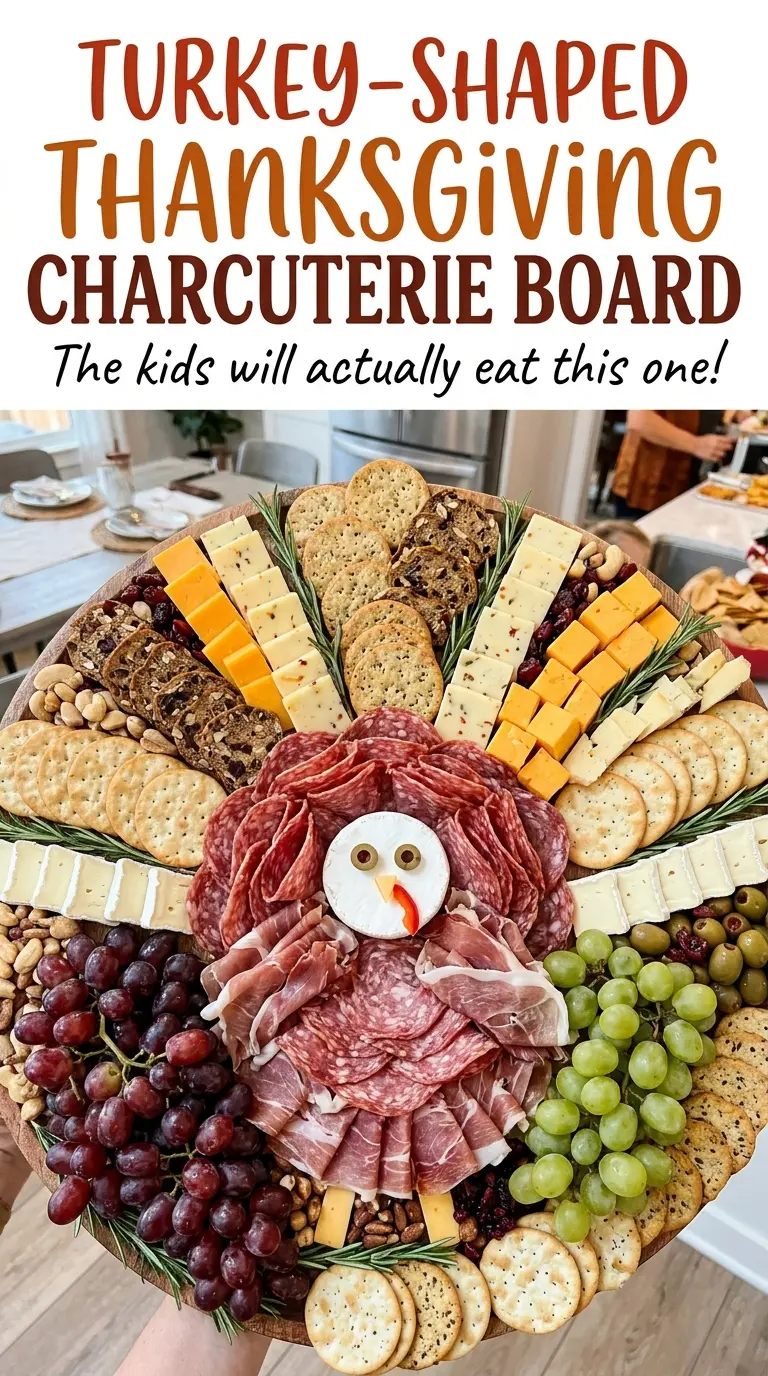
- Pear — Choose one that holds together when halved and sliced. The half with its cut side down anchors the turkey; the slices from the other half add fresh fruit to the board. A very soft pear is harder to position neatly.
- Sharp cheddar — The chilled block gives you enough control to cut a small beak and thin feather triangles. A block matters more here than a particular brand because pre-sliced cheese won’t give you the same clean shapes. Keep the unused portion cold while you arrange the board.
- Thinly sliced salami — Thin slices fold into a fan without making the tail bulky. Overlap them so the semicircle stays connected, then tuck the cheddar triangles into the gaps. If you leave salami off, the board loses its savory feather fan; use the fruit-led variation below for a different layout.
- Black olives and dried cranberry — Their dark eyes and red wattle give the pear its face, so small, distinct pieces work best. If you don’t have olives, you can leave off the eyes rather than forcing another ingredient into that tiny space.
- Grapes, dried apricots, crackers, and roasted almonds — These fill the board with different textures and keep it from being only meat and cheese. Wash and dry the grapes before arranging them; damp fruit can leave moisture on the board. The apricots and almonds are ready to place, so there’s no extra prep for those snacks.
- Carrot and fresh rosemary — Carrot makes both the feet and the extra sticks for the board, keeping the turkey details coordinated. Fresh rosemary sprigs add a green accent along the edges; tuck them at the perimeter so they don’t cover the food or the tail.
Build the Pear Turkey Before Filling the Board
Set the Pear Body in Place
Halve the pear lengthwise and set one half cut-side down near the center of the 18×12-inch board. Point its narrow end up so there’s room for the face at the top and the feet below. Slice the other half and set those pieces aside for the board. If the pear rocks, reposition it until the cut face sits flat before building around it.
Add the Face and Carrot Feet
Cut two thin slices from the black olives and place them near the narrow end of the pear for eyes. Cut a small triangle from the chilled cheddar for the beak and set it between them. Cut two 2-inch carrot sticks for feet and arrange them below the pear, then cut the remaining carrot into sticks. Split the dried cranberry and place one piece beside the beak as the wattle.
Fan the Salami and Cheddar Feathers
Arrange the salami in a semicircle behind the pear, overlapping each slice so the fan looks continuous. Keep the fan close enough to frame the body but leave the pear itself clear. Cut the remaining cheddar into thin triangles and tuck them between the salami slices. If the tail starts to look like one solid block, spread the slices slightly so the cheddar accents remain visible.
Fill the Open Spaces Without Hiding the Tail
Arrange the reserved pear slices, carrot sticks, crackers, washed and dried grapes, dried apricots, and roasted almonds around the turkey. Work outward from the body and use the smaller items to fill open pockets rather than piling food over the salami. Keep the crackers in their own visible clusters so they’re easy to pick up. Tuck the rosemary sprigs along the board’s edges, then serve.
Two Ways to Adapt the Turkey Board
Make It Nut-Free
Leave off the roasted almonds and use the grapes, dried apricots, pear slices, and crackers to fill those spaces instead. The board stays colorful, though it loses the almonds’ crunchy, savory bite. For an allergy-safe board, use a clean board and utensils and keep other nuts away from the ingredients.
Make the Tail Fruit-Forward
For a lighter, meat-free layout, leave off the salami and arrange the grapes and dried apricots in a broad fan behind the pear, with the cheddar triangles tucked among them. The turkey still has a clear body and face, but the tail becomes sweeter and less savory. Keep the pear and carrot details in place so the shape remains recognizable.
Storage and Reheating
- Refrigerator: Refrigerate leftovers promptly in covered containers and eat within 3 days. Store crackers separately to help them stay crisp; the cut pear may darken and soften.
- Freezer: Freezing isn’t a good fit. The pear and grapes lose their fresh texture, and crackers soften after thawing.
- Reheating: No reheating is needed; serve the board cold. Don’t microwave the assembled leftovers, since the fruit, crackers, and cheese won’t warm evenly.
Questions That Come Up While Building the Turkey Board
Turkey-Shaped Thanksgiving Charcuterie Board
Ingredients
Equipment
Method
- Halve the pear lengthwise.
- Place one half cut-side down near the center of an 18x12-inch serving board, with its narrow end pointing up.
- Cut the other half into slices and set them aside for the board.
- Cut two thin slices from the olives for eyes.
- Place the olive slices near the narrow end of the pear.
- Cut a small triangle from the cheddar for a beak.
- Place the cheddar triangle between the eyes.
- Cut two 2-inch sticks from the carrot for feet.
- Arrange the carrot sticks below the pear.
- Cut the remaining carrot into sticks.
- Split the cranberry and place one piece beside the beak as a wattle.
- Fan the salami in a semicircle behind the pear, overlapping the slices.
- Cut the remaining cheddar into thin triangles and tuck them between the salami slices.
- Arrange the reserved pear slices, carrot sticks, crackers, grapes, dried apricots, and almonds around the turkey, filling open spaces without covering the tail.
- Tuck the rosemary sprigs along the board's edges and serve.