
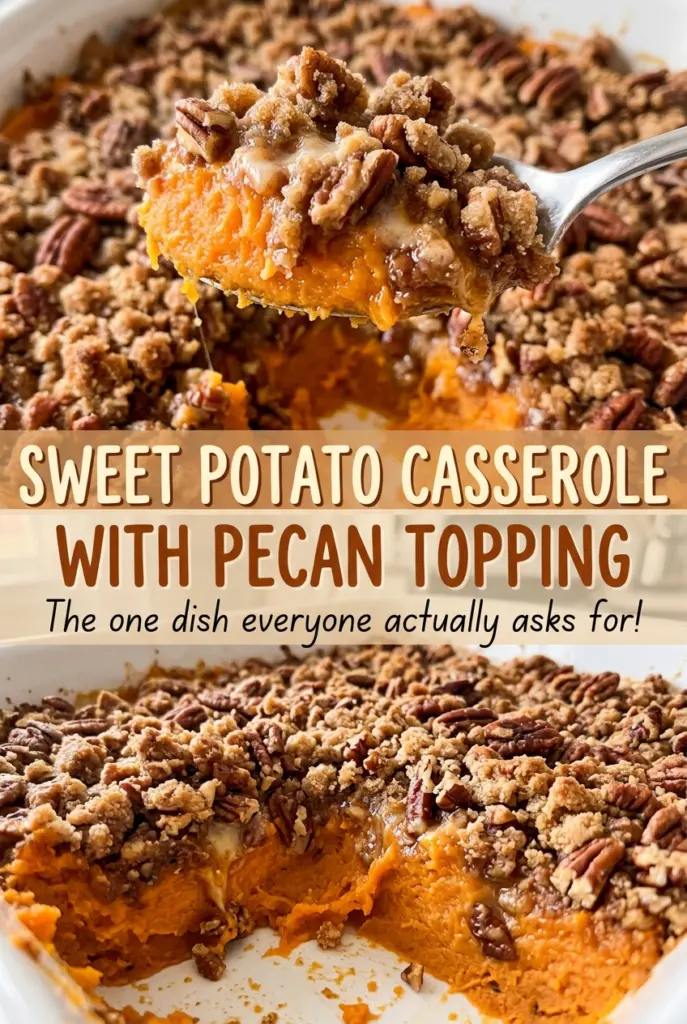
Sweet Potato Casserole with Pecan Topping
The sweet potatoes should mash into a soft, steamy pile, not a watery one. I drain them well before adding the eggs and milk so the filling bakes up tender…
Tip: save now, cook later.The sweet potatoes should mash into a soft, steamy pile, not a watery one. I drain them well before adding the eggs and milk so the filling bakes up tender and scoopable instead of loose. That small bit of care makes this sweet potato casserole with pecan topping a dependable side dish, with a smooth center and a crisp, buttery layer on top.
I like that the sweetness stays measured here. The potatoes bring plenty of their own, while vanilla rounds out the filling and brown sugar gives the pecans a toasty, caramel-like finish. The topping comes together in one bowl; stir until you see little clumps, then scatter them across the filling so every serving gets some crunch.
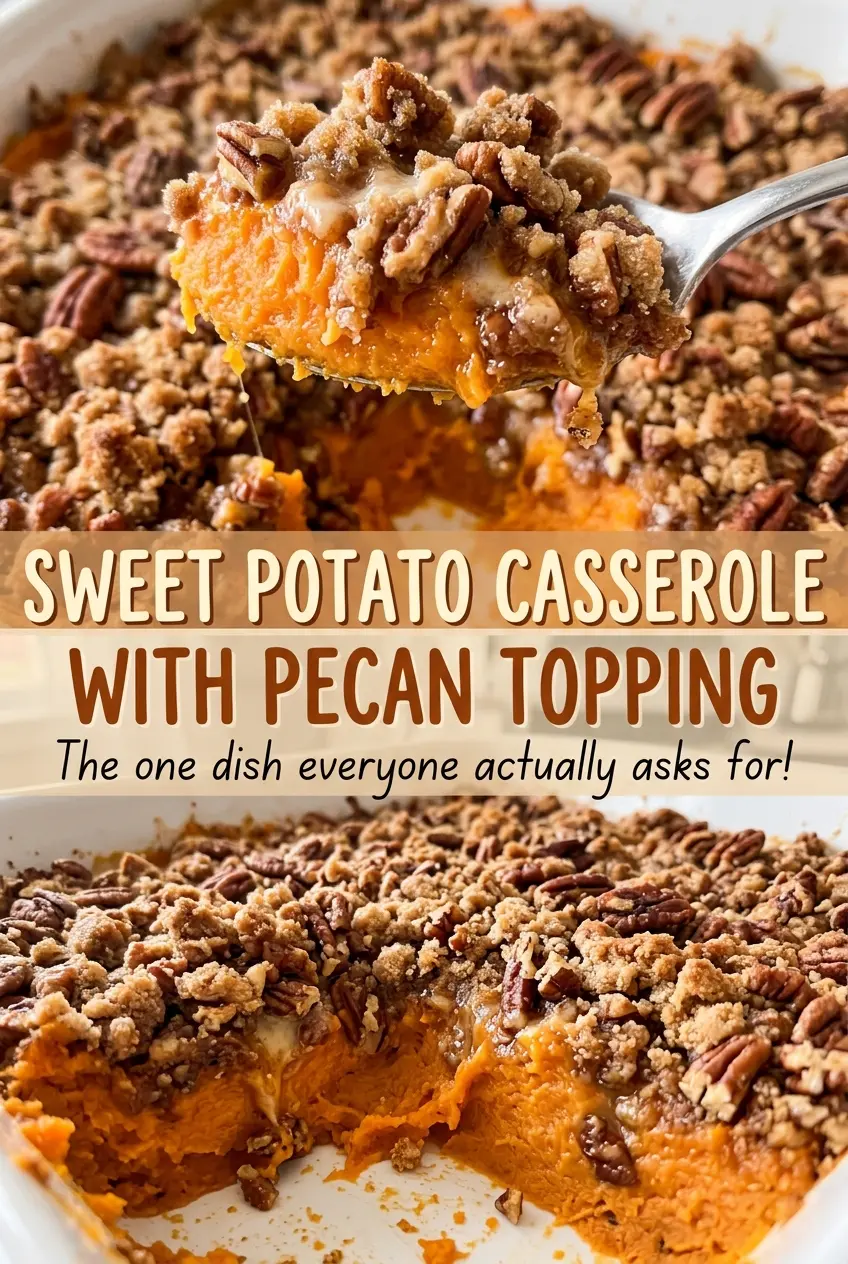
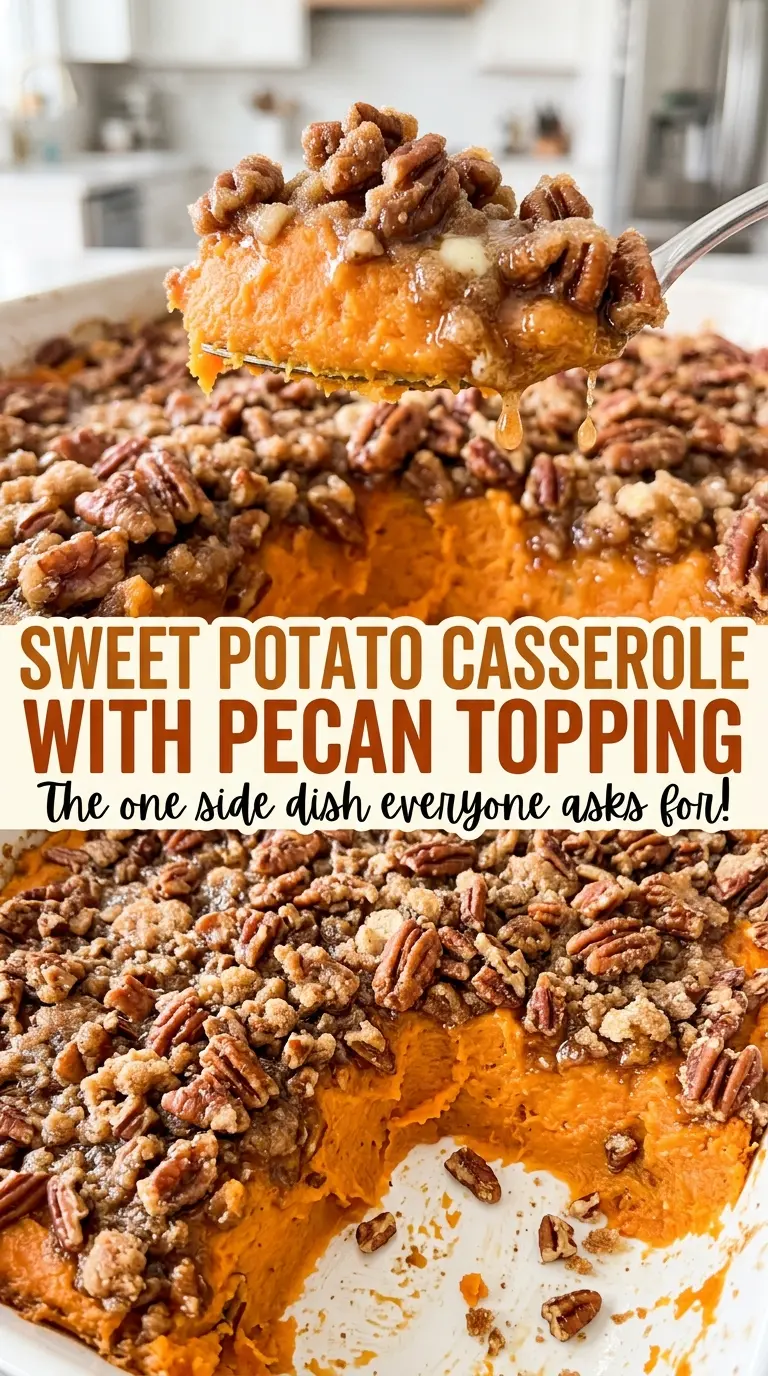
After a short rest, the center holds together on the spoon while the pecan topping stays golden and crumbly. It’s the kind of casserole that feels at home beside a holiday spread, but it’s just as welcome whenever you want a warm, substantial side.
Kitchen Note
Let the potatoes drain thoroughly before you mash them. Water left clinging to the pieces can thin the filling, and you can’t fix that texture once the milk and eggs are mixed in.
Save this sweet potato casserole with pecan topping for a make-ahead side with a creamy center and buttery, clumpy pecan crust.
Why This Filling Sets Like a Soft Custard, Not a Bowl of Mashed Potatoes
Sweet potato casserole can go wrong in two directions: the filling stays loose, or it bakes up dense and pasty. Here, eggs do more than enrich the mashed potatoes. They help the filling set in the oven, so it serves neatly but still feels soft when you scoop into it. That’s a different result from plain mashed sweet potatoes, which rely on the potato itself for structure.
Keep the texture mostly smooth rather than working the potatoes until they’re perfectly silky. A few small soft pieces are fine, and a gentle stir after adding the egg mixture is enough to bring everything together. Beating the filling aggressively doesn’t improve the set; it can make the texture heavier than you want. The goal is a cohesive mixture that spreads easily in the baking dish, not an airy puree.
The topping gives the filling a second texture to balance that softness. Flour and melted butter hold the brown sugar and pecans in clumps, so the surface bakes into a crisp layer instead of disappearing into the potatoes. Distribute those clumps across the dish rather than leaving one big pile in the middle.
What the Sweet Potatoes, Eggs, and Pecans Each Bring
- Sweet potatoes — Choose firm potatoes without soft spots, then peel and cut them into even pieces so they cook at about the same pace. Fresh sweet potatoes give you control over the filling’s moisture and sweetness.
- Eggs — These bind the filling as it bakes and help it hold its shape when served. Whisk them with the milk and seasonings first so they’re evenly distributed instead of leaving streaks through the mash.
- Whole milk — It loosens the mashed potatoes while keeping the filling creamy. The mild dairy flavor supports the sweet potatoes without competing with the pecan topping.
- Granulated sugar and vanilla — The sugar gives the filling a gentle sweetness, and vanilla adds warmth without turning it into a dessert-like puree. Vanilla extract is all you need; there’s no reason to use an expensive specialty bottle here.
- All-purpose flour and brown sugar — Flour helps the melted butter form a topping that clumps, while packed light brown sugar brings a deeper sweetness than granulated sugar would. Stir these with the pecans before adding the butter for an even crumb.
- Pecans and unsalted butter — Fresh-tasting pecans matter because their flavor is prominent in the topping; stale nuts can taste flat or bitter. Unsalted butter lets the topping’s sweetness and nutty flavor come through without adding extra salt.
From Fork-Tender Potatoes to a Golden Pecan Crust
Simmer the potatoes until a fork slides in easily
Heat the oven to 350°F and grease a 9×13-inch baking dish. Put the peeled, 1-inch sweet potato pieces in a 6-quart pot, cover them with cold water by about 1 inch, and bring the pot to a boil over high heat. Lower the heat and simmer for 15 to 20 minutes, until a fork passes through a piece without resistance. Drain the potatoes well, then mash them in a large bowl until mostly smooth.
Whisk the filling before it meets the mash
In a medium bowl, whisk together the milk, eggs, granulated sugar, vanilla, and kosher salt until the mixture looks uniform. Pour it into the mashed sweet potatoes and stir just until combined. Scrape the bottom and sides of the bowl as you mix so no plain mash is left behind. The filling should look creamy and spreadable, with no separate puddle of liquid.
Mix the pecan topping until it clumps
Stir the flour, packed light brown sugar, and chopped pecans together in a medium bowl. Add the melted butter and mix until small clumps form throughout. If there’s dry flour sitting at the bottom, keep stirring until it’s picked up; dry patches bake into a dusty topping. The mixture should look like coarse crumbs, not a smooth paste.
Bake until golden, then give the center time to settle
Spread the filling evenly in the prepared dish and scatter the pecan mixture over the top. Bake for 30 to 35 minutes, until the topping is golden and the center reaches 160°F. If the edges look done but the center hasn’t reached that temperature, give it more time in the oven. Rest the casserole for 10 minutes before serving so the filling can settle and portion more cleanly.
Three Smart Ways to Adapt the Casserole
Make the topping gluten-free
Replace the all-purpose flour in the topping with a cup-for-cup gluten-free all-purpose flour blend. The topping may bake a little more tender and sandy, but it will still form buttery clumps around the pecans; the filling is naturally made without flour.
Prepare the components ahead
Make the filling and topping separately, cover both, and refrigerate them for up to a day. Bring the filling closer to room temperature before spreading it in the baking dish; the chilled butter in the topping will firm up, so crumble it with a fork before scattering it over the filling. Bake as usual, checking that the center reaches the proper temperature.
Leave off the pecans
For a pecan-free version, omit the chopped pecans and mix the remaining topping ingredients as usual. The top will be a finer, sweeter crumble without the same nutty crunch, but the flour, brown sugar, and butter still bake into a golden layer. If you’re avoiding tree nuts because of an allergy, account for cross-contact in your ingredients and kitchen.
Storage and Reheating
- Refrigerator: Cover leftovers and refrigerate for 3 to 4 days. The pecan topping softens as it sits.
- Freezer: Freeze the baked casserole, tightly covered, for up to 2 to 3 months. Thaw it overnight in the refrigerator; expect the topping to be less crisp after freezing.
- Reheating: Reheat covered in a 325°F oven until the center reaches 165°F, uncovering near the end if you’d like to refresh the topping. Avoid reheating uncovered the whole time, which can dry out the filling before the middle warms through.
Questions That Come Up While Making Sweet Potato Casserole
Sweet Potato Casserole with Pecan Topping
Ingredients
Equipment
Method
- Heat the oven to 350°F.
- Grease a 9x13-inch baking dish.
- Put the sweet potatoes in a 6-quart pot, cover with cold water by about 1 inch, and bring to a boil over high heat; reduce the heat and simmer for 15 to 20 minutes, until easily pierced with a fork.
- Drain the sweet potatoes well.
- Mash them in a large bowl until mostly smooth.
- Whisk the milk, eggs, granulated sugar, vanilla, and salt in a medium bowl.
- Stir the milk mixture into the mashed sweet potatoes until combined.
- Stir the flour, brown sugar, and pecans together in a medium bowl.
- Mix in the melted butter until clumps form.
- Spread the sweet potato mixture in the prepared dish.
- Scatter the pecan topping evenly over it.
- Bake for 30 to 35 minutes, until the topping is golden and the center reaches 160°F.
- Let the casserole rest for 10 minutes before serving.
