
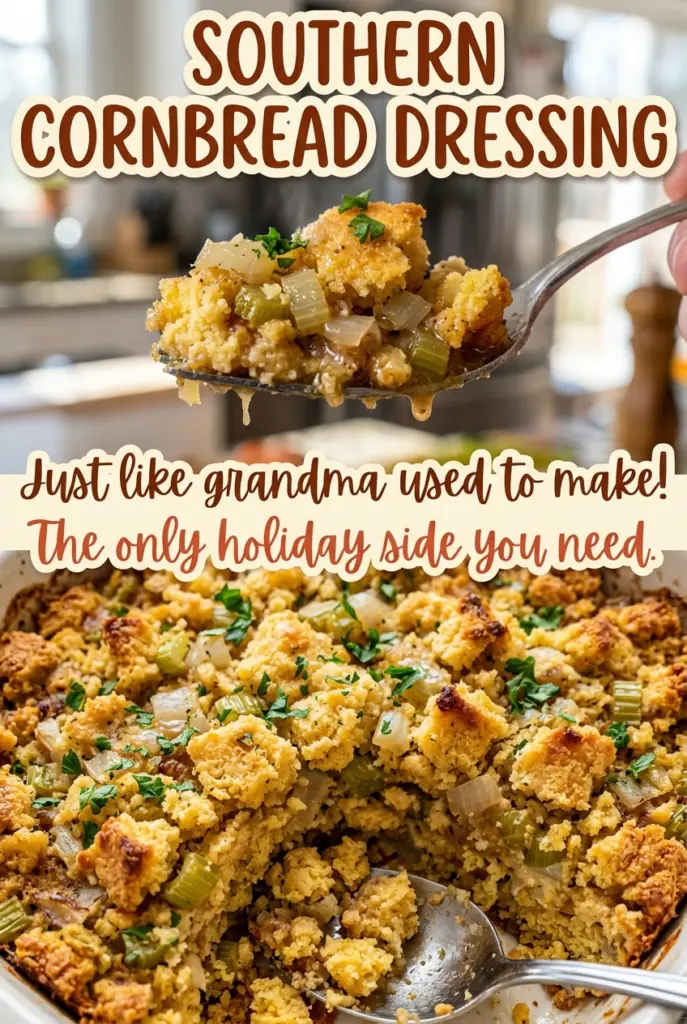
Southern Cornbread Dressing
The onion and celery soften slowly in butter, and the kitchen starts to smell like sage before the cornbread even goes into the dish. That two-part rhythm is what I…
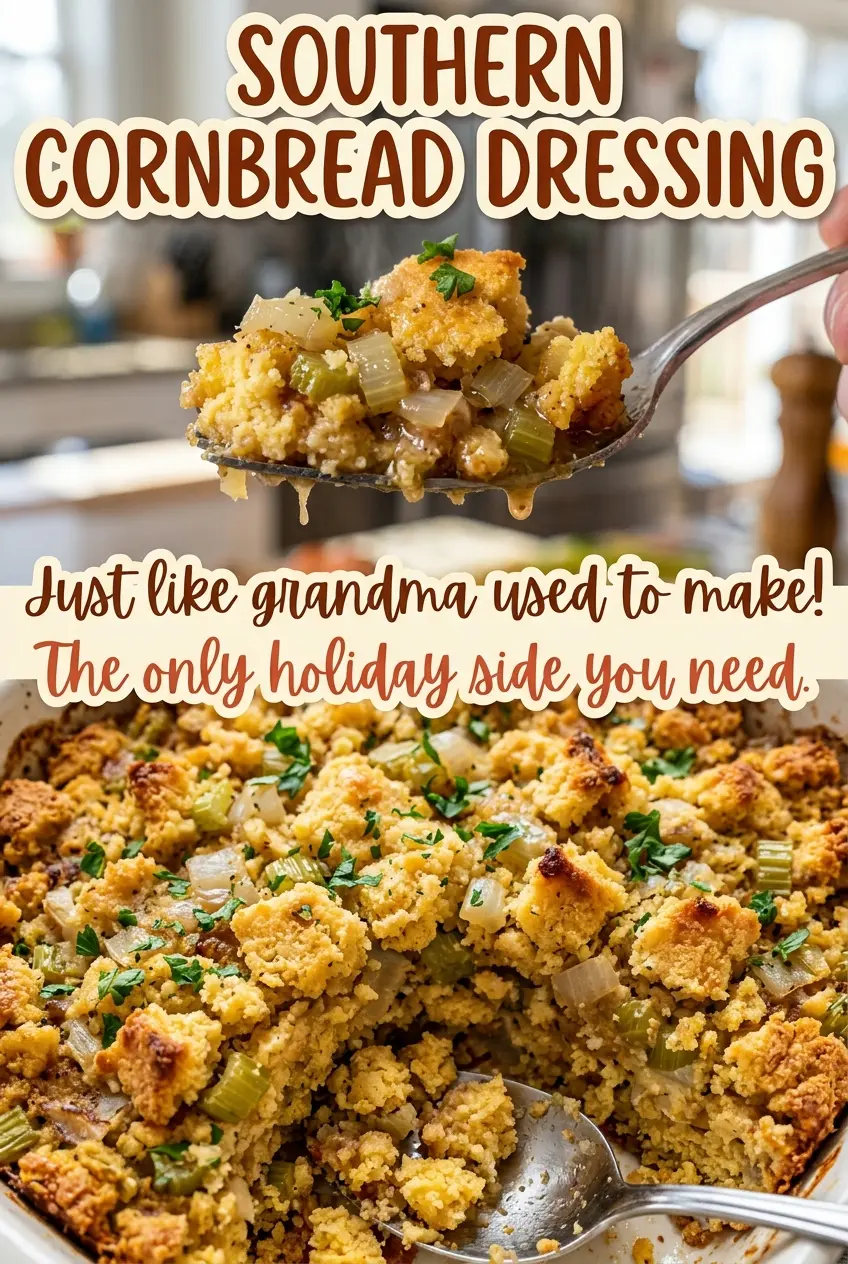
Tip: save now, cook later.The onion and celery soften slowly in butter, and the kitchen starts to smell like sage before the cornbread even goes into the dish. That two-part rhythm is what I like about Southern cornbread dressing: first you bake a sturdy pan of cornbread, then crumble it and let broth, vegetables, and seasonings turn it into a savory dressing for 12.
I keep the cornbread and dressing bakes separate rather than trying to make one batter do both jobs. The cornbread gets a hotter oven to set and brown at the edges; the finished dressing bakes more gently after it’s moistened. With the onion and celery softened first, each bite has a tender, savory crumb and a golden top.
Kitchen Note
I separate the butter before I start: the smaller portion goes into the cornbread, and the rest is for softening the onion and celery. It’s easy to forget that split once both pans are on the counter.
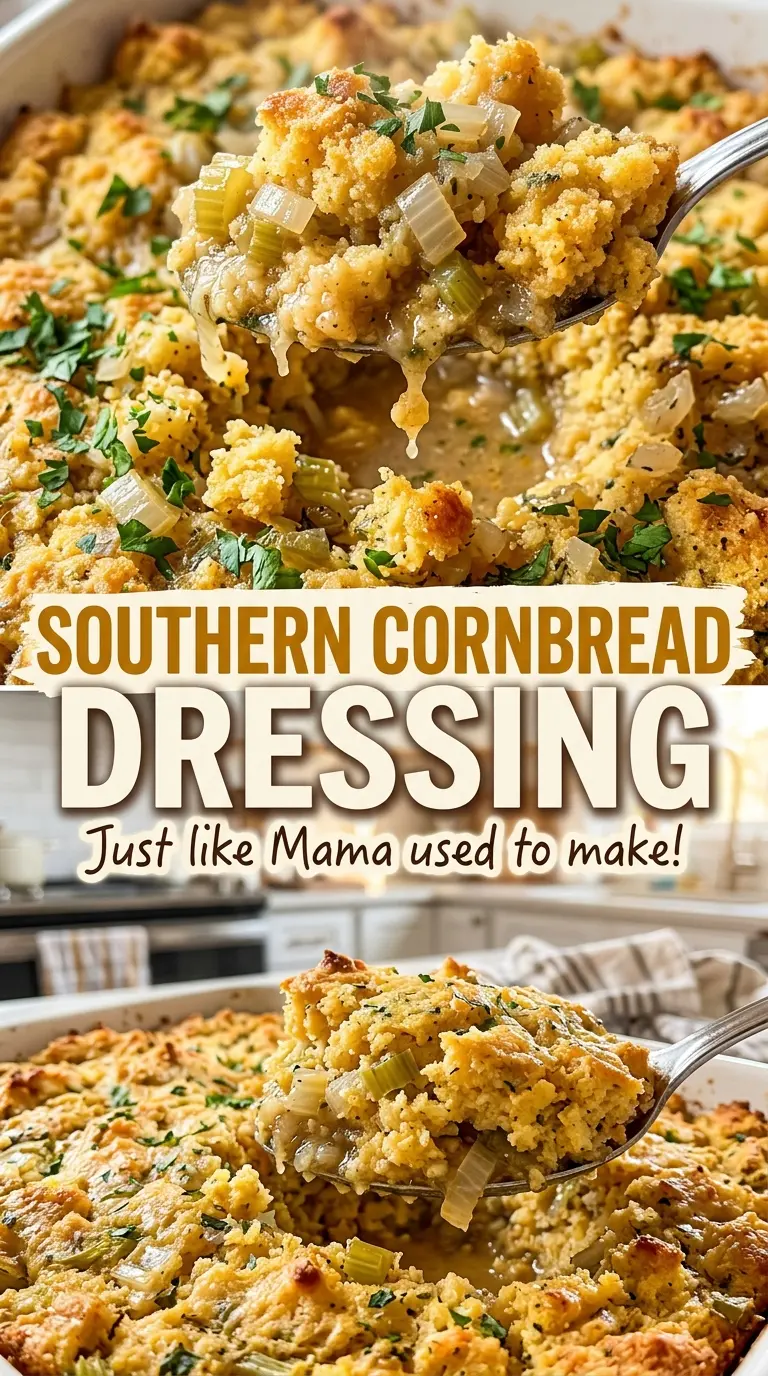
Save this Southern cornbread dressing for its sage-scented crumb and golden top, with the cornbread baked fresh for the best texture.
Why This Dressing Needs Its Cornbread Baked Before the Broth Goes In
It might seem simpler to mix cornmeal straight into the dressing ingredients, but that skips the step that gives this pan its structure. Baking the cornbread first sets the cornmeal, flour, eggs, and buttermilk into a crumb that can be broken up and moistened evenly. The broth then reaches the crumbled pieces instead of having to hydrate a raw batter in the casserole dish.
The change in oven temperature has a purpose, too. The cornbread bakes at 400°F until its center tests clean, while the dressing finishes at 350°F after the broth and vegetables are mixed through. That gentler second bake gives the center time to cook while the top turns golden. Let the cornbread cool completely before crumbling it; a hot, steamy pan is harder to handle and can make the crumbs clump as you work them into the dressing.
Think of the first bake as building the base and the second as bringing all the parts together. Once you’ve got that sequence in mind, the recipe feels less like a complicated casserole and more like a straightforward two-pan process.
How Cornmeal, Buttermilk, and Sage Build This Dressing’s Character
- Yellow cornmeal — It gives the cornbread its unmistakable corn flavor and crumb. A fresh bag matters more than an expensive one; cornmeal that has been open for a long time can taste flat. Keep the yellow cornmeal for the familiar color and flavor of this dressing.
- All-purpose flour and baking powder — The flour softens the cornmeal’s texture, while baking powder helps the cornbread rise rather than bake up heavy. Stir the wet mixture into the dry ingredients only until combined; extra mixing works against a tender crumb.
- Buttermilk and eggs — Buttermilk brings a gentle tang and moisture to the cornbread. The eggs are divided between the cornbread and the finished dressing: they help the first bake hold together and help the casserole set in its second bake.
- Unsalted butter — Butter adds richness in both parts of the recipe. Unsalted butter lets the measured table salt do the seasoning, and dividing the butter keeps some for the cornbread batter and the rest for the vegetables.
- Yellow onion and celery — These are the savory base, not just filler. Finely chopping them helps them soften evenly in the skillet and spread through the dressing instead of leaving large, crunchy pieces.
- Low-sodium chicken broth — It moistens the crumbs without bringing in as much salt as regular broth. Choosing low-sodium broth gives the table salt, sage, poultry seasoning, and pepper room to come through without the dressing tasting too salty.
- Rubbed sage and poultry seasoning — Rubbed sage gives the dressing its clear, earthy aroma, while poultry seasoning rounds out the seasoning. Use spices that smell fragrant when you open the jar; old, scentless herbs won’t bring as much character to the pan.
The Two Bakes That Give This Dressing Its Structure
Mix the Cornbread Without Overworking It
Heat the oven to 400°F and coat a 9×13-inch baking pan with nonstick cooking spray. Whisk the cornmeal, flour, baking powder, and 1 teaspoon of salt in a large bowl. In a medium bowl, whisk 2 eggs with the buttermilk and 1/4 cup melted butter, then stir that mixture into the dry ingredients just until combined. Stop when no dry pockets remain; a smooth, heavily worked batter isn’t the goal.
Bake, Cool, and Crumble the Cornbread
Pour the batter into the prepared pan and bake for 20–25 minutes. Look for golden edges, and check the center with a toothpick; it should come out clean. Cool the cornbread completely, then crumble it into a large bowl. Break it into small, fairly even pieces so the broth and seasonings can be stirred through without leaving big slabs behind.
Soften the Onion and Celery in Butter
Heat the oven to 350°F and coat a 9×13-inch baking dish with nonstick cooking spray. Melt the remaining 1/2 cup butter in a 12-inch skillet over medium heat, then add the finely chopped onion and celery. Cook for 8–10 minutes, until the vegetables have softened. Keep the heat at medium; the aim is tender vegetables, not browned edges.
Moisten, Bake, and Let the Center Set
Add the softened vegetables, remaining 2 eggs, remaining 1 teaspoon salt, rubbed sage, poultry seasoning, and black pepper to the crumbled cornbread. Pour in the chicken broth and stir until the crumbs are evenly moistened, with no dry patches left in the bowl. Transfer the mixture to the prepared baking dish and bake for 45–55 minutes, until the top is golden and the center reaches 160°F. Rest the dressing for 10 minutes before serving so it can settle into neat, tender portions.
Three Useful Ways to Change the Flavor or Fit
Make the Cornbread Gluten-Free
Replace the all-purpose flour with the same amount of a 1:1 gluten-free baking flour. The cornmeal stays as it is, so the dressing keeps its corn-forward taste; the crumb may be a little more delicate, so stir the finished mixture gently.
Make It Vegetarian With Vegetable Broth
Use low-sodium vegetable broth in place of the chicken broth, keeping the same amount. The texture stays much the same, though the dressing loses the deeper savory note that chicken broth brings.
Lean Into the Sage
For a more pronounced sage aroma, stir an extra 1/2 teaspoon of rubbed sage into the crumbled cornbread with the other seasonings. The flavor will be more herbal and direct, so keep the poultry seasoning in place to preserve its rounded savory note.
Storage and Reheating
- Refrigerator: Store covered in the refrigerator for 3–4 days. The top softens as it sits, while the center stays moist.
- Freezer: Freeze baked, cooled dressing in tightly wrapped portions for up to 2–3 months. Thaw it in the refrigerator before reheating for more even warming.
- Reheating: Warm portions in a 325°F oven, covered, until the center reaches 165°F. Avoid reheating uncovered for a long stretch, which can dry out the cornbread before the middle is hot.
Questions That Come Up While Making Southern Cornbread Dressing
Southern Cornbread Dressing
Ingredients
Equipment
Method
- Heat the oven to 400°F.
- Coat a 9x13-inch baking pan with nonstick cooking spray.
- Whisk the cornmeal, flour, baking powder, and 1 teaspoon of the salt in a large bowl.
- In a medium bowl, whisk 2 eggs with the buttermilk and 1/4 cup melted butter.
- Stir the wet ingredients into the dry ingredients just until combined.
- Pour the batter into the prepared pan.
- Bake for 20–25 minutes, until golden at the edges and a toothpick inserted in the center comes out clean.
- Cool completely.
- Crumble the cornbread into a large bowl.
- Heat the oven to 350°F.
- Coat a 9x13-inch baking dish with nonstick cooking spray.
- Melt the remaining 1/2 cup butter in a 12-inch skillet over medium heat.
- Add the onion and celery.
- Cook for 8–10 minutes until softened.
- Add the vegetables, remaining 2 eggs, remaining 1 teaspoon salt, sage, poultry seasoning, and pepper to the crumbled cornbread.
- Pour in the broth.
- Stir until evenly moistened.
- Transfer the mixture to the prepared baking dish.
- Bake for 45–55 minutes, until golden on top and the center reaches 160°F.
- Rest for 10 minutes before serving.
