
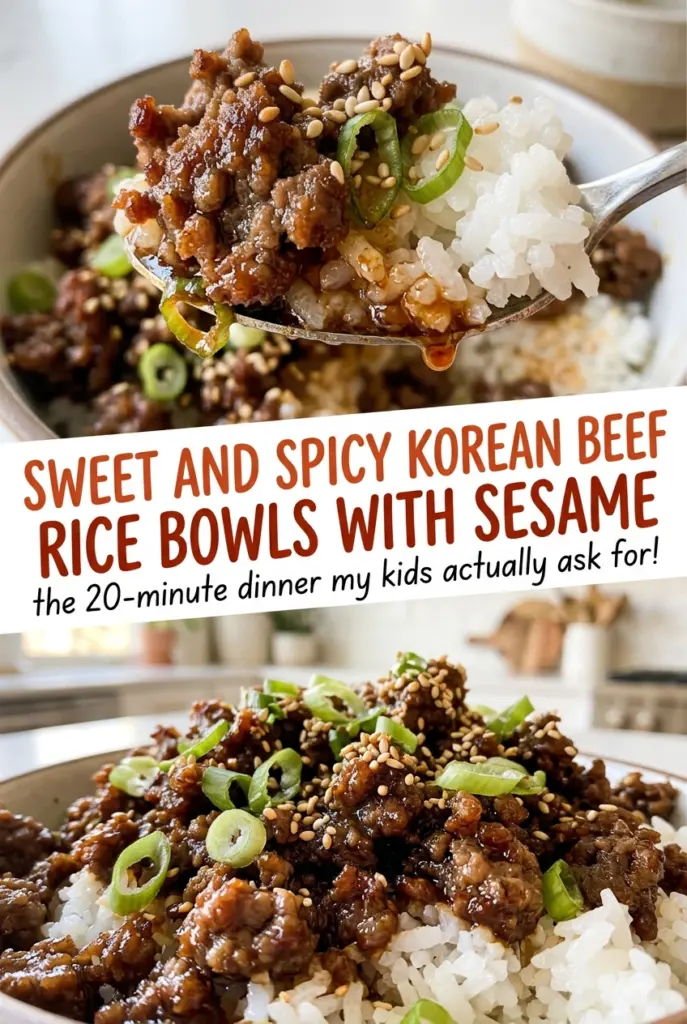
Sweet and Spicy Korean Beef Rice Bowls with Sesame
The beef starts to turn glossy as the brown sugar melts into the soy sauce and gochujang, but it shouldn’t go into the skillet until it’s browned first. That order…
Tip: save now, cook later.The beef starts to turn glossy as the brown sugar melts into the soy sauce and gochujang, but it shouldn’t go into the skillet until it’s browned first. That order gives these sweet and spicy Korean beef rice bowls their savory, caramelized edge instead of a batch of beef that tastes mostly like sauce. I like the contrast of the rich, saucy beef against plain long-grain rice; every bite gets a little heat without the rice competing for attention.
The rice and beef cook separately, so neither has to wait on the other for long. Rinsing the rice clears away some surface starch, and letting it rest covered after cooking gives the grains time to settle. Meanwhile, the beef gets its garlic and ginger, then a quick simmer with the sweet, tangy, spicy sauce. Green onions and toasted sesame seeds go on at the end, where their fresh bite and crunch stay distinct.
It’s a straightforward skillet dinner, but the timing keeps the textures in balance: fluffy rice underneath, browned beef coated in a glossy sauce, and a fresh finish on top.
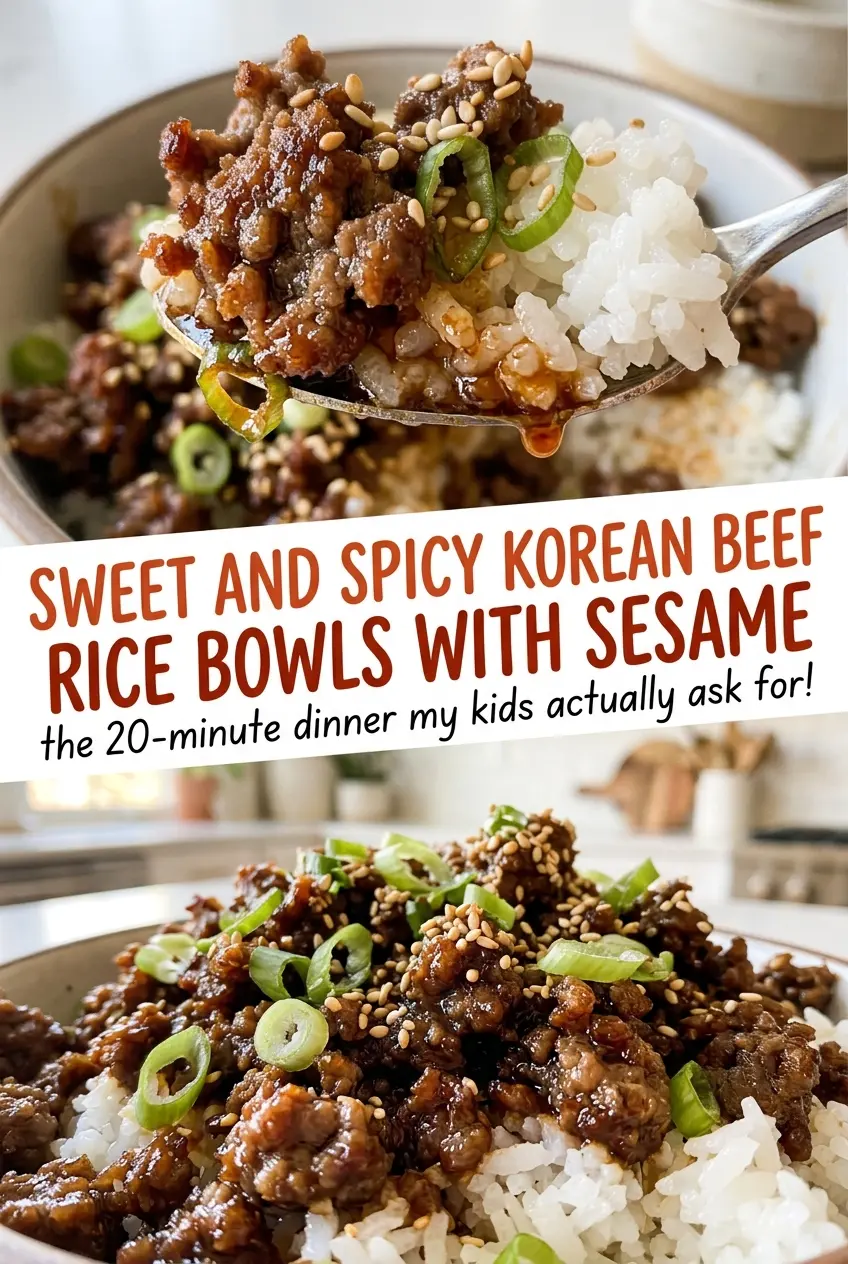
Kitchen Note
Slice the green onions thinly so they scatter across the bowls instead of landing in thick, sharp bites. Add them with the sesame seeds right before serving, and they’ll keep their fresh bite and crunch.
Save these sweet and spicy Korean beef rice bowls for a night when you want glossy, gochujang-coated beef over fluffy rice.
Brown the Beef Before the Sweet Sauce Goes In
It’s easy to reach for the soy sauce and sugar as soon as the beef hits the pan, but that makes it harder to get the browned flavor that gives this bowl its depth. Let the beef cook in the hot skillet first, breaking it into small pieces as it browns. Once it’s cooked through and has picked up color, the sauce can coat those browned bits instead of steaming the meat in liquid.
The skillet size helps here. A 12-inch pan gives a pound of ground beef room to cook in a broad layer, and medium-high heat gets it browning without a long wait. If you add the sauce too early, the beef turns gray and the sweet sauce has less of that savory, toasty flavor to cling to. The sugar and gochujang only need a brief simmer at the end; they’re there to glaze the beef, not to cook it from raw.
That quick finish also keeps the sauce from becoming heavy or sticky. Stir it through until the beef looks coated and glossy, then take the skillet off the heat as soon as it reaches that point. The rice is mild by design, so the beef can carry the sweet heat without making the whole bowl taste one-note.
How the Rice, Gochujang, and Sesame Shape Each Bowl
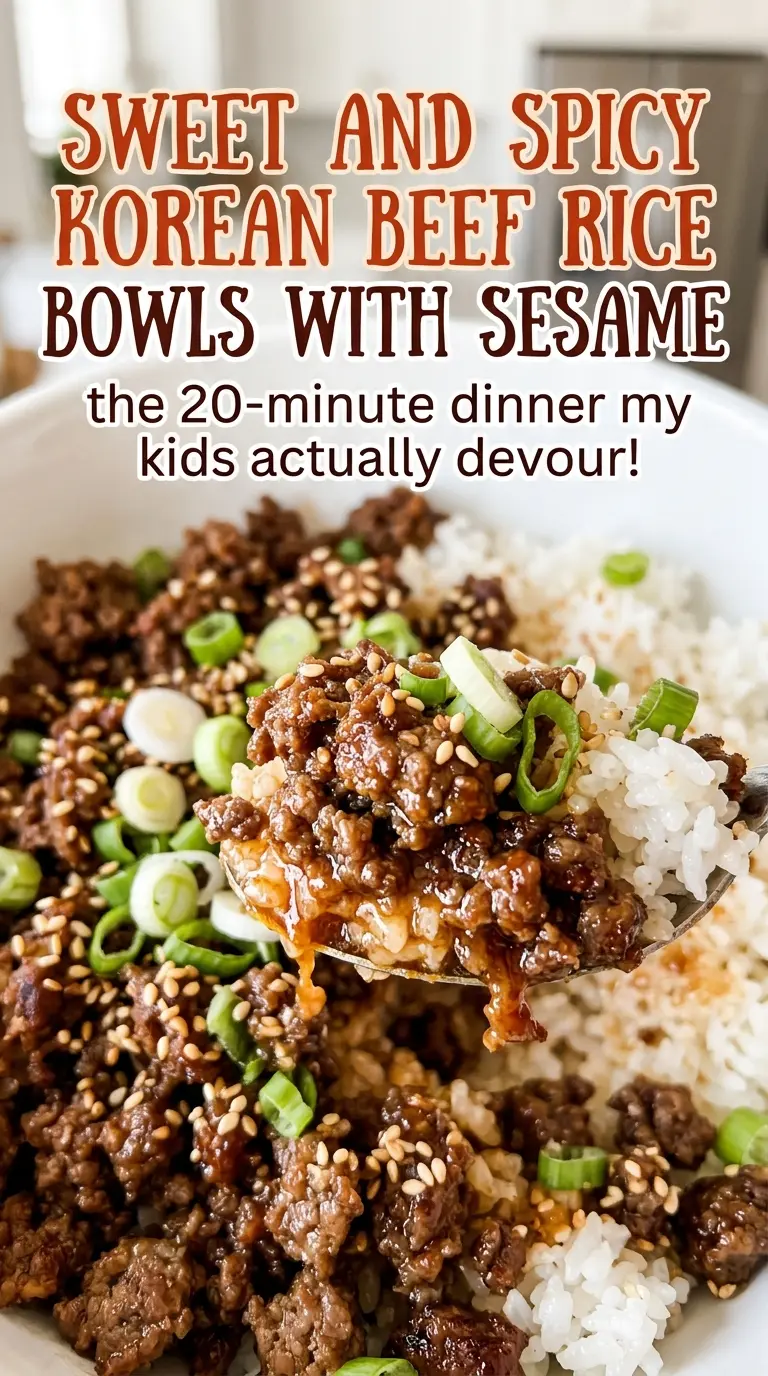
- Long-grain white rice — Its separate, tender grains make a steady base for the saucy beef. Rinsing removes loose surface starch; an ordinary bag of long-grain rice works well here, and another rice variety won’t give the same texture on this timing.
- 85% lean ground beef — This balance of meat and fat gives the skillet enough richness for browning while leaving the finished beef juicy. Breaking it into small pieces helps the sauce reach more of the meat, so don’t leave it in large clumps.
- Gochujang — This fermented Korean chile paste brings both heat and a savory depth that plain crushed red pepper can’t reproduce. Brands vary in heat and saltiness, so use the listed amount for the intended balance and choose a tub you enjoy eating on its own.
- Low-sodium soy sauce and brown sugar — Soy sauce supplies the salty, savory base, while packed light brown sugar softens its edge and helps the sauce cling. Low-sodium soy sauce keeps the finished beef from becoming overly salty; regular soy sauce works in the same quantity but tastes saltier.
- Rice vinegar and toasted sesame oil — The vinegar cuts through the beef’s richness, and the sesame oil adds a deep, nutty aroma. Toasted sesame oil is the ingredient where freshness matters most; a stale bottle can taste flat or harsh, so smell it before using.
- Garlic, ginger, green onions, and sesame seeds — Freshly minced garlic and grated ginger make a more fragrant base than dried seasonings, while the thinly sliced onions and toasted seeds bring a bright, crunchy finish. Mince and grate the aromatics before they go into the hot skillet, since they cook quickly.
The Order That Keeps the Rice Fluffy and the Beef Glossy
Rinse, Simmer, and Rest the Rice
Rinse the rice under cool water until the water runs mostly clear, then drain it well. Combine it with the water and kosher salt in a medium saucepan and bring the pot to a boil over medium-high heat. Cover the pan, lower the heat, and simmer for 15 minutes; lifting the lid lets steam escape, so leave it closed. Take the saucepan off the heat and let the rice stand, still covered, for 10 minutes before serving.
Brown the Beef in the Skillet
Heat the neutral oil in a 12-inch skillet over medium-high heat, then add the ground beef. Break it into small pieces as it cooks so you get an even mix of browned edges and tender crumbles. Cook for 6 to 8 minutes, until the beef is browned and reaches 160°F. Don’t rush to add the sauce while the beef is still pink; the meat should finish cooking before the sweet ingredients go in.
Wake Up the Aromatics, Then Coat the Beef
Stir the minced garlic and freshly grated ginger into the browned beef and cook for 30 seconds, just until fragrant. Add the soy sauce, packed brown sugar, gochujang, rice vinegar, toasted sesame oil, and crushed red pepper flakes, stirring to combine. Let the mixture simmer for 1 to 2 minutes. Watch for the sauce to cling to the beef rather than pool at the bottom of the skillet.
Build the Bowls at the Last Minute
Divide the rice among four bowls, then spoon the beef over the top. Finish with the thinly sliced green onions and toasted sesame seeds. Keep the beef on top rather than stirring everything together in the pan; that way the rice stays distinct and the garnishes remain easy to see and taste.
Two Easy Changes for Heat and Sesame Preferences
Make the Beef Less Spicy
Leave out the crushed red pepper flakes and keep the gochujang. The sauce will still have the chile warmth and savory character of the paste, but it won’t get the extra sharp kick from the flakes.
Skip the Sesame
For a sesame-free version, leave out both the toasted sesame oil and sesame seeds. The beef will lose its nutty aroma and crunchy finish, but the soy, ginger, garlic, vinegar, and gochujang still make a balanced sauce.
Storage and Reheating
- Refrigerator: Refrigerate leftovers within 2 hours and use them within 3 to 4 days. The rice firms up and the sauce thickens as they chill.
- Freezer: Freeze cooled portions in airtight containers for up to 2 to 3 months for best quality. The rice may be a little softer after thawing, but the beef freezes well.
- Reheating: Warm covered in the microwave, stirring partway through, or heat gently in a skillet until the leftovers reach 165°F. Don’t blast the beef uncovered for a long stretch; the sauce can dry out before the rice is hot.
Questions That Come Up When Making These Beef Bowls
Sweet and Spicy Korean Beef Rice Bowls with Sesame
Ingredients
Equipment
Method
- Rinse the rice under cool water until the water runs mostly clear, then drain.
- Combine the rice, water, and salt in a medium saucepan and bring to a boil over medium-high heat.
- Cover, reduce the heat to low, and simmer for 15 minutes.
- Remove from the heat and let stand, covered, for 10 minutes.
- Heat the oil in a 12-inch skillet over medium-high heat, add the ground beef, and cook for 6 to 8 minutes, breaking it into small pieces, until browned and cooked to 160°F.
- Add the garlic and ginger and cook for 30 seconds, stirring, until fragrant.
- Stir in the soy sauce, brown sugar, gochujang, rice vinegar, sesame oil, and red pepper flakes, then simmer for 1 to 2 minutes until the sauce coats the beef.
- Divide the rice among four bowls and top with the beef, green onions, and sesame seeds.