
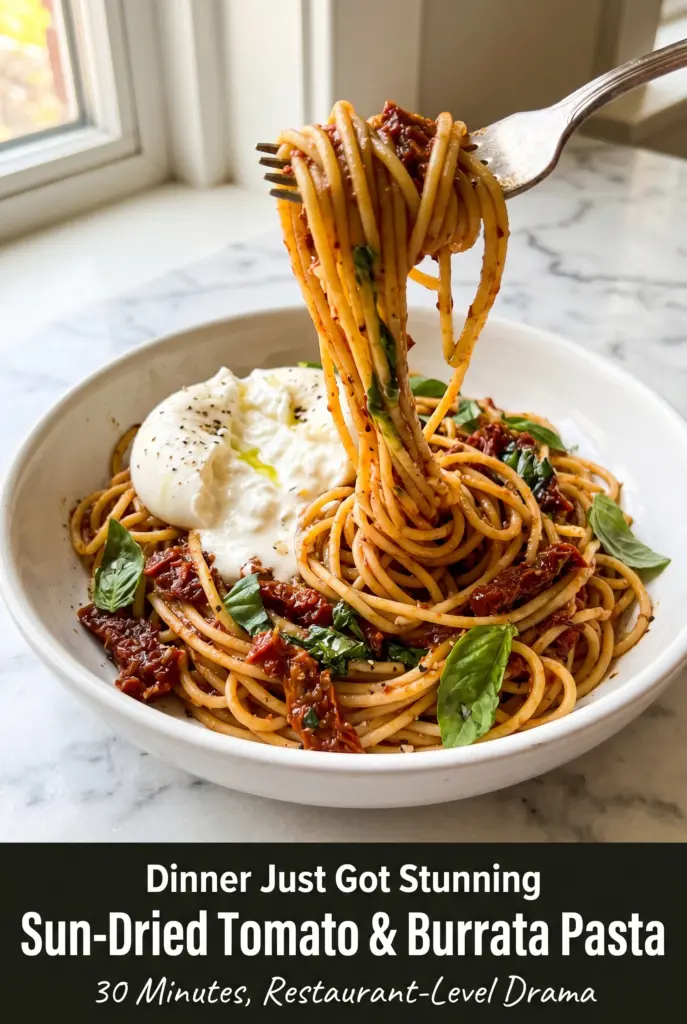
Sun-Dried Tomato & Burrata Pasta with Basil Oil
Silky pasta, jammy sun-dried tomatoes, and a torn burrata center make this bowl feel far more special than the time it takes to cook. The sauce clings in that glossy,…
Tip: save now, cook later.Silky pasta, jammy sun-dried tomatoes, and a torn burrata center make this bowl feel far more special than the time it takes to cook. The sauce clings in that glossy, restaurant-style way that looks luxurious on the plate, but what really sets it apart is the contrast: sweet, concentrated tomatoes, sharp Parmesan, cool creamy cheese, and a bright basil oil that wakes everything up.
The trick is building the sauce in two layers. First, the garlic and sun-dried tomato oil bloom together so the pan starts with flavor already packed in, then the pasta water turns that base into something silky instead of greasy. The burrata goes on at the end, off the heat, so it softens into the pasta without disappearing completely.
Below, I’ve included the details that matter most: how to keep the garlic from burning, when to stop adding pasta water, and a few smart ways to adapt this if you need a different cheese or want to make it a little lighter.
The basil oil stayed bright green and the pasta water made the sauce glossy instead of oily. I was nervous about the burrata melting too much, but tearing it on top right before serving gave every bite that creamy center my husband kept going back for.
Save this burrata pasta for the night you want silky noodles, creamy cheese, and basil oil that looks as good as it tastes.
The Problem With Burrata Pasta Is Usually Greasy Sauce, Not Too Little Cheese
Burrata pasta sounds rich by design, but it goes wrong fast when the pan is too hot or the sauce is built without enough starch. The pasta should be coated, not swimming. If the oil separates from the tomato pieces, the dish tastes heavy instead of silky.
That’s why the reserved pasta water matters here. It brings starch into the pan, which helps the oil and tomato juices emulsify around the noodles. The Parmesan also needs to go in off the heat or over very low heat; otherwise it can turn grainy and tighten the sauce instead of smoothing it out. Burrata belongs on top at the very end so the center spills into the warm pasta without fully melting away.
- Sun-dried tomatoes in oil — The jarred oil is part of the flavor base, so don’t drain it off completely. The tomatoes themselves bring concentrated sweetness and chew, while the oil carries that flavor through the sauce.
- Burrata — This is the finish that turns the dish from good to special. If you can only find one ball, slice it in half and let the creamy center do the work.
- Fresh basil — Fresh basil oil needs bright leaves, not wilted ones. If basil is scarce, use half basil and half parsley so the oil still stays green and fresh-tasting.
- Parmesan — Freshly grated Parmesan melts into the sauce far better than the pre-grated kind. The bagged stuff often stays dusty instead of turning the pasta glossy.
Building the Sauce So It Stays Glossy Instead of Oily
Make the Basil Oil First
Blend the basil, olive oil, garlic, and salt until smooth and vivid green, then set it aside. If you overblend it for too long, the heat from the blender can dull the color, so stop as soon as it looks cohesive. The oil should taste fresh and grassy with just enough garlic to notice in the background.
Cook the Pasta to the Right Point
Boil the spaghetti or linguine in heavily salted water until al dente, then pull out at least half a cup of the cooking water before draining. If the pasta gets too soft, it will go limp once it hits the skillet and won’t hold the sauce as well. You want a little firmness in the center so it finishes in the pan instead of turning mushy.
Wake Up the Garlic and Tomatoes
Warm the olive oil and reserved sun-dried tomato oil over medium heat, then add the sliced garlic and red pepper flakes. The garlic should turn pale gold and smell nutty; if it browns fast, the heat is too high and the whole pan will taste bitter. Stir in the sun-dried tomatoes and let them sizzle for a minute or two so their edges soften and the sauce gets deeper.
Turn the Pasta Water Into Sauce
Add the drained pasta straight to the skillet and toss, adding the pasta water a splash at a time. The sauce should go from loose and oily to shiny and lightly clinging. Stop adding water when the noodles look coated and there’s just a little saucy sheen left in the pan; too much water will wash the flavor out instead of pulling it together.
Finish Off the Heat
Take the pan off the burner before adding the Parmesan, then season with salt and black pepper. That off-heat moment keeps the cheese smooth instead of clumping. Plate the pasta, tear the burrata over the top, and drizzle with basil oil while the noodles are still hot enough to soften the cheese without completely melting it.
Three Ways to Make This Burrata Pasta Work for Your Kitchen
Gluten-Free Version
Use a gluten-free spaghetti that holds its shape well, then cook it just shy of done so it can finish in the sauce. Gluten-free pasta usually releases less starch, so use the full amount of pasta water and toss a little longer to help the sauce cling.
Dairy-Free Swap
Skip the burrata and Parmesan, then finish with a spoonful of cashew cream or a good vegan ricotta-style cheese. You’ll lose the milky stretch of burrata, but the basil oil and tomato base still carry the dish if you season it generously and don’t skimp on the pasta water.
Make It Heartier
Add sautéed shrimp, sliced chicken, or crispy chickpeas if you want more protein. Keep the protein separate until the end so the pasta sauce stays glossy, then spoon it over the top instead of stirring it in too early and crowding the pan.
Make It Spicier or Milder
The red pepper flakes are easy to tune. Use less for a softer, creamier-tasting finish, or add an extra pinch if you want the heat to cut through the burrata. Just don’t add so much that it hides the basil oil, which is one of the best parts of the dish.
Storage and Reheating
- Refrigerator: Store leftovers for up to 3 days. The pasta will absorb some sauce as it sits, and the burrata won’t have the same creamy center once chilled.
- Freezer: This one doesn’t freeze well. Burrata turns grainy after thawing and the basil oil loses its freshness.
- Reheating: Warm the pasta gently in a skillet with a splash of water over low heat until loosened. Don’t blast it in the microwave or the cheese and oil will separate instead of turning silky again.
Questions I Get Asked About This Recipe
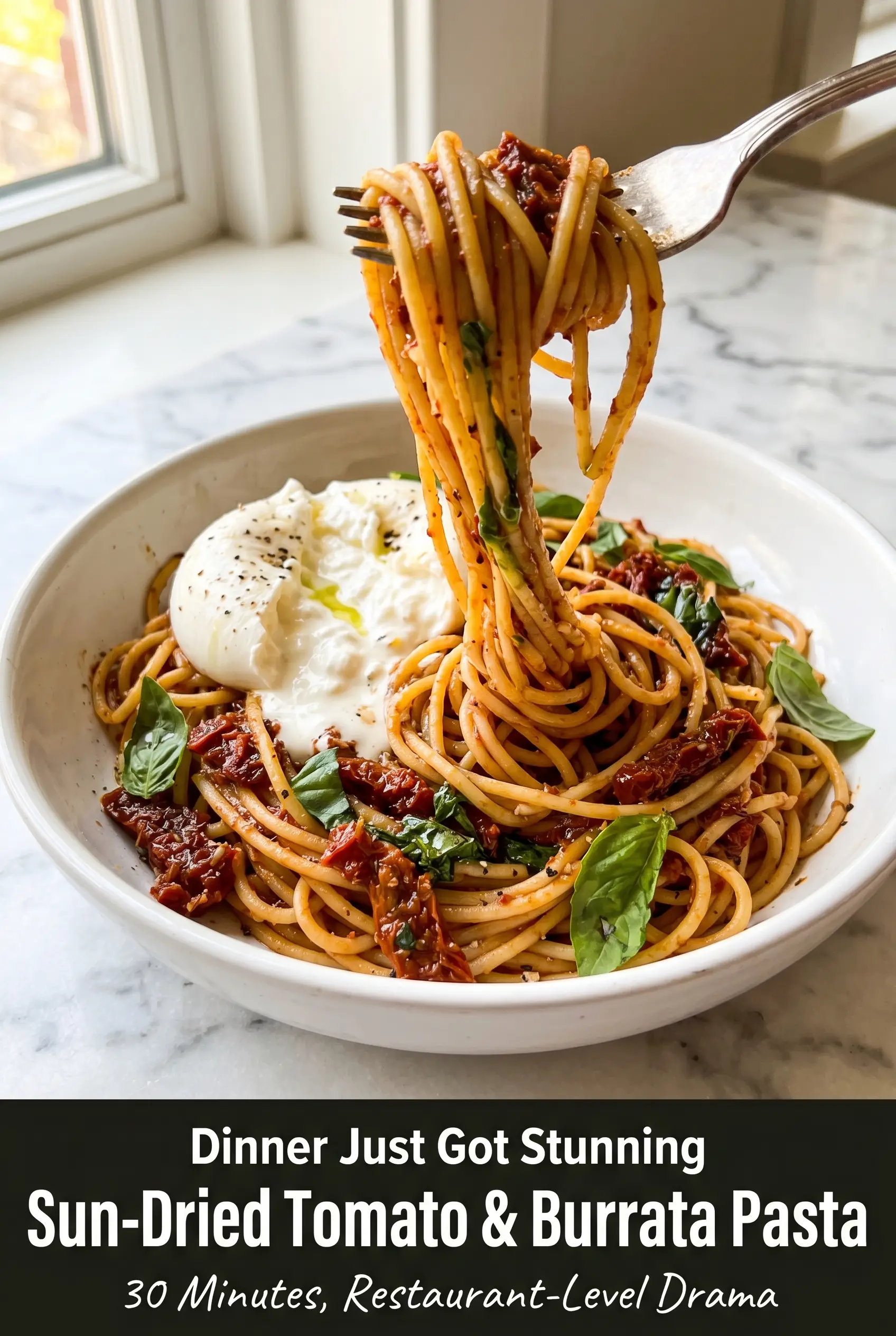
Sun-Dried Tomato & Burrata Pasta with Basil Oil
Ingredients
Equipment
Method
- Blend basil leaves, extra virgin olive oil, the small garlic clove, and a pinch of salt in a small blender or food processor until smooth and vivid green, scraping down if needed.
- Bring a large pot of heavily salted water to a boil, then cook the spaghetti or linguine according to package directions until al dente.
- Reserve 1/2 cup of pasta cooking water before draining the pasta, so you have enough starchy water for a glossy sauce.
- Heat olive oil and the reserved sun-dried tomato oil together in a large skillet over medium heat until shimmering.
- Add the sliced garlic and red pepper flakes and sauté for 1–2 minutes until golden and fragrant, making sure they don’t burn.
- Add the chopped sun-dried tomatoes and stir to combine, then cook for 2 minutes to deepen the flavor.
- Add the drained pasta directly to the skillet and toss to coat, adding pasta water a splash at a time until the sauce is glossy and clings to every strand.
- Remove from heat, then stir in the grated Parmesan and season generously with salt and black pepper.
- Plate the pasta and make a slight well in the center to catch the burrata and basil oil.
- Tear each burrata ball and nestle the pieces on top, letting the creamy interior spill out onto the warm pasta.
- Drizzle generously with the basil oil, aiming for even coverage over the tomatoes and burrata.
- Top with extra fresh basil leaves, flaky sea salt, extra Parmesan, and black pepper, then serve immediately while the burrata is melting slightly.