
Southern Turkey and Dumplings
When the broth turns creamy and the dumplings begin to soften at the edges, this pot starts to feel like more than turkey soup. I wanted Southern Turkey and Dumplings…
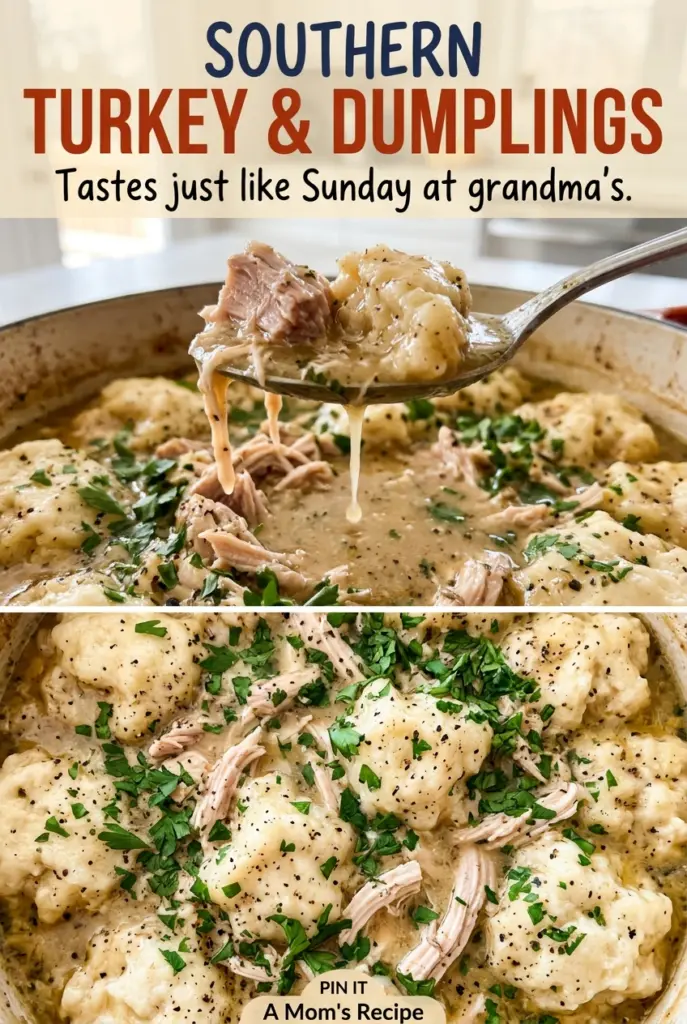
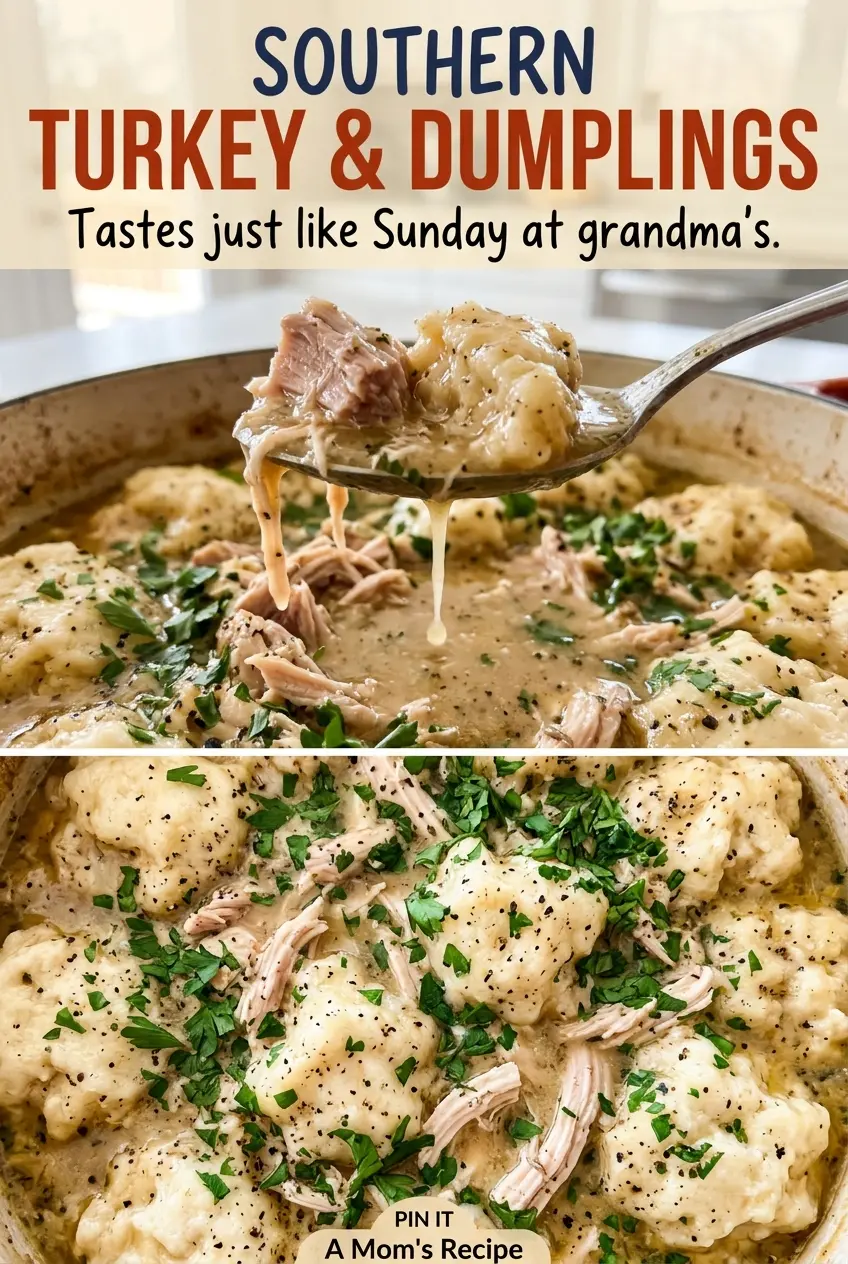
Tip: save now, cook later.When the broth turns creamy and the dumplings begin to soften at the edges, this pot starts to feel like more than turkey soup. I wanted Southern Turkey and Dumplings to have tender pieces of meat and a broth that clings to each dumpling, without relying on canned soup or drop biscuits. Bone-in turkey thighs give the broth time to develop while they simmer, and the finished stew stays hearty without getting heavy.
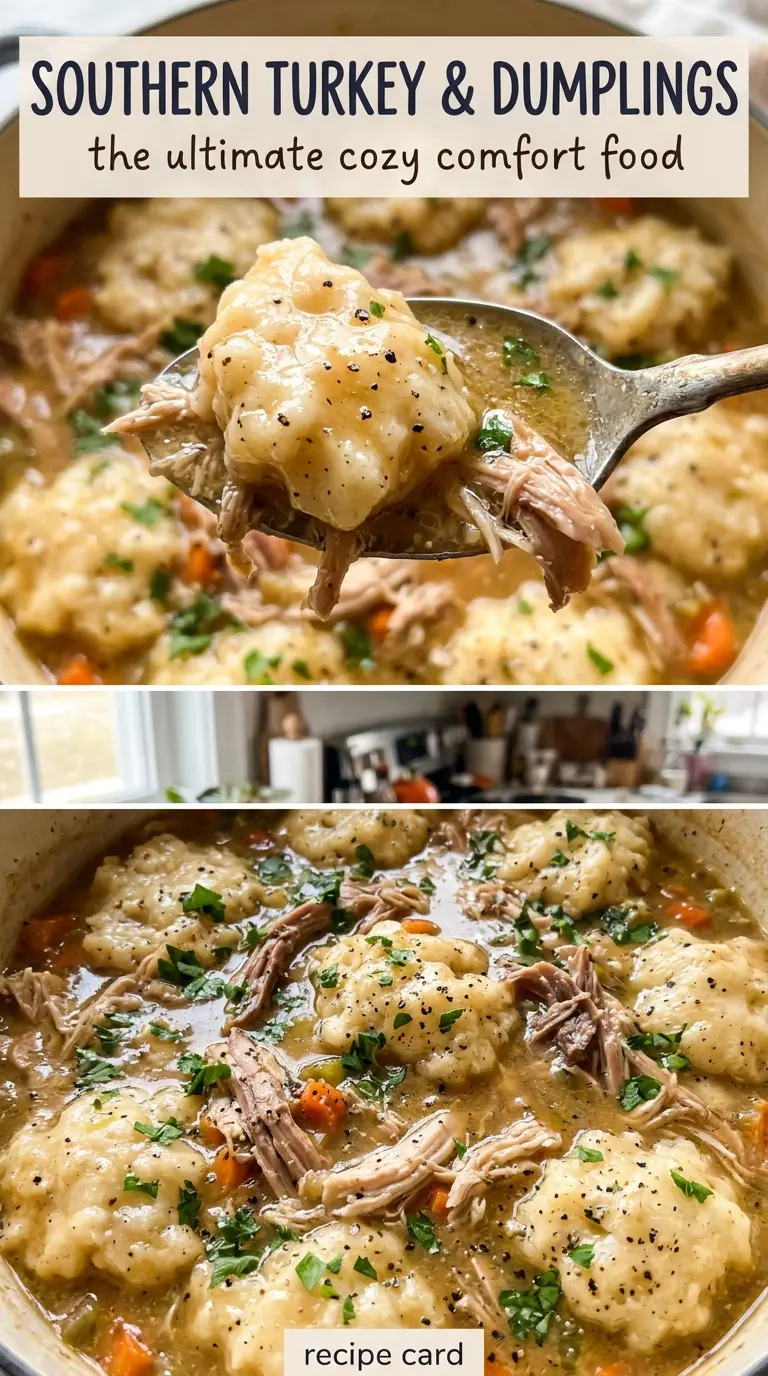
The dumplings are made from a simple flour-and-shortening dough, rolled thin and cut into small pieces. That makes them more like tender, home-style noodles than fluffy biscuits. A roux thickens the strained turkey broth before the dumplings go in, so they cook in a creamy base rather than a pot of thin liquid. Each spoonful brings together soft dumplings, shredded turkey, and savory gravy.
Kitchen Note
I wait until the shredded turkey is back in the pot before I decide whether the stew needs more salt. The broth has reduced as it thickened, so tasting at the end gives me a better read on the finished seasoning.
Save Southern Turkey and Dumplings for a cozy pot of tender dumplings and creamy, slow-simmered turkey broth.
Why These Dumplings Stay Tender Without Turning Into Biscuits
These dumplings aren’t leavened or dropped by the spoonful. They’re a simple dough of flour, shortening, and water, which gives them a firm enough structure to simmer in broth while still turning tender. The shortening coats some of the flour, helping the pieces stay delicate rather than developing the chew of a heavily worked dough.
That texture depends on treating the dough gently. Work the flour and shortening only until the mixture looks like coarse crumbs, then knead just long enough to bring the dough together. A short covered rest lets it relax before rolling, so it’s easier to shape without adding extra flour and making the dumplings tough. Keeping the pieces relatively small also helps them cook through in the thickened broth without leaving a doughy center.
The broth matters just as much as the dough. The turkey simmers with onion, celery, and bay leaves first, then those aromatics are strained out before the broth becomes gravy. That leaves a smooth base with a gentle savory flavor, rather than bits of vegetables competing with the dumplings.
What the Turkey, Shortening, and Flour Each Bring to the Pot
- Bone-in turkey thighs — The bones and dark meat give the cooking broth a fuller body than lean, boneless meat. The skin and bones come out before the turkey is shredded, so there’s no fussy carving at the table. Choose thighs that fit comfortably in your Dutch oven; the brand matters less than starting with bone-in pieces.
- Low-sodium chicken broth — It gives the turkey enough liquid to simmer while leaving room to season the finished stew. A regular-sodium broth can work, but the final seasoning will need a lighter hand. An inexpensive carton is fine here because the turkey and aromatics add their own character.
- All-purpose flour — It does double duty in the dumplings and the gravy. All-purpose flour makes a dough sturdy enough to roll and gives the roux the thickening power this stew needs. Self-rising flour isn’t a good swap: its leavening changes the dumplings’ texture.
- Vegetable shortening — Shortening keeps the dumpling dough tender without adding a buttery flavor. Cold unsalted butter can replace it, though the dumplings will taste richer and may be a little less delicate. Work either fat into the flour until you see coarse crumbs, not a smooth paste.
- Unsalted butter and whole milk — Butter forms the roux, while whole milk rounds out the broth and gives the gravy a creamy finish. The unsalted kind makes it easier to control seasoning at the end. Two-percent milk works if that’s what you have, but the sauce will be a little lighter.
From Turkey Broth to Tender Dumplings: The Stages That Matter
Simmer the Thighs Until the Meat Gives Easily
Combine the turkey thighs, chicken broth, quartered onion, celery, bay leaves, kosher salt, and black pepper in a 6-quart Dutch oven. Bring everything to a boil over medium-high heat, then lower the heat, partially cover the pot, and simmer for 60 to 75 minutes. The thickest part of the turkey should reach 165°F, and the meat should feel tender rather than tight. Transfer the thighs to a plate to rest for 10 minutes, strain the broth into a heatproof bowl, and discard the aromatics; once the turkey is cool enough to handle, remove the skin and bones and shred the meat.
Bring the Dough Together Without Overworking It
Work the flour for the dumplings and the shortening together with your fingertips until the mixture resembles coarse crumbs. Stir in the water until a dough forms, then knead briefly until smooth; a long knead makes these dumplings tougher. Cover the dough and let it rest for 15 minutes. Lightly flour the counter, roll the dough to about 1/8 inch thick, and cut it into roughly 1-by-2-inch pieces.
Build a Smooth, Creamy Broth
Melt the butter in the Dutch oven over medium heat, then whisk in the flour for the roux. Keep whisking as it cooks for 2 minutes so the flour loses its raw taste without browning unevenly. Gradually whisk in the strained broth; adding it in stages helps the roux blend smoothly instead of clumping. Whisk in the whole milk and bring the mixture to a gentle simmer over medium heat.
Simmer the Dumplings, Then Return the Turkey
Add the dumplings a few at a time and stir gently so the pieces don’t stick together. Lower the heat and simmer uncovered for 15 to 20 minutes, stirring gently once or twice; the broth should thicken, and the dumplings should be tender all the way through. If the pot boils hard, turn the heat down rather than stirring vigorously, which can break up the dough. Stir in the shredded turkey and simmer for 3 to 5 minutes, until it’s heated through.
Three Practical Ways to Adapt This Pot
Make the stew dairy-free
Use equal amounts of plant-based butter in the roux and plain, unsweetened oat milk in place of the whole milk. The stew will still thicken, though the finish will be less rich and buttery. Choose an unsweetened milk so the gravy stays savory.
Make it with bone-in chicken thighs
Replace the turkey with the same weight of bone-in chicken thighs for a chicken-and-dumplings version. Chicken thighs may become tender sooner, so use tenderness and a safe poultry doneness check rather than relying on the turkey timing alone. The broth will still benefit from the bones and dark meat.
Give the broth a pepperier finish
For a more pronounced black-pepper bite, increase the pepper in the broth to suit your taste. The dumplings and milk soften the seasoning as the stew comes together, so a slightly bolder broth gives each bite a warmer finish without changing the method.
Storage and Reheating
- Refrigerator: Store in a covered container for 3 to 4 days. The dumplings will continue to absorb broth, so the stew thickens as it sits.
- Freezer: The stew can be frozen, but the dumplings soften after thawing. For the best texture, freeze the turkey and broth before adding dumplings, then make the dumplings fresh when you serve it.
- Reheating: Warm leftovers gently in a saucepan, stirring carefully so the dumplings stay intact. If the stew has tightened in the refrigerator, loosen it with a small splash of chicken broth; a hard boil can make the dumplings fall apart.
Questions I Get Asked About Southern Turkey and Dumplings
Southern Turkey and Dumplings
Ingredients
Equipment
Method
- Combine the turkey thighs, chicken broth, onion, celery, bay leaves, salt, and pepper in a 6-quart Dutch oven.
- Bring to a boil over medium-high heat, then reduce the heat to low, partially cover, and simmer for 60 to 75 minutes, until the thickest part of the turkey reaches 165°F and the meat is tender.
- Transfer the turkey to a plate and let it rest for 10 minutes.
- Strain the broth into a heatproof bowl and discard the aromatics.
- When cool enough to handle, remove and discard the skin and bones, then shred the meat.
- In a medium bowl, work 2 cups of the flour and the shortening together with your fingertips until the mixture resembles coarse crumbs.
- Stir in the water until a dough forms, then knead briefly until smooth.
- Cover the dough and rest for 15 minutes.
- Lightly flour the counter with some of the remaining 1/4 cup flour and roll the dough about 1/8 inch thick.
- Cut the dough into roughly 1-by-2-inch pieces.
- Melt the butter in the Dutch oven over medium heat.
- Whisk in the remaining 1/4 cup flour and cook for 2 minutes, whisking constantly.
- Gradually whisk in the strained broth.
- Whisk in the milk.
- Bring to a gentle simmer over medium heat.
- Add the dumplings a few at a time, stirring gently so they do not stick together.
- Reduce the heat to low and simmer uncovered for 15 to 20 minutes, stirring gently once or twice, until the dumplings are tender throughout and the broth has thickened.
- Stir in the shredded turkey and simmer for 3 to 5 minutes, until heated through.
- Taste and add more salt if needed.