
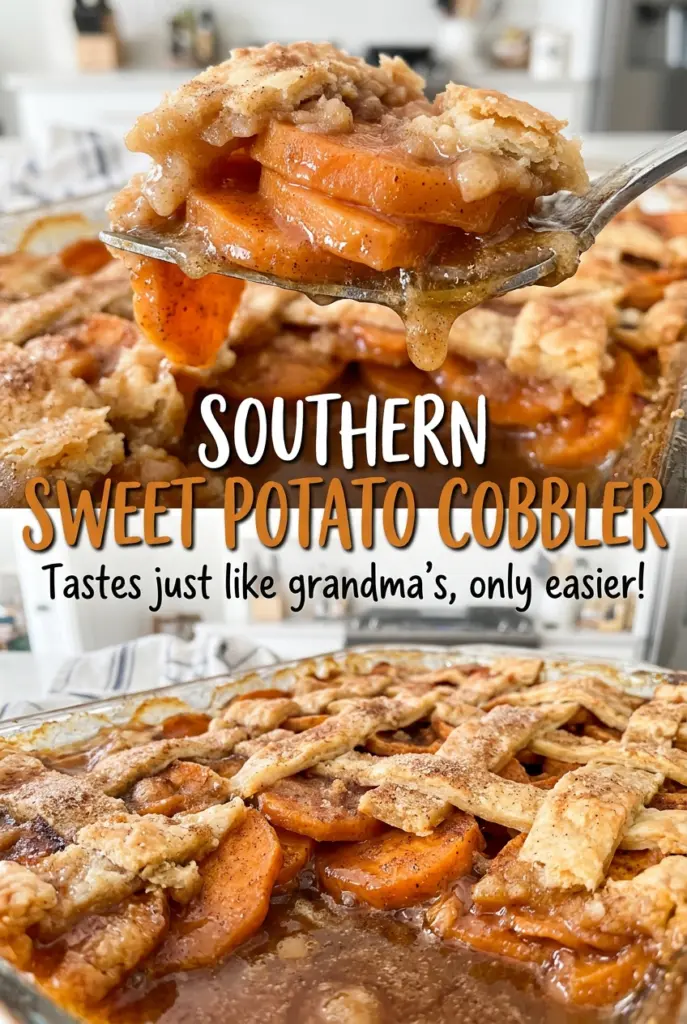
Southern Sweet Potato Cobbler
When the syrup turns glossy in the Dutch oven, the sweet potatoes are still waiting to go in. That short pause matters: it gives the filling its body before the…
Tip: save now, cook later.When the syrup turns glossy in the Dutch oven, the sweet potatoes are still waiting to go in. That short pause matters: it gives the filling its body before the slices have a chance to soften. In Southern Sweet Potato Cobbler, cinnamon and nutmeg scent the butter-rich syrup, while a simple shortening pastry makes a sturdy base and a crisp lattice top.
I make the dough first so it has time to chill while I prepare the filling. The larger piece lines the dish, and the smaller piece becomes strips for the top; keeping those portions separate makes the assembly much easier to manage. A fork-tender slice is the cue to stop simmering the sweet potatoes, since they’ll spend more time in the oven.
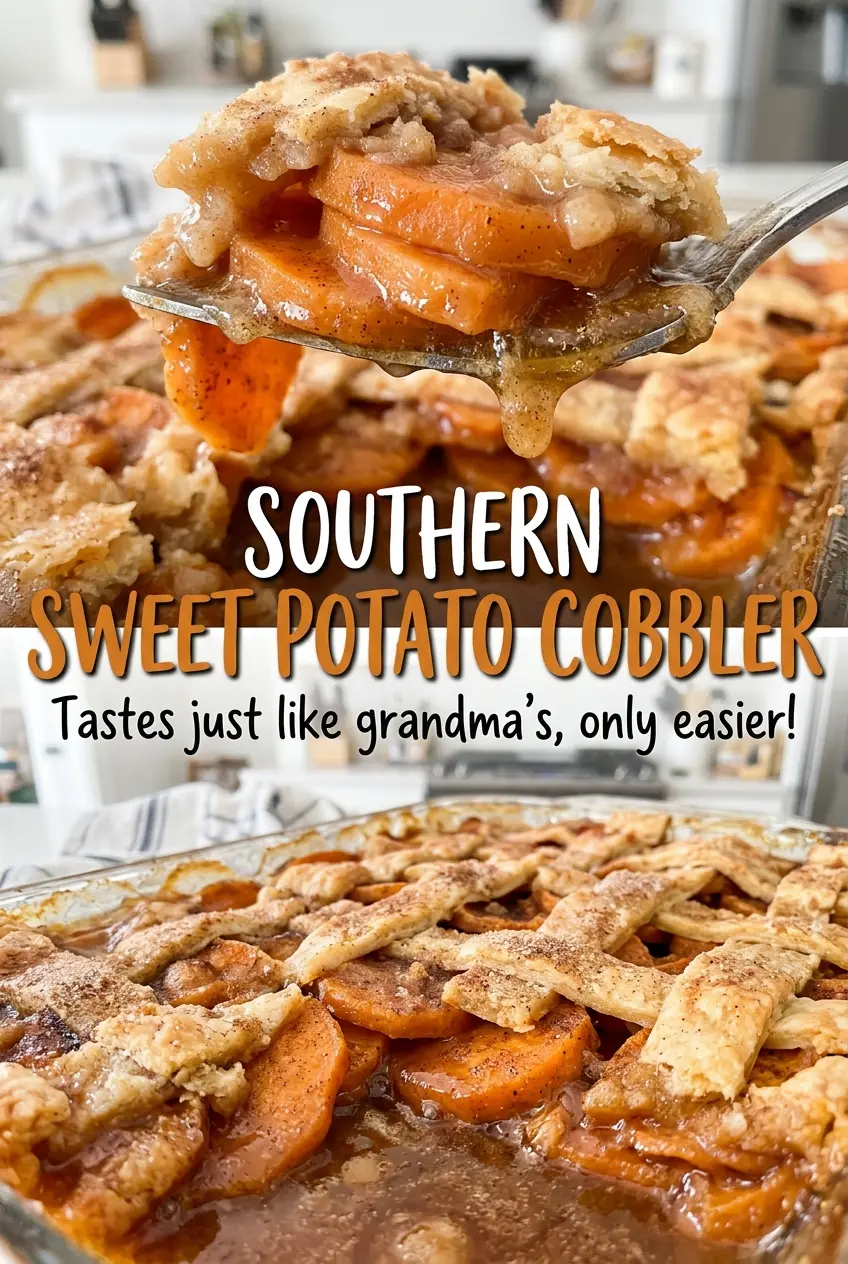
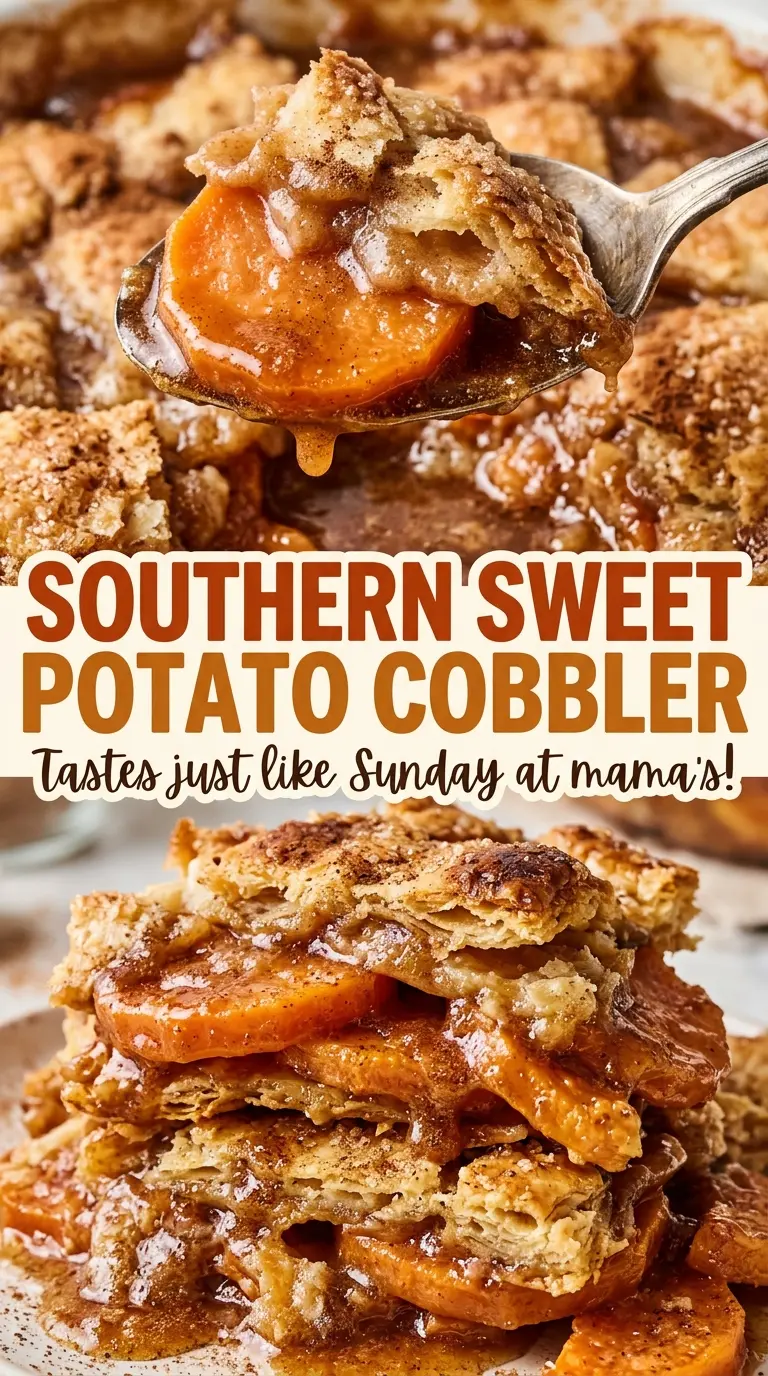
After baking, the pastry should be golden and the filling bubbling in the center. Give the cobbler at least 30 minutes to cool before cutting. The syrup settles around the tender sweet potatoes, and each scoop comes with a piece of flaky crust.
Kitchen Note
Chill both pastry portions for at least 30 minutes before rolling. The cold dough is easier to handle when you’re fitting the bottom crust and cutting clean lattice strips.
Save Southern Sweet Potato Cobbler for its glossy spiced filling and golden pastry lattice.
Why the Sweet Potatoes Go Into a Thickened Syrup, Not Plain Sugar
Sweet potatoes release moisture as they cook, so starting them in a thin mixture of sugar and water can leave the filling loose. Here, cornstarch is whisked into cold water first, then stirred into the melted butter with both sugars and the spices. Heating that mixture to a simmer lets the starch thicken the syrup before the potatoes are added.
That order also gives you a useful visual check. The syrup should turn glossy and thicken after a minute or two of simmering; if it still looks watery, the potatoes aren’t in the pot yet, so you have time to keep whisking and let it cook a little longer. Once the sweet potato slices are added, gentle stirring coats them without breaking them apart. The result is a filling that clings to the slices instead of pooling like spiced water under the crust.
It’s a small bit of sequencing, but it makes this cobbler different from simply layering raw sweet potatoes with a dry sugar mixture. The filling is already saucy before it reaches the baking dish, and the oven finishes the pastry while the center bubbles.
What the Shortening Crust and Spiced Syrup Each Bring
- Vegetable shortening — It gives this pastry its tender, crumbly texture and is easy to work into the flour. Keep it cool as you cut it in; pea-size crumbs are the target, not a smooth paste. Cold unsalted butter can replace it in the same quantity for a richer, more buttery crust, though the texture will be less reliably flaky.
- All-purpose flour and cold whole milk — All-purpose flour gives the crust enough structure to line the dish and hold the lattice. Add the milk after the shortening is cut in, and toss just until the dough comes together; extra mixing can make pastry tougher. For a dairy-free dough, plain unsweetened plant milk is the most useful swap.
- Sweet potatoes — Choose firm potatoes and cut them into even slices so they soften at roughly the same pace. Fresh sweet potatoes are important here because they simmer in the syrup before baking; canned ones are already soft and are more likely to fall apart.
- Cornstarch — This is what thickens the butter-and-sugar syrup before the sweet potatoes go in. Whisk it into the water until smooth so you don’t carry dry lumps into the pot. I wouldn’t replace it with flour here; the syrup won’t thicken in quite the same clean, glossy way.
- Granulated and light brown sugars — Together they sweeten the filling while the brown sugar adds a deeper molasses note. Dark brown sugar works in place of light brown sugar if that’s what’s in your pantry; expect a more pronounced molasses flavor.
- Cinnamon, nutmeg, and vanilla — These season the syrup without hiding the sweet potato. Ground spices don’t need to be expensive, but use ones that still smell fragrant when you open the jar. Imitation vanilla can stand in for pure vanilla extract in the same amount.
- Unsalted butter — Butter gives the syrup a rounded, buttery base. A good everyday butter is fine because it’s melted into the filling; there’s no need to reach for a specialty brand.
How to Get a Tender Filling Under a Crisp Lattice
Mixing and Resting the Pastry
Whisk the flour and salt in a large bowl, then cut in the shortening until you see coarse crumbs about the size of peas. Pour in the cold milk and toss with a fork only until the dough holds together; it doesn’t need to look perfectly smooth. Divide it into two portions, roughly two-thirds and one-third, shape each into a rectangle, wrap, and refrigerate for at least 30 minutes. If the dough feels sticky when you start rolling, return it to the refrigerator until it’s easier to handle.
Building the Glossy Spiced Syrup
Whisk the cornstarch and water in a medium bowl until no dry pockets remain, then whisk in the granulated sugar, brown sugar, cinnamon, and nutmeg. Melt the butter in a 5-quart Dutch oven over medium heat and whisk in the mixture. Bring it to a simmer and cook for 1 to 2 minutes, whisking, until the syrup thickens and looks glossy. Keep whisking around the bottom and sides of the pot so the thickening mixture doesn’t settle in one spot.
Simmering the Sweet Potato Slices
Add the sweet potatoes and stir gently to coat each slice in syrup. Cover the Dutch oven and simmer over medium-low heat for 12 to 15 minutes, stirring gently once or twice. Stop when a fork passes into the slices easily but they still hold their shape; they’ll continue cooking in the oven. Take the pot off the heat and stir in the vanilla.
Fitting the Crust and Baking Until Bubbly
Preheat the oven to 375°F and grease a 9×13-inch baking dish with the reserved shortening. Roll the larger piece of dough on a lightly floured surface into an 11×15-inch rectangle, fit it into the dish, and press it over the bottom and about 1 inch up the sides. Roll the smaller piece into a 10×14-inch rectangle and cut 1-inch-wide strips. Spoon the potatoes and syrup into the lined dish, arrange the strips in a lattice, then fold the bottom crust over the strip ends and press to seal. Bake on the lower-middle rack for 45 to 55 minutes, until the pastry is golden and the filling bubbles in the center; cool at least 30 minutes before serving.
Two Good Ways to Adapt This Sweet Potato Cobbler
Make the pastry and filling dairy-free
Use plain unsweetened plant milk in place of the whole milk, and use a dairy-free butter substitute in the filling. The shortening-based pastry is already made without butter, so those two swaps cover the dairy ingredients. The filling may taste a little less rich, but the cinnamon-spiced syrup still coats the sweet potatoes.
Trade the nutmeg for ginger
Replace the ground nutmeg with the same amount of ground ginger for a warmer, slightly sharper spice note. Keep the cinnamon in place so the filling still has its familiar sweet-spice character.
Storage and Reheating
- Refrigerator: Cover and refrigerate leftovers for 3 to 4 days. The pastry will soften as it sits beside the syrup.
- Freezer: Freeze fully cooled portions in an airtight container for up to 2 months. Thaw overnight in the refrigerator; the crust may be softer than when freshly baked.
- Reheating: Warm portions in a 325°F oven until heated through. The oven brings back some crispness; microwaving is quicker but leaves the pastry soft.
Questions That Come Up With Southern Sweet Potato Cobbler
Southern Sweet Potato Cobbler
Ingredients
Equipment
Method
- Preheat the oven to 375°F and grease a 9x13-inch baking dish with 1 teaspoon of the shortening.
- Whisk the flour and salt in a large bowl.
- Cut in the remaining shortening until the mixture has coarse, pea-size crumbs.
- Pour in the milk and toss with a fork until the dough holds together.
- Divide the dough into two portions, about two-thirds and one-third.
- Shape each portion into a rectangle, wrap, and refrigerate for at least 30 minutes.
- In a medium bowl, whisk the cornstarch and water until smooth.
- Whisk in the granulated sugar, brown sugar, cinnamon, and nutmeg.
- Melt the butter in a 5-quart Dutch oven over medium heat.
- Whisk in the cornstarch mixture and bring to a simmer.
- Cook for 1 to 2 minutes, whisking, until the syrup thickens and turns glossy.
- Add the sweet potatoes and gently stir to coat.
- Cover and simmer over medium-low heat for 12 to 15 minutes, stirring gently once or twice, until the slices are just fork-tender.
- Remove from the heat and stir in the vanilla extract.
- Roll the larger portion of dough on a lightly floured surface into an 11x15-inch rectangle.
- Fit the dough into the baking dish and press it across the bottom and about 1 inch up the sides.
- Roll the smaller portion into a 10x14-inch rectangle.
- Cut the dough into 1-inch-wide strips.
- Spoon the sweet potatoes and syrup into the pastry-lined dish.
- Arrange the dough strips in a lattice over the filling.
- Fold the bottom crust over the strip ends and press to seal.
- Bake on the lower-middle oven rack for 45 to 55 minutes, until the pastry is golden brown and the filling bubbles in the center.
- Let the cobbler cool for at least 30 minutes before serving.