
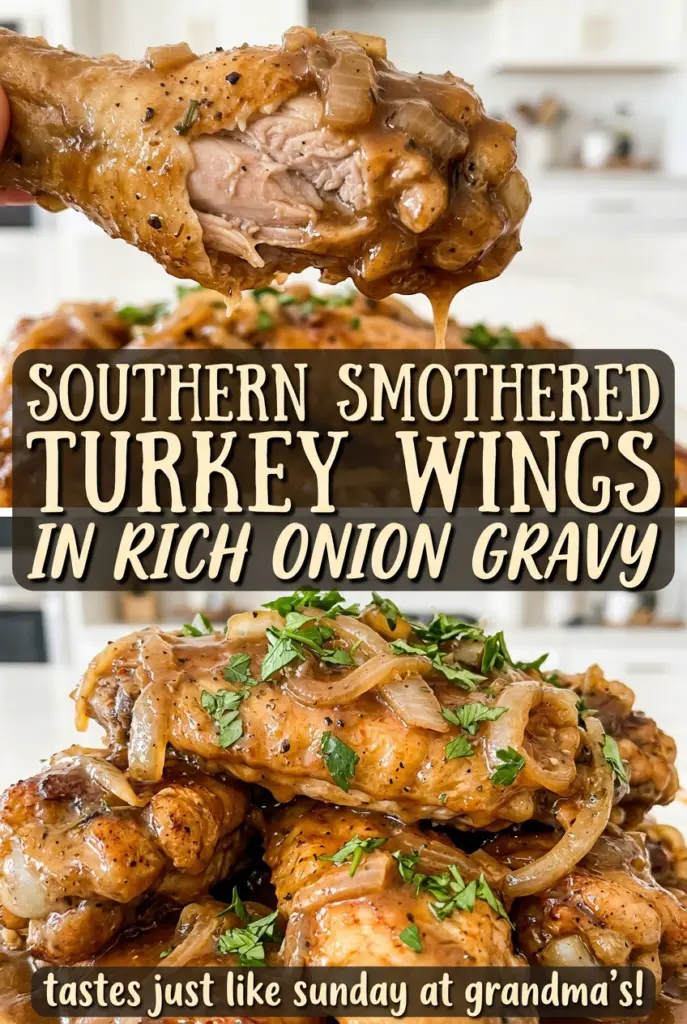
Southern Smothered Turkey Wings in Rich Onion Gravy
When the turkey wings hit the hot skillet, the paprika and garlic start to smell toasty before the gravy is even underway. I brown them in batches so the skin…
Tip: save now, cook later.When the turkey wings hit the hot skillet, the paprika and garlic start to smell toasty before the gravy is even underway. I brown them in batches so the skin gets real color instead of steaming in a crowded pan. That first sear gives these Southern smothered turkey wings a deeper, savory start, while the oven does the slow work of making the meat tender.
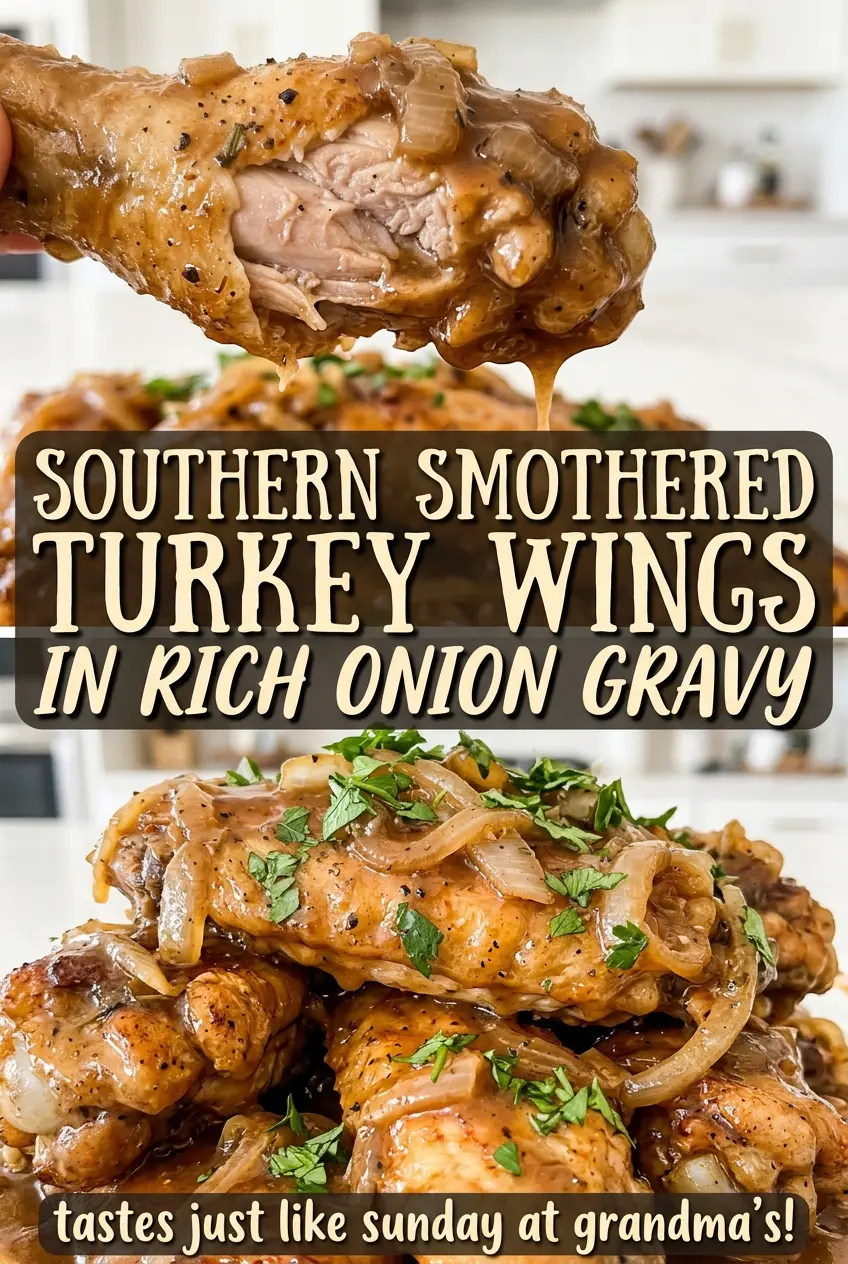
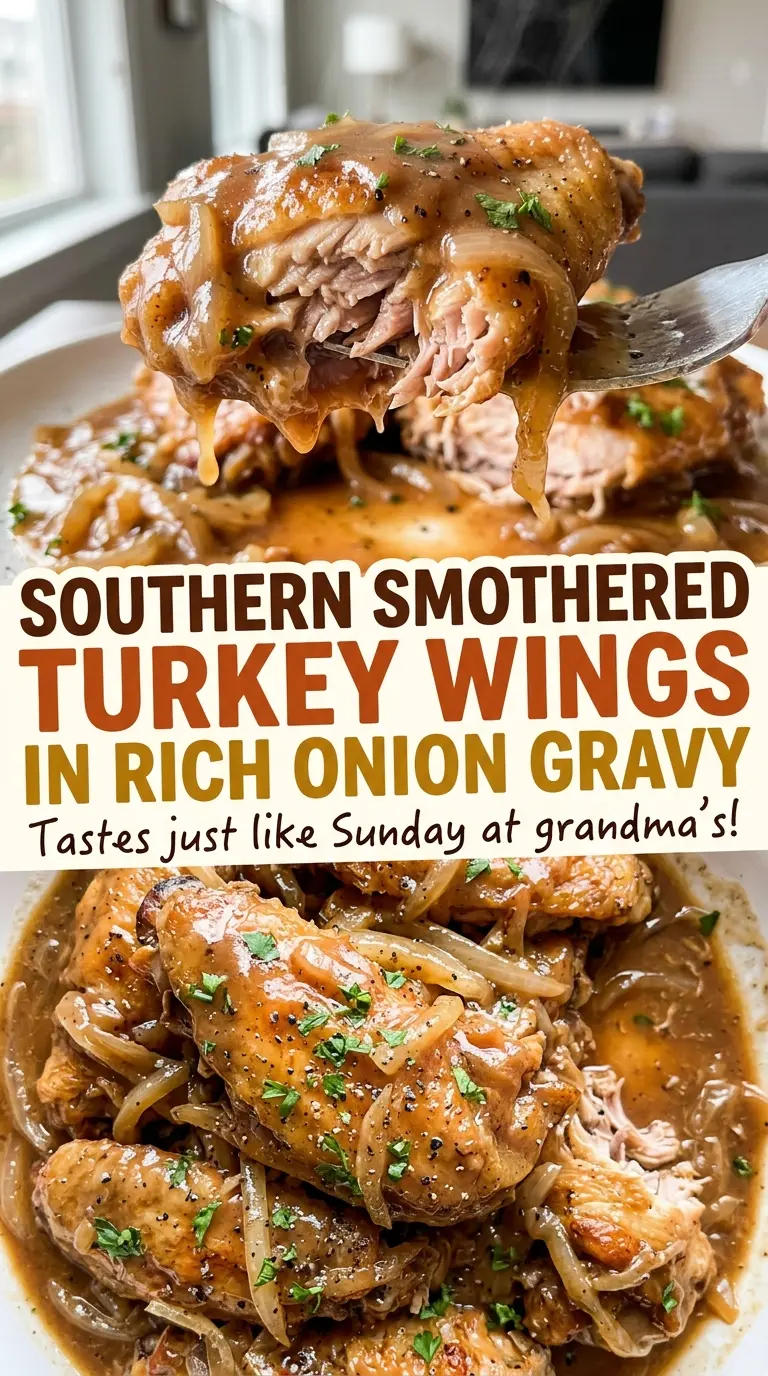
The onion gravy comes together right in the same skillet. Softened onions, butter, and flour make a sturdy base; whisking in the broth gradually keeps it smooth before it goes over the wings. Then everything bakes covered until the gravy is rich and the turkey is fork-tender. Spoon plenty of that soft onion gravy over each piece, right down to the last bite.
Kitchen Note
I check the thickest part of a wing with the thermometer tip held clear of the bone. The wings should reach at least 165°F there, and the meat should be fork-tender.
Save these smothered turkey wings for a cozy dinner with tender meat and plenty of rich onion gravy.
Why These Wings Need a Covered Oven, Not a Quick Roast
Turkey wings have more connective tissue than a quick-cooking cut, so a short roast can leave the meat chewy even when the outside looks browned. A long, covered bake gives the wings time to soften while the gravy stays around them. The foil matters here: it holds in moisture instead of letting the top layer of gravy dry out during the extended cook.
The browning and the braise do different jobs. The skillet puts color on the seasoned wings, while the covered baking dish carries that savory base through the slow cook. The onions soften into the gravy rather than staying sharp, and their sweetness balances the peppery seasoning. Keep the wings in a single layer so each piece sits in the gravy and cooks evenly; stacking them makes it harder for the heat and sauce to surround every piece.
This is a dish to cook until the wings are tender, not to pull out just because the clock reaches the low end of the baking range. Wing size can vary, so use the texture and temperature cues rather than relying on appearance alone. By the time they’re ready, the meat should give easily under a fork and the onions should be soft throughout.
What the Onions, Flour, and Broth Each Bring to the Gravy
- Turkey wings — Look for meaty pieces with an even size so they finish at a similar pace. Patting them dry before seasoning helps them brown in the skillet instead of releasing surface moisture. If they’re sold whole, split them at the joints.
- Yellow onions — Their mellow sweetness gives this gravy its main character. Thin, even slices soften in the skillet during the short cooking time; thicker pieces may still feel firm when the gravy is ready.
- All-purpose flour — Flour thickens the gravy and helps it cling to the wings. Let it cook with the butter and onions before adding broth so the finished gravy doesn’t taste raw or pasty.
- Low-sodium chicken broth — This gives the gravy a savory base while leaving room for the salt and seasoning on the wings. A low-sodium carton is useful here because the sauce cooks down around the meat.
- Unsalted butter — Butter rounds out the onion gravy and helps the flour coat the softened onions. Unsalted butter also keeps the seasoning easier to control alongside the broth and seasoned wings.
- Garlic powder, paprika, black pepper, and dried thyme — The first three season the turkey before browning; thyme brings an earthy note to the gravy. Dried thyme is easy to whisk into the broth and distributes through the sauce as it simmers.
- Vegetable oil — Use it to brown the wings over medium-high heat. It has a neutral taste, so the browned turkey and seasoning stay in front.
From Skillet-Browned Wings to Onion Gravy in the Oven
Brown the Seasoned Wings
Heat the oven to 350°F, then pat the wings dry and season them all over with kosher salt, black pepper, garlic powder, and paprika. Warm the vegetable oil in a 12-inch skillet over medium-high heat. Brown the wings in batches for 4 to 5 minutes per side; crowding the skillet keeps the pieces from getting proper color. Arrange the browned wings in a single layer in a 9×13-inch baking dish.
Soften the Onions and Cook the Flour
Add the sliced onions to the skillet and cook them over medium heat for 6 to 8 minutes, stirring occasionally, until softened. They should look relaxed and glossy rather than crisp. Stir in the butter until it melts, then add the flour and cook for 1 minute. Keep stirring so the flour coats the onions and doesn’t catch on the bottom of the pan.
Whisk the Broth into a Smooth Gravy
Gradually whisk in the chicken broth and dried thyme, working out any floury pockets as you go. The mixture should turn smooth before it comes to a simmer. Cook for 2 to 3 minutes, stirring, until the gravy begins to thicken. It doesn’t need to be fully thick at this point; it will continue cooking around the wings in the oven.
Cover and Bake Until Tender
Pour the gravy over the wings, distributing the onions across the dish, and cover the baking dish tightly with foil. Bake for 2 to 2 1/2 hours, until the wings are fork-tender and meet the temperature check in the Kitchen Note. Take care when removing the foil because trapped steam can rush out. Let the wings rest in the gravy for 10 minutes before serving so the sauce settles around the meat.
Two Useful Ways to Adapt These Smothered Wings
Make the Gravy Dairy-Free
Replace the unsalted butter with the same amount of vegetable oil. The flour will still thicken the gravy, though it won’t have quite the same buttery richness. Keep the oil for browning the wings as well.
Split Whole Wings into Joint Pieces
If you’re starting with whole wings, split them at the joints before seasoning. The smaller pieces are easier to arrange in the baking dish and portion at the table, while keeping the same savory seasoning and onion gravy.
Storage and Reheating
- Refrigerator: Store the wings with their gravy in a covered container for 3 to 4 days. The gravy will thicken as it chills.
- Freezer: Freeze the wings with plenty of gravy in an airtight freezer-safe container for up to 3 months. Thaw overnight in the refrigerator for more even reheating.
- Reheating: Warm the wings covered in a skillet over low heat, spooning gravy over them as it loosens. Avoid high heat, which can scorch the thickened gravy before the meat warms through.
The Questions That Come Up Before These Wings Go in the Oven
Southern Smothered Turkey Wings in Rich Onion Gravy
Ingredients
Equipment
Method
- Heat the oven to 350°F.
- If whole, split the turkey wings at the joints.
- Pat the wings dry.
- Season the wings all over with the salt, pepper, garlic powder, and paprika.
- Heat the oil in a 12-inch skillet over medium-high heat.
- Brown the wings in batches for 4 to 5 minutes per side.
- Arrange the browned wings in a single layer in a 9x13-inch baking dish.
- Add the thinly sliced onions to the skillet and cook over medium heat for 6 to 8 minutes, stirring occasionally, until softened.
- Add the butter and stir until melted.
- Stir in the flour and cook for 1 minute.
- Gradually whisk in the broth and thyme until smooth.
- Bring the gravy to a simmer and cook for 2 to 3 minutes, stirring, until it begins to thicken.
- Pour the gravy over the wings and cover the dish tightly with foil.
- Bake for 2 to 2 1/2 hours, until the wings are fork-tender and reach at least 165°F in the thickest part without touching bone.
- Remove the foil carefully and let the wings rest in the gravy for 10 minutes before serving.