

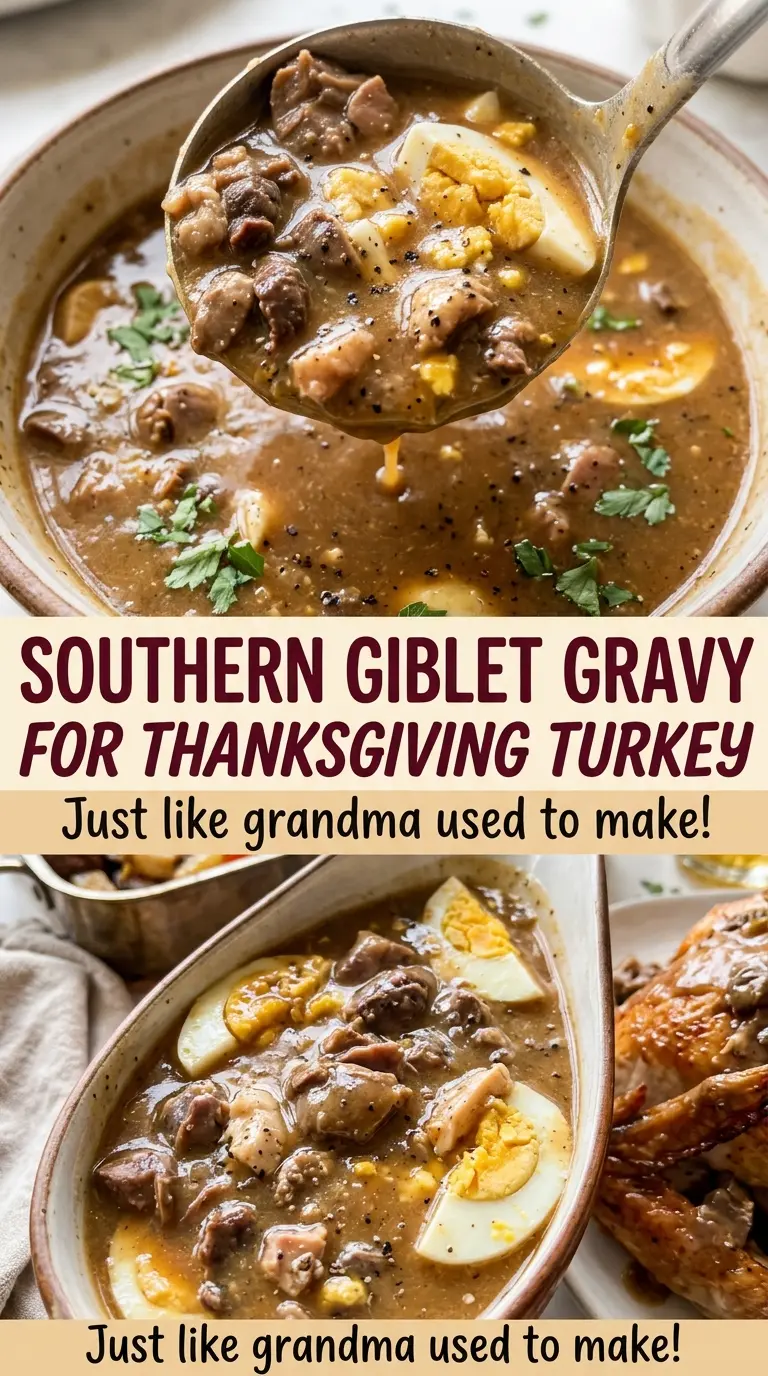
Southern Giblet Gravy for Thanksgiving Turkey
When the butter and flour begin to bubble together, the gravy starts with a smell that tells you it’s on the right track: warm, nutty, and ready for the turkey…
Tip: save now, cook later.When the butter and flour begin to bubble together, the gravy starts with a smell that tells you it’s on the right track: warm, nutty, and ready for the turkey flavor to come. I used to treat the pan drippings as the whole story, but they can’t give Southern giblet gravy for Thanksgiving turkey the depth that a slow-simmered stock brings.
The neck and giblets simmer into a savory base, while strained turkey drippings add the roasted flavor left in the pan. A butter-and-flour roux gives the gravy its body, and chopped giblets and hard-cooked eggs make each spoonful feel unmistakably Southern. Take your time with the stock, whisk the liquid in gradually, and let the finished gravy thicken until it coats a spoon. It’s rich, peppery, and made for the turkey platter.

Kitchen Note
Keep the egg saucepan covered after you take it off the heat, and give the eggs the full 12 minutes to stand. Cooling them under running water afterward makes peeling easier, and the firm yolks chop neatly instead of crumbling into the gravy.
Save this Southern giblet gravy for Thanksgiving: a slow-simmered turkey stock, chopped giblets, and a silky roux-built base make it a holiday-table classic.
Why the Gravy Isn’t Built on Pan Drippings Alone
Pan drippings bring the roasted turkey flavor, but they aren’t a steady foundation for a full saucepan of gravy. Their flavor and richness depend on the bird and what’s left in the roasting pan. Using strained giblet stock alongside them gives the gravy a savory base that doesn’t rely on drippings alone.
The roux has a different job: it thickens the liquid, rather than supplying the turkey flavor. That distinction matters because a gravy can taste rich and still feel thin, or thicken nicely but lack depth. Here, stock, drippings, and roux each contribute something separate. The chopped giblets and eggs add texture at the end; they aren’t what makes the gravy coat a spoon. Once those roles are clear, it’s easier to judge the finished sauce by its consistency and taste instead of trying to solve every problem with more drippings.
The Giblets, Drippings, and Eggs Each Bring Something Different
- Turkey neck, heart, and gizzard — These are the backbone of the stock and the savory pieces folded into the finished gravy. Finely chopping the cooked meat helps it distribute through the sauce instead of landing in a few oversized bites.
- Liver — It gives the gravy a deeper, more distinctive giblet flavor. Add it later than the neck and gizzard so it cooks through without spending the entire stock-simmering time in the pot.
- Turkey pan drippings — They bring the roasted flavor that stock by itself can’t quite supply. Strain them and skim off excess fat before measuring them for the gravy; if the roasting pan doesn’t yield enough, make up the difference with strained giblet stock for a milder turkey flavor.
- Unsalted butter and all-purpose flour — Together they form the roux that thickens the gravy. Unsalted butter leaves the salt level easier to manage alongside seasoned drippings, while all-purpose flour gives the sauce its classic smooth, spoon-coating body.
- Large eggs — Chopped hard-cooked eggs add tender, distinct pieces rather than dissolving into the sauce. Use ordinary large eggs; their size suits the balance of this gravy.
Build the Stock and Roux in the Right Order
Give the Neck and Gizzard Their Long Simmer
Put the turkey neck, heart, and gizzard in a 6-quart pot with the water, quartered onion, celery pieces, and bay leaf. Bring everything to a boil over high heat, then reduce the heat to low, partially cover the pot, and simmer for 1 1/2 to 2 hours. The neck meat and gizzard should be tender before you move on. Keep the simmer gentle rather than letting the pot boil hard.
Add the Liver, Then Strain and Chop
Add the liver after the neck meat and gizzard have softened, and simmer for 20 minutes, until it’s cooked through. Strain the stock, discard the vegetables and bay leaf, and measure out 6 cups; add hot water if you need to bring the amount up. Pull the meat from the neck and discard the bones. Finely chop the neck meat, heart, gizzard, and liver so they’ll be easy to spoon through the gravy.
Cook and Chop the Eggs
Place the eggs in a small saucepan and cover them with cold water by 1 inch. Bring the water to a boil, cover the pan, and remove it from the heat; let the eggs stand for 12 minutes. Cool them under cold running water, peel, and chop. Set the pieces aside for the final stir-in.
Cook the Roux Until Smooth and Bubbling
Melt the butter in a 4-quart saucepan over medium heat. Whisk in the flour and keep whisking for 2 to 3 minutes, until the mixture is smooth and bubbling. If the flour settles into pale clumps, keep whisking before adding any liquid. A smooth roux gives the stock a much better chance of blending in evenly.
Whisk in the Liquids and Finish the Gravy
Gradually whisk in the giblet stock and strained turkey drippings with excess fat skimmed. Bring the gravy to a gentle simmer and cook for 8 to 12 minutes, whisking often, until it thickens and coats a spoon. Stir in the chopped giblets, eggs, kosher salt, and black pepper, then simmer for 2 to 3 minutes while stirring gently. Serve while hot.
Two Ways to Adapt the Giblets and Eggs
A Milder Gravy Without Liver
Leave out the liver and skip its separate simmer. The gravy will have a gentler giblet flavor, while the neck meat, heart, and gizzard still give it plenty of texture and savory character.
An Egg-Free Version
Omit the eggs and their cooking step for gravy without egg. The sauce will be smoother and won’t have the soft chunks of chopped egg, but the roux and giblets still provide its familiar thickness and texture.
Storage and Reheating
- Refrigerator: Refrigerate within 2 hours and use within 3 to 4 days. The gravy will thicken as it chills.
- Freezer: Freeze in an airtight container for up to 3 months. Thaw overnight in the refrigerator; the chopped eggs may be a little firmer after freezing.
- Reheating: Warm gently in a saucepan, stirring often, until it reaches 165°F. Avoid a hard boil, which can make the thick gravy tighten and splatter.
Answers to the Giblet Gravy Questions That Come Up at the Stove
Southern Giblet Gravy for Thanksgiving Turkey
Ingredients
Method
- Put the turkey neck, heart, and gizzard in a 6-quart pot with the water, onion, celery, and bay leaf.
- Bring to a boil over high heat.
- Reduce the heat to low, partially cover, and simmer for 1 1/2 to 2 hours, until the neck meat and gizzard are tender.
- Add the liver and simmer for 20 minutes, until cooked through.
- Strain the stock, discard the vegetables and bay leaf, and measure 6 cups of stock, adding hot water if needed.
- Pull the meat from the neck, discard the bones, and finely chop the neck meat, heart, gizzard, and liver.
- Place the eggs in a small saucepan and cover with cold water by 1 inch.
- Bring to a boil, cover, and remove from the heat.
- Let stand for 12 minutes.
- Cool the eggs under cold running water, peel, and chop.
- Melt the butter in a 4-quart saucepan over medium heat.
- Whisk in the flour and cook, whisking, for 2 to 3 minutes, until smooth and bubbling.
- Gradually whisk in the giblet stock and turkey drippings.
- Bring to a gentle simmer and cook for 8 to 12 minutes, whisking often, until the gravy thickens and coats a spoon.
- Stir in the chopped giblets, eggs, salt, and pepper.
- Simmer for 2 to 3 minutes, stirring gently, then serve.