
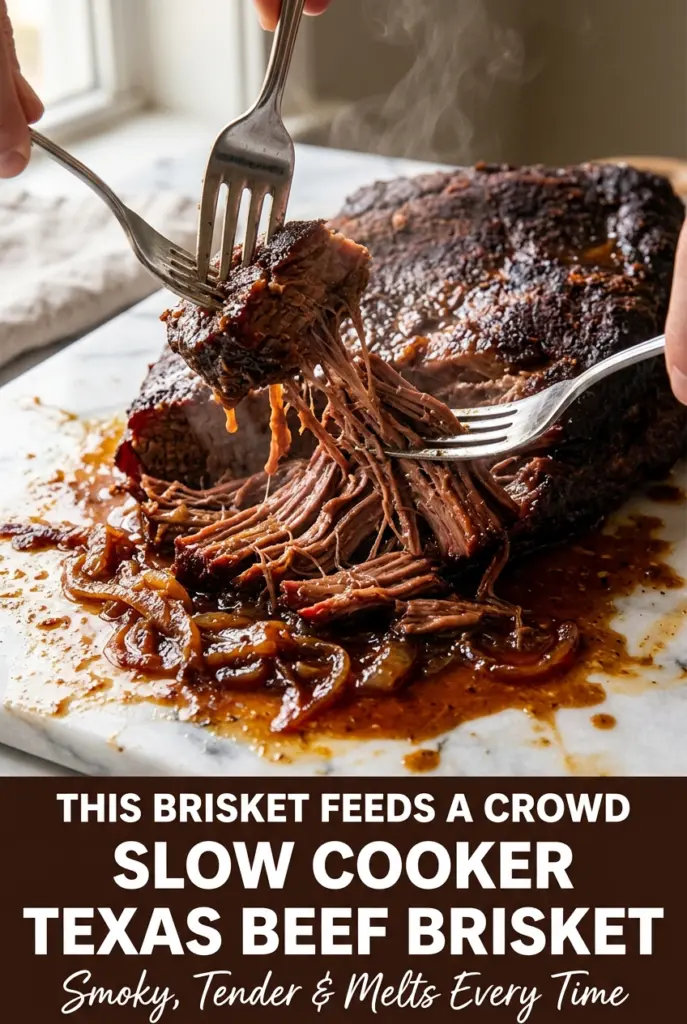
Slow Cooker Texas Beef Brisket for a Crowd
Slow cooker brisket earns its place when you want slices that hold together at the edges but give way with almost no resistance in the center. The best part is…
Tip: save now, cook later.Slow cooker brisket earns its place when you want slices that hold together at the edges but give way with almost no resistance in the center. The best part is the contrast: a peppery, deeply browned crust on the outside and tender beef that soaks up every bit of the smoky, tangy sauce underneath. For a big gathering, that kind of payoff matters because it stays juicy on the table and doesn’t need last-minute babysitting.
This version leans on a hard sear before the slow cooker ever comes into play. That step isn’t just for looks. Brisket has a lot of connective tissue, and the long, low heat handles that beautifully, but the sear gives you the deep savory flavor that a crockpot alone can’t build. The sauce also keeps its balance because it uses ketchup, vinegar, Worcestershire, and mustard together instead of relying on one-note sweetness. The result tastes bold without getting muddy.
Below you’ll find the small decisions that matter: how to season brisket so the flavor reaches past the surface, why the sauce only needs to come partway up the meat, and how to slice it so every serving stays tender instead of stringy.
The brisket sliced beautifully after resting, and the sauce had just enough tang to cut through the richness. I served it on buns for a party and there wasn’t a dry piece left.
Like this Texas brisket? Save it to Pinterest for the next time you need a smoky, tangy main dish that feeds a crowd without touching a smoker.
The Sear Is Doing More Work Than the Slow Cooker
A brisket that goes straight into the crockpot without browning first usually comes out tender but flat. The problem isn’t the slow cooker itself. It’s that the pot does moisture and texture well, but it can’t create that dark, roasted flavor on its own. If you skip the sear, the seasoning stays on the surface and the final sauce tastes softer and sweeter than it should.
The goal here is a deep brown crust, not a quick tan. High heat in a skillet or Dutch oven drives off surface moisture fast enough for the meat to brown instead of steam. If the pan isn’t hot enough, the brisket will leak juices, and those juices will pool under the meat before it ever gets color. Wait for the oil to shimmer and the brisket to release easily from the pan before turning it.
- Salt and pepper build the backbone. The brisket needs a full, even coating because the long cook time mellows seasoning.
- Smoked paprika, garlic powder, onion powder, and cayenne give the rub a Texas-style edge without turning the sauce into barbecue glaze.
- Apple cider vinegar keeps the sauce from tasting heavy. White vinegar works in a pinch, but the apple note is softer and more rounded.
- Yellow onion and smashed garlic melt into the braising liquid and keep the juices savory instead of one-dimensional.
What Each Ingredient Is Actually Doing in This Dish
Beef broth gives the slow cooker enough liquid to braise without drowning the brisket. It doesn’t need to cover the meat. In fact, too much liquid can wash away the rub and make the finished sauce thinner than you want.
Ketchup brings body and a little sweetness, while brown sugar deepens that sweetness with molasses flavor. Worcestershire adds the salty, savory punch that makes the sauce taste cooked instead of mixed. Mustard and vinegar are the sharp notes that keep the sauce from turning sticky. If you want a less sweet finish, cut the brown sugar back by a tablespoon; the brisket will still taste balanced.
- Brisket flat cut is the right choice for slicing. It cooks more evenly than a point cut and gives you neat slabs for sandwiches or platters.
- Olive oil is only there to help the sear. Any neutral oil with a higher smoke point also works.
- Worcestershire sauce matters more than it looks like it should. It adds depth that ketchup alone can’t mimic.
- Yellow mustard won’t taste like mustard in the finished dish. It sharpens the sauce and helps it cling.
How to Build the Brisket So It Stays Tender All Day
Seasoning the Meat Fully
Pat the brisket dry before you season it. Wet meat steams first, and that works against the crust you want later. Rub the spice mix over every surface, including the edges, and press it in so it doesn’t fall off in the sear. The surface should look heavily speckled and a little dry before it hits the pan.
Getting Color Before the Long Cook
Sear the brisket fat-side down first and let it sit long enough to develop a dark brown crust. If it sticks, it’s not ready to turn yet. Once it releases, flip it and do the second side. You’re not cooking it through here, just building the flavor that the slow cooker can’t create.
Setting Up the Crockpot the Right Way
Scatter the onions and garlic under the brisket so they act like a rack and keep the meat from sitting flat against the bottom. Pour the sauce over the top, but don’t try to submerge the brisket. Slow cookers trap moisture, and the steam plus sauce is enough to braise the meat without drowning it. Cook on LOW if you can, because the gentler heat gives the connective tissue time to relax without tightening the fibers.
Resting and Slicing Cleanly
Lift the brisket out carefully and let it rest before you cut it. That short pause keeps the juices from running across the board the moment the knife goes in. Slice against the grain if you want neat pieces, or shred it if you’re serving sandwiches. If the brisket falls apart while you slice, it was cooked a touch too long for tidy slabs but is still perfect for piling onto buns.
Three Ways to Make This Brisket Work for Your Table
Dairy-Free and Naturally Gluten-Free
This brisket already fits both of those needs as written, as long as your Worcestershire sauce is gluten-free. The texture stays the same, and you don’t lose anything by keeping it this way, which is rare for a crowd dish this rich.
A Less Sweet Texas-Style Sauce
Drop the brown sugar to 1 tablespoon if you want a sauce that leans more tangy than sticky. The vinegar and mustard will stand out more, and the final juices will taste cleaner over mashed potatoes or rice.
Turning It Into Sandwich Meat
Cook the brisket until it pulls apart with almost no resistance, then shred it instead of slicing. Stir a few spoonfuls of the cooking juices back into the meat so it stays moist on buns. This version is especially good if you’re feeding people who’d rather build sandwiches than sit down to a plated dinner.
Storage and Reheating
- Refrigerator: Store the brisket in its juices for up to 4 days. The flavor deepens overnight, and the meat slices a little more firmly the next day.
- Freezer: It freezes well for up to 3 months. Pack the meat with some of the sauce in airtight containers or freezer bags so it doesn’t dry out.
- Reheating: Warm it covered in a low oven or on the stovetop over gentle heat with a splash of the braising liquid. High heat dries brisket out fast, especially if it’s already sliced.
Answers to the Questions Worth Asking
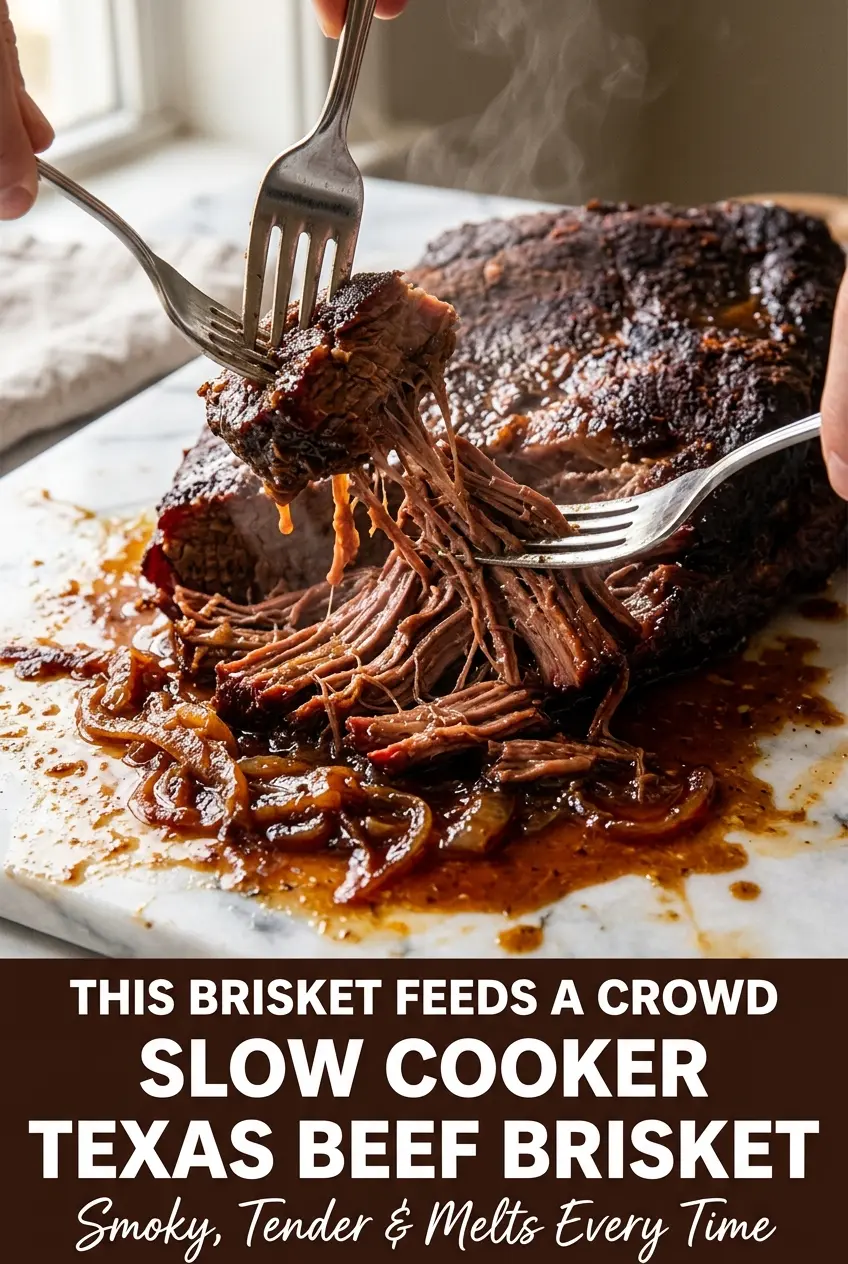
Slow Cooker Texas Beef Brisket for a Crowd
Ingredients
Equipment
Method
- Pat the brisket dry with paper towels, so the rub clings and sears properly.
- Mix kosher salt, coarse black pepper, smoked paprika, garlic powder, onion powder, and cayenne pepper together and rub generously all over every surface of the brisket.
- Heat olive oil in a large skillet or Dutch oven over high heat until shimmering.
- Sear the brisket fat-side down for 3–4 minutes until deeply browned, aiming for a dark, crusty surface.
- Flip the brisket and sear the other side for another 3 minutes until browned, using visual color to confirm the crust is set.
- While the brisket sears, whisk beef broth, ketchup, apple cider vinegar, brown sugar, Worcestershire sauce, yellow mustard, and chili powder together until smooth.
- Scatter sliced onion and smashed garlic into the bottom of a large slow cooker (6-quart or bigger).
- Place the seared brisket on top, fat-side up.
- Pour the sauce evenly over the brisket so it won’t fully cover the meat, which is fine.
- Cover and cook on LOW for 9–10 hours, until the brisket is fork-tender and pulls apart easily at the thickest part.
- (Alternative timing) Cover and cook on HIGH for 5–6 hours, until the brisket is fork-tender and pulls apart easily at the thickest part.
- Carefully transfer the brisket to a cutting board and let it rest for 15 minutes so the juices redistribute.
- Skim excess fat from the juices left in the slow cooker, leaving behind a richer braising liquid.
- Slice the brisket against the grain into thick slabs, or shred it with two forks for sandwiches.
- Spoon the rich pan juices generously over the brisket before serving.