
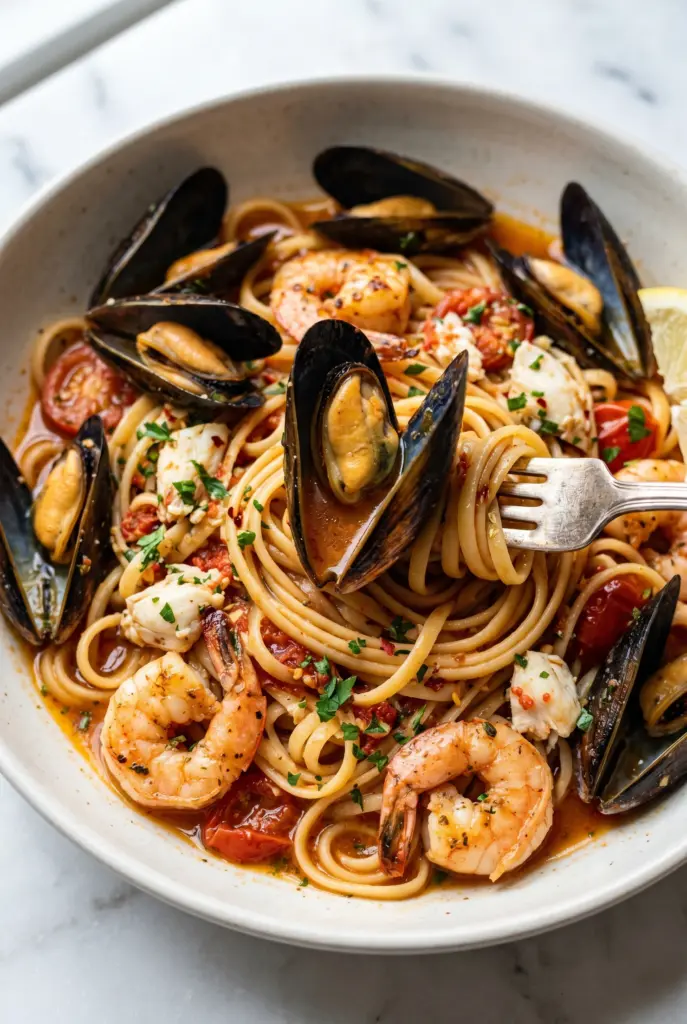
One Pot Patriotic Seafood Pasta
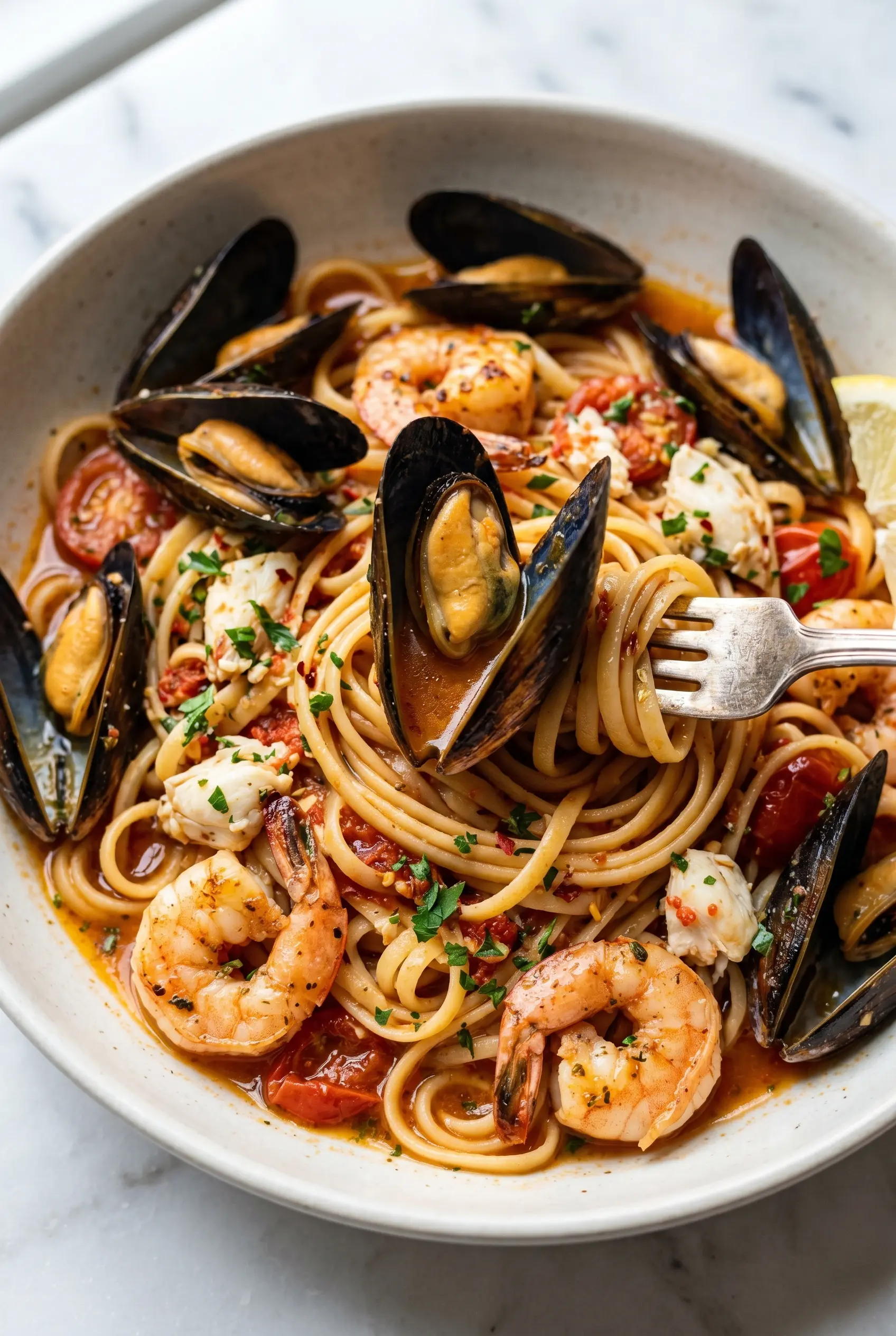
Glossy linguine, briny mussels, sweet crab, and plump shrimp come together in one pot with a sauce that clings instead of pooling at the bottom of the bowl. The pasta…
Tip: save now, cook later.Glossy linguine, briny mussels, sweet crab, and plump shrimp come together in one pot with a sauce that clings instead of pooling at the bottom of the bowl. The pasta cooks right in the broth, so every strand picks up garlic, white wine, tomato, and Old Bay as it softens. What you end up with is festive enough for a cookout table but practical enough for a weeknight when you want dinner to look like you tried harder than you did.
The trick is keeping the liquid at a steady simmer instead of a hard boil. That gives the pasta time to cook evenly while the starch thickens the broth into a sauce. The mussels go in when the pasta is almost there, not at the beginning, so they stay tender and the shrimp only need a few minutes at the end. Crab folds in last because it just needs warming through; if it cooks too long, it turns stringy and loses that sweet, delicate texture.
Below, I’ve laid out the small details that matter most: how to keep the pasta from clumping, when to add each seafood component, and what swaps work if you need to adjust the pot for what’s in your kitchen.
The pasta soaked up the broth beautifully and the mussels opened right on time. I was worried the crab would disappear, but folding it in at the end kept it sweet and tender. My husband kept going back for more sauce.
Save this one-pot seafood pasta for the night you want shrimp, mussels, and crab in a saucy, company-worthy pot with almost no cleanup.
The Sauce Needs to Simmer, Not Race
The biggest mistake in one-pot pasta is boiling the liquid too hard once the noodles go in. That agitates the starch, splashes the broth down too fast, and leaves you with sticky pasta on top and soupy sauce underneath. A steady simmer gives the linguine time to soften while the liquid concentrates around it.
This dish also depends on layering the seafood in stages. Mussels need enough heat to open, but not so much time that they tighten up. Shrimp cook even faster, and crab should only be warmed through. If all three go in together, the shrimp overcook before the mussels are ready.
- Wide pot matters: A broad, shallow pan gives the pasta more room to relax and keeps the mussels in a single layer so they cook evenly.
- Stir every couple of minutes: That keeps the linguine from welding itself into one tangled mass on the bottom.
- Watch the liquid level: If the pot looks dry before the pasta is tender, add a splash more broth or water. If it looks too loose at the end, let it sit uncovered for a minute or two.
What Each Ingredient Is Actually Doing in This Pot
- Linguine or spaghetti: Long pasta works best because it twirls through the sauce instead of disappearing into it. Broken strands cook more evenly in a crowded pot, which is why halving them here helps.
- Dry white wine: This adds brightness and gives the sauce a clean edge. Pick something you would drink; a cheap wine with harsh notes will stay harsh after it reduces. If you need to skip it, use more seafood broth with a squeeze of lemon at the end.
- Crushed tomatoes: They give the sauce body without turning it into a heavy red pasta. Whole tomatoes need extra crushing and can leave the broth uneven, so crushed tomatoes are the easiest path here.
- Seafood broth: This is where a lot of the ocean flavor comes from. If you only have regular vegetable broth, the dish still works, but it loses some depth. In that case, add a little more Old Bay and finish with extra lemon.
- Mussels, shrimp, and crab: Each one brings a different texture, which is what makes the pot feel abundant. Fresh mussels matter most because they need to open cleanly; shrimp and crab are more forgiving, but the crab should be lump meat if you want those visible sweet pieces.
Building the Pot in the Right Order
Softening the Onion First
Cook the onion in olive oil until it turns translucent and loses its raw bite. You are not looking for browning here; browned onion would push the sauce in a heavier direction before the seafood even enters the pot. Once the garlic goes in, stir constantly because it can go from fragrant to bitter in less than a minute.
Reducing the Wine Before Anything Else
Pour in the wine and let it bubble until it drops by about half. That cooks off the sharp alcohol edge and concentrates the fruitiness into the sauce. If you rush this step, the broth can taste thin and boozy instead of layered and clean.
Cooking the Pasta in the Broth
Add the liquids and seasoning, then slide in the pasta while the broth is at a gentle boil. Fan the noodles out with a spoon so they do not stick together in one block. Keep the pot uncovered at this stage so the sauce can reduce while the pasta releases starch, which is what gives you that silky finish.
Finishing with Seafood in Stages
When the pasta is almost al dente and the sauce has thickened, tuck in the mussels and cover the pot until they open. Add the shrimp only after that, because they need just a couple of minutes to turn pink and curl. Fold in the crab at the end with a light hand so the pieces stay intact instead of disappearing into the sauce.
How to Adapt This for the Pot You Have
Gluten-Free Version
Use a sturdy gluten-free linguine and watch it closely, because many GF pastas go from firm to soft fast once they hit liquid. Pull it off the heat while the center still has a little bite, since it will keep soaking up broth as it sits.
Dairy-Free and Naturally Light
This recipe already skips dairy, so the main job is keeping the sauce balanced with olive oil, citrus, and good seasoning. If the broth tastes flat at the end, an extra squeeze of lemon wakes everything up without adding richness that would cover the seafood.
No Mussels on Hand
Leave them out and increase the shrimp slightly, or add scallops in the last few minutes if you want another tender seafood element. Without the mussels, the pot loses some briny depth, so use a little more seafood broth and a small pinch more Old Bay to keep the flavor broad.
Storage and Reheating
- Refrigerator: Store leftovers in an airtight container for up to 2 days. The pasta will absorb more liquid, so expect it to thicken.
- Freezer: I don’t recommend freezing this one. The seafood texture gets fragile, and the pasta turns soft once thawed.
- Reheating: Warm gently on the stove over low heat with a splash of broth or water. High heat can make the shrimp tough and the mussels rubbery before the center is hot.
Answers to the Questions Worth Asking
One Pot Patriotic Seafood Pasta
Ingredients
Equipment
Method
- Heat the olive oil in a large wide pot or deep skillet over medium heat. Add the diced yellow onion and cook for 3–4 minutes until soft and translucent, stirring occasionally so nothing sticks.
- Add the minced garlic and red pepper flakes. Stir constantly for 1 minute until fragrant, and keep the heat steady so the garlic doesn’t brown (watch for golden spots).
- Pour in the dry white wine and let it reduce by half, about 2 minutes, scraping any bits from the bottom of the pot. The liquid should look slightly syrupy and the alcohol smell should fade.
- Add the crushed tomatoes, seafood broth, smoked paprika, and Old Bay seasoning. Stir to combine and bring to a gentle boil, then let the surface bubble softly.
- Break the linguine in half and push it into the broth, fanning out to keep strands from clumping. Reduce heat to medium and cook uncovered for 8 minutes, stirring every 2 minutes so it doesn’t stick.
- When the pasta is almost al dente and most liquid is absorbed, nestle the mussels into the pot. Cover and cook 3–4 minutes until mussels open, discarding any that remain closed.
- Scatter the large shrimp across the top and cover again. Cook 2–3 minutes until the shrimp are pink and curled at the thickest part.
- Gently fold in the lump crab meat. Taste and adjust salt, black pepper, and red pepper flakes as needed until the broth tastes balanced.
- Remove from heat and top generously with chopped fresh flat-leaf parsley. Serve immediately with lemon wedges and crusty bread if using.