

Sheet Pan Chicken Thighs Dinner
Juicy chicken thighs with crisp, bronzed skin and tender roasted vegetables make this the kind of dinner that earns a permanent place in the weekly rotation. Everything cooks on one…
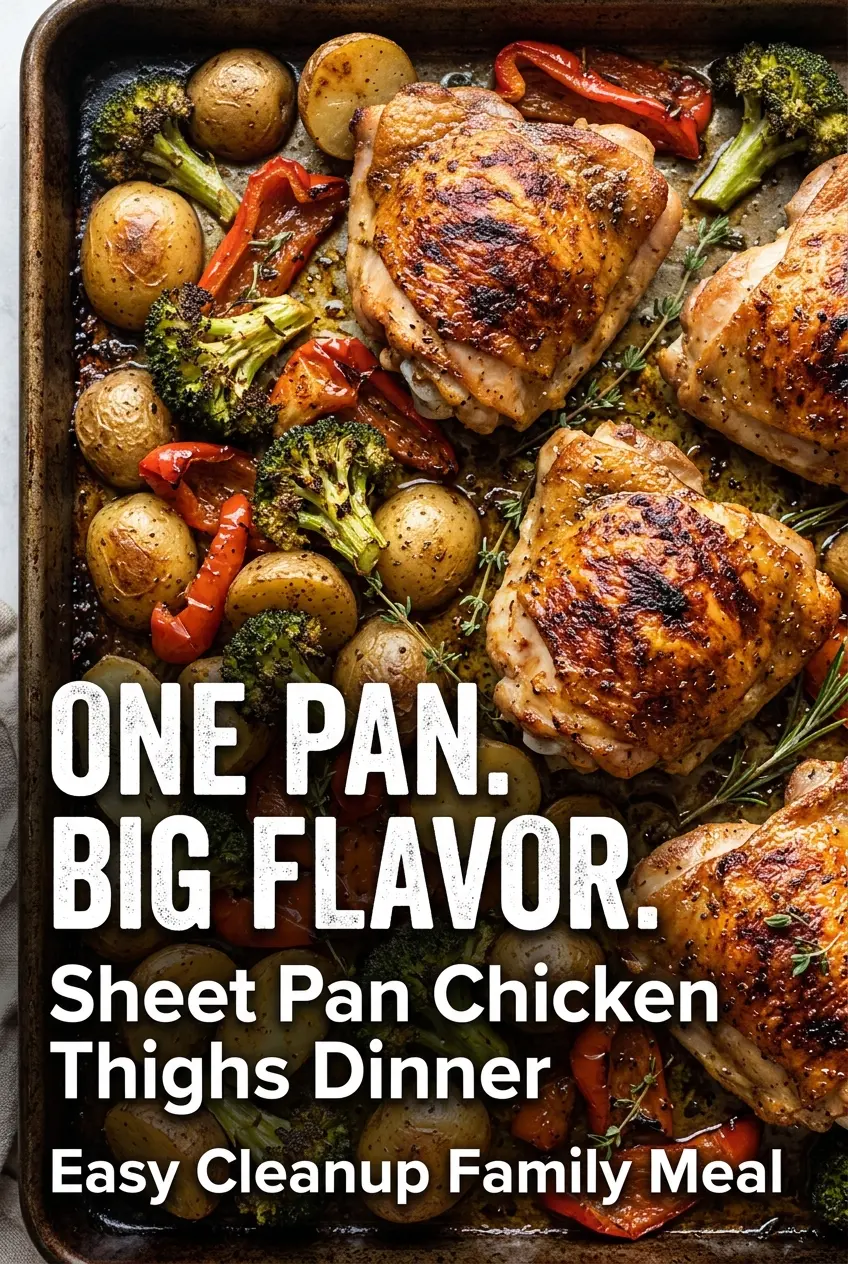
Tip: save now, cook later.Juicy chicken thighs with crisp, bronzed skin and tender roasted vegetables make this the kind of dinner that earns a permanent place in the weekly rotation. Everything cooks on one pan, but it doesn’t taste like a shortcut meal. The potatoes pick up the seasoned chicken drippings, the broccoli gets those browned edges, and the onions soften just enough to turn sweet without going mushy.
The key is staging the vegetables so nothing overcooks. Potatoes need a head start, especially if they’re the kind that take a little longer to soften, while the broccoli and peppers go in later so they stay bright and still have some bite. Bone-in, skin-on thighs handle the high heat beautifully because they stay juicy even after the skin has time to render and crisp.
Below, I’m walking through the timing that keeps the vegetables from turning soft and the skin from steaming. I also included a few practical swaps for different vegetables and an easy way to make the meal work with what you already have in the fridge.
The chicken skin came out crisp and the potatoes soaked up all the seasoning from the pan. I added the broccoli halfway through and it stayed bright with just the right amount of char.
Love the crispy chicken thighs and pan-roasted vegetables? Save this one-pan dinner for the nights when you want a full meal without extra dishes.
The Trick to Crisp Skin Without Overcooking the Vegetables
Chicken thighs are forgiving, but that doesn’t mean every sheet pan version turns out the same. The usual problem is crowding everything onto the pan at once. When that happens, the vegetables steam, the chicken skin stays soft, and the whole tray tastes flat instead of roasted.
This version works because the potatoes get the first stretch in the oven while the chicken starts rendering. That gives the thighs time to build color and the potatoes time to soften before the quicker-cooking vegetables join in. Broccoli and bell pepper only need enough time to blister at the edges and pick up the drippings, not enough time to collapse.
The other detail that matters is the high oven temperature. At 425°F, the chicken skin has a better chance of crisping before the meat dries out, and the vegetables get those darkened spots that taste like they came off a much more complicated dinner.
What Each Ingredient Is Actually Doing in This Dish

The bone-in, skin-on chicken thighs carry this whole dinner. Boneless thighs will work in a pinch, but they won’t give you the same rich drippings or the same crisp skin. If you use boneless, check them earlier because they cook faster and dry out before they’ve had time to pick up much color.
Baby potatoes are worth keeping in the mix because they hold their shape and soak up seasoning without turning mealy. Halving them helps them cook through in the same window as the chicken. If yours are larger, cut them into smaller wedges so they’re tender by the time the meat is done.
Broccoli, bell pepper, and red onion are here for contrast. Broccoli gives you browned edges, the peppers soften without losing all their structure, and the onion turns sweet in the oven. If you swap in zucchini, add it near the end because it releases more moisture and can make the pan soggy if it goes in too early.
The olive oil and seasoning mix do more than add flavor. They help the chicken and vegetables roast instead of dry out. Smoked paprika adds a deeper, almost woodsy note, while garlic powder and onion powder create a savory base that clings to the potatoes and skin better than fresh garlic would at this temperature.
Building the Pan in the Right Order
Start with the Potatoes
Toss the halved potatoes with part of the oil and seasoning first so every cut face is coated. Spread them out in a single layer and give them room, because crowded potatoes steam before they brown. They should start to soften at the edges and pick up color before anything else goes in.
Season the Chicken Separately
Rub the thighs with the remaining oil and spices so the seasoning sticks to the skin instead of falling into the pan. Lay them skin-side up and leave space around each one. If the thighs are packed tightly together, the skin won’t crisp; it will stay pale and rubbery from trapped steam.
Add the Faster Vegetables Later
After the first roast, scatter in the broccoli, bell pepper, and onion. Toss them in the pan juices so they pick up flavor without needing extra seasoning. They’re done when the broccoli florets have browned tips, the peppers are tender at the edges, and the onions look glossy and slightly caramelized.
Finish with a Quick Broil
A short broil gives the chicken skin that last burst of crackle. Stay close, because the line between crisp and scorched is short under the broiler. Pull the pan as soon as the skin looks deeply golden and blistered in spots.
How to Adapt This for Different Tables and Different Fridges
Make It Dairy-Free and Naturally Gluten-Free
This recipe already lands in both lanes as written, which is part of why it’s such a practical weeknight dinner. Just keep an eye on any seasoning blends you substitute, since some premixed spice blends add flour or hidden dairy. The flavor stays the same as long as you use plain spices and good olive oil.
Swap the Vegetables for What Needs Using Up
Cauliflower, carrots, Brussels sprouts, and green beans all work well here, but they don’t all need the same timing. Dense vegetables like carrots and Brussels sprouts can go in earlier with the potatoes, while green beans should wait until the last stretch so they stay snappy. Watery vegetables like zucchini need a later add-in or they’ll soften the whole pan.
Use Boneless Thighs or Chicken Breasts
Boneless thighs work well if you want a faster dinner, but they’ll need less time and won’t give you the same crisp skin. Chicken breasts can be used too, though they dry out faster, so add them later or cut them into large pieces and watch the internal temperature closely. The rest of the pan can stay the same.
Storage and Reheating
- Refrigerator: Store leftovers for up to 4 days. The chicken skin softens in the fridge, but the flavor holds up well.
- Freezer: The chicken freezes well, though the vegetables soften after thawing. Freeze in airtight containers for up to 2 months for best texture.
- Reheating: Reheat on a sheet pan in a 375°F oven until warmed through. The oven brings back more texture than the microwave, which tends to make the skin chewy and the vegetables limp.
Questions I Get Asked About This Recipe
Sheet Pan Chicken Thighs Dinner
Ingredients
Equipment
Method
- Preheat the oven to 425°F (220°C). Heat the oven fully so the chicken skin crisps during roasting.
- Line a large sheet pan with parchment paper. This helps prevent sticking and makes cleanup faster.
- Toss the potatoes with half the olive oil and half the seasonings. Coat all cut sides so they roast evenly.
- Arrange the potatoes on the sheet pan. Spread them into a single layer for better browning.
- Season the chicken thighs with the remaining olive oil and spices. Rub the seasoning over the skin for flavor and color.
- Place the chicken thighs on the pan beside the potatoes. Keep the thighs spaced so hot air can circulate.
- Roast for 25 minutes. Look for the potatoes to start browning and the chicken skin to set.
- Add the broccoli, bell pepper, and onion. Nestle them into the empty spaces so they roast alongside the chicken.
- Toss the vegetables lightly with the pan juices. This coats them with chicken drippings for better seasoning.
- Roast for another 20 minutes until the chicken reaches 165°F. Check the thickest part of the thigh and ensure the juices run clear.
- Broil for 2–3 minutes for extra crispy skin. Watch closely to prevent burning on the edges.
- Garnish with fresh parsley and serve. Finish right before serving for the freshest herb flavor.