

Sausage Egg and Cheese Breakfast Sliders
When the sausage comes out of the skillet, those browned bits and a little rendered fat are a reminder to drain it before the eggs go in. Too much grease…
Tip: save now, cook later.When the sausage comes out of the skillet, those browned bits and a little rendered fat are a reminder to drain it before the eggs go in. Too much grease can weigh down the soft rolls, while sausage cooked into small crumbles spreads evenly from edge to edge. That’s the difference between a slider that holds together and one that loses its filling as soon as you pick it up. These sausage egg and cheese breakfast sliders bake as one connected slab, then pull apart into 12 generous portions.
I keep the Hawaiian rolls attached while slicing them horizontally, so the filling stays neatly sandwiched between the bottom and top slabs. The eggs cook gently in the same skillet, with milk to keep them tender, and they’re ready when no liquid egg remains. Cheddar melts over the sausage and eggs while the buttery Dijon topping gives the sweet rolls a savory finish. Each slider comes out warm, soft, and just golden on top.

Kitchen Note
Give the sliders the full five-minute rest before pulling them apart. The melted cheese settles around the filling during that pause, so the sausage and egg are less likely to slide out when you serve them.
Save these sausage egg and cheese breakfast sliders for a make-ahead breakfast with soft rolls, savory crumbles, and a buttery Dijon top.
Why Keeping the Hawaiian Rolls Connected Makes These Sliders Easier to Serve
It’s easy to pull the rolls apart first and build each slider individually, but that gives you 12 little sandwiches to fill and arrange. Keeping the rolls joined changes the job: you make one top slab and one bottom slab, then layer the filling across the whole pan. The connected rolls stay aligned while you build, and the filling is spread in a single even layer instead of being portioned by hand.
That setup also matters once the sliders are baked. The edges of the rolls touch, so the finished slab is easy to lift and the filling stays tucked between the bread as you separate portions. Use a 9×13-inch baking dish that holds the full 12-count package without crowding or folding the rolls. If the top slab shifts while you place it, nudge it back into alignment before brushing on the butter and mustard; it’s much easier to correct before the topping goes on.
The filling should cover the bread without piling up in one spot. Spread the sausage and eggs across the rolls, then lay the cheddar over the surface. That even layering gives each portion a balanced bite, rather than leaving some sliders with mostly bread and others with all the filling.
What the Sausage, Eggs, and Sweet Rolls Each Bring to the Pan
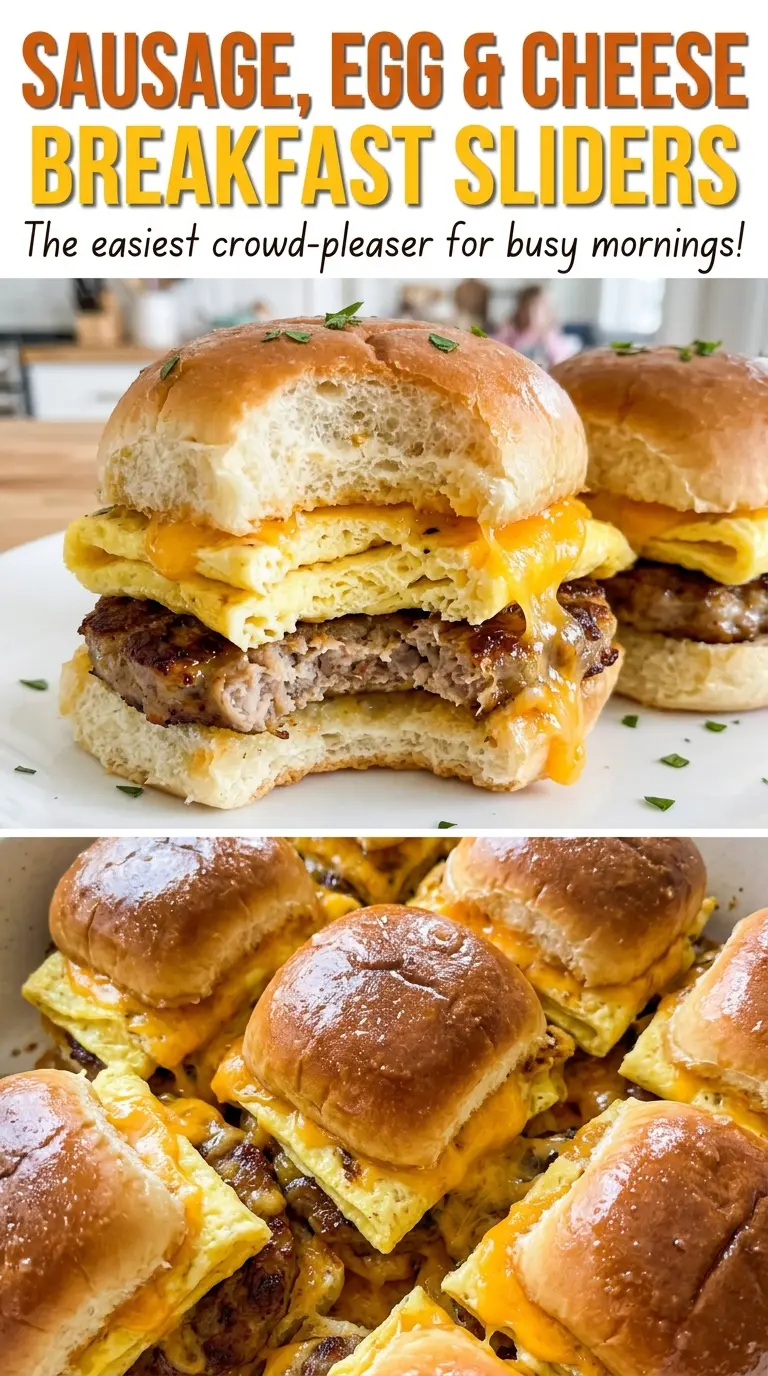
- Bulk pork breakfast sausage — Its seasoning flavors the whole filling, and the crumbles tuck neatly between the rolls. Buy bulk sausage rather than links when it’s available; links need their casings removed before you can break the meat into the same small pieces. The browned crumbles should be drained before the eggs go into the skillet.
- Eggs and milk — The eggs make a soft, substantial layer, while milk loosens the mixture and helps it cook into tender curds. Whisk them together before they hit the pan so the salt and pepper distribute evenly. If you need a dairy-free option, unsweetened plain oat milk can replace the milk in the egg mixture; avoid sweetened or vanilla varieties.
- Hawaiian sweet rolls — Their soft texture and gentle sweetness balance the savory sausage and cheddar, and the connected package makes assembly simple. Keep the rolls joined for the horizontal cut so you have two broad slabs rather than a stack of individual tops and bottoms.
- Cheddar slices — Slices cover the filling evenly and melt into a layer that helps hold the eggs and sausage together. Pre-sliced cheddar is convenient here; there’s no need to shred cheese or measure it out. A sharper cheddar brings a more pronounced cheese flavor, while mild cheddar keeps the filling mellow.
- Butter and Dijon mustard — Stirring Dijon into melted butter gives the roll tops a savory, lightly tangy coating. Melt the butter before mixing so the mustard blends in smoothly, then brush the mixture over the whole top slab instead of pouring it into one spot.
Build the Filling First, Then Bake Until the Cheese Melts
Brown the Sausage Until It Crumbles
Heat the oven to 350°F and lightly coat a 9×13-inch baking dish with cooking spray. Set a 12-inch skillet over medium heat and cook the bulk sausage for 8–10 minutes, breaking it into small crumbles as it browns. Look for browned pieces throughout rather than a few large clumps, and cook until the sausage reaches 160°F. Transfer it to a plate and pour off the excess fat before cooking the eggs.
Cook the Eggs Until No Liquid Remains
Whisk the eggs with the milk, kosher salt, and black pepper in a medium bowl. Pour the mixture into the skillet and cook over medium-low heat, stirring, for 3–5 minutes. The curds should look soft but fully set, with no liquid egg pooling in the pan. If they start sticking, keep stirring gently and scrape across the bottom so the eggs cook evenly.
Layer the Sliders in the Baking Dish
Slice the package of rolls horizontally without separating the individual rolls, then place the bottom slab in the prepared dish. Spread the cooked sausage and eggs evenly over it, followed by the 12 cheddar slices, and set the top slab in place. Stir the melted butter and Dijon mustard together, then brush the mixture over the tops of the rolls. Keep the topping on the bread rather than letting it collect around the sides of the dish.
Bake Until Golden and Let the Slab Set
Bake for 15–18 minutes, until the tops are lightly golden and the cheese has melted. Start checking near the shorter end of the baking window; the tops should have a little color without turning dark. Let the sliders rest for 5 minutes, then pull them apart along the natural lines between the rolls. If you cut through the joined rolls with a knife, use the seams as a guide for even portions.
Three Simple Ways to Change the Sliders Without Losing Their Shape
Make Them Vegetarian with Plant-Based Breakfast Sausage
Replace the pork sausage with plant-based breakfast sausage crumbles. Cook them according to the package directions, then use them in the same layer with the eggs and cheddar; their browning and fat content vary by brand, so drain off any excess before assembling. The sliders keep their savory, hearty filling, though the seasoning will depend on the product you choose.
Turn Up the Heat with Spicy Breakfast Sausage
Use hot bulk pork breakfast sausage in place of the regular breakfast sausage, keeping the same amount. It brings peppery heat to every bite without adding another ingredient or changing the assembly. The sweet rolls and cheddar soften the spice, but choose mild cheddar if you want the sausage to stay at the center of the flavor.
Use Pepper Jack for a Spicier Cheese Layer
Swap the cheddar slices for the same number of pepper jack slices. They melt into the same broad layer but add a mild chile kick that pairs especially well with regular breakfast sausage. For a gentler result, use half pepper jack and half cheddar so the heat stays in the background.
Storage and Reheating
- Refrigerator: Store cooled leftovers in an airtight container for 3–4 days. The rolls soften as they sit, but the filling stays together.
- Freezer: Freeze individual portions wrapped tightly for up to 2 months. Thaw overnight in the refrigerator; the bread may be softer than when freshly baked.
- Reheating: Warm portions in a 325°F oven, loosely covered with foil, until heated through to 165°F in the center. Avoid microwaving for too long, which can make the rolls chewy.
Questions That Come Up When Making Breakfast Sliders
Sausage Egg and Cheese Breakfast Sliders
Ingredients
Equipment
Method
- Heat the oven to 350°F and lightly coat a 9x13-inch baking dish with cooking spray.
- Cook the sausage in a 12-inch skillet over medium heat for 8–10 minutes, breaking it into small crumbles, until browned and it reaches 160°F.
- Transfer the sausage to a plate and pour off the excess fat.
- Whisk the eggs, milk, salt, and pepper in a medium bowl.
- Pour the egg mixture into the skillet and cook over medium-low heat, stirring, for 3–5 minutes until fully set with no liquid egg remaining.
- Slice the rolls horizontally without separating them into individual rolls and place the bottom slab in the prepared dish.
- Spread the sausage and eggs over the rolls.
- Cover with the cheese slices and place the top slab of rolls over the filling.
- Stir the melted butter and Dijon mustard together and brush the mixture over the tops of the rolls.
- Bake for 15–18 minutes until the tops are lightly golden and the cheese is melted.
- Let the sliders rest for 5 minutes before pulling them apart and serving.