
Rhubarb Cheesecake
Rhubarb cheesecake hits that sweet spot between rich and bright. The filling is dense and silky, the crust stays crisp enough to give each slice some structure, and the rhubarb…
Tip: save now, cook later.Rhubarb cheesecake hits that sweet spot between rich and bright. The filling is dense and silky, the crust stays crisp enough to give each slice some structure, and the rhubarb topping cuts through all that creaminess with a clean, tart finish. It’s the kind of dessert that doesn’t taste heavy even though it absolutely feels special on the plate.
What makes this version work is the balance. The cheesecake base gets a little lemon juice to keep the filling from tasting flat, and the rhubarb topping is cooked just enough to turn glossy and spoonable without losing its sharp edge. A brief bake on the crust helps it hold up under the filling, which matters when you want neat slices instead of a crumbly bottom that falls apart.
Below, I’ve broken down the part that matters most: how to keep the cheesecake smooth instead of cracked, how to get the topping thick without turning it gluey, and what to change if you need to adapt the recipe a little.
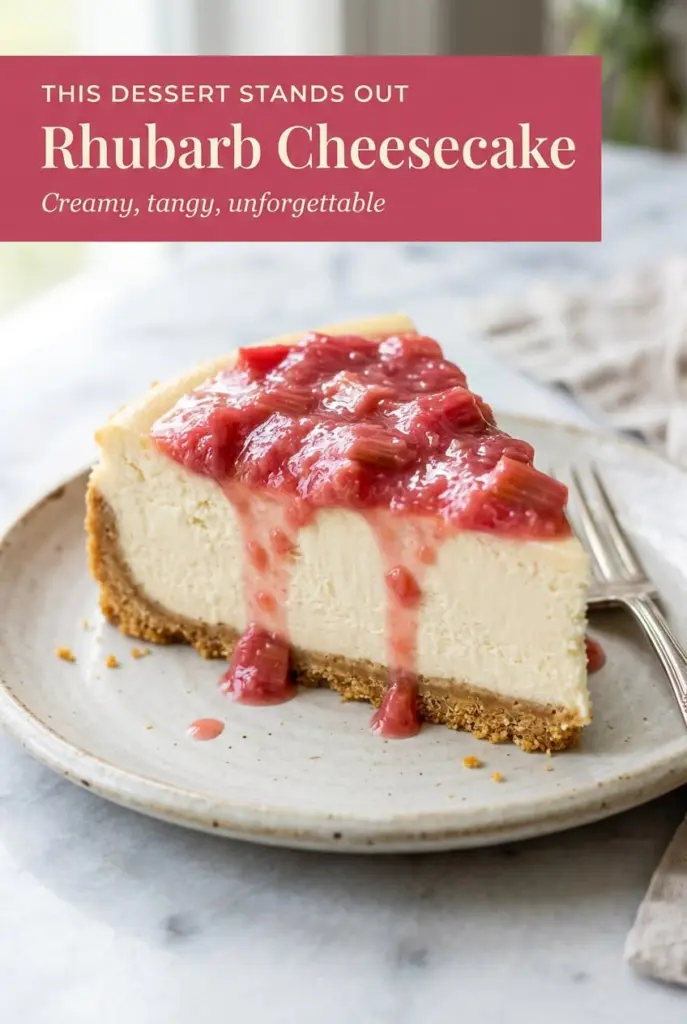
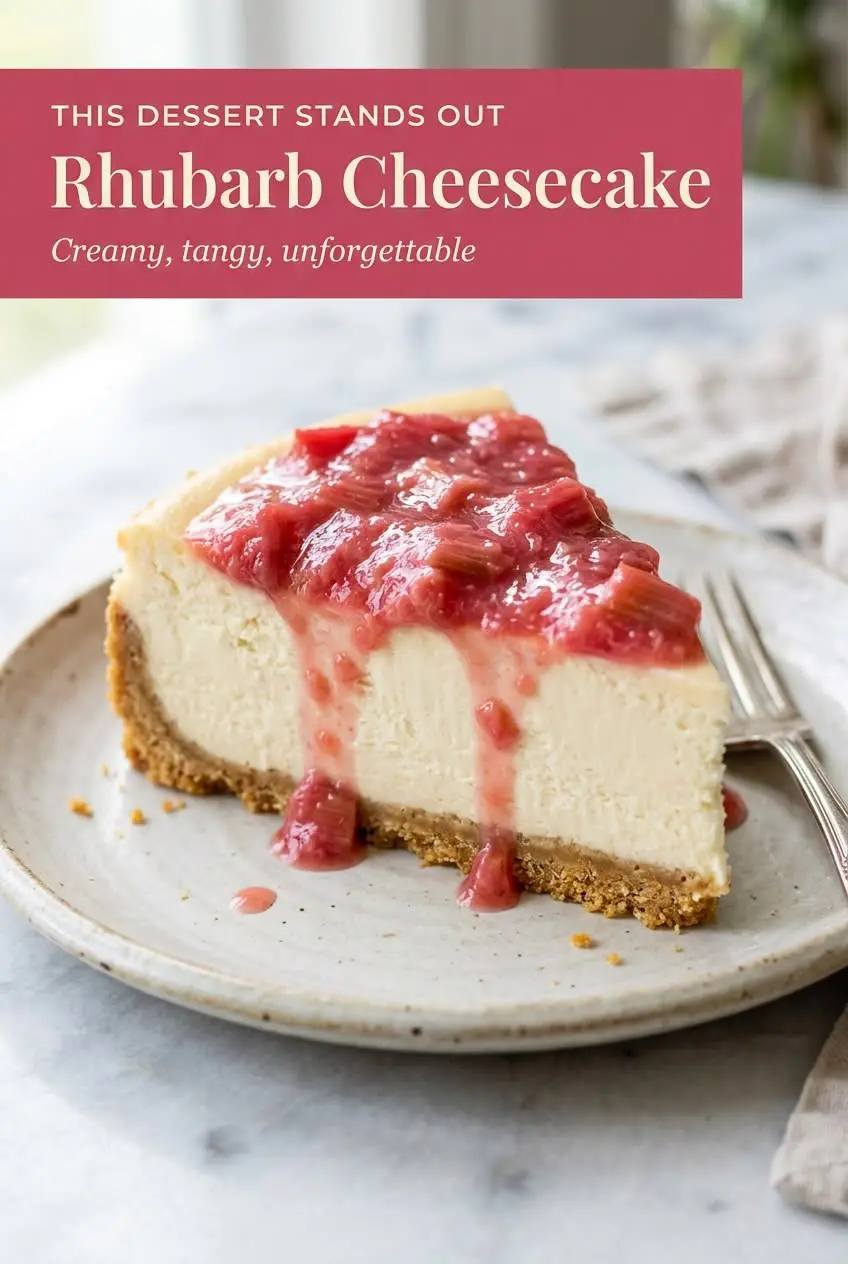
The cheesecake baked up smooth with no cracks, and the rhubarb layer set into this glossy topping that wasn’t runny at all. I liked that the tart fruit kept the filling from tasting too sweet.
Rhubarb cheesecake with a glossy tart topping for the times you want a clean, creamy slice with real fruit contrast.
The Secret to Keeping the Cheesecake Smooth Instead of Split
The biggest mistake with cheesecake is rushing the mixing. If you beat the batter hard after the eggs go in, you whip in air, and that air expands in the oven and leaves you with cracks or a puffy center that sinks as it cools. Mix gently once the eggs are added, just until the batter looks uniform and glossy.
Temperature matters too. Softened cream cheese blends into a satiny base; cold cream cheese stays lumpy no matter how long you mix it. The filling should pour in a thick ribbon, not sit stiffly in the bowl. That texture is a good sign you’ve incorporated everything without overworking it.
- Room-temperature cream cheese gives you the smoothest filling. Cold blocks leave little specks that never fully disappear.
- Heavy cream adds body and a softer, silkier set. Milk won’t give the same richness or structure.
- Lemon juice doesn’t make this taste lemony. It sharpens the filling just enough to keep it from tasting one-note.
What the Crust, Filling, and Rhubarb Topping Each Need to Do
- Graham crackers bring that familiar honeyed base that works against the tart rhubarb. If you swap them for another cookie crumb, choose one that’s dry and not too sweet.
- Unsalted butter binds the crust and gives it that slightly toasted edge after baking. Salted butter will work in a pinch, but keep the crust sugar as written so it doesn’t go too savory.
- Cream cheese is the backbone of the filling, so use full-fat if you can. Lower-fat versions tend to loosen the set and can bake up grainy.
- Rhubarb is what keeps the dessert from leaning too rich. Chop it evenly so it softens at the same rate and turns into a smooth topping instead of a mix of mush and firm pieces.
- Cornstarch is the difference between a loose fruit sauce and a topping that actually sits on the cheesecake. It needs a full simmer to activate, so don’t pull it off the heat as soon as it looks cloudy.
Building the Cheesecake So It Bakes Evenly
Pressing and Pre-Baking the Crust
Mix the crumbs, melted butter, and sugar until every crumb looks damp, then press the mixture firmly into the pan. A loose crust crumbles when you slice it, and that gets worse once the filling goes on top. Bake it just until it smells lightly toasted and feels set in the center. You’re not browning it deeply here; you’re building a base that can hold up under a heavy filling.
Mixing the Filling Without Whipping in Air
Beat the cream cheese and sugar first until the mixture turns completely smooth and there are no visible lumps. Add the eggs one at a time and stop mixing as soon as each one disappears. The batter should look thick, satiny, and pourable. If it starts to look foamy, the mixer is going too fast or staying on the batter too long.
Watching for the Right Bake
Bake until the edges are set and the center still has a slight wobble when you nudge the pan. That wobble matters; if the middle is firm in the oven, it’s already overbaked. Cheesecake keeps setting as it cools, and that carryover heat gives you the dense, creamy texture you want instead of a dry, chalky slice.
Cooking the Rhubarb Topping to the Right Thickness
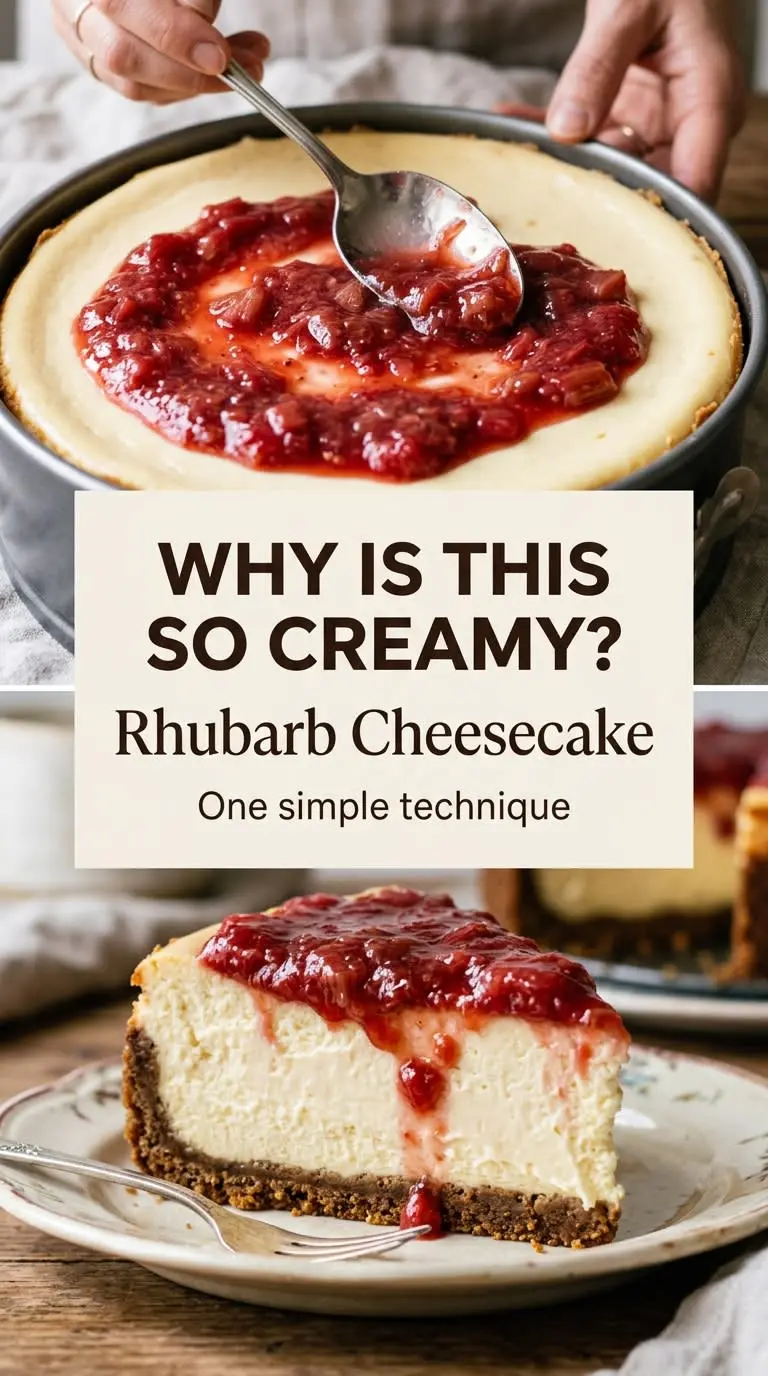
Cook the rhubarb with sugar, water, and cornstarch until the fruit softens and the liquid turns shiny and thick. If the topping still looks loose in the pan, it will run off the cheesecake later. Let it cool before spreading it over the chilled cake so the surface stays smooth instead of melting the top layer.
How to Adapt This for a Different Crust, a Lighter Finish, or a Dairy-Free Table
Use digestive biscuits instead of graham crackers
Digestive biscuits give the crust a slightly less sweet, more buttery taste. Crush them finely and keep the butter amount the same, since a dry crumb crust needs enough fat to pack cleanly and hold together after baking.
Make it gluten-free
Swap in certified gluten-free graham crackers or another gluten-free cookie crumb. The filling and topping are naturally gluten-free, so this change is all about keeping the crust crisp and making sure your crumbs are dry enough to press into a stable layer.
Go lighter on the topping
If you want the rhubarb to stay brighter and less jam-like, cook it only until the sugar dissolves and the cornstarch thickens the juices. You’ll get a looser topping with more visible fruit pieces, which works well if you like a sharper contrast against the cheesecake.
Use a dairy-free cheesecake base
A dairy-free cream cheese and plant-based cream can work, but the texture will be a little softer and less dense than the original. Chill it longer before slicing, since dairy-free fillings usually need extra time to firm up cleanly.
Storage and Reheating
- Refrigerator: Keeps well for 4 to 5 days covered. The topping may soften slightly, but the flavor stays balanced.
- Freezer: Freezes well without the rhubarb topping for up to 1 month. Wrap the cheesecake tightly, freeze it whole or in slices, and add fresh topping after thawing for the best texture.
- Reheating: This dessert is best served cold. If you freeze slices, thaw them in the refrigerator overnight rather than warming them, since heat will loosen the filling and dull the texture.
Answers to the Questions Worth Asking
Rhubarb Cheesecake
Ingredients
Equipment
Method
- Preheat the oven to 160°C (320°F) and line a springform pan with parchment, ensuring the parchment covers the base. This prevents sticking and helps lift the cheesecake out cleanly.
- Mix crushed graham crackers, melted unsalted butter, and granulated sugar until evenly moistened. Press the mixture firmly into the pan base using the bottom of a cup to create a tight crust layer.
- Bake the crust for 8 minutes, or until set, then let it cool completely. The crust should look slightly dry on the surface before you add the filling.
- Beat cream cheese and granulated sugar until smooth and creamy. Scrape down the sides to remove lumps for a silky texture.
- Add eggs one at a time, mixing gently after each addition. Stop as soon as each egg is incorporated to avoid overmixing.
- Stir in heavy cream, vanilla extract, and lemon juice until fully combined. Mix just until no streaks remain.
- Pour the filling over the cooled crust. Bake at 160°C (320°F) for 45 minutes, until the center is just set with a slight wobble; it will firm up as it cools.
- Let the cheesecake cool completely at room temperature, then chill in the refrigerator for 4 hours. Chilling helps the texture set for neat slicing.
- Cook rhubarb, granulated sugar, water, and cornstarch over medium heat until thick and glossy. Stir continuously, and cook just until the mixture looks translucent and coats a spoon.
- Cool the rhubarb topping completely, then spread it over the chilled cheesecake before serving. Keep the topping cool so it doesn’t melt into the filling.