
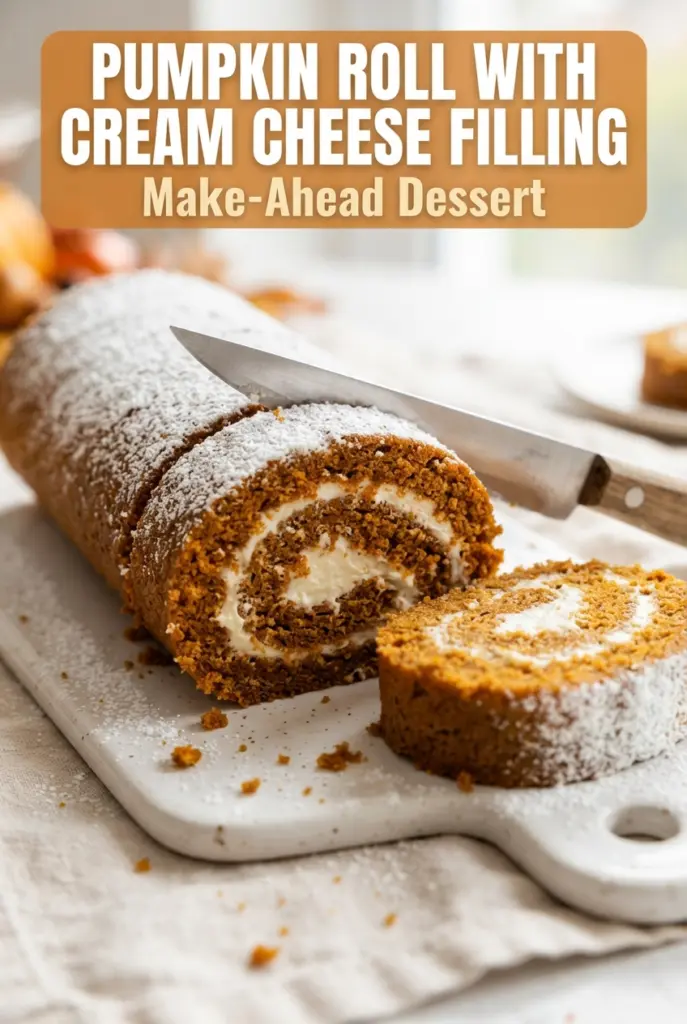
Pumpkin Roll with Cream Cheese Filling
Soft pumpkin sponge, a tangy cream cheese filling, and those clean spirals in every slice are what keep a pumpkin roll coming back year after year. The cake stays tender…
Tip: save now, cook later.Soft pumpkin sponge, a tangy cream cheese filling, and those clean spirals in every slice are what keep a pumpkin roll coming back year after year. The cake stays tender instead of dry, the filling sets up just enough to hold its shape, and the whole dessert feels polished without being fussy. It’s the kind of bake that looks like it took a lot more effort than it actually did.
What makes this version work is the balance between a thin, flexible cake and a filling that spreads easily but chills into something sliceable. The eggs are beaten with the sugar until thick, which gives the cake lift without needing a lot of flour, and the pumpkin puree keeps the crumb moist. The towel roll while the cake is warm is the part people skip and later regret; that first shape-setting roll is what keeps the cake from cracking when you fill it.
Below you’ll find the small details that matter most: how to keep the cake from sticking, how to roll it without panic, and how to freeze it ahead so it still looks neat when you slice it.
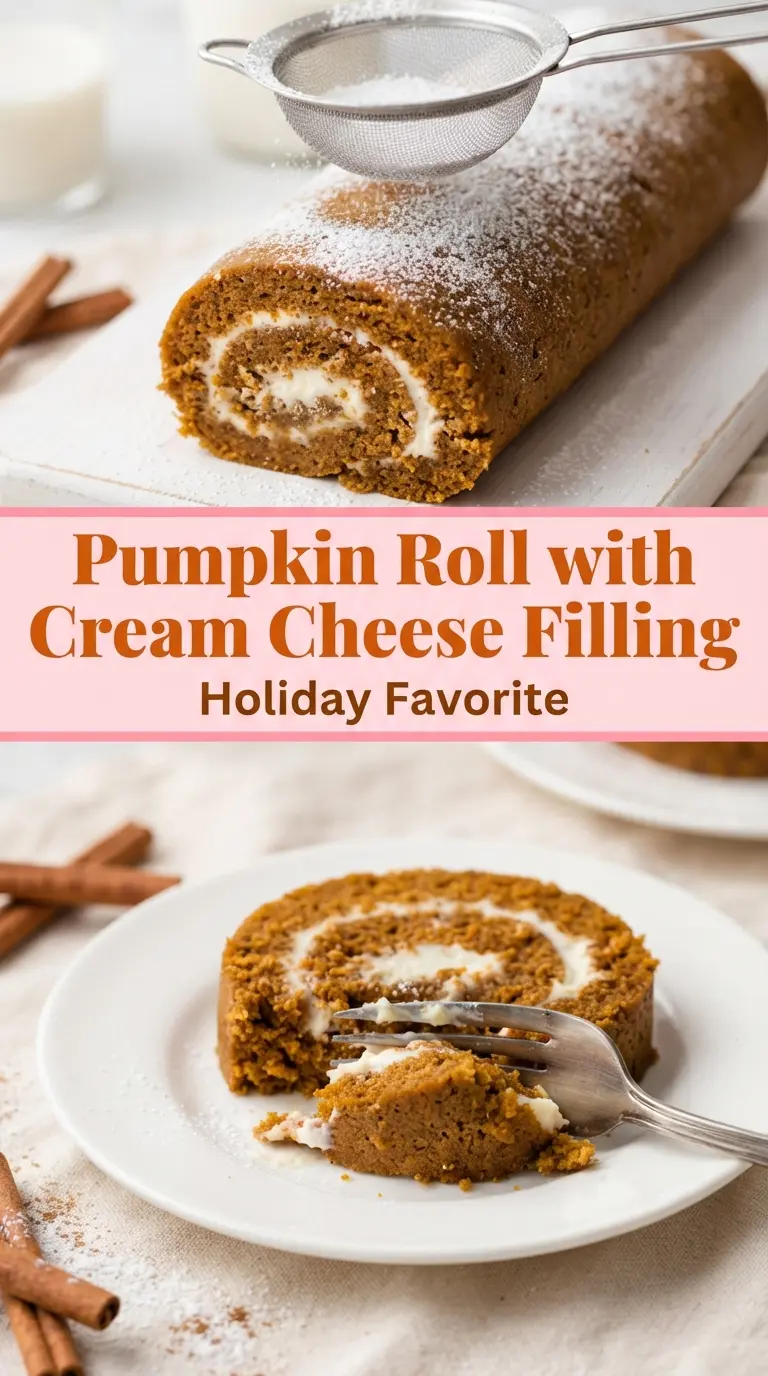
The roll came out in one piece, the filling was smooth, and chilling it before slicing gave me those neat swirls instead of a gooey mess.
Pumpkin roll with cream cheese filling deserves a spot in your holiday dessert lineup — save this one for the neat swirls and make-ahead convenience.
The Reason Pumpkin Rolls Crack Before They Even Get Filled
A pumpkin roll usually cracks for one of two reasons: the cake baked a little too long, or it cooled flat instead of curled. The batter is thin and the sponge is delicate, which means even an extra minute in the oven can turn the cake stiff enough to split when you roll it. You want the top to spring back when touched, but the center should still feel tender.
The other part people miss is timing. The cake needs to be rolled while it’s still warm, with the towel acting like a memory for the shape. If it cools spread out first, the first roll becomes the hard one, and that’s when the surface starts to tear. The parchment also matters more than people expect; if it sticks, the cake can pull apart before you even get to the filling.
- Don’t overbake the sponge. A few extra minutes dries it out and makes it less flexible.
- Roll while warm. That first curl sets the shape before the cake has a chance to stiffen.
- Use powdered sugar generously. It keeps the towel from grabbing the cake.
- Cool it completely before filling. Warm cake melts the filling and turns the swirl messy.
What Each Ingredient Is Actually Doing in This Pumpkin Roll
- All-purpose flour — Keeps the cake light and flexible. Too much flour makes the sponge tough, so measure it carefully.
- Baking soda — Gives the cake a little lift and helps it bake up tender. It also supports the eggs so the sponge doesn’t turn dense.
- Cinnamon and pumpkin pie spice — These bring the warm spice flavor without overpowering the pumpkin. If you don’t have pumpkin pie spice, use a mix of cinnamon, ginger, nutmeg, and clove.
- Eggs — They’re the structure here. Beating them with the sugar until thick traps air, which is what makes the cake rollable instead of heavy.
- Pumpkin puree — Use pure pumpkin, not pumpkin pie filling. The puree adds moisture and body, while pie filling would throw off both the sweetness and texture.
- Cream cheese — Full-fat cream cheese gives the filling its tang and firmness. Lower-fat versions tend to be softer and can turn loose after chilling.
- Unsalted butter — Softened butter helps the filling whip smooth and spreadable. If you use butter straight from the fridge, you’ll end up with little lumps that won’t disappear.
- Powdered sugar — This sweetens the filling and helps it set. It also keeps the filling from being grainy.
- Vanilla extract — It rounds out the filling and makes the cream cheese taste less sharp.
Rolling, Filling, and Chilling Without Breaking the Cake
Whipping the Batter Until It Holds Air
Beat the eggs and sugar until the mixture turns pale, thick, and ribbons off the beaters. That stage matters because the cake gets most of its lift from the eggs, not from a big dose of leavener. Fold in the dry ingredients just until the flour disappears; if you stir too long, the batter gets tight and the finished cake turns less flexible.
Baking to the Point of Spring-Back
Spread the batter evenly in the pan so the cake bakes at the same rate from edge to edge. Pull it from the oven when the top springs back lightly under your finger and the cake has just started to pull from the sides. If it bakes until it looks fully dry, it will crack when you roll it.
The Warm Towel Roll
Dust a clean kitchen towel generously with powdered sugar before turning the cake out. Peel off the parchment carefully, then roll the cake up from the short end while it’s still warm. If the cake sticks at any point, pause and loosen it gently rather than tugging, because that’s how thin spots tear.
Filling and Finishing the Swirl
Let the cake cool completely before you spread on the filling. Unroll it slowly, and if the cake tries to stay curved, let it sit for a minute so it relaxes instead of forcing it flat. Spread the filling in an even layer all the way to the edges, then roll it back up firmly but without squeezing so hard that the filling oozes out.
How to Adapt This Pumpkin Roll for Different Kitchens and Timelines
Gluten-Free Version
Swap in a 1:1 gluten-free baking flour that contains xanthan gum. The cake will still roll well, but it may feel a little more delicate, so don’t overbake it or handle it while warm too roughly.
Lighter Filling
You can cut the powdered sugar in the filling by a few tablespoons if you like a sharper cream cheese flavor. The filling will be less sweet and slightly softer, so chill the roll before slicing if you go this route.
Make-Ahead and Freezer-Friendly
This dessert freezes well after it’s filled and rolled. Wrap it tightly in plastic and then foil, freeze it whole, and thaw it in the refrigerator before slicing. The texture stays better than if you freeze individual slices, which can dry out at the cut edges.
Storage and Reheating
- Refrigerator: Store covered for up to 5 days. The cake stays moist, and the filling firms up a bit more after the first day.
- Freezer: Freezes well for up to 2 months when wrapped tightly. Freeze the whole roll for the cleanest slices later.
- Reheating: Don’t reheat this dessert. Serve it chilled or let it sit at room temperature for 15 to 20 minutes so the filling softens slightly without losing shape.
Answers to the Questions Worth Asking
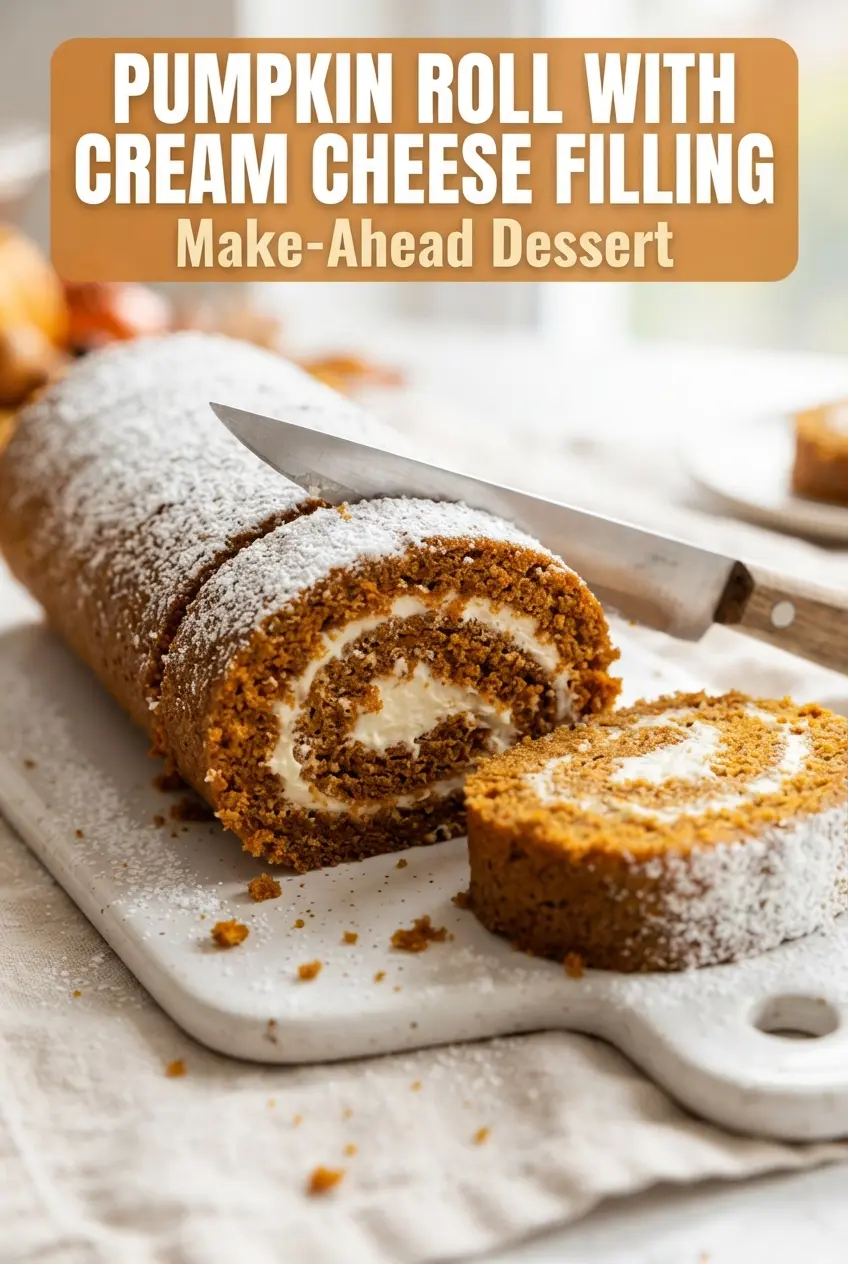
Pumpkin Roll with Cream Cheese Filling
Ingredients
Equipment
Method
- Preheat the oven to 375 F (190 C), grease a 15x10-inch jelly roll pan, and line it with parchment that you also grease. This prevents sticking so the cake can roll cleanly.
- Whisk together the all-purpose flour, baking soda, salt, ground cinnamon, and pumpkin pie spice. Mix until the spices are evenly distributed.
- Beat the eggs and granulated sugar for 2 minutes until thick, then beat in the pumpkin puree. Stop when the batter looks smooth and lighter in color.
- Fold the dry ingredients into the egg mixture, then spread the batter evenly in the prepared pan. Work the batter into the corners for an even thickness.
- Bake for 13 to 15 minutes, until the top springs back when touched. Keep an eye on doneness so the cake stays flexible.
- Dust a clean kitchen towel with powdered sugar, then flip the warm cake onto it and peel off the parchment. The sugar helps prevent sticking to the towel.
- Roll the cake up in the towel from the short end and cool completely, about 1 hour. Cooling in the roll sets the shape for later.
- Beat the cream cheese, unsalted butter, powdered sugar, and vanilla extract until smooth. Scrape the bowl as needed for a lump-free filling.
- Gently unroll the cake, spread the filling evenly, and roll it back up without the towel. Keep the roll snug to help clean slices.
- Wrap and chill for at least 1 hour, then slice and dust with powdered sugar. Chilling firms the filling for neat spirals.
