
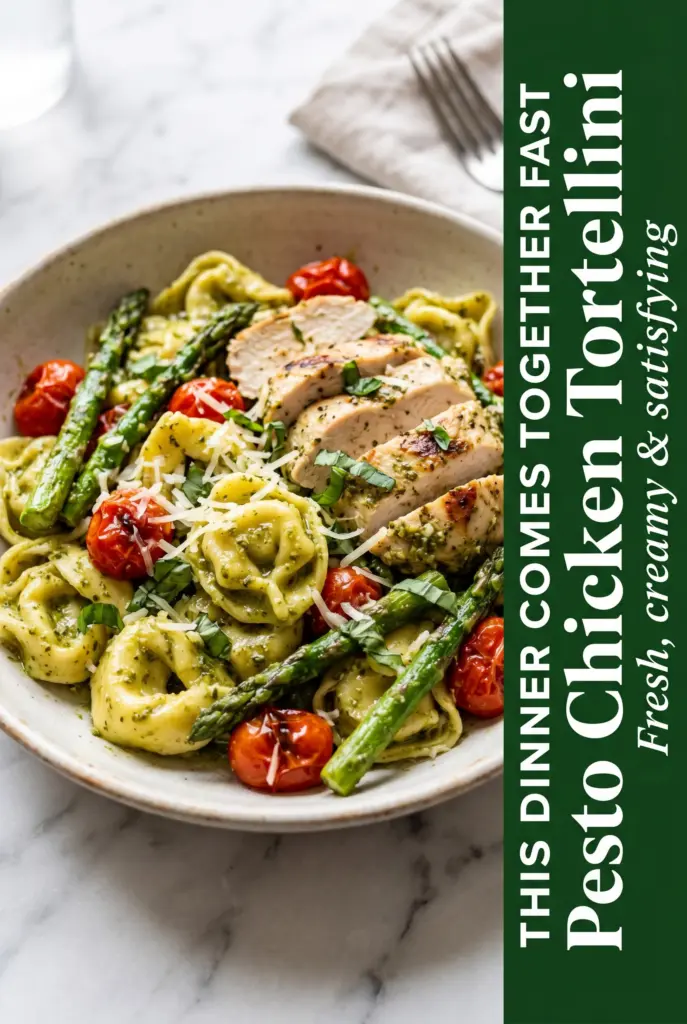
Pesto Chicken with Tortellini and Veggies
Pesto chicken with tortellini and veggies is the kind of one-pan dinner that lands on the table looking colorful and tasting like you spent far more effort than you did.…
Tip: save now, cook later.Pesto chicken with tortellini and veggies is the kind of one-pan dinner that lands on the table looking colorful and tasting like you spent far more effort than you did. The chicken stays juicy, the tortellini catches every bit of basil pesto, and the asparagus and tomatoes keep the whole skillet from feeling heavy. It’s a smart mix of tender, crisp, and creamy that makes each bite feel complete.
What keeps this version working is the order. The chicken gets cooked first so it can take on color, then the vegetables go in just long enough to stay distinct. The tortellini is cooked separately, which sounds like an extra step, but it protects the pasta from turning mushy while the pesto and Parmesan coat everything at the end. A little cream is optional, but it does soften the pesto into a silkier sauce without drowning the basil.
Below, I’ll walk through the part that matters most: how to keep the asparagus bright, how to avoid overcooking the tortellini, and what to change if you need to swap in a different vegetable or make the dish a little lighter.
The pesto clung to the tortellini instead of sliding off, and the asparagus stayed crisp-tender even after tossing everything together. I used the cream, and the sauce came together smooth without getting watery.
Save this pesto chicken tortellini for a fast skillet dinner with juicy chicken, crisp asparagus, and a sauce that coats instead of clumps.
The Secret to Keeping Tortellini from Going Soft in the Skillet
The biggest mistake with tortellini skillet dinners is treating the pasta like it can sit around forever. Tortellini is already tender, so once it’s cooked, it only needs enough time in the pan to get coated and warmed through. If you let it simmer in the sauce too long, the edges swell, the filling gets a little dull, and the whole dish loses its fresh texture.
This recipe avoids that by cooking the tortellini separately and adding it near the end. That gives you control over the pasta’s texture and keeps the sauce from turning starchy or thick in a way that feels heavy. The other key point is using a large enough pan that the ingredients can toss instead of pile up; crowded tortellini steams, and steamed tortellini goes soft fast.
What Each Ingredient Is Doing in This Pan
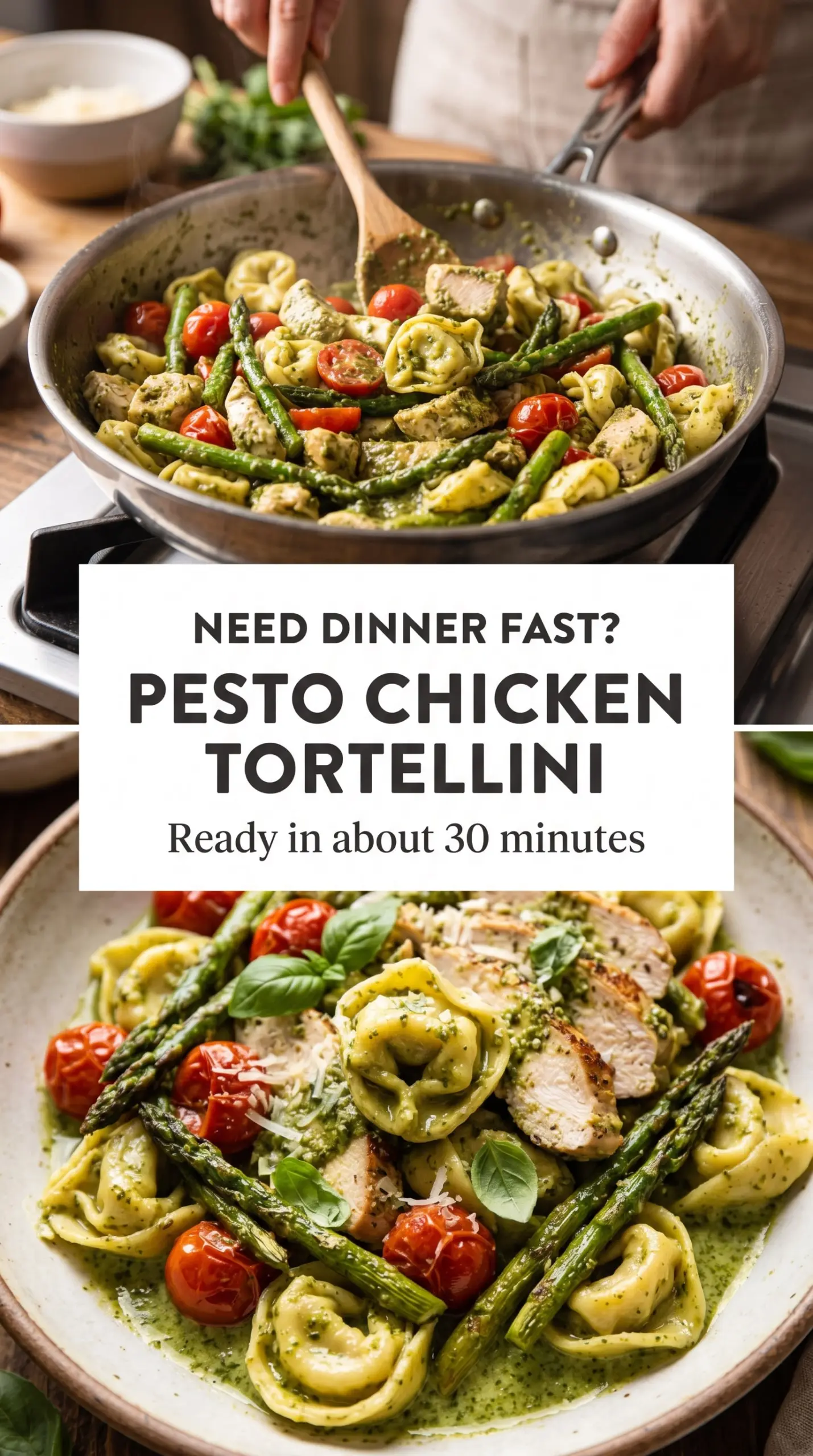
The ingredients here each have a job, and the dish only works when they’re used in the right order. The pesto brings the basil, garlic, and oil-based richness that ties everything together. Use a pesto you actually like on its own; if it tastes flat from the jar, it’ll taste flat in the skillet.
- Cheese tortellini — Fresh or refrigerated tortellini gives you the best texture here because it cooks fast and stays tender without falling apart. Dried tortellini can work, but it usually needs a different cook time and a little more sauce to keep it from drying out.
- Chicken breasts — Slicing them before cooking helps them brown quickly and stay juicy. If your chicken breasts are thick, pound them lightly or cut them into even strips so one piece doesn’t dry out while another is still pale in the center.
- Asparagus — This is the vegetable that gives the dish its snap. Cut the spears into bite-size pieces so they cook quickly and stay crisp-tender; if they sit in the pan too long, they turn drab and stringy.
- Cherry tomatoes — They bring acidity and a little juiciness, which keeps the pesto from feeling one-note. Once they start to blister and soften, they’re ready; if you cook them until they collapse completely, they can disappear into the sauce.
- Heavy cream — Optional, but useful if you want the pesto to loosen into a silkier coating. A small amount is enough; too much and the basil flavor gets muted, which defeats the point.
- Parmesan cheese — This adds salt and body, and it helps the sauce cling to the tortellini instead of sliding off. Finely grated Parmesan melts in better than big shreds, especially if you’re skipping the cream.
How to Build the Skillet Without Overcooking Anything
Cook the tortellini first, then park it
Boil the tortellini according to the package directions and drain it as soon as it’s tender. Don’t leave it sitting in the hot pot, because residual heat keeps cooking the pasta and softens the edges before it ever hits the skillet. If you’re not ready to add it right away, toss it with a tiny drizzle of oil so it doesn’t clump.
Brown the chicken before the vegetables go in
Heat the olive oil until it shimmers, then add the sliced chicken in a single layer. You’re looking for golden edges and fully opaque centers, not pale, steamy chicken. If the pan is crowded, the chicken will release moisture and simmer instead of sear, and you’ll miss the browned flavor that gives the dish its backbone.
Wake up the garlic, then move fast
Add the garlic after the chicken is cooked and stir just until fragrant, about 30 seconds. Garlic burns fast in an empty pan, and once it turns bitter there’s no fixing it. Right after that, add the asparagus so the garlic has enough moisture around it to stop the cooking.
Finish with the pesto off the worst heat
Stir in the cherry tomatoes and let them soften slightly before adding the tortellini. Mix the pesto, Parmesan, and cream separately if you’re using cream, then add that mixture to the pan and toss until everything is coated. If the sauce looks tight, add a splash of pasta water or a spoonful of plain water; if you heat pesto hard for too long, it can turn dull and greasy instead of glossy.
Three Useful Ways to Change This Dish Without Losing What Makes It Good
Dairy-Free Version
Use a dairy-free pesto and skip the Parmesan and cream, then finish with a spoonful of reserved pasta water to help the sauce coat the tortellini. You’ll lose a little richness, but the basil flavor stays bright and clean instead of getting weighed down by substitutes that don’t melt well.
Gluten-Free Version
Swap in gluten-free tortellini if you can find it, and cook it just to the tender point because gluten-free pasta can go soft fast once it hits the sauce. The rest of the dish already fits naturally, so this is one of the easier adaptations as long as you watch the pasta closely.
Make It Heartier
Add sautéed mushrooms or spinach if you want more vegetables without changing the structure of the dish. Mushrooms bring a deeper, savory note, while spinach wilts into the sauce and keeps the bowl feeling lighter. Add either near the end so they don’t turn limp and watery.
Use Thighs Instead of Breasts
Boneless chicken thighs bring more richness and stay forgiving if you cook them a minute too long. Cut them into even pieces and cook until the edges are browned and the center is no longer pink. The flavor gets a little deeper, though the dish will feel slightly richer than the chicken breast version.
Storage and Reheating
- Refrigerator: Store in an airtight container for up to 3 days. The tortellini will soften a bit as it sits, but the flavor holds up well.
- Freezer: I don’t recommend freezing this one. The tortellini and tomatoes both lose their texture after thawing, and the pesto can separate.
- Reheating: Warm it gently in a skillet over low heat with a splash of water or broth. Microwaving on high tends to make the chicken dry and the tortellini tough around the edges.
Questions I Get Asked About This Recipe
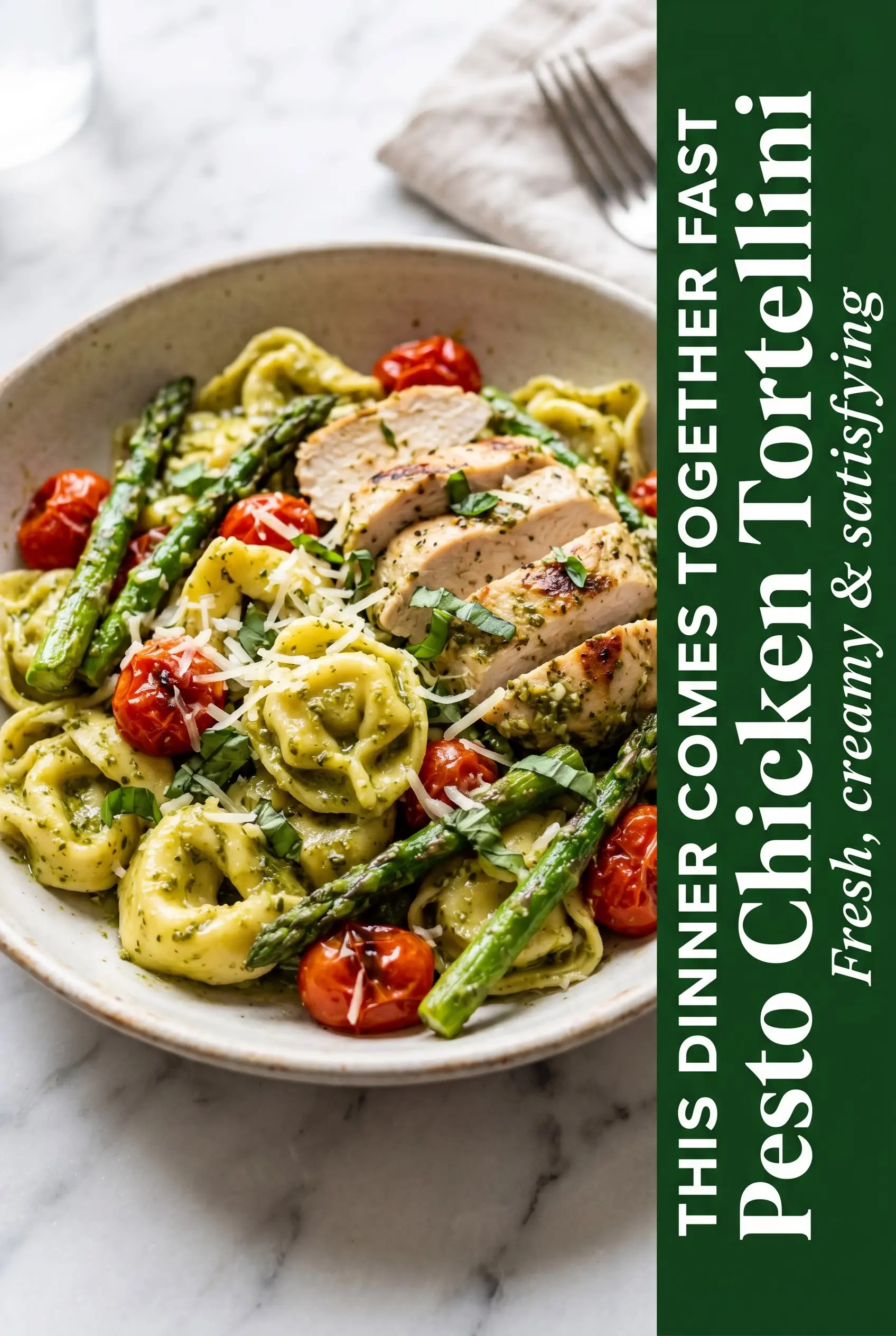
Pesto Chicken with Tortellini and Veggies
Ingredients
Equipment
Method
- Bring a pot of water to a boil and cook the cheese tortellini according to package instructions. Stir once or twice so the pasta doesn’t clump, then drain and set aside.
- Heat olive oil in a pan over medium-high heat until shimmering. Add sliced chicken, season with salt and black pepper, and cook 4 to 6 minutes per side (or until fully cooked and golden).
- Add minced garlic and cook 30 to 60 seconds, stirring, until fragrant and not browned.
- Add asparagus to the pan and cook 3 to 4 minutes, stirring occasionally, until slightly tender but still crisp. Add cherry tomatoes and cook 2 to 3 minutes, until they begin to soften and release juices.
- Add the drained tortellini to the pan and toss to combine. Mix basil pesto, grated Parmesan, and heavy cream, then pour into the pan and toss until evenly coated and heated through, about 1 to 2 minutes.