
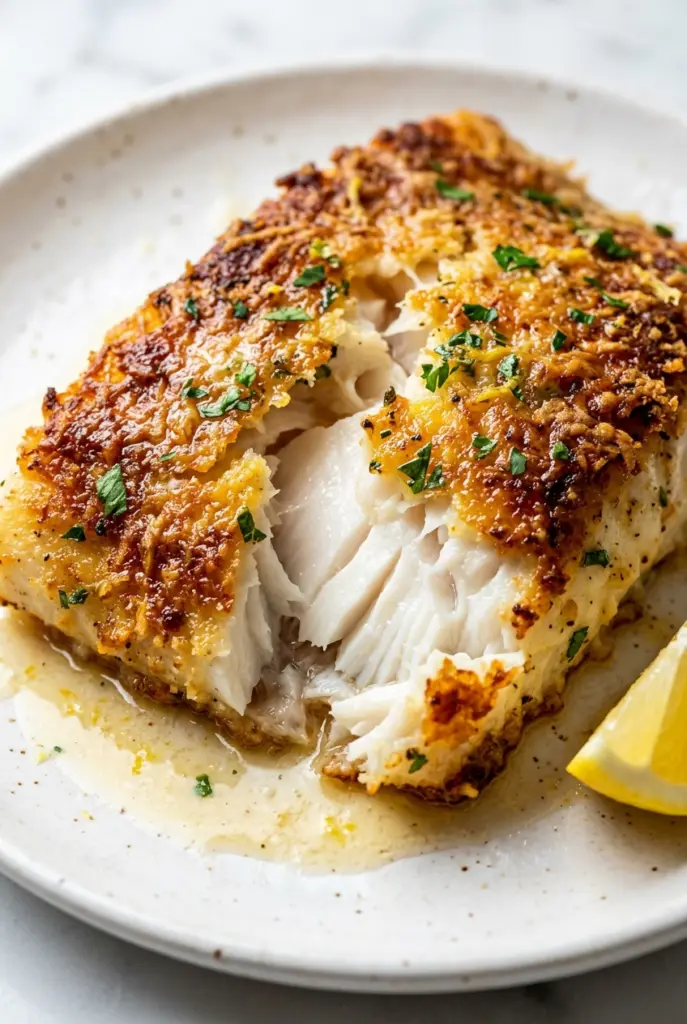
Parmesan Crusted Halibut
Parmesan Crusted Halibut gives you that rare dinner combination: crisp on top, tender in the middle, and fast enough to keep on a weeknight rotation. The crust bakes into a…
Tip: save now, cook later.Parmesan Crusted Halibut gives you that rare dinner combination: crisp on top, tender in the middle, and fast enough to keep on a weeknight rotation. The crust bakes into a salty, nutty shell with just enough panko to keep it light, while the halibut stays clean-tasting and flaky instead of heavy or greasy. It feels polished without asking for much more than a hot oven and a little attention to detail.
The difference between a crust that clings and one that slides off starts before the fish even goes into the oven. Dry fillets, a firm press of the topping, and a little melted butter in the crust mixture help everything brown instead of steaming. I also like finishing with a short broil, but only after the fish is nearly done, so the Parmesan gets that deep golden edge without overcooking the halibut underneath.
Below, you’ll find the small things that matter here: how to keep the crust crisp, which substitutions work without ruining the texture, and what to do if your fillets are thinner or thicker than average.
The crust turned out crisp instead of soggy, and the halibut stayed perfectly flaky. I used the broil for the last minute and it browned beautifully without drying out the fish.
Save this Parmesan Crusted Halibut for the nights when you want a crisp, restaurant-style fish dinner without pan-frying or extra cleanup.
The Crust Has to Crisp in the Oven, Not Steam on the Fish
Halibut is lean and fairly thick, which is exactly why it works here, but that same leanness means it can go from silky to dry if the topping traps moisture. The first job is getting the surface of the fish dry enough for the Parmesan crust to stick and brown. If the fillets are wet, the coating softens before it has a chance to set.
The other common mistake is piling on a topping that looks sturdy but never really bonds. This mixture should feel like damp sand and hold together when you pinch it. Press it on firmly, then let the oven do the work. You’re after a crust that turns deeply golden at the edges and releases in one piece when you cut into the fish.
- Halibut — Choose fillets that are similar in thickness so they finish at the same time. Halibut is mild enough to let the Parmesan, garlic, and herbs lead, but sturdy enough to hold up under a crust. If halibut is unavailable, thick cod or mahi-mahi can work, though both cook a little faster.
- Freshly grated Parmesan — This matters. Pre-grated cheese often contains anti-caking agents that keep it from melting into that crisp, lacy shell you want. Grating it yourself gives you better browning and a more cohesive crust.
- Panko breadcrumbs — Panko keeps the coating light and crisp instead of dense. Standard breadcrumbs will work in a pinch, but the crust will be finer and less shattery.
- Melted butter — Butter helps the crust toast and gives the topping a richer finish than oil alone. It also helps the mixture cling. If you need dairy-free, use olive oil, but expect a slightly less browned and less savory crust.
- Lemon zest and parsley — These keep the crust from tasting heavy. The zest brightens the Parmesan, and the parsley adds freshness right at the end. Don’t skip the zest if you want the fish to taste balanced rather than salty.
How to Bake the Fish So the Crust Stays Put
Dry the Fillets First
Pat the halibut completely dry with paper towels before anything else touches it. That step matters more than almost anything else in this recipe because moisture is the enemy of browning. Salt and pepper the fish after it’s dry, then give it a minute while you mix the crust so the seasoning starts to settle in.
Build a Crust That Presses Together
Mix the Parmesan, panko, butter, garlic, parsley, lemon zest, thyme, and paprika until the crumbs look evenly moistened. The texture should resemble coarse wet sand, not a paste. If it seems too dry, add a tiny bit more melted butter; if it looks greasy, toss in another spoonful of panko.
Press, Don’t Sprinkle
Brush the tops of the fillets with olive oil, then press the crust mixture firmly onto each one. A light sprinkle falls off in the oven. A firm press gives the cheese something to fuse with as it bakes, which is how you get those crisp edges that stay in place when you lift the fish from the pan.
Watch the Last Few Minutes Closely
Bake at 425°F until the fish flakes easily at the thickest point and the crust is turning deep gold. If you broil, do it only at the very end and stay right there. The line between bronzed and burnt is short with Parmesan, and once it goes dark, the flavor turns bitter fast.
Make It Gluten-Free Without Losing the Crunch
Swap the panko for gluten-free panko or crushed gluten-free crackers. Gluten-free breadcrumbs can work, but they tend to brown a little faster and can taste dry if the mix is under-seasoned, so keep the Parmesan and butter ratio the same.
Dairy-Free Version
Use a dairy-free Parmesan-style cheese and replace the butter with olive oil. The crust will still brown, but it won’t have quite the same nutty depth or crispness as the original, so keep the oven temperature steady and watch the broil carefully.
Swap in Cod or Mahi-Mahi
Both of these fish work well if your halibut fillets are hard to find. Cod is softer and may need a gentler hand when transferring to the baking sheet, while mahi-mahi is firmer and a little meatier. Either way, start checking for doneness a couple of minutes early if the fillets are thinner than 1 inch.
Storage and Reheating
- Refrigerator: Store leftovers in an airtight container for up to 2 days. The crust will soften a bit, but the fish still reheats well if you avoid blasting it with heat.
- Freezer: I don’t recommend freezing the finished dish. The crust loses its texture after thawing and the fish can turn grainy.
- Reheating: Warm in a 300°F oven for about 8 to 10 minutes, just until heated through. The biggest mistake is using the microwave, which makes the crust soggy and pushes the fish past flaky into dry.
The Things That Trip People Up With This Dish
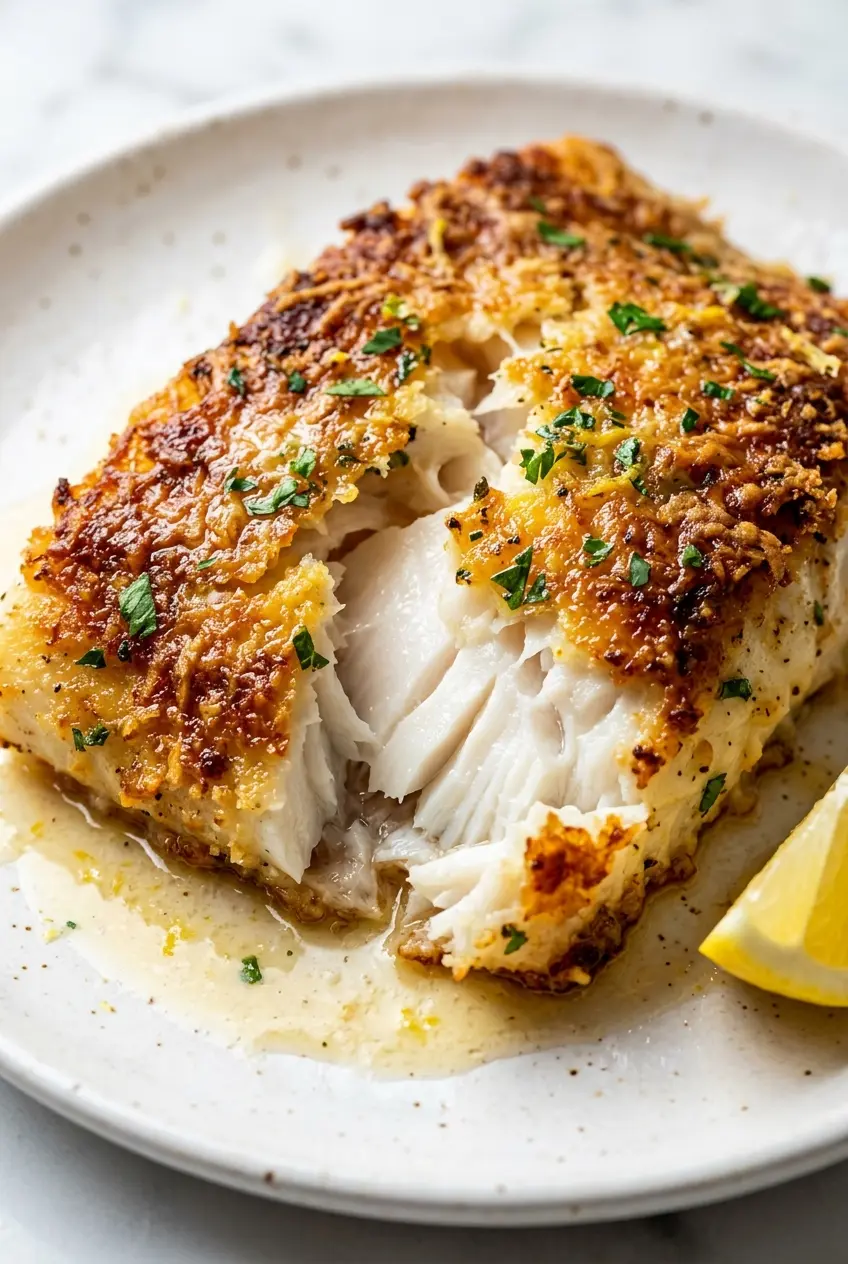
Parmesan Crusted Halibut
Ingredients
Equipment
Method
- Preheat your oven to 425°F (220°C), then line a sheet pan with parchment paper and lightly grease it.
- Pat the halibut fillets completely dry with paper towels, then season both sides with kosher salt and black pepper.
- Brush the tops of the halibut fillets with olive oil.
- Press a generous, complete layer of the Parmesan crust mixture onto the tops of the fillets so they’re fully covered.
- Arrange the fillets crust-side up on the prepared sheet pan and bake for 12–15 minutes, until the crust is deeply golden and the fish flakes easily at the thickest point.
- For extra browning, switch to broil for the final 1–2 minutes and watch closely so the crust doesn’t burn.
- Remove from the oven and rest the halibut for 2 minutes before serving.
- In a small bowl, mix the Parmesan cheese, panko breadcrumbs, melted unsalted butter, minced garlic, chopped fresh parsley, lemon zest, dried thyme, and paprika until it resembles coarse wet sand and holds together when pressed.
- Serve the halibut immediately with lemon wedges and a scatter of extra fresh parsley.