
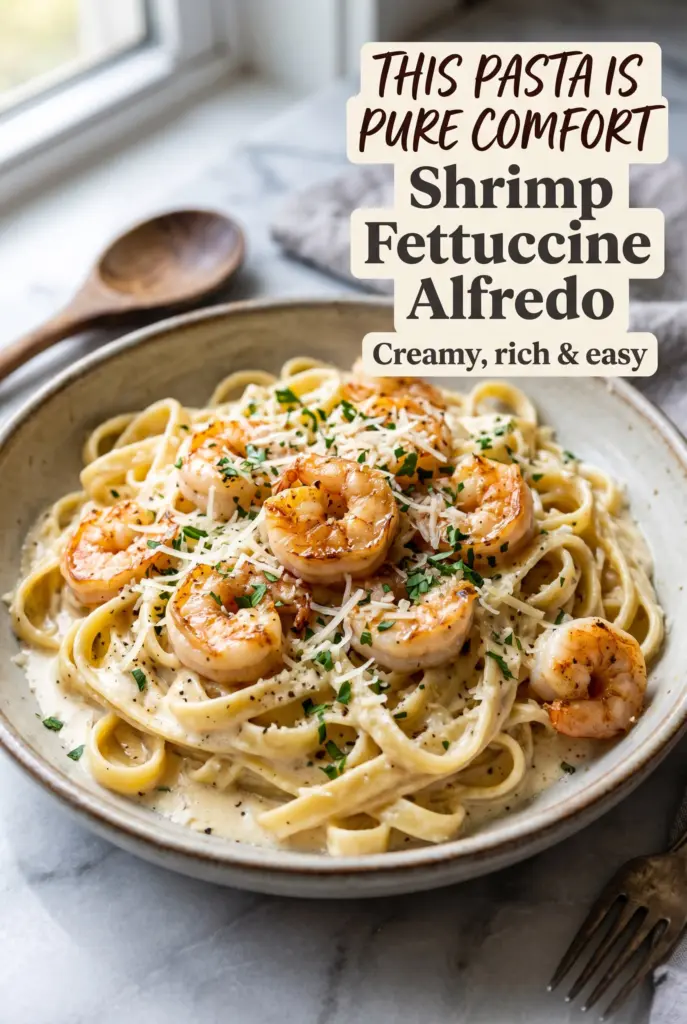
One Pot Shrimp Fettuccine Alfredo
Silky fettuccine, tender shrimp, and a sauce that clings to every strand without turning heavy or gluey — that’s the whole point of this one-pot Alfredo. The pasta cooks right…
Tip: save now, cook later.Silky fettuccine, tender shrimp, and a sauce that clings to every strand without turning heavy or gluey — that’s the whole point of this one-pot Alfredo. The pasta cooks right in the broth and cream, so it picks up flavor as it softens instead of tasting boiled and then sauced at the end. The result is a bowl that eats like something far more involved than the cleanup suggests.
The trick is keeping the shrimp brief and the heat gentle once the dairy goes in. Shrimp only need a minute or two until they turn pink and curl into loose C-shapes; overcook them and they go rubbery fast. The Parmesan also behaves better when it’s stirred in off a hard boil, because aggressive heat can make the sauce grainy instead of smooth.
Below, I’ll walk through the part that matters most: how to keep the pasta moving just enough so it cooks evenly without sticking, and how to finish the sauce so it stays glossy instead of splitting. There’s also a storage note for leftovers, because this dish reheats best when you know exactly how much moisture to bring back.
The sauce coated the fettuccine perfectly and didn’t turn thick and pasty like some one-pot pastas do. I followed the shrimp timing exactly, and they stayed tender instead of rubbery. My husband went back for seconds before I’d even sat down.
Save this One Pot Shrimp Fettuccine Alfredo for the nights when you want creamy pasta, tender shrimp, and one pan to wash.
The Reason One-Pot Alfredo Stays Creamy Instead of Turning Heavy
The biggest mistake with one-pot pasta is crowding too much liquid into the pan and then letting it boil hard. That sounds efficient, but it’s how you end up with a sauce that breaks or pasta that cooks unevenly. Here, the broth gives the fettuccine the water it needs while the cream adds body, and the two work best when the pan stays at a steady simmer instead of a rolling boil.
The other thing that matters is timing the shrimp separately. If they cook the whole time with the pasta, they go from tender to tight before the noodles are done. Pulling them out early keeps them juicy, then you fold them back in at the end just long enough to warm through.
- Fettuccine — The broad noodles are ideal here because they hold onto the sauce without disappearing into it. Regular dried fettuccine works well; you don’t need fresh pasta for this to taste rich.
- Shrimp — Medium or large shrimp are easiest to control. Smaller shrimp cook too fast and can overdo it before the pasta is tender.
- Chicken broth — This carries the pasta cooking liquid and adds seasoning from the inside out. If you use low-sodium broth, the finished dish tastes cleaner and gives you more control over the salt.
- Heavy cream — This is what gives the sauce its classic Alfredo body. Half-and-half can work in a pinch, but the sauce will be thinner and less velvety.
- Parmesan — Use finely grated Parmesan if you can. Pre-shredded cheese often has anti-caking agents that make it melt less smoothly.
How to Build the Sauce So the Pasta Cooks Evenly
Blooming the Garlic Without Browning It
Start with the butter and olive oil, then add the garlic just until it smells fragrant and turns slightly glossy. If it browns, it turns bitter fast and that bitterness carries through the whole pan. You’re aiming for a soft, warm garlic aroma, not toasted edges. Keep the heat moderate so the garlic perfumes the fat instead of burning in it.
Letting the Pasta Drink the Liquid
Once the broth and cream go in, add the fettuccine and stir often enough to keep the strands separated. The pan should stay at a gentle simmer with small bubbles, not a hard boil. If the liquid reduces too fast before the pasta is tender, add a splash of broth or water and keep going. The noodles should end up silky and cooked through, with just a little bite in the center before the cheese goes in.
Finishing With Cheese and Shrimp
Lower the heat before the Parmesan goes in and stir until the sauce looks smooth and glossy. If you add cheese over high heat, it can clump or turn grainy instead of melting into the cream. Return the shrimp at the very end and fold them through gently, just until they’re hot again. That last minute is enough; any longer and they’ll lose the tenderness you worked to keep.
What to Change When You Need a Different Version
Make It Gluten-Free
Use a gluten-free fettuccine that holds up well to simmering, not a delicate rice pasta that falls apart early. Keep an eye on the liquid, because some gluten-free noodles absorb more unevenly and may need an extra splash of broth near the end.
Swap the Shrimp for Chicken
Use thin-sliced chicken breast or thigh and cook it fully before the garlic goes in. Chicken needs a longer cooking window than shrimp, so this version trades speed for a heartier bite.
Make It Lighter Without Losing the Sauce
You can replace part of the heavy cream with whole milk, but don’t swap all of it or the sauce turns thin and less stable. The finished pasta won’t be as lush, yet the Parmesan still gives it enough body to feel like Alfredo instead of just creamy noodles.
Dairy-Free Version
Use a dairy-free cream substitute that’s meant for cooking and a Parmesan-style alternative that melts well. The texture won’t be identical, but keeping the heat low and finishing the sauce slowly still gives you a smooth result instead of a separated one.
Storage and Reheating
- Refrigerator: Store leftovers in an airtight container for up to 3 days. The sauce thickens as it chills, so the pasta will look denser the next day.
- Freezer: I don’t recommend freezing this dish. Cream sauces tend to separate after thawing, and the shrimp can turn tough.
- Reheating: Warm it gently in a skillet over low heat with a splash of broth or cream, stirring often. High heat is the mistake that breaks the sauce and tightens the shrimp.
Questions I Get Asked About This Recipe
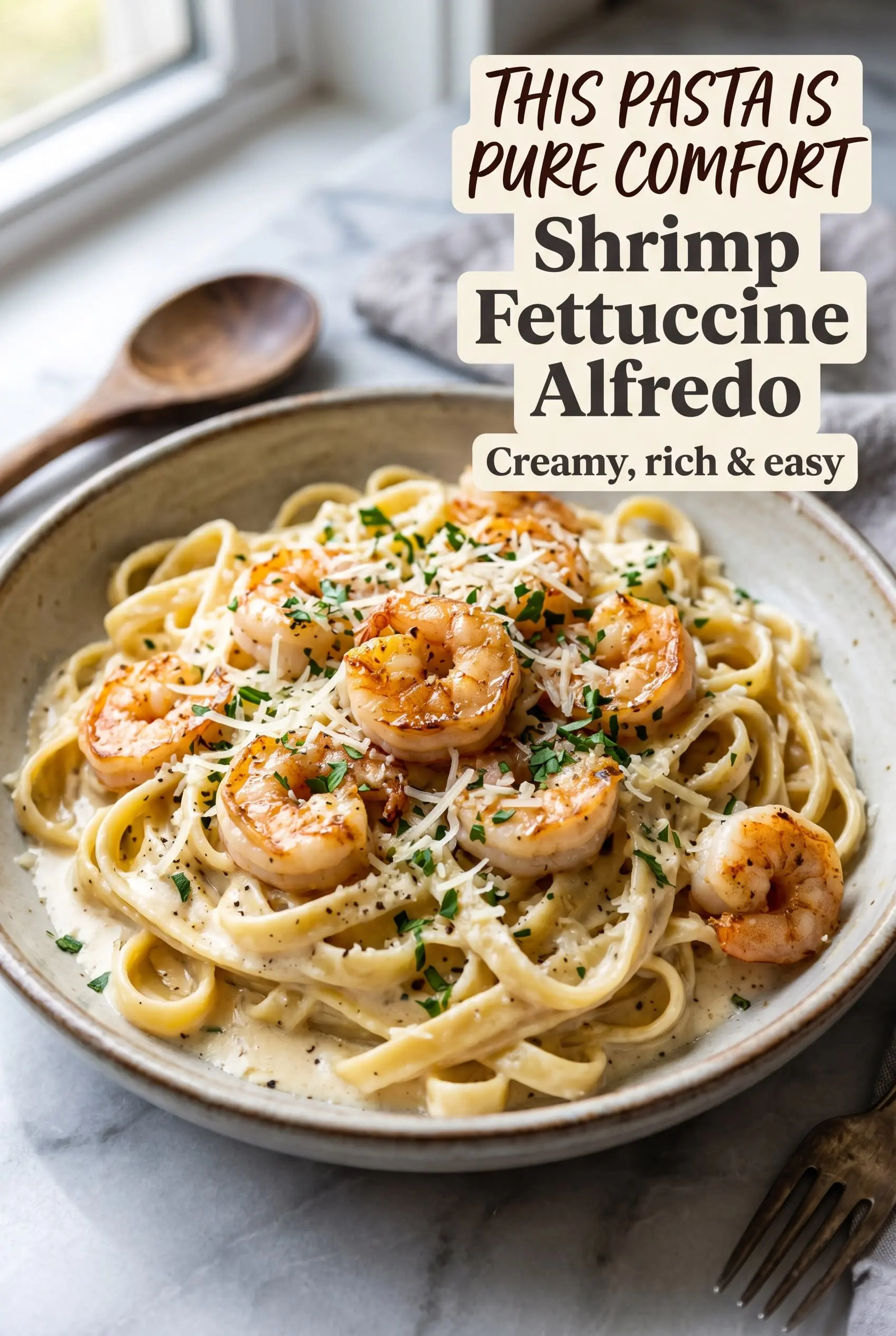
One Pot Shrimp Fettuccine Alfredo
Ingredients
Equipment
Method
- Heat olive oil and butter in a large pan over medium heat until butter melts and foams slightly (around 1 minute).
- Add shrimp in a single layer and cook for 1 to 2 minutes, stirring once, until just pink at the center, then remove to a plate.
- In the same pan, sauté garlic for 30 to 60 seconds until fragrant but not browned.
- Pour in chicken broth and heavy cream, scraping up any browned bits from the bottom of the pan.
- Add fettuccine and cook for 10 to 12 minutes, stirring occasionally, until tender and mostly submerged.
- Stir in Parmesan cheese and continue cooking for 1 to 2 minutes until the sauce turns creamy and coats the pasta.
- Return shrimp to the pan and mix gently for 30 to 60 seconds until warmed through.
- Garnish with fresh parsley and serve warm.