
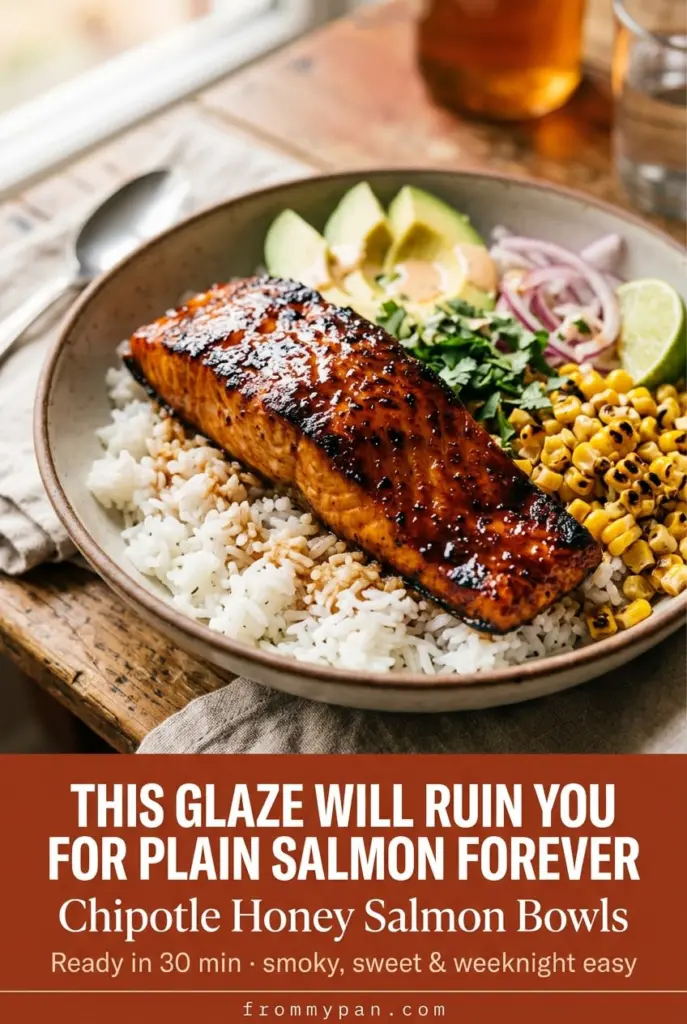
Chipotle Honey Salmon Bowls
Sticky chipotle honey salmon lands with a caramelized edge, flaking apart under the fork and handing off just enough heat to keep every bite interesting. Piled over rice with cool…
Tip: save now, cook later.Sticky chipotle honey salmon lands with a caramelized edge, flaking apart under the fork and handing off just enough heat to keep every bite interesting. Piled over rice with cool avocado, sweet corn, and a squeeze of lime, it eats like a bowl you’d order out, but it comes together on a weeknight without much fuss.
The trick is keeping the honey from burning before the salmon finishes cooking. A hot skillet gives you color fast, but the real payoff comes from a short marinade and a fast sear, so the glaze turns glossy instead of scorched. Chipotle in adobo brings smoke and heat in one shot, and the lime at the end keeps the whole bowl from tasting heavy.
Below, I’ve included the small details that matter most: how long to marinate without softening the fish too much, what to do if your salmon is thick, and a few swaps if you want to build these bowls with what’s already in the fridge.
The honey-chipotle glaze turned sticky and caramelized exactly like I hoped, and the salmon stayed tender instead of drying out. I used the full 30 minutes for the marinade and the bowls tasted even better with the lime at the end.
Save these chipotle honey salmon bowls for a smoky-sweet dinner that comes together fast and still feels layered.
The Secret to Keeping Honey from Burning on the Salmon
Honey and a hot skillet can turn on you fast. The glaze needs enough heat to caramelize, but not so much that the sugars blacken before the fish cooks through. That’s why a brief marinade works here, but a long soak doesn’t help much. Salmon is delicate, and after about 30 minutes in an acidic, salty mixture, the texture starts to soften in a way that can make the surface a little mushy instead of lacquered.
The other mistake is crowding the pan. If the fillets are packed in too tightly, they steam and the glaze stays pale. Give each piece enough room to sear, and leave it alone once it hits the pan so the sugars can set into a real crust. If the salmon sticks for the first few seconds, that’s normal; it usually releases cleanly once the crust forms.
What Each Ingredient Is Doing in the Bowl
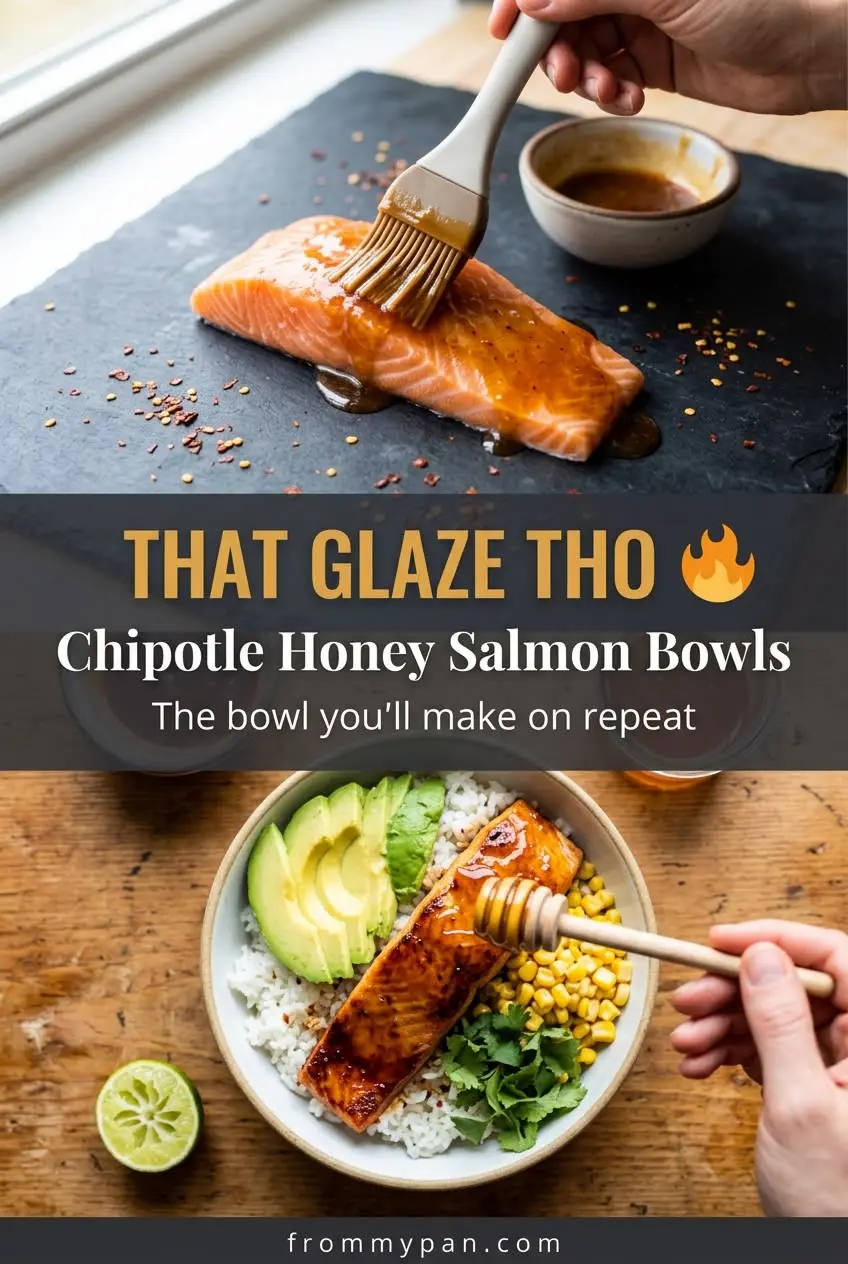
- Salmon — Rich salmon holds up to the sticky glaze and gives the bowls enough body to feel like a full meal. Thicker fillets are easier to cook without drying out, but even thinner pieces work if you shorten the sear a little and pull them as soon as they flake.
- Honey — This is what gives the salmon that glossy finish. Maple syrup can stand in if needed, but it tastes a little darker and less floral, so the bowl shifts from bright sweet-heat to something deeper.
- Chipotle peppers in adobo — These bring smoke, heat, and tang in one ingredient. If you only have adobo sauce, use it, but the glaze will be less chunky and a little less intense.
- Rice — Plain rice is the neutral base that catches the glaze and balances the heat. Brown rice works fine if you want more chew, and jasmine rice gives you a softer, more aromatic bowl.
- Avocado, corn, red onion, cilantro, and lime — These toppings keep the bowl from tasting one-note. The avocado cools the heat, the corn adds sweetness, the onion gives crunch, and the lime sharpens every bite at the end.
- Sour cream or Greek yogurt — The drizzle is optional, but it matters if you want a creamier finish. Greek yogurt gives a tangier edge and holds up a little better than sour cream if you’re thinning it with lime juice.
Building the Glaze, Searing the Fish, and Assembling the Bowls
Mixing the Marinade
Stir the honey, minced chipotle, adobo sauce, olive oil, garlic powder, salt, and pepper until the mixture looks loose and evenly red-brown. You want it thick enough to cling to the salmon, but still loose enough to brush or spoon on without tearing the fish. If the honey is stiff, warm it for just a few seconds so it mixes cleanly.
Letting the Salmon Take on Flavor
Coat the fillets and let them sit for 15 to 30 minutes. That’s enough time for the surface to pick up heat and smoke without turning the fish soft. If your salmon is already very thin, stick closer to 15 minutes so the texture stays firm.
Getting the Sear Without Burning the Glaze
Heat the skillet until it’s properly hot, then lay the salmon in and don’t move it around. You’re looking for a deep golden crust around the edges and a glaze that starts to bubble and darken in spots. If the pan smokes hard or the sugars go from brown to black in a minute, the heat is too high; lower it before adding the next fillet.
Putting the Bowls Together
Spoon rice into each bowl first, then top with the salmon while it’s still warm. Add avocado, corn, and red onion around the fish so each bite gets a mix of creamy, sweet, and sharp. Finish with cilantro and a squeeze of lime; that last hit of acid keeps the glaze from feeling sticky on the palate.
Three Ways to Adjust These Bowls Without Losing What Makes Them Good
Make It Dairy-Free
Skip the sour cream or yogurt drizzle and finish with extra lime instead. The bowls still taste complete because the avocado brings the same cooling effect, and the citrus keeps the chipotle from feeling heavy.
Use Brown Rice or Cauliflower Rice
Brown rice adds chew and a nuttier background, while cauliflower rice makes the bowl lighter and lower in carbs. Cauliflower rice needs a quick cook in a dry skillet so it stays fluffy instead of watery, which matters because this bowl already has a saucy topping.
Swap the Salmon for Shrimp
Shrimp works well if you want a faster version, but it needs less time in the pan and will overcook in a hurry. Cook just until it turns opaque and curls into a loose C shape; once it tightens into a hard O, it’s gone too far.
Use the Broiler Instead of a Skillet
Broiling gives you good color fast, especially if your fillets are thick. Place the salmon on a lined sheet pan and watch closely near the end; the honey can go from caramelized to scorched in less than a minute once it starts bubbling hard.
Storage and Reheating
- Refrigerator: Store the salmon and toppings separately for up to 3 days. The fish stays good, but the glaze softens a little once chilled.
- Freezer: The cooked salmon freezes well for up to 2 months, though the avocado and fresh toppings do not. Wrap portions tightly and freeze the rice separately if you want the best texture later.
- Reheating: Warm the salmon gently in a covered skillet over low heat or in a 300°F oven just until heated through. High heat dries it out fast and can turn the honey glaze sticky in the wrong way.
Answers to the Questions Worth Asking
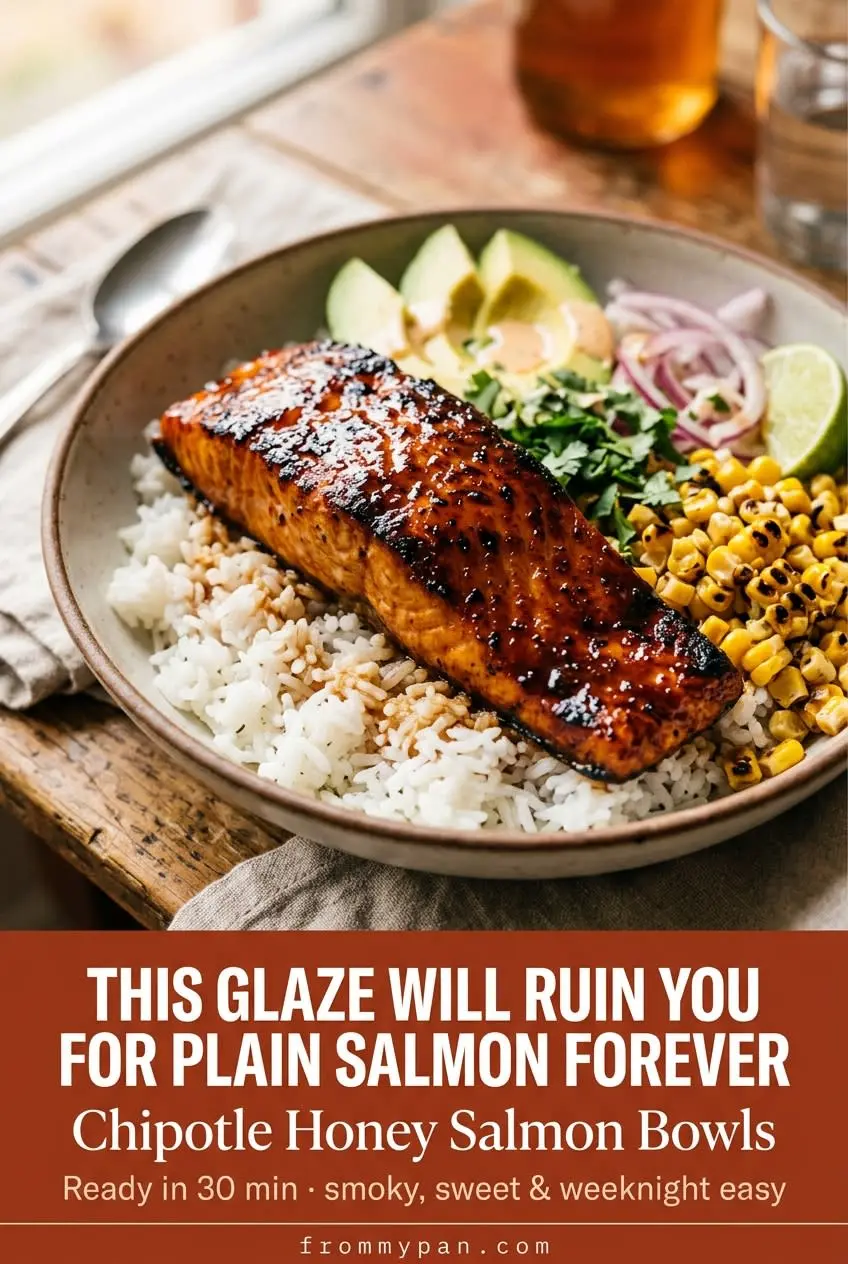
Chipotle Honey Salmon Bowls
Ingredients
Equipment
Method
- Mix honey, minced chipotle peppers, adobo sauce, olive oil, garlic powder, and salt & pepper into a marinade until smooth and uniform.
- Coat the salmon fillets with the marinade, then marinate for 15–30 min.
- Sear salmon in a hot skillet for 3–4 min per side until caramelized and cooked through.
- Assemble bowls with a rice base, then top with salmon, sliced avocado, corn, and thinly sliced red onion.
- Finish with a sour cream or Greek yogurt drizzle (if using), a squeeze of lime, and fresh cilantro.