
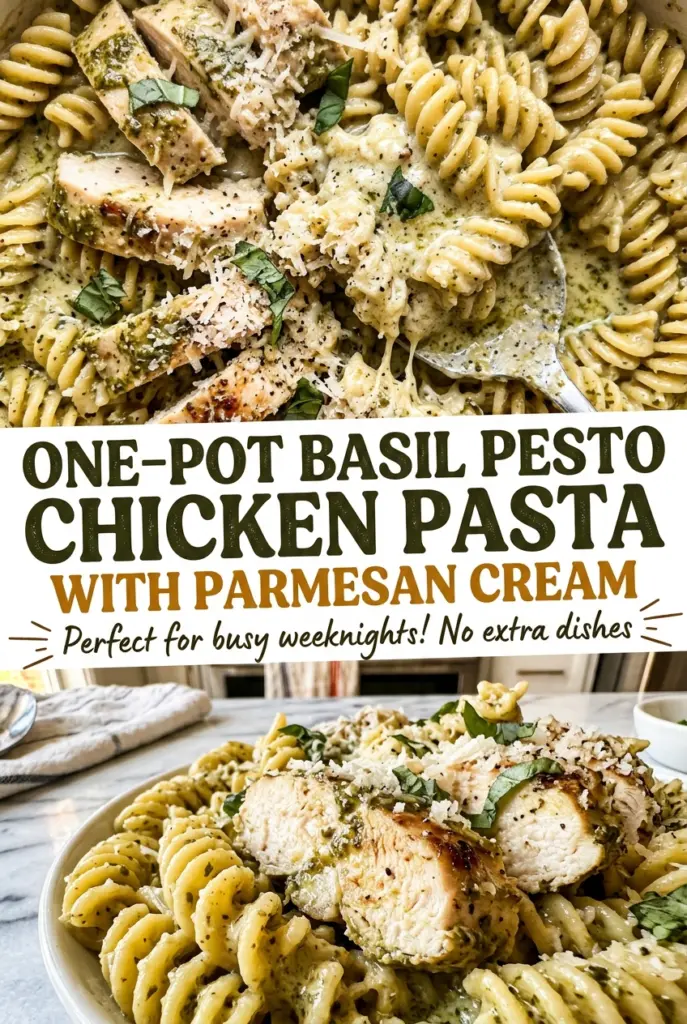
One-Pot Basil Pesto Chicken Pasta with Parmesan Cream
The skillet starts to smell like browned chicken and garlic before there’s any cream in it. That’s when I know this one-pot basil pesto chicken pasta is on track: the…
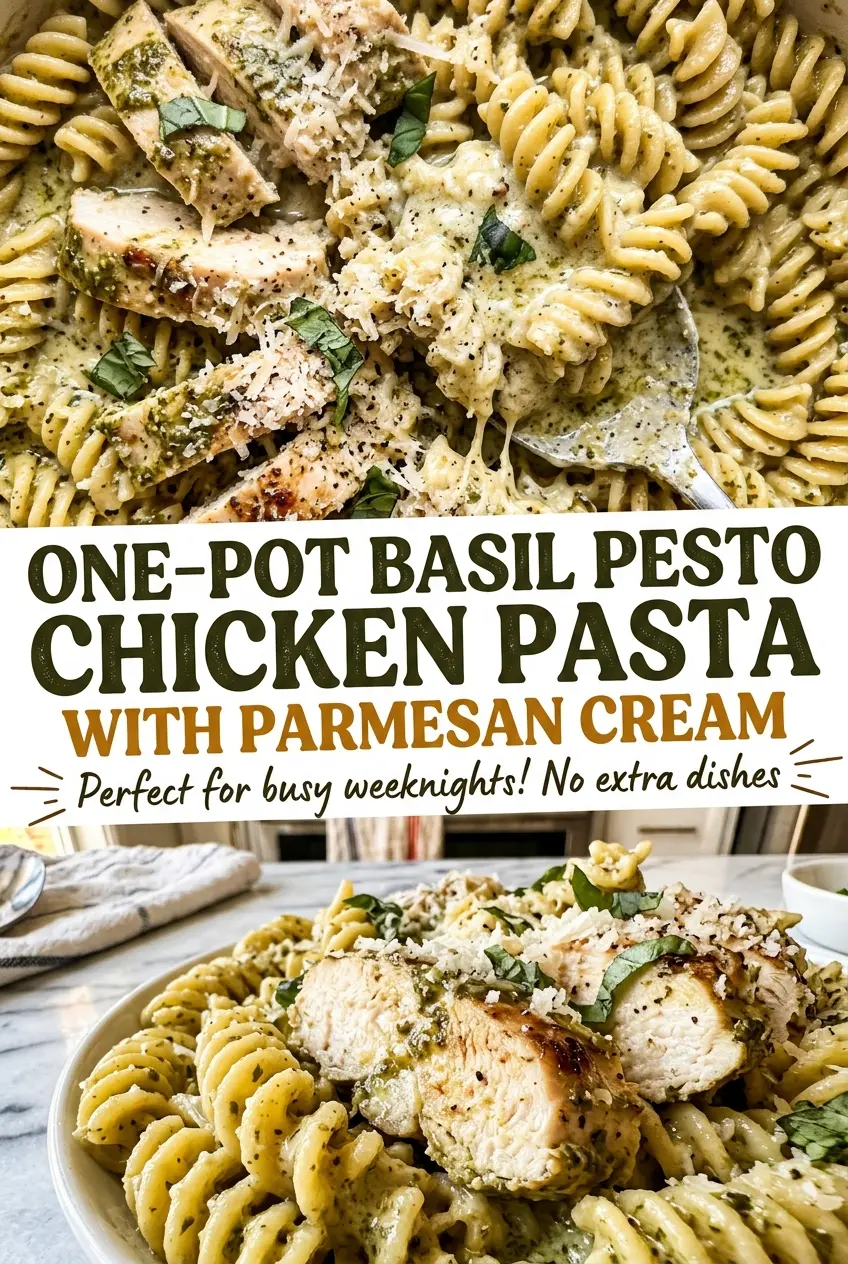
Tip: save now, cook later.The skillet starts to smell like browned chicken and garlic before there’s any cream in it. That’s when I know this one-pot basil pesto chicken pasta is on track: the chicken has picked up color, and the browned bits left behind are ready to become part of the sauce. The penne cooks in the same skillet, which means the pasta picks up all that savory flavor without leaving another pot to wash.
The order matters. I brown the chicken first, then let the pasta simmer in broth and water before adding the cream, Parmesan, and pesto at the end. That keeps the basil bright and gives the pasta time to release enough starch to help the sauce cling. Each bite is creamy without burying the pesto’s fresh, herby taste.
Kitchen Note
I take the skillet completely off the heat before stirring in the Parmesan and pesto. If the pan is still bubbling hard, the cheese is more likely to clump instead of melting into the cream.
Save this one-pot basil pesto chicken pasta for a night when you want creamy Parmesan sauce without a sink full of dishes.
Why the Penne Needs to Cook Before the Cream Goes In
In a one-pot pasta, the cooking liquid isn’t something you pour off at the end. The penne simmers directly in the chicken broth and water, and as it cooks it releases starch into that liquid. That starch gives the sauce a head start: instead of cream and pesto sitting in a thin pool at the bottom, they meet a broth that’s already beginning to cling to the pasta.
Adding the dairy after the pasta is close to done also gives you better control over the finish. The pasta can simmer steadily without the cream in the pan, and the Parmesan and pesto go in after the skillet comes off the heat. You get a sauce that coats the penne while the basil still tastes fresh. Keep the pasta uncovered and stir it often; the liquid level drops as the noodles cook, and stirring helps them cook evenly rather than sticking in one spot.
That’s the balance this method is built around: enough liquid to cook the pasta, but not so much that the finished dish stays soupy. A short rest at the end gives the sauce a moment to settle around the noodles.
Penne, Basil Pesto, and Parmesan: The Choices That Shape the Sauce
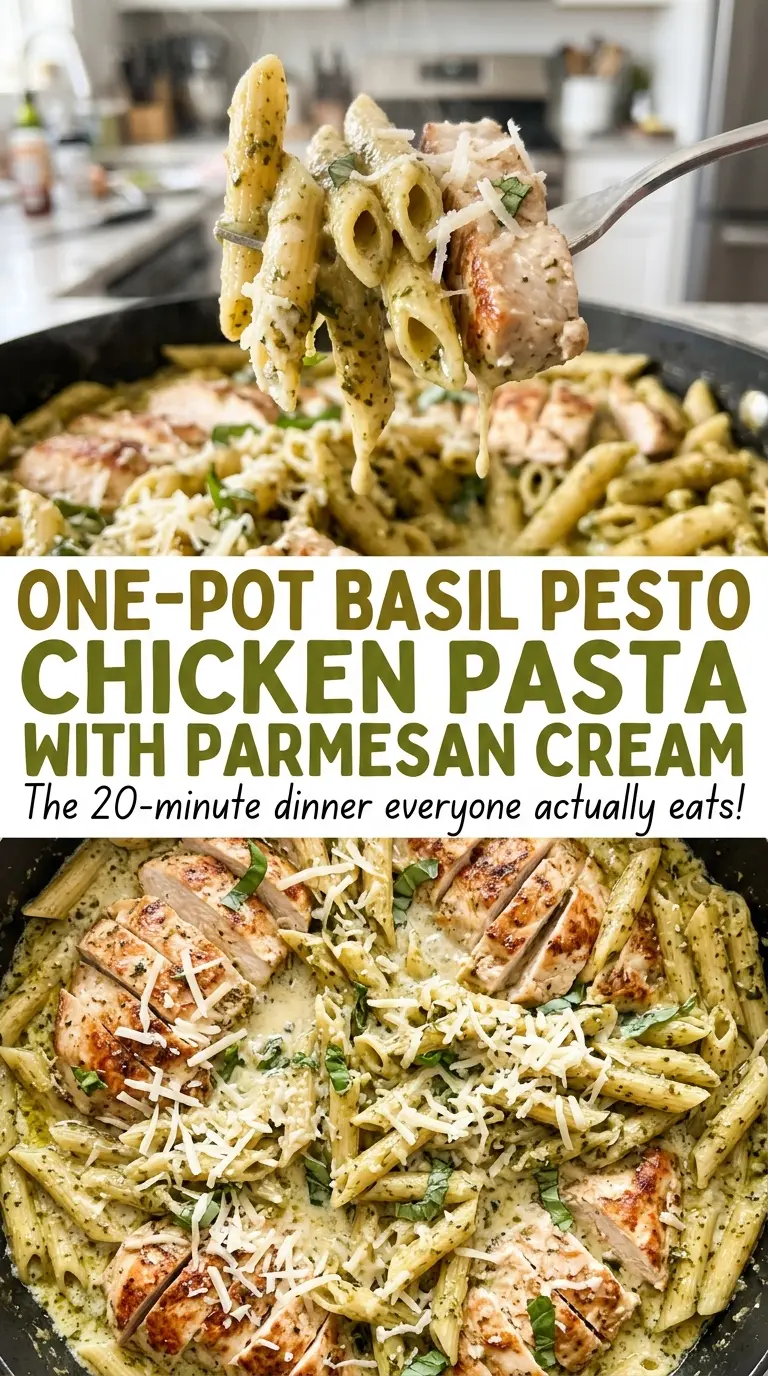
- Penne — Its short tubes hold creamy pesto sauce, and the shape cooks predictably in the skillet. Use dried penne rather than fresh pasta, which cooks much faster and absorbs liquid differently.
- Chicken breasts — Cutting the meat into even 1-inch pieces helps it brown and finish cooking in step with the pasta. Boneless, skinless chicken is convenient here; the chicken gets a brief first cook, then returns to the skillet later.
- Heavy cream and Parmesan — Heavy cream gives the sauce body, while finely grated Parmesan melts more smoothly than thick shreds. A block of Parmesan is worth grating if you have one; packaged finely grated Parmesan works when convenience matters.
- Basil pesto — Pesto brings the concentrated basil flavor, so a standard store-bought jar is perfectly practical. Choose a basil pesto you like on its own; the sauce doesn’t have enough cooking time to mellow a pesto whose flavor you dislike.
- Onion and garlic — Finely chopped onion softens quickly, and minced garlic needs only a short turn in the skillet. Keep the garlic moving after you add it so it perfumes the oil without browning.
Build the Pasta in the Skillet, Then Finish It Off the Heat
Brown the Chicken Without Cooking It Through
Heat the olive oil in a 12-inch deep skillet over medium-high heat. Season the 1-inch chicken pieces with kosher salt and black pepper, then brown them for 5–6 minutes, stirring occasionally. They should pick up color on the outside, but they don’t need to be fully cooked yet. Transfer them to a clean plate so they can finish later in the simmering pasta.
Soften the Aromatics and Lift the Browned Bits
Add the finely chopped onion to the same skillet and cook for 2–3 minutes, stirring, until softened. Stir in the minced garlic for 30 seconds; it should smell fragrant, not toasted. Pour in the chicken broth and water, then scrape the bottom of the skillet to loosen the browned bits. Bring the liquid to a boil before adding the penne.
Simmer the Penne in the Broth
Stir in the pasta, then reduce the heat until the liquid holds a steady simmer. Cook uncovered for 5 minutes, stirring often. Look for consistent, gentle bubbling rather than a hard boil that splashes liquid out of the skillet. If the pasta sits unstirred, the pieces at the bottom can stick as the liquid reduces.
Finish the Chicken and Make the Creamy Sauce
Return the chicken and any juices on the plate to the skillet. Simmer for 6–8 minutes, stirring often, until the penne is al dente and the thickest chicken pieces reach 165°F. Reduce the heat to low, stir in the heavy cream, and heat gently for 1–2 minutes. Remove the skillet from the heat, stir in the Parmesan and pesto until creamy, then let the pasta rest for 2 minutes before serving.
Easy Swaps for a Different Pasta Night
Use gluten-free penne
Swap in dried gluten-free penne for a gluten-free version. Brands vary in how quickly they soften and how much starch they release, so use the package’s doneness cue and check the pasta early; the sauce may be a little less thick than with wheat penne.
Trade the chicken breasts for thighs
Use boneless, skinless chicken thighs cut into 1-inch pieces in place of the breasts. They bring a richer taste and stay juicy, but check the thickest pieces for the same safe doneness before serving.
Make the cheese sharper with Pecorino Romano
Replace the Parmesan with finely grated Pecorino Romano for a sharper, saltier finish. It melts into the sauce in the same way, but the final dish will taste more assertively savory.
Storage and Reheating
- Refrigerator: Refrigerate leftovers within 2 hours and keep them for 3–4 days. The penne will absorb sauce as it sits, so expect a thicker texture when chilled.
- Freezer: Freeze in an airtight container for up to 2 months for best quality. The pasta may soften and the cream sauce may separate slightly after thawing.
- Reheating: Warm gently in a skillet over low heat, stirring in a splash of chicken broth or water to loosen the sauce. Heat until steaming throughout; high heat can make the creamy sauce oily.
Questions That Come Up While Making This Pesto Pasta
One-Pot Basil Pesto Chicken Pasta with Parmesan Cream
Ingredients
Equipment
Method
- Heat the olive oil in a 12-inch deep skillet over medium-high heat.
- Season the chicken with the salt and pepper.
- Brown the chicken in the skillet for 5–6 minutes, stirring occasionally.
- Transfer the chicken to a clean plate.
- Add the onion and cook for 2–3 minutes, stirring, until softened.
- Add the garlic and cook for 30 seconds.
- Pour in the chicken broth and water.
- Scrape up the browned bits.
- Bring the liquid to a boil.
- Stir in the pasta.
- Reduce the heat to maintain a steady simmer.
- Cook the pasta uncovered for 5 minutes, stirring often.
- Return the chicken and any juices to the skillet.
- Simmer for 6–8 minutes, stirring often, until the pasta is al dente and the chicken reaches 165°F in the thickest pieces.
- Reduce the heat to low.
- Stir in the heavy cream.
- Heat gently for 1–2 minutes.
- Remove the skillet from the heat.
- Stir in the Parmesan and pesto until creamy.
- Let the pasta rest for 2 minutes before serving.