
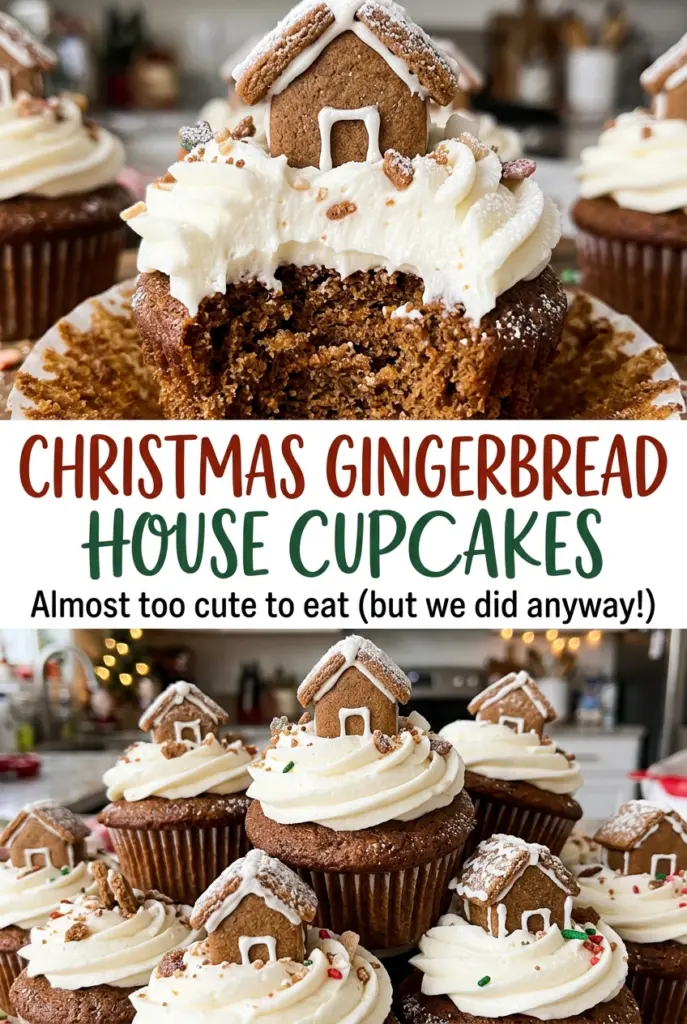
Christmas Gingerbread House Cupcakes
When the cupcake batter comes together, it looks looser than a typical cake batter, and that can make you wonder whether it needs more flour. It doesn’t. The hot water…
Tip: save now, cook later.When the cupcake batter comes together, it looks looser than a typical cake batter, and that can make you wonder whether it needs more flour. It doesn’t. The hot water and molasses give these Christmas Gingerbread House Cupcakes their soft, moist crumb, while the separate gingerbread cookies bake into little sturdy houses for the tops.
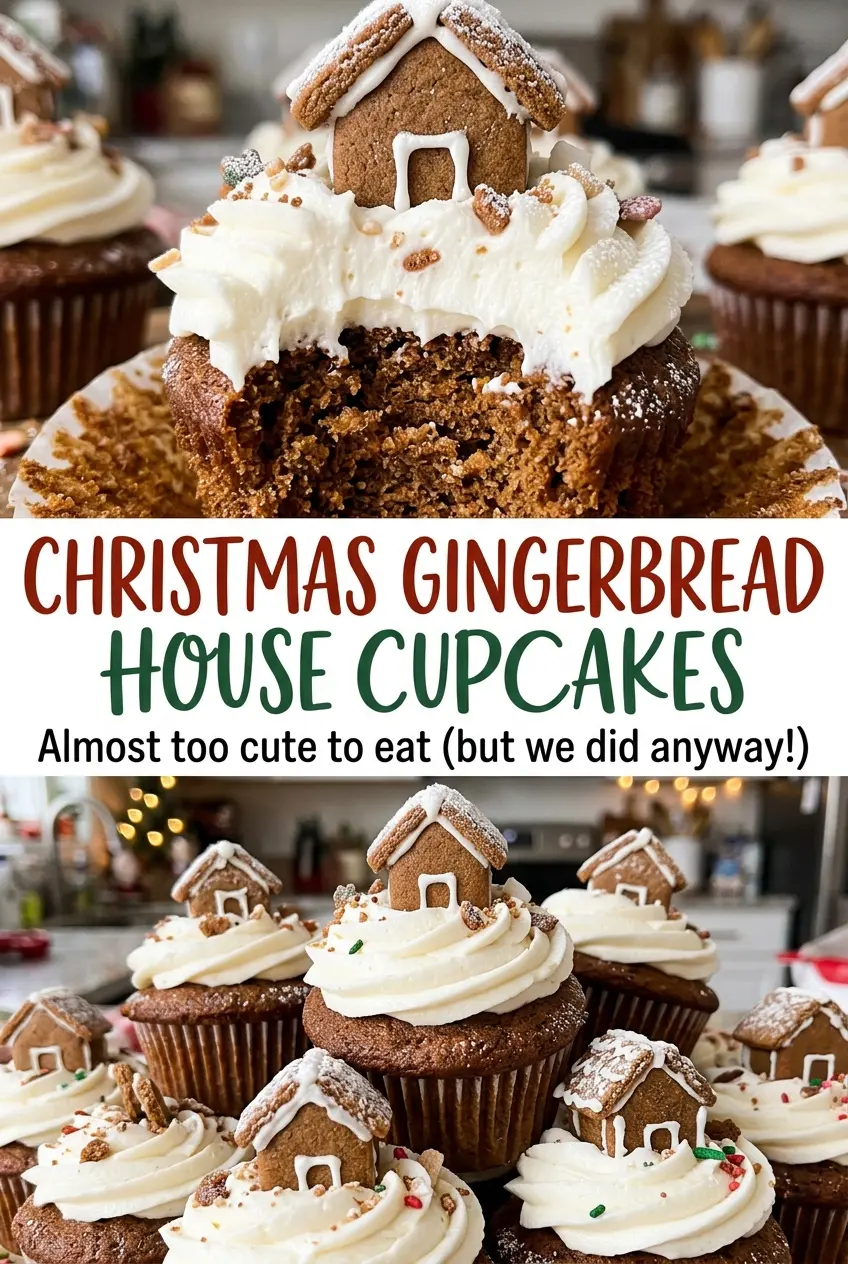
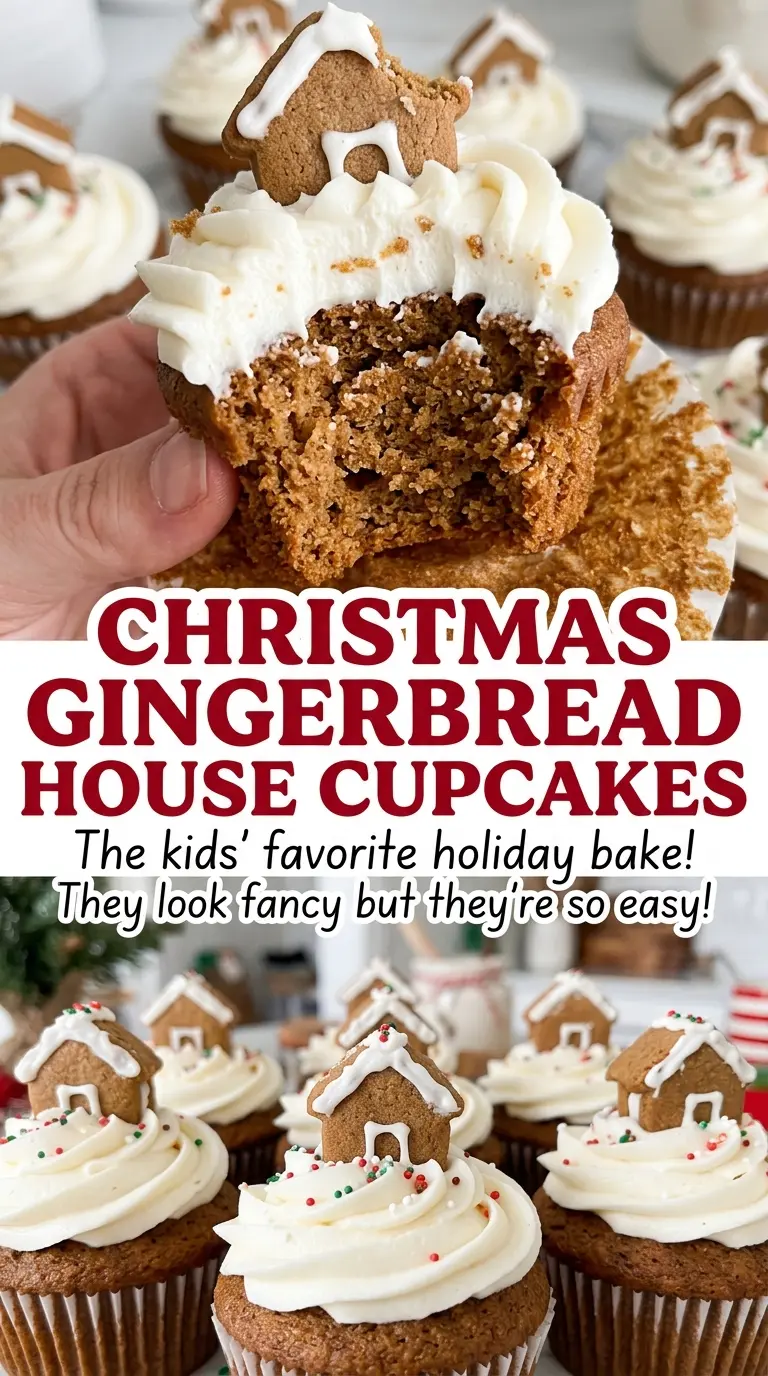
I like that each part has a clear job: the cookies hold their shape, the cream cheese frosting gives them a soft landing, and the candy-coated chocolates turn each house into a tiny decorated scene. Bake the toppers first, then make the cupcakes while the cookies cool. Once everything is completely cool, the houses sit neatly on a thick swirl of frosting, with warm ginger and cinnamon in every bite.
Kitchen Note
The cream cheese frosting should be fluffy but still hold its shape when you spread it. If it feels too soft, give it 20 minutes in the refrigerator before frosting; that short chill is more useful than adding extra powdered sugar and making the topping overly sweet.
Save these Christmas Gingerbread House Cupcakes for a festive bake: soft spiced cake, cream cheese frosting, and a little cookie house on every one.
Why Gingerbread Cupcake Batter Looks Looser Than You Expect
Molasses and hot water make this batter noticeably more fluid than a butter-based cupcake batter. That’s expected, not a sign that the flour was measured incorrectly. Whisk the wet ingredients together, add the flour mixture, and stop as soon as the batter looks smooth. Adding extra flour to make it thicker changes the balance and can leave the cupcakes heavy instead of tender.
The same molasses gives the cake its deep gingerbread taste, while baking soda helps the batter rise in the oven. Since the batter is thin, divide it evenly among the lined muffin cups and get the pan into the oven without a long wait. The best doneness cue is a top that springs back when touched and a toothpick with a few moist crumbs, not a completely dry pick. Those crumbs are a good sign that the centers will stay soft as the cupcakes cool.
The Molasses, Spices, and Frosting That Shape Each Layer
- Unsulphured molasses and brown sugar — Molasses supplies the deep, slightly bittersweet gingerbread character in both the cookies and cupcakes; brown sugar adds sweetness and a softer texture. A standard unsulphured molasses is the right buy here, and a store brand works well. Dark molasses can stand in at the same amount for a more robust taste, but blackstrap is much more bitter and can overpower the warm spices.
- All-purpose flour — Flour gives the cookie toppers enough structure to hold their house shape and keeps the cupcakes from collapsing. Regular store-brand flour is fine; the important detail is keeping the cookie and cupcake portions separate as you measure them. For a gluten-free version, use a measure-for-measure baking blend that includes xanthan gum in place of the all-purpose flour in both components. The cookies may be a little more delicate.
- Ground ginger, cinnamon, and cloves — These ground spices make the cake taste unmistakably like gingerbread, with ginger up front and cinnamon and cloves rounding it out. Use spices that still smell fragrant when you open the jars; old, faint spices make a muted cake. Keep the divided portions straight so the cookie dough and cupcake batter each get their intended balance.
- Neutral oil and eggs — The oil helps keep the cupcakes moist, while the whole egg binds the cake batter. Vegetable or canola oil both work as neutral choices, so there’s no need for a specialty bottle. The cookie dough uses only an egg yolk, which helps bind its smaller batch without adding the extra moisture of a whole egg.
- Cream cheese and powdered sugar — Cream cheese gives the frosting its gentle tang, which keeps the sweet cookie and cake from tasting one-note. Let the cream cheese soften before beating so it turns smooth instead of leaving little lumps. Powdered sugar dissolves into the frosting easily, and an ordinary store brand is suitable.
- Mini candy-coated chocolates — Two candies make simple, visible windows on each house. Small candies sit best on the cookie without weighing down the decoration; press them into the icing while it’s still fresh so they stay put as it sets.
Bake the Houses First, Then Give the Cupcakes Their Turn
Chill and Cut the Gingerbread Houses
Beat the softened butter with the cookie portion of the brown sugar until smooth, then mix in the cookie portion of the molasses and the egg yolk. Whisk the cookie flour with its ginger and cinnamon before stirring it into the butter mixture, stopping when a dough forms. Flatten the dough into a disk, wrap it, and refrigerate it for 45 minutes. Roll it 1/4 inch thick between parchment sheets, cut 12 houses with a 2 1/4-inch house cutter, and reroll the scraps as needed.
Bake the Cookies Until Their Edges Set
Heat the oven to 350°F and line a large baking sheet with parchment. Bake the cutouts for 8 to 10 minutes, looking for cookies that are set and lightly browned at the edges rather than dark all over. Leave them on the baking sheet for 5 minutes before moving them to a rack; they’re delicate while hot. Let the cookies cool completely before you pipe the roof and door details.
Whisk the Thin Cupcake Batter Smooth
Line a 12-cup muffin pan with paper liners. Whisk the remaining flour with the baking soda, ginger, cinnamon, cloves, and salt in one bowl, then whisk the oil, remaining brown sugar, egg, molasses, and hot water in a larger bowl. Add the flour mixture to the wet ingredients and whisk just until smooth. Divide the batter evenly among the liners so the cupcakes bake at a similar pace.
Finish the Frosting and Set Each House in Place
Bake the cupcakes at 350°F for 18 to 22 minutes, until the tops spring back and a toothpick comes out with a few moist crumbs. Cool them in the pan for 10 minutes, then move them to a rack to cool completely. Stir the powdered sugar and milk for the cookie icing until thick and smooth, pipe roofs and doors, press two candies onto each cookie for windows, and let the icing set for 15 minutes. Beat the cream cheese until smooth, then add the remaining powdered sugar and vanilla and beat until fluffy, about 2 minutes; spread it over the cooled cupcakes and press one house into each.
Two Ways to Adapt These Gingerbread House Cupcakes
Make Both Parts Gluten-Free
Replace the all-purpose flour in the cookie dough and cupcake batter with a measure-for-measure gluten-free baking blend that contains xanthan gum, using the same amounts for each portion. The cupcakes stay tender, though the cutout cookies can be more fragile when you transfer them, so handle the cooled houses gently.
Keep the Gingerbread Cupcakes, Skip the Houses
For a simpler cupcake format, make the cupcake portion and cream cheese frosting, leaving out the separate cookie dough, cookie icing, and candy windows. You’ll still get the molasses-and-spice cake under tangy frosting, but without the crisp topper or the extra decorating time.
Storage and Reheating
- Refrigerator: Keep the finished cupcakes covered for up to 3 days. The frosting firms in the cold, and the cake crumb feels a little denser straight from the refrigerator.
- Freezer: Freeze unfrosted cupcakes individually wrapped, then sealed in an airtight container, for up to 2 months. Thaw them while wrapped; decorated cupcakes don’t freeze as neatly because the frosting and cookie houses can lose their clean finish.
- Reheating: Let a chilled cupcake sit at room temperature for about 20 minutes before serving. Skip the microwave, which can soften the frosting before the cake warms evenly.
Questions That Come Up While Building the Gingerbread Houses
Christmas Gingerbread House Cupcakes
Ingredients
Equipment
Method
- Beat the butter and 3 tablespoons brown sugar in a medium bowl until smooth, about 2 minutes.
- Beat in 1 1/2 tablespoons molasses and the egg yolk.
- Whisk 3/4 cup flour with 1/4 teaspoon ginger and 1/8 teaspoon cinnamon.
- Mix the flour mixture into the butter mixture until a dough forms.
- Flatten the dough into a disk, wrap, and refrigerate for 45 minutes.
- Heat the oven to 350°F and line a large baking sheet with parchment paper.
- Roll the dough 1/4 inch thick between sheets of parchment.
- Cut out 12 house shapes with a 2 1/4-inch house cutter, and reroll the scraps as needed.
- Bake the cookies for 8 to 10 minutes, until set and lightly browned at the edges.
- Cool on the baking sheet for 5 minutes before transferring to a rack to cool completely.
- Line a 12-cup muffin pan with paper liners.
- Whisk the remaining 1 1/2 cups flour with the baking soda, remaining ginger and cinnamon, cloves, and salt in a medium bowl.
- In a large bowl, whisk the oil, remaining 9 tablespoons brown sugar, egg, remaining 1/2 cup molasses, and hot water.
- Add the flour mixture to the wet mixture and whisk just until smooth.
- Divide the batter evenly among the liners.
- Bake at 350°F for 18 to 22 minutes, until the tops spring back and a toothpick comes out with a few moist crumbs.
- Cool in the pan for 10 minutes, then transfer the cupcakes to a rack to cool completely.
- Stir 1 cup powdered sugar with the milk until thick and smooth.
- Pipe icing onto the cooled cookies to outline roofs and doors.
- Press 2 candies onto each cookie for windows, and let the icing set for 15 minutes.
- Beat the cream cheese until smooth.
- Beat in the remaining 2 1/2 cups powdered sugar and vanilla until fluffy, about 2 minutes.
- Chill for 20 minutes if the frosting is too soft to spread.
- Spread frosting over the cooled cupcakes and press one gingerbread house cookie into each cupcake.