

Million Dollar Chicken Casserole
Tender shredded chicken tucked into a rich, creamy base and finished with a buttery cracker topping is the kind of casserole that disappears fast. The filling stays lush and savory,…
Tip: save now, cook later.Tender shredded chicken tucked into a rich, creamy base and finished with a buttery cracker topping is the kind of casserole that disappears fast. The filling stays lush and savory, while the top bakes into a crisp, golden layer that gives each bite a little crunch. It tastes like the kind of dinner people remember, but it comes together with pantry-friendly ingredients and leftover chicken if you have it.
What makes this version work is the balance. Cream cheese gives body, sour cream adds tang, cottage cheese melts into the sauce without making it heavy, and the canned soup helps everything stay smooth and dependable in the oven. The chicken goes in after the dairy mixture is combined, so it stays in distinct shreds instead of turning mushy, and the cracker topping goes on last so it browns instead of sinking in.
Below, you’ll find the little details that keep the filling creamy instead of grainy, plus the best way to swap ingredients if you need to work with what’s already in your fridge.
The filling baked up creamy without getting watery, and the cracker topping stayed crisp all the way through dinner. I used rotisserie chicken and it still tasted like I spent way more time on it.
Creamy Million Dollar Chicken Casserole with that buttery cracker top is worth pinning for busy nights and make-ahead dinners.
The Trick to Keeping the Filling Creamy Instead of Watery
The biggest mistake with casseroles like this is rushing the dairy base and then wondering why it loosens in the oven. Cream cheese needs to be softened all the way through so it blends cleanly; if it goes in cold, you’ll chase little lumps around the bowl and the filling won’t bake evenly. Cottage cheese also matters more than people think. It adds texture and moisture, but it needs to be stirred into a smooth mixture before the chicken goes in so it doesn’t separate into pockets.
The other thing that helps is using cooked chicken that’s been cooled and shredded, not chopped too finely. Shredded chicken holds onto the sauce better, and because it isn’t diced small, it stays satisfying after baking. If your filling seems a little loose in the bowl, that’s fine. It should spread easily, then set up in the oven as the cheeses melt and the top browns.
What Each Ingredient Is Doing in This Casserole
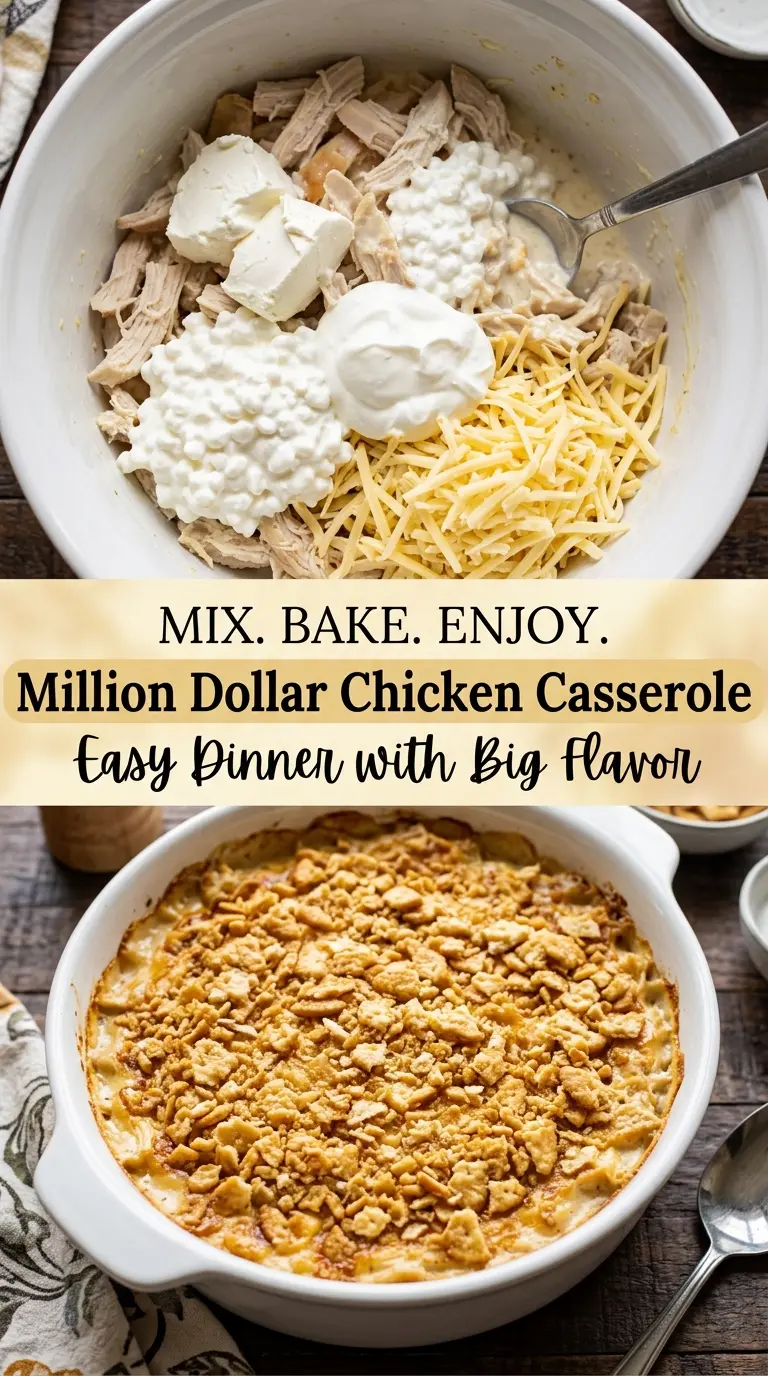
- Shredded chicken — This is the backbone of the dish. Rotisserie chicken is the easiest shortcut, and leftover baked chicken works just as well. Just keep the pieces on the larger side so they don’t vanish into the filling.
- Cream cheese — This gives the casserole its thick, rich base. Soften it fully before mixing or you’ll end up with streaks. Low-fat versions work, but they don’t bake up with the same velvety texture.
- Cottage cheese — It melts into the filling and adds body without making the casserole taste heavy. Small-curd cottage cheese blends best. If you hate the texture, pulse it briefly in a blender before using.
- Sour cream — This adds the tang that keeps the casserole from tasting flat. Full-fat sour cream gives the best texture, but plain Greek yogurt can step in if that’s what you have. The sauce will be a little sharper and slightly less plush.
- Cream of chicken soup — This helps bind everything together and gives the filling that classic casserole finish. It also keeps the mixture stable in the oven. If you want a from-scratch version, a thick homemade white sauce can replace it, but the texture will be less nostalgic and a little cleaner tasting.
- Mozzarella and Parmesan — Mozzarella gives stretch and melt, while Parmesan brings salt and a deeper savory note. Freshly grated Parmesan has more punch than the shelf-stable kind, but either will work here.
- Buttery crackers and melted butter — This is the part that gives you contrast. The crackers should be crushed, not powdered, so you get a crisp, craggy top instead of a paste. If you skip the butter or use too little, the topping bakes dry instead of golden.
How to Build the Casserole So the Topping Stays Crisp
Mix the base until it looks smooth, not streaky
Start with the cream cheese, sour cream, cottage cheese, soup, and seasonings in a large bowl and stir until the mixture is fully combined. You want a thick, even filling with no white streaks of cream cheese left behind. If the base looks lumpy at this stage, those lumps will still be there after baking, just warmer. A hand mixer works if the cream cheese is stubborn, but a sturdy spoon is enough when everything is softened properly.
Fold in the chicken after the dairy is already blended
Add the shredded chicken once the base is smooth. Stir just until the chicken is coated and spread the mixture into the baking dish without packing it down. Overmixing breaks up the chicken and makes the casserole dense. The filling should mound a little, then settle as it bakes.
Finish with crackers right before it goes into the oven
Combine the crushed crackers with melted butter and scatter them evenly over the top. Don’t add the topping too early or it will absorb moisture and lose its crunch before the casserole is done. Bake until the edges are bubbling and the top is deeply golden in spots. Let it rest for a few minutes so the filling settles and doesn’t run when you scoop it.
Three Ways to Make It Work for Your Pantry
Dairy-Free Version With a Different Finish
Use dairy-free cream cheese, dairy-free sour cream, and a good melting plant-based cheese. The texture will still be creamy, but the flavor will lean a little less tangy and more neutral, so season the filling a bit more boldly. The cracker topping still gives you the same crunchy contrast.
Gluten-Free Swaps That Keep the Same Comfort-Food Feel
Use a gluten-free cream of chicken soup and swap the buttery crackers for a gluten-free buttery-style cracker. The casserole still bakes up with the same creamy center and crisp top, though gluten-free crackers can brown faster, so watch the last few minutes closely.
How to Stretch It for a Bigger Crowd
Add an extra 2 cups of shredded chicken and a handful more mozzarella if you need the casserole to feed more people. Keep the same ratio of dairy so the filling stays creamy instead of turning dry. If the dish is deeper than a standard 9×13, add a few extra minutes of bake time and wait for the center to bubble before pulling it out.
Storage and Reheating
- Refrigerator: Store covered for up to 4 days. The topping softens a little, but the filling stays creamy.
- Freezer: It freezes well baked or unbaked. Wrap tightly and freeze for up to 2 months, then thaw in the fridge before baking or reheating.
- Reheating: Reheat covered in a 325°F oven until hot in the center. If you use the microwave, the topping will lose its crunch, so the oven is the better choice for leftovers.
Answers to the Questions Worth Asking

Million Dollar Chicken Casserole
Ingredients
Equipment
Method
- Preheat the oven to 350°F (175°C) and set a rack in the middle position.
- Grease a 9×13-inch baking dish so the casserole releases cleanly.
- In a large bowl, combine cream cheese, cottage cheese, sour cream, cream of chicken soup, mozzarella, Parmesan, garlic powder, onion powder, and black pepper.
- Stir until smooth and well combined.
- Fold in the shredded chicken until evenly coated.
- Spread the mixture evenly into the prepared baking dish.
- Combine crushed buttery crackers and melted unsalted butter in a small bowl.
- Sprinkle the cracker mixture evenly over the casserole so the top cooks up crisp-tender.
- Bake at 350°F (175°C) for 35–40 minutes until hot and bubbly.
- Rest the casserole for 5 minutes before serving so it sets and slices cleanly.
- Garnish with fresh parsley and serve.