
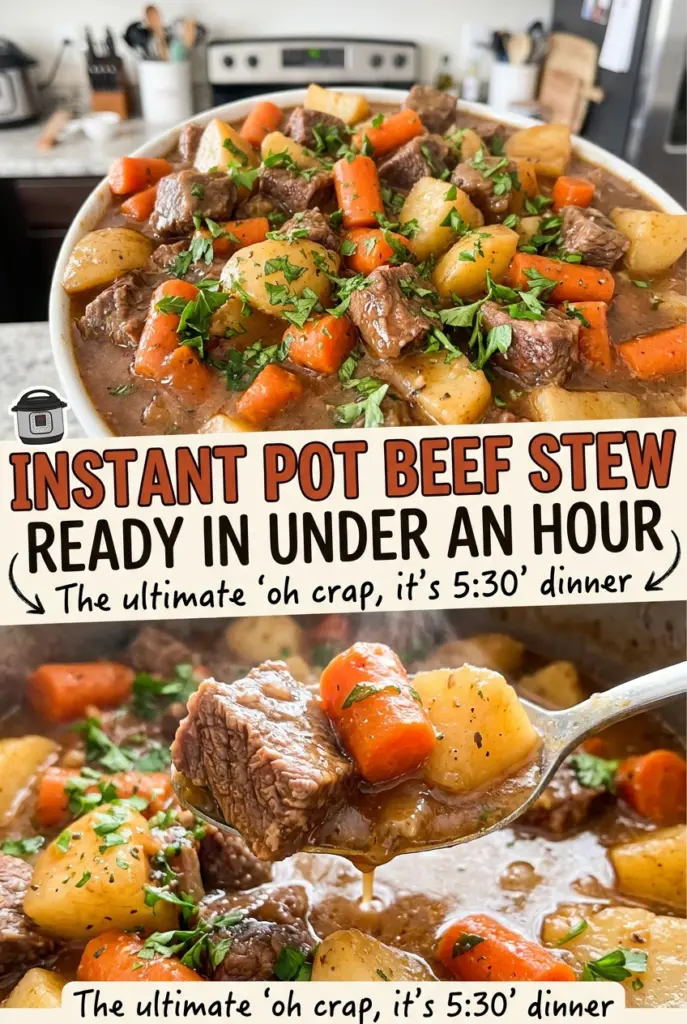
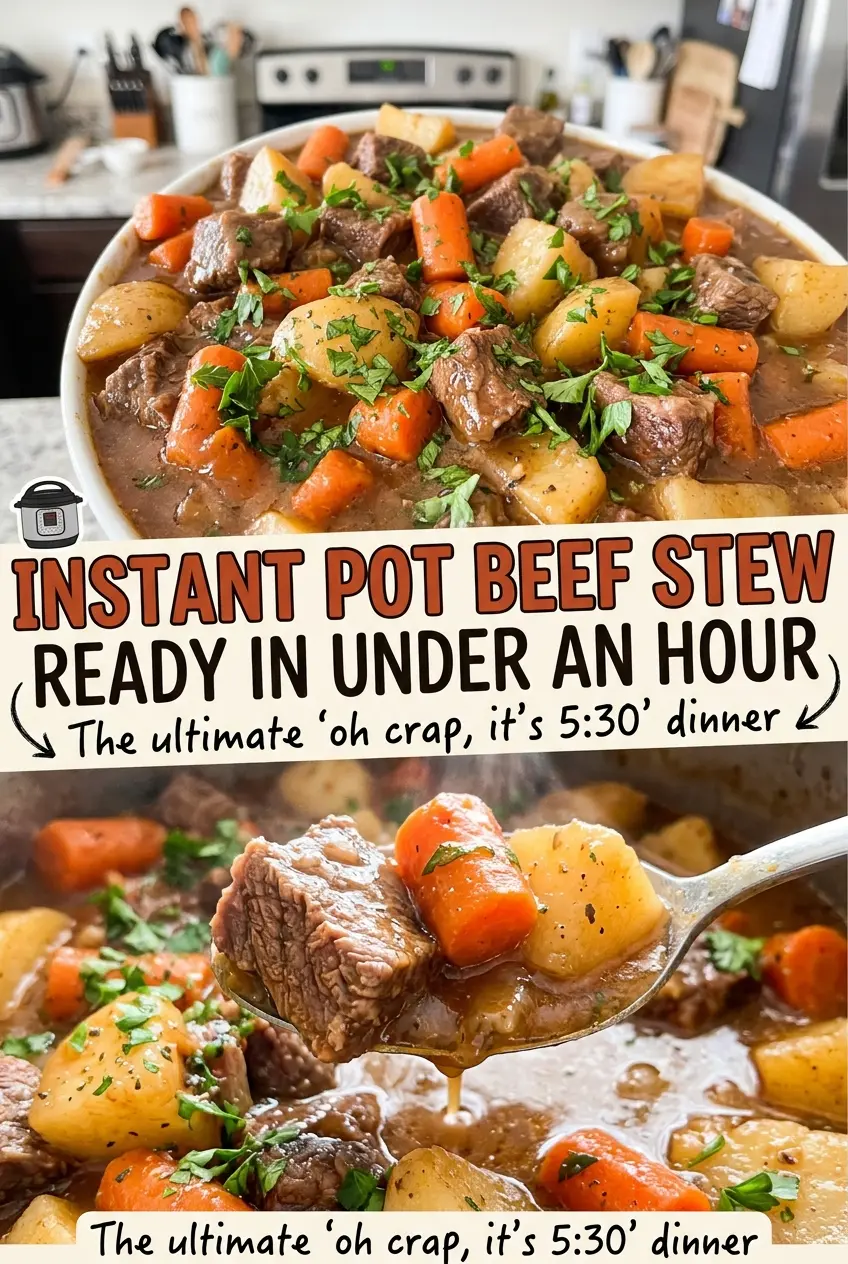
Instant Pot Beef Stew Ready in Under an Hour
When the lid comes off, the beef should be tender and the potatoes easy to pierce, but the broth still looks thinner than a stew ought to. That’s expected. I…
Tip: save now, cook later.When the lid comes off, the beef should be tender and the potatoes easy to pierce, but the broth still looks thinner than a stew ought to. That’s expected. I thicken this Instant Pot beef stew at the end with a quick cornstarch slurry, so the broth turns glossy without making the potatoes cook down into mush.
The cuts are sized to work together under pressure: small beef cubes become tender while larger potato pieces hold their shape. Browning the beef first also gives the broth a deeper, more savory base. The pressure-cooking time is 22 minutes, with extra time needed for the pot to come to pressure and release. Once the peas are hot and the broth clings to a spoon, you’ve got a hearty bowl of beef, potatoes, and vegetables ready to serve.
Kitchen Note
Give the beef room in the pot while it browns. Crowded cubes release moisture and steam instead of developing the browned surfaces that leave so much flavor behind.
Save this Instant Pot beef stew for tender beef, potatoes that hold their shape, and a rich broth thickened right at the end.
Why the Beef and Potatoes Need Different-Sized Cuts
The beef and vegetables don’t all soften at the same rate, so cutting them to the right size matters more than making every piece look alike. Beef chuck cut into 3/4-inch cubes has enough time under pressure to turn tender, while 1 1/2-inch potato pieces are large enough to stay recognizable through the cook. Cut the potatoes much smaller and their edges are more likely to break down before the stew is finished.
The carrots get a middle ground: 1-inch pieces soften but still add a distinct bite. Celery is cut smaller because it’s there to season the broth and soften into the base. Keep the pieces reasonably even within each ingredient, rather than trying to make the beef, potatoes, carrots, and celery all the same size. That way, you get a spoonful with tender beef and vegetables that haven’t disappeared into the liquid.
This balance also makes the final thickening easier. The cornstarch gives the broth body after pressure cooking, so the potatoes don’t have to break apart to make the stew feel hearty.
Why Chuck, Yukon Golds, and a Little Tomato Paste Matter
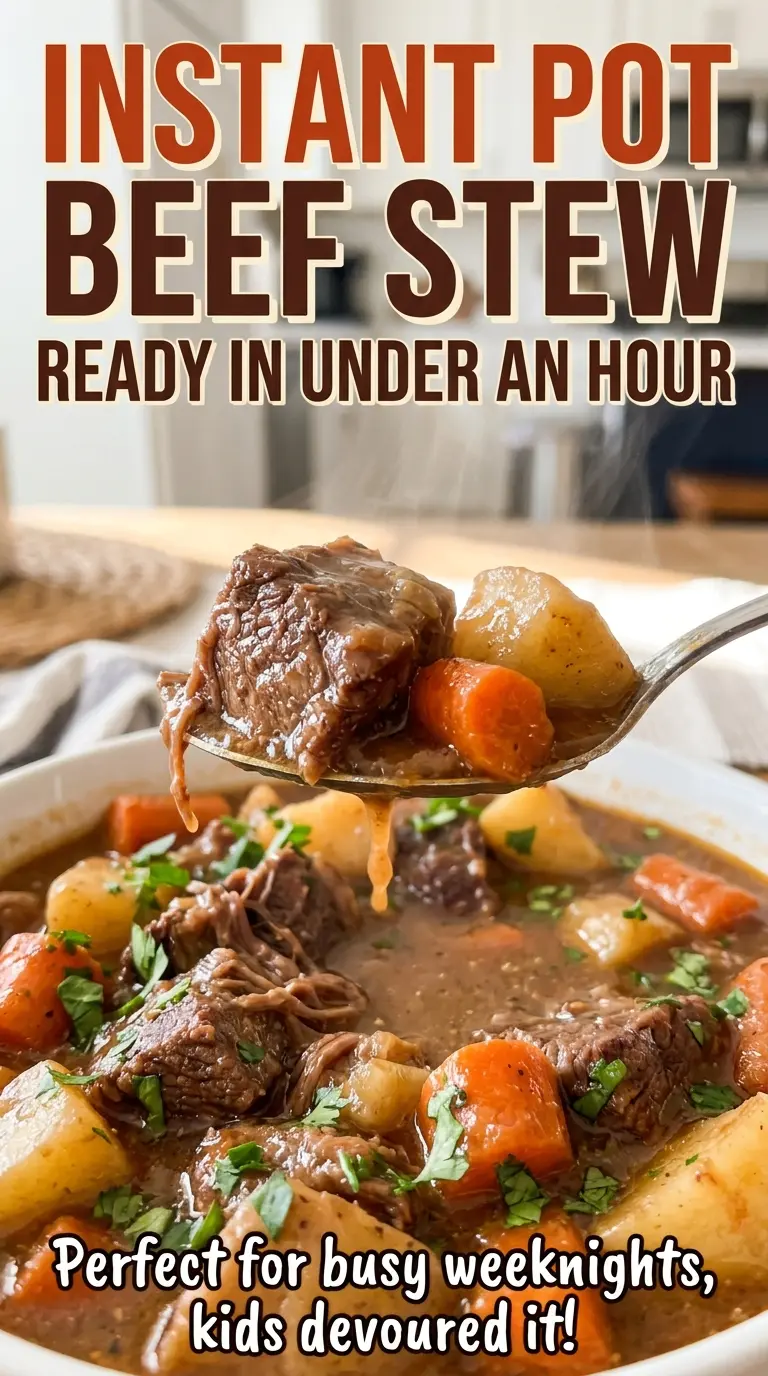
- Beef chuck — Chuck has enough connective tissue to become tender during pressure cooking while keeping a substantial, beefy texture. Choose boneless chuck and cut it into even cubes; very lean beef is more likely to turn dry rather than tender.
- Yukon gold potatoes — Their creamy texture suits stew, and they hold together better than a floury potato during the pressure cook. Red potatoes are a workable swap if you prefer firmer pieces, though they’re less buttery in the finished bowl.
- Low-sodium beef broth, tomato paste, and Worcestershire — The broth supplies the stew’s liquid, while tomato paste adds a concentrated savory note and Worcestershire brings tangy depth. Low-sodium broth gives you more control over seasoning; the inexpensive pantry versions of tomato paste and Worcestershire work well here.
- Cornstarch and frozen peas — Cornstarch thickens the broth without needing to simmer the potatoes for a long time. Frozen peas go in at the finish, so they stay green and tender instead of cooking away during the pressure cycle.
- Fresh garlic and dried thyme — Minced garlic cooks briefly with the tomato paste, which takes the raw edge off without scorching it. Dried thyme is convenient in this long-simmered style of broth and doesn’t need to be replaced with fresh herbs.
Building the Stew in the Instant Pot, From Browning to Thickening
Brown the Chuck in Batches
Season the beef with kosher salt and black pepper. Set a 6-quart Instant Pot to Sauté on high, add the vegetable oil, and brown the beef in batches for 2 minutes per side, moving each batch to a plate when browned. If the beef sticks at first, give it a little more time before turning; it will release more readily once a browned surface forms. Keep the batches separate rather than piling the cooked cubes back into the pot.
Soften the Vegetables and Toast the Tomato Paste
Add the diced onion, celery, and carrots to the pot and sauté for 3 minutes, stirring often. The onion should start to soften, and the vegetables will pick up some of the browned flavor left in the pot. Stir in the minced garlic and tomato paste and cook for 30 seconds. Keep stirring during this short step so the garlic and paste warm through without catching on the bottom.
Scrape the Pot Before Pressure Cooking
Pour in the beef broth and Worcestershire sauce, then scrape the bottom thoroughly to loosen the browned bits. This step matters because stuck-on bits can interfere with pressure cooking. Stir in the thyme, bay leaf, potatoes, and browned beef, then lock the lid and set the valve to Sealing. Cook on High Pressure for 22 minutes.
Release, Thicken, and Add the Peas
Let the pressure release naturally for 5 minutes, then carefully quick-release what remains. The beef should be fork-tender and a fork should pass easily through the potatoes. Whisk the cornstarch with cold water until smooth, then stir the slurry into the stew along with the peas. Set the pot to Sauté and simmer for 2 to 3 minutes, stirring, until the broth thickens and the peas are hot; remove the bay leaf before serving.
Three Useful Ways to Adapt This Beef Stew
Use red potatoes for firmer pieces
Replace the Yukon gold potatoes with red potatoes, cut to the same size. They’ll hold their shape well, but the stew will have a firmer, less creamy potato texture.
Leave out the peas
Skip the frozen peas if you want a simpler beef-and-potato stew. The broth and cooking method stay the same; you’ll just lose the peas’ sweet pop of color and texture.
Make it lower in sodium
Omit the kosher salt and keep the low-sodium beef broth. The stew will taste less seasoned, so taste the finished broth before serving and adjust only if it suits your needs.
Storage and Reheating
- Refrigerator: Store in a covered container for 3 to 4 days. The potatoes will soften a little as they sit; refrigerate leftovers within 2 hours.
- Freezer: Freeze in airtight containers for up to 3 months. The stew freezes well, though the potatoes may be softer after thawing.
- Reheating: Warm gently on the stovetop over medium-low heat, stirring now and then, until the stew reaches 165°F. Avoid a hard boil, which can break up the potatoes.
Questions That Come Up When Making Instant Pot Beef Stew
Instant Pot Beef Stew Ready in Under an Hour
Ingredients
Equipment
Method
- Season the beef with the salt and pepper.
- Set a 6-quart Instant Pot to Sauté on high and add the oil.
- Brown the beef in batches for 2 minutes per side.
- Transfer the browned beef to a plate.
- Add the onion, celery, and carrots to the pot and sauté for 3 minutes, stirring often.
- Add the garlic and tomato paste and cook for 30 seconds.
- Pour in the broth and Worcestershire sauce, scraping up the browned bits from the bottom of the pot.
- Stir in the thyme, bay leaf, potatoes, and beef.
- Lock the lid, set the valve to Sealing, and cook on High Pressure for 22 minutes.
- Let the pressure release naturally for 5 minutes, then carefully quick-release the remaining pressure.
- Check that the beef is fork-tender and the potatoes are easily pierced with a fork.
- Whisk the cornstarch with the cold water.
- Stir the cornstarch mixture into the stew with the peas.
- Set the Instant Pot to Sauté and simmer for 2 to 3 minutes, stirring, until the stew thickens and the peas are hot.
- Remove the bay leaf.