

Herb Butter Roasted Cornish Hens for a Small Thanksgiving
At the 50-minute check, the skin can look beautifully golden while the thickest part of the bird still needs more time. That’s why I treat color as a cue, not…
Tip: save now, cook later.At the 50-minute check, the skin can look beautifully golden while the thickest part of the bird still needs more time. That’s why I treat color as a cue, not the finish line, when I make these herb butter roasted Cornish hens for a small Thanksgiving. The two birds fit neatly on one rimmed baking sheet, and each one gives you a generous portion without the long carving and roasting routine of a large turkey.
The herb butter goes both under the breast skin and over the outside, so the herbs aren’t only sitting on the surface. I use softened butter because it spreads without pulling at the skin, and a wire rack leaves room for hot air to move around the hens as they roast. Leave a little space between the birds, and they’ll brown more evenly.
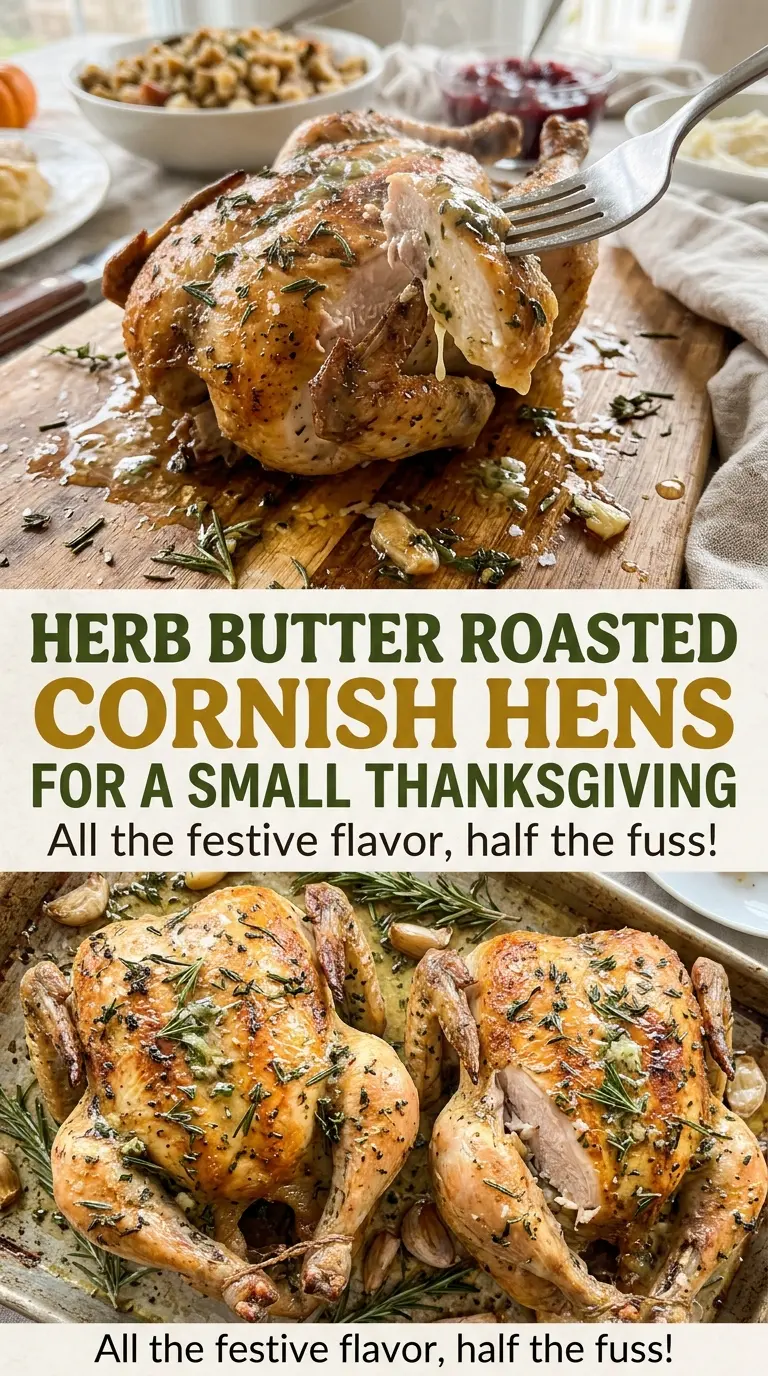
After roasting, give the hens their full rest before serving. The skin stays crisp, the meat is tender, and the parsley, rosemary, thyme, sage, and garlic make every slice smell like Thanksgiving.

Kitchen Note
When you loosen the skin over the breast, work gently with your fingertips and stop if it starts to pull tight. A small opening is enough to slide the butter underneath; forcing the skin wider can tear it.
Save these herb butter roasted Cornish hens for a small Thanksgiving table: crisp golden skin, tender meat, and a fragrant butter made with fresh herbs.
Golden Skin Isn’t Proof That the Thigh Is Done
A small whole bird gives you two different kinds of meat to judge. The breast is lean and sits close to the surface, while the thigh is tucked deeper into the bird. They don’t always reach doneness at the same moment, and browned skin can make the hens look finished before the deepest meat is ready. Relying on color alone is the easiest way to end up with a beautiful-looking bird that needs more roasting.
Use an instant-read thermometer in both places that matter: the thickest part of each breast and the innermost part of each thigh. Keep the probe away from bone, which can give you a misleading reading. Check each hen separately, too; even birds from the same package may differ slightly in size. The rack and the space between the hens help them roast well, but the thermometer is what tells you the inside is ready. Once you’ve checked both birds, the 10-minute rest gives the juices time to settle before you carve.
Why Soft Butter and Fresh Herbs Make a Better Coating
- Cornish hens — Choose birds within the listed size range, thaw them completely, and remove the giblets before seasoning. Their small size makes them practical for a modest holiday meal, but each still needs its own doneness check.
- Unsalted butter — Softened butter blends easily with the herbs and garlic and spreads beneath the skin without needing to be melted. Unsalted butter lets the measured table salt season the birds without adding an unknown amount of salt from the butter.
- Parsley, rosemary, and thyme — The fresh herbs bring a green, fragrant note that works alongside the richer butter. Chop the parsley and rosemary finely so they distribute through the butter; strip the thyme leaves from their stems.
- Rubbed sage — Sage brings the earthy, familiar note that makes the herb mixture feel suited to a Thanksgiving meal. Rubbed sage blends through softened butter more evenly than a large piece of leaf would.
- Garlic, salt, and black pepper — Minced garlic adds savory depth, while the salt and pepper season the butter and the outside of the hens. Mince the garlic finely so no large pieces are left to scorch on the skin.
How to Get the Herb Butter Under the Skin and the Skin Golden
Set Up the Pan and Dry the Hens
Heat the oven to 425°F and set a wire rack in an 18×13-inch rimmed baking sheet. Pat the thawed hens dry with paper towels, including around the legs and wings, then put them breast side up on the rack. Leave space between the birds rather than letting them touch. A dry surface gives the skin a better chance to brown instead of staying damp.
Mix a Spreadable Herb Butter
Stir the softened butter with the chopped parsley and rosemary, thyme leaves, rubbed sage, minced garlic, table salt, and black pepper. Keep mixing until the herbs and seasonings look evenly distributed through the butter. If the butter is too cold, it will feel stiff and drag across the skin; let it soften enough to spread smoothly. Don’t melt it, since softened butter is easier to place beneath the skin.
Butter Beneath the Breast Skin and Over the Outside
Gently loosen the skin over each breast with your fingers, taking care not to tear it. Spread about one tablespoon of herb butter under the skin of each hen, then rub the remaining butter over the outside. Try to coat the surface evenly, especially over the breasts and legs. The butter under the skin seasons the breast directly, while the outside coating carries herbs onto the browned skin.
Roast, Check Both Birds, and Rest
Roast for 50 to 65 minutes, checking at 50 minutes. Look for golden-brown skin, then take the internal temperature in the thickest part of each breast and the innermost part of each thigh without touching bone; each location should read 165°F. If the skin is already browned but a reading is short, keep roasting and check again rather than relying on color. Rest the hens for 10 minutes before serving.
Small Changes for a Smaller Table or a Different Herb Balance
Roast One Hen for a Two-Person Meal
For a smaller table, roast one hen and scale the herb butter ingredients proportionally. Keep the same oven temperature and begin checking at the listed first-check time; a single bird may finish sooner, so use the thermometer rather than assuming the full batch timing applies. You’ll still get the same herb-buttered breast and crisp skin, with less leftover meat.
Make the Herb Butter Milder
For a gentler, greener herb taste, leave out the rubbed sage and keep the parsley, rosemary, thyme, garlic, butter, salt, and pepper. The result loses some of sage’s earthy character but keeps the fresh-herb aroma and spreads the same way under the skin. No extra ingredient is needed.
Keep the Meal Gluten-Free
The ingredients in these hens contain no wheat-based component, so the dish needs no ingredient swap for a gluten-free menu. The herb butter and roasting method stay the same, which preserves the crisp skin and the intended seasoning.
Storage and Reheating
- Refrigerator: Store leftover meat in a covered container for 3 to 4 days. The skin softens after chilling, though the meat stays tender.
- Freezer: Remove the meat from the bones and freeze it in an airtight container for up to 3 months. Thaw it in the refrigerator before reheating.
- Reheating: Warm carved meat covered in a microwave or oven until steaming hot throughout. Reheating the whole bird uncovered can dry out the breast before the center warms.
Questions That Come Up When Roasting Cornish Hens
Herb Butter Roasted Cornish Hens for a Small Thanksgiving
Ingredients
Equipment
Method
- Heat the oven to 425°F and set a wire rack in an 18x13-inch rimmed baking sheet.
- Pat the hens dry with paper towels and arrange them breast side up on the rack, leaving space between them.
- Stir the softened butter, parsley, rosemary, thyme, sage, garlic, salt, and pepper together in a small bowl.
- Gently loosen the skin over each breast and spread about 1 tablespoon of herb butter under it; rub the remaining butter over the hens.
- Roast for 50 to 65 minutes, checking at 50 minutes, until the skin is golden brown and a thermometer reads 165°F in the thickest part of each breast and the innermost part of each thigh without touching bone.
- Rest the hens for 10 minutes before serving.