
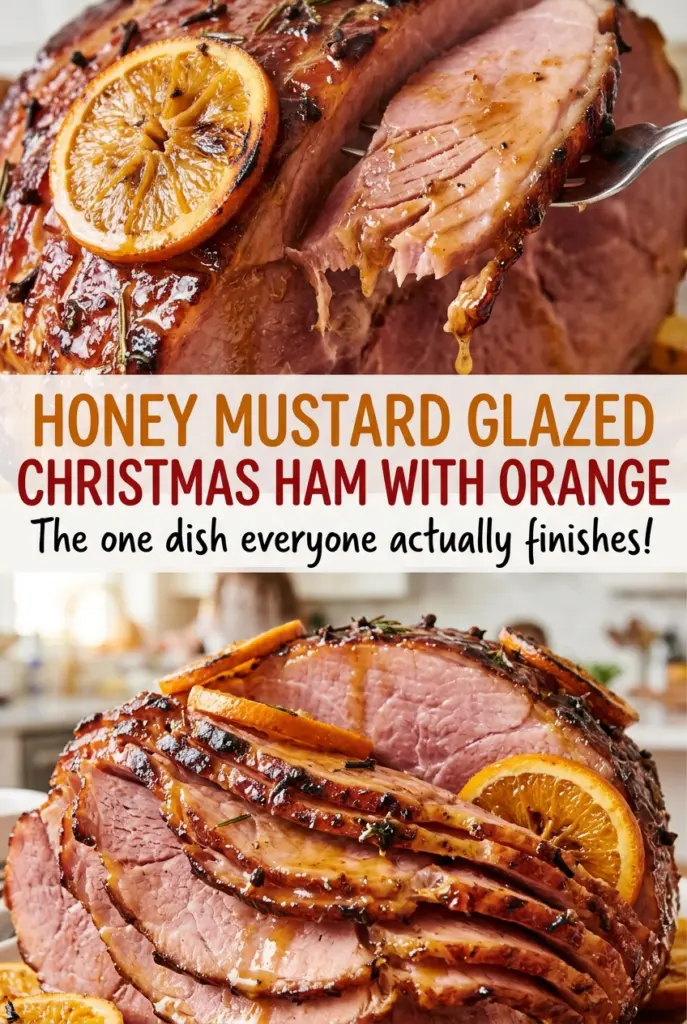
Honey Mustard Glazed Christmas Ham with Orange
The foil comes off and the ham is tender, but its surface is still pale; that’s the moment the orange and honey glaze gets to do its work. I like…
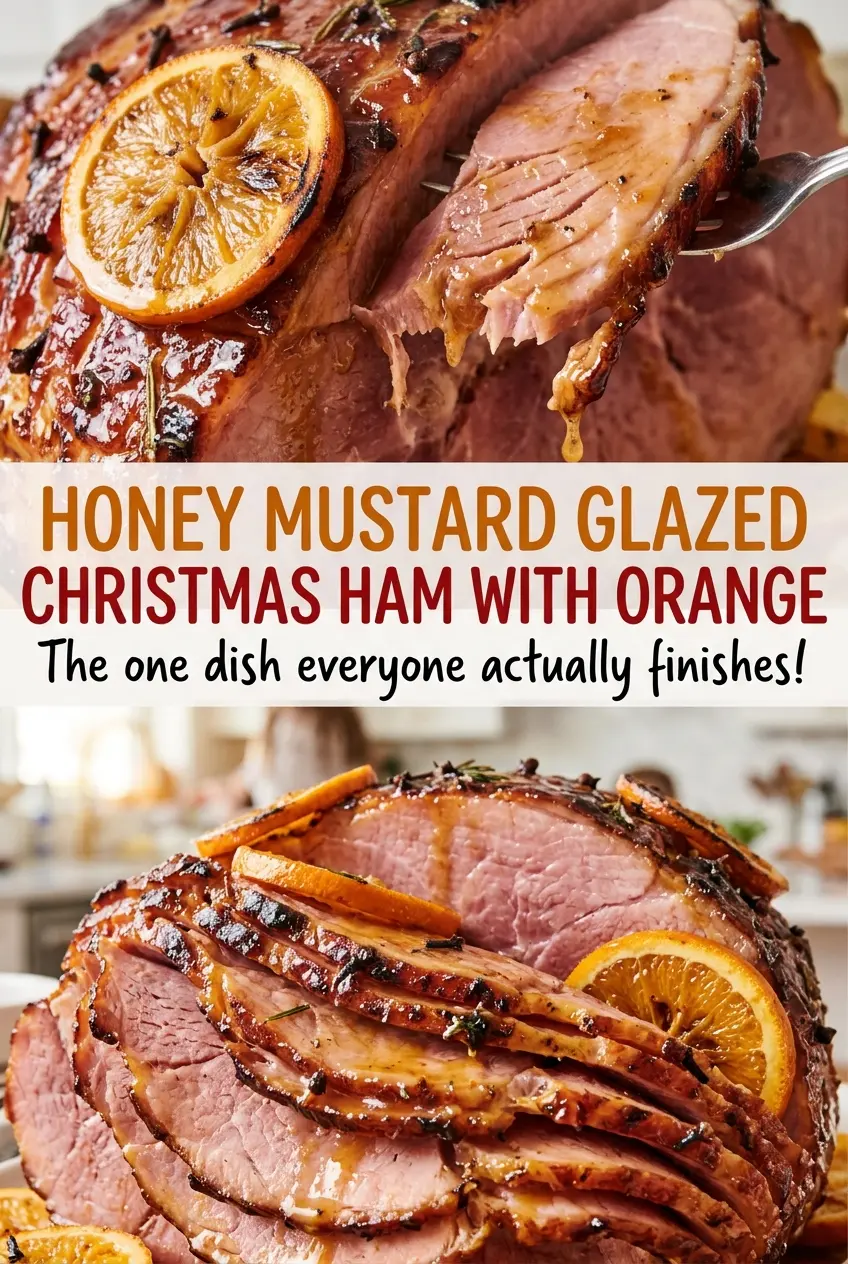
Tip: save now, cook later.The foil comes off and the ham is tender, but its surface is still pale; that’s the moment the orange and honey glaze gets to do its work. I like this approach for a holiday table because the ham warms gently first, then spends its final stretch in the oven picking up a glossy, sweet-tangy coat. The orange brings a fresh edge to the honey and brown sugar, while Dijon keeps the glaze from tasting one-note.
Using a fully cooked, bone-in ham keeps the main job simple: warm it through without rushing, then glaze it uncovered. The glaze simmers just long enough for the sugar to dissolve and the mixture to thicken slightly, so it brushes on easily instead of running straight off. By the time the ham rests, the outside is lacquered and fragrant, with slices ready to serve for a table of 16.
Kitchen Note
Bone-in ham can throw off a temperature reading if the thermometer touches the bone. Angle the instant-read thermometer into the thickest meat and stop short of the bone.
Save this honey mustard glazed Christmas ham with orange for a holiday meal: tender slices, a glossy citrus glaze, and enough to serve 16.
Why a Whole Ham Stays Juicier Than a Spiral-Sliced One
Spiral-sliced ham is convenient, but all those cuts create extra exposed edges. As the ham heats, those surfaces lose moisture sooner than the intact outside of a whole ham. Starting with a bone-in ham that hasn’t been spiral-sliced gives you a more protected piece of meat for the covered warming stage, and a smooth outside for the glaze to cling to later.
That changes how the glaze works, too. Instead of trying to coat dozens of cut surfaces, you brush it over the fat and let it set on the outside. Scoring the fat gives the glaze shallow grooves to settle into, but cutting down into the meat defeats the point: the surface dries more easily and the diamond pattern won’t stay neat. Once the ham is warmed through, the uncovered finish builds color without subjecting the meat to a long, hot roast from the start.
What the Orange, Mustard, and Sugar Each Bring to the Glaze

- Bone-in smoked ham — Choose a fully cooked, commercially packaged ham in the specified size range, and avoid spiral-sliced. Its smoky, savory meat balances the sweet glaze; the bone also gives you a clear landmark to avoid when checking temperature. If the ham has a rind, it needs to come off so the glaze can reach the fat.
- Honey — Honey gives the glaze its smooth sweetness and helps it brush across the ham. A standard supermarket honey works well here; its distinct character matters less once it’s simmered with the other ingredients. There isn’t a direct swap among the listed ingredients that keeps honey’s texture and flavor intact.
- Dijon mustard — Dijon supplies the sharp, tangy note that keeps the honey and brown sugar in check. A smooth Dijon blends readily into the glaze, so there’s no need to seek out an expensive variety. Leaving it out makes the finish sweeter and less balanced.
- Light brown sugar — Packed brown sugar adds a deeper sweetness and helps the glaze thicken as it simmers. Light brown sugar keeps the flavor mellow; the darker kind would give the coating a more pronounced molasses note. You can omit it for a lower-sugar version, though the glaze will be thinner and less sticky.
- Fresh orange — The zest carries fragrant citrus oils, while the juice adds brightness and liquid to the glaze. A fresh orange gives you both in one ingredient, and its zest is more aromatic than juice alone. Zest the orange before juicing it; the whole fruit is easier to hold and zest while its peel is still firm.
- Ground cloves — Cloves add a warm, distinctive note that fits naturally with smoked ham and orange. Use them sparingly because their aroma can take over quickly. For a less spiced, more orange-forward glaze, leave them out rather than increasing another seasoning.
- Water — The water in the roasting pan creates a moist environment while the ham warms under foil. Keep it around the ham rather than pouring it over the top, where it would wash away the surface before glazing.
Warm the Ham First, Then Build the Glaze in Layers
Prepare the Fat and Set Up the Roasting Pan
Heat the oven to 325°F. If the ham has a rind, remove it while leaving about 1/4 inch of fat, then score the fat in a 1-inch diamond pattern. Keep the cuts shallow and stop before they reach the meat. Set the ham cut side down in a 12×16-inch roasting pan, pour the water around it, and cover the pan tightly with foil.
Warm It Gently Under Foil
Bake the covered ham for 1 1/2 to 2 1/2 hours, checking the center with an instant-read thermometer as it nears the end of that range. The target at this stage is 110°F to 120°F, not the final temperature. Because hams vary in shape and starting temperature, use the thermometer cue rather than pulling it out just because the clock says the shorter time has passed. Keep the foil snug so the meat warms in the moisture inside the pan.
Simmer the Orange-Mustard Glaze
While the ham bakes, combine the honey, Dijon mustard, brown sugar, orange zest, orange juice, and ground cloves in a small saucepan. Bring the mixture to a simmer over medium-low heat, stirring as it warms. Cook it for 3 to 5 minutes, until the sugar has dissolved and the glaze looks slightly thickened. If sugar remains on the bottom, keep stirring gently rather than turning up the heat and risking a scorched taste.
Brush, Finish, and Rest Before Carving
Remove the foil and brush the ham with about half of the glaze. Bake uncovered for 30 to 40 minutes, brushing with the remaining glaze every 10 minutes; the repeated coats form a more even finish than one heavy layer. The thickest part should reach 140°F, with the thermometer kept clear of the bone. If the glaze darkens too quickly, loosely cover the ham with foil for the rest of the bake. Transfer it to a cutting board and rest for 15 minutes before carving.
Two Small Changes for a Different Glaze Finish
A lower-sugar, lighter coating
Leave out the brown sugar and keep the other glaze ingredients. Honey still gives the ham sweetness, but the glaze won’t thicken or cling as much, so brush on thinner coats and expect a less lacquered finish. This is lower in added sugar, not sugar-free.
A smoother orange glaze
For a smooth finish without bits of zest or clove, strain the glaze through a fine-mesh strainer after simmering and before brushing it on. The orange aroma stays in the liquid, while the surface looks more even and polished.
Storage and Reheating
- Refrigerator: Refrigerate carved ham within 2 hours, packed in airtight containers; it keeps for 3 to 4 days. Slices may firm up as they chill.
- Freezer: Freeze tightly wrapped portions for 1 to 2 months for best quality. Thaw them in the refrigerator before reheating.
- Reheating: Warm slices covered in a baking dish with a little water until they reach 165°F. Keep the dish covered; heating ham uncovered can dry out the edges before the centers are warm.
Questions That Come Up Before the Ham Goes in the Oven
Honey Mustard Glazed Christmas Ham with Orange
Ingredients
Equipment
Method
- Heat the oven to 325°F.
- If the ham has a rind, remove it, leaving about 1/4 inch of fat, then score the fat in a 1-inch diamond pattern without cutting into the meat.
- Set the ham cut side down in a 12x16-inch roasting pan and pour the water around it.
- Cover the pan tightly with foil and bake for 1 1/2 to 2 1/2 hours, until the center reaches 110°F to 120°F on an instant-read thermometer.
- While the ham bakes, combine the honey, Dijon mustard, brown sugar, orange zest, orange juice, and ground cloves in a small saucepan.
- Bring to a simmer over medium-low heat, stirring, and cook for 3 to 5 minutes until the sugar dissolves and the glaze is slightly thickened.
- Remove the foil and brush the ham with about half of the glaze.
- Bake uncovered for 30 to 40 minutes, brushing with the remaining glaze every 10 minutes, until the thickest part reaches 140°F without the thermometer touching the bone; loosely cover with foil if the glaze darkens too quickly.
- Transfer the ham to a cutting board and rest for 15 minutes before carving.