

Christmas Roast Duck with Orange Glaze
The roasting pan starts filling with clear, golden fat long before the duck is ready, and that’s the moment to pay attention. A whole duck renders differently from a chicken;…
Tip: save now, cook later.The roasting pan starts filling with clear, golden fat long before the duck is ready, and that’s the moment to pay attention. A whole duck renders differently from a chicken; the fat needs somewhere to go, or the skin sits in it instead of roasting. I learned to prick the skin carefully and keep an eye on the pan, and those small details make this Christmas Roast Duck with Orange Glaze much easier to manage.
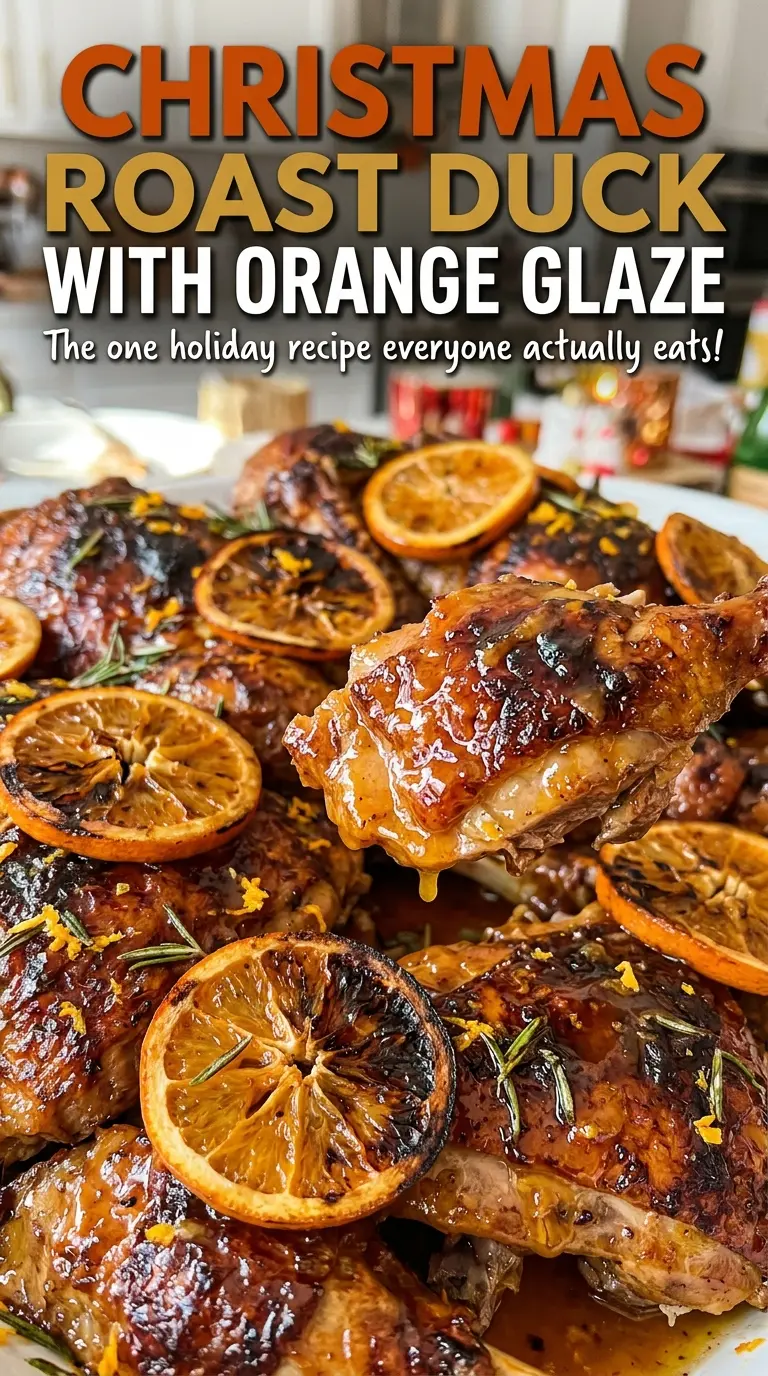
The glaze brings together orange marmalade, juice, honey, vinegar, and Dijon. It’s sweet, but the vinegar and mustard keep it from tasting flat. I wait until the duck is nearly cooked before brushing it on, so the glaze has time to turn glossy without spending the whole roast in the oven.
Once the breast and thigh reach temperature, the duck rests before carving. You’ll have tender meat under a lacquered orange glaze, with the roasting pan doing the hard work along the way.

Kitchen Note
The glaze should coat a spoon but still move easily when you tilt it. If it thickens too much while it sits, it’ll be harder to brush into an even layer.
Save this Christmas Roast Duck with Orange Glaze for its glossy citrus finish and a roast schedule that keeps the last stretch manageable.
Why a Whole Duck Needs Two Temperature Checks
A whole duck doesn’t cook as evenly as a boneless piece of meat. The breast and the innermost part of the thigh sit in different places, and their thickness and proximity to bone affect how quickly they heat. If you judge the roast by the breast alone, the thigh may need more time; if you wait on the thigh without checking the breast, you can overshoot the breast.
That’s why I use the breast temperature as the cue to start glazing, then check both the thickest part of the breast and the innermost thigh before taking the duck out. The first reading tells you when to begin the finishing stage, not when the roast is finished. A reliable instant-read thermometer takes the guesswork out of a large bird, especially when its shape makes visual doneness hard to judge. Keep the probe away from bone for a useful reading.
The other thing that helps is not treating the glaze like a long-roast coating. Marmalade and honey contain sugars that darken under high heat. Brushing in two layers near the end gives the glaze time to cling and shine without exposing it to the full roasting time.
What the Orange Glaze Ingredients Each Bring to the Duck
- Whole duck — Buy it fully thawed, with the giblets removed, so the cavity is ready for the orange quarters. A whole bird is important here; duck breasts cook on a different schedule and won’t follow these roasting cues. There isn’t a direct cut-for-cut substitute that preserves the method.
- Orange marmalade — This supplies concentrated citrus flavor, sweetness, and bits of peel that give the glaze its character. A standard grocery-store marmalade works; a smoother orange preserve can stand in measure for measure, though the finished glaze will have less peel texture.
- Orange juice and orange quarters — Juice loosens the glaze, while the quartered orange sits in the cavity as the duck roasts. Fresh or carton juice both work. If you’re out of the whole orange, use lemon quarters in the cavity for a sharper citrus aroma.
- Honey — It helps the glaze turn shiny and sticky as it cooks. Maple syrup can replace it in the same amount; expect a more pronounced maple note and a slightly different sweetness.
- Red wine vinegar and Dijon mustard — The vinegar reins in the marmalade’s sweetness, and Dijon adds a mild savory edge. Apple cider vinegar works in the same amount if needed. Whole-grain mustard can replace Dijon measure for measure, with a more textured finish.
- Kosher salt and black pepper — These season the duck itself rather than the glaze. Season all over, including the sides, so the flavor isn’t limited to the top of the bird.
Roasting and Glazing Without Guesswork
Dry and Season the Bird
Heat the oven to 425°F and set a rack in a 16×13-inch roasting pan. Pat the fully thawed duck dry, trim large pieces of excess fat around the cavity, then prick the skin all over with a skewer without piercing the meat. Put the orange quarters in the cavity, season the duck all over with kosher salt and black pepper, and set it breast side up on the rack. Keeping the skin intact matters; pierce through it, not down into the flesh.
Simmer the Orange Glaze
Combine the orange marmalade, orange juice, honey, red wine vinegar, and Dijon mustard in a small saucepan. Bring the mixture to a simmer over medium heat, stirring as it cooks for 8 to 10 minutes. It’s ready when it looks syrupy but still brushes easily across the back of a spoon. Set it aside while the duck roasts.
Roast and Drain the Rendered Fat
Roast the duck for 20 minutes at 425°F, then lower the oven to 350°F. Continue roasting for about 1 1/2 to 2 1/4 hours, carefully pouring off the rendered fat about every 45 minutes. The large range reflects the size of the bird and how it cooks in your oven, so use the thermometer rather than relying on the clock alone. When the thickest part of the breast reaches 150–155°F, it’s time to start glazing.
Brush in Two Layers, Then Rest
Brush half the glaze over the duck and roast for 8 to 10 minutes. Brush on the remaining glaze and roast for another 5 to 10 minutes, until both the thickest part of the breast and the innermost thigh register 165°F on an instant-read thermometer, with the probe clear of bone. If the glaze darkens too quickly, tent the duck loosely with foil. Transfer the bird to a carving board and let it rest for 15 minutes before carving.
Three Small Changes to Give the Orange Glaze a Different Edge
Use blood-orange marmalade
Replace the regular orange marmalade with the same amount of blood-orange marmalade. The glaze keeps its citrus base but takes on a deeper, slightly more bittersweet note; it still needs to simmer until syrupy and brushable.
Trade the honey for maple syrup
Use the same amount of maple syrup in place of honey for a warmer, woodsy sweetness. It pairs naturally with the orange, though it nudges the glaze away from a straight citrus taste.
Try balsamic vinegar in the glaze
Swap the red wine vinegar for the same amount of balsamic vinegar. It gives the glaze a rounder, darker tang, so the orange tastes less bright and more mellow.
Storage and Reheating
- Refrigerator: Keep carved duck in a covered container for 3 to 4 days. The skin softens in storage, while the meat stays suitable for leftovers.
- Freezer: Freeze carved portions in an airtight container for up to 3 months. The meat freezes well, though the glaze and skin won’t be quite as glossy after thawing.
- Reheating: Warm portions covered in a 325°F oven until heated through, adding a little water to the dish if the meat looks dry. Uncovered, high-heat reheating can darken the glaze before the duck warms evenly.
Questions That Come Up When Roasting a Whole Duck
Christmas Roast Duck with Orange Glaze
Ingredients
Equipment
Method
- Heat the oven to 425°F and set a rack in a 16x13-inch roasting pan.
- Pat the duck dry and trim any large pieces of excess fat around the cavity.
- Prick the skin all over with a skewer, taking care not to pierce the meat.
- Put the orange quarters in the cavity and season the duck all over with the salt and pepper.
- Place the duck breast side up on the rack.
- Combine the marmalade, orange juice, honey, vinegar, and mustard in a small saucepan.
- Bring to a simmer over medium heat and cook, stirring, for 8-10 minutes, until syrupy but still easy to brush; set aside.
- Roast the duck for 20 minutes at 425°F, then reduce the oven to 350°F and roast for about 1 1/2 to 2 1/4 hours, carefully pouring off rendered fat from the pan about every 45 minutes.
- Near the end, check the thickest part of the breast; when it reaches 150-155°F, begin glazing.
- Brush half the glaze over the duck and roast for 8-10 minutes.
- Brush with the remaining glaze and roast 5-10 minutes more, until the thickest part of the breast and the innermost thigh each register 165°F on an instant-read thermometer without touching bone.
- If the glaze darkens too quickly, tent the duck loosely with foil.
- Transfer the duck to a carving board and rest for 15 minutes before carving.