
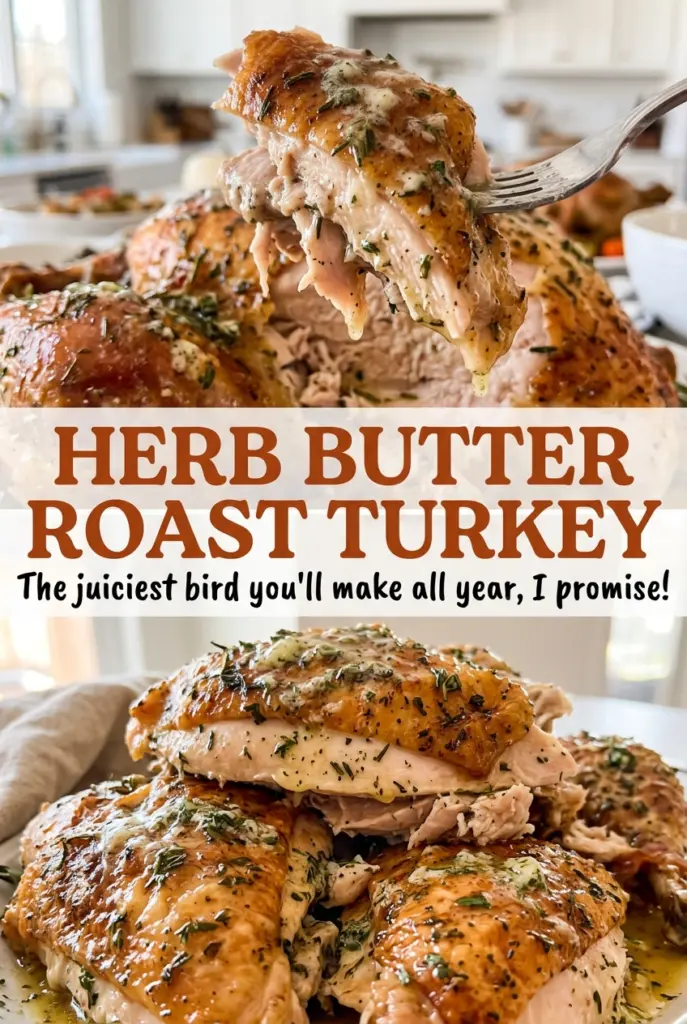
Herb Butter Roast Turkey
When a whole turkey comes out of the oven, the skin can look ready to carve while the thickest part still needs time. A thermometer takes the guesswork out of…
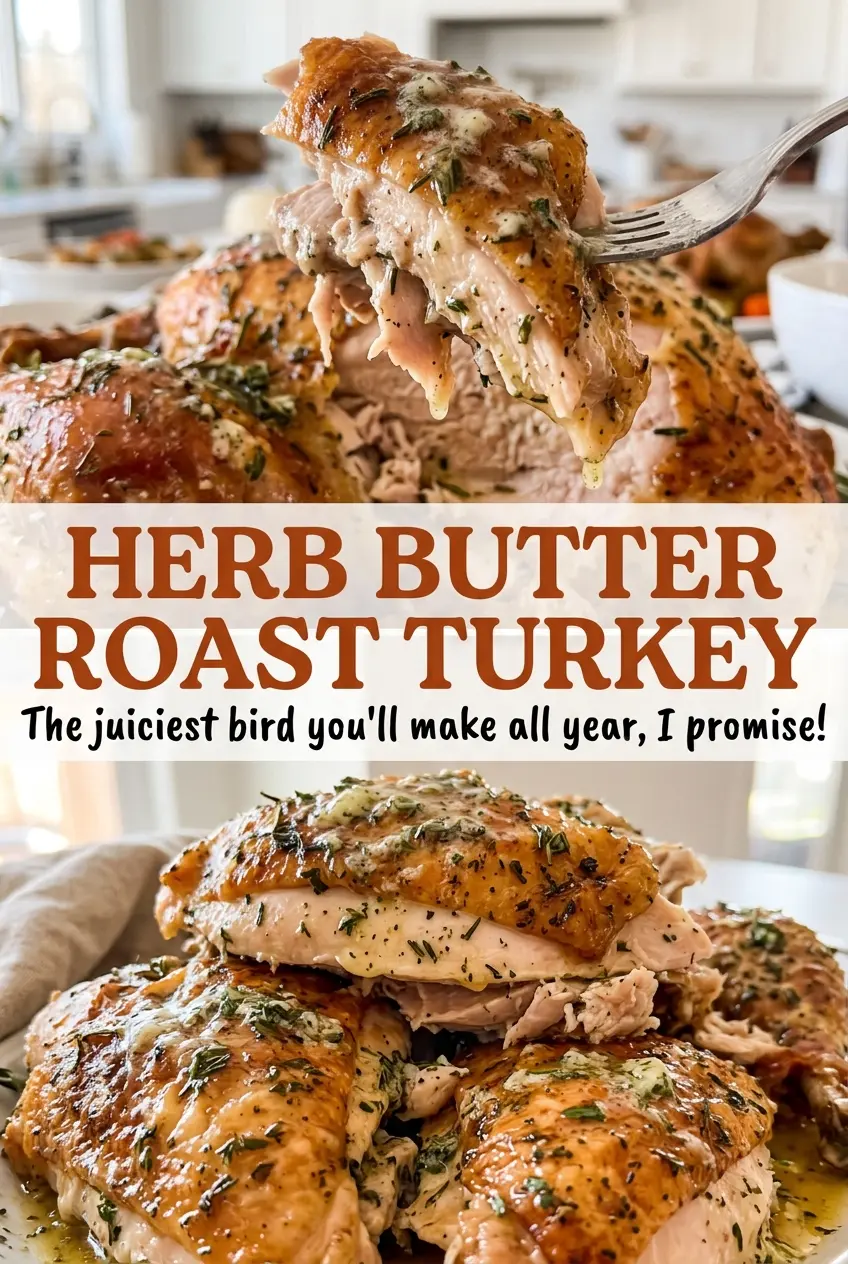
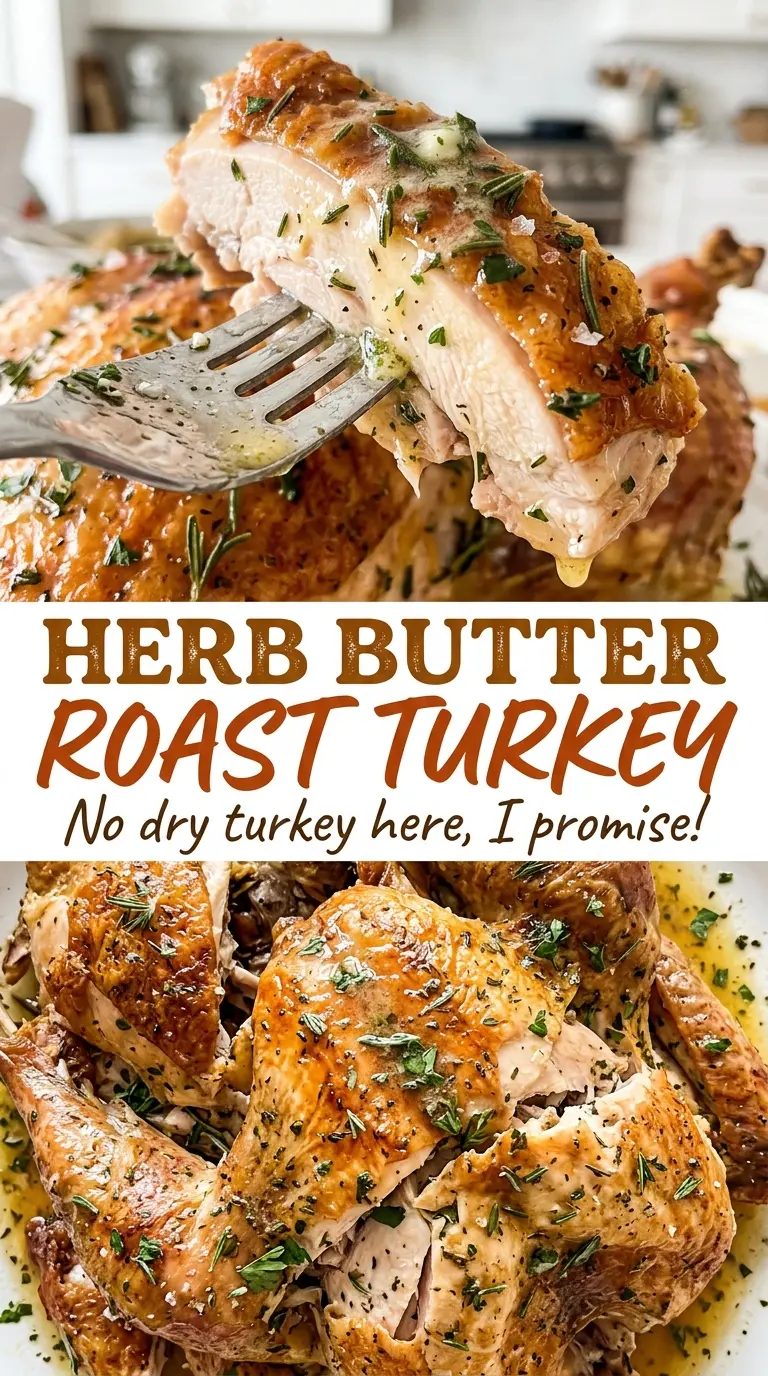
Tip: save now, cook later.When a whole turkey comes out of the oven, the skin can look ready to carve while the thickest part still needs time. A thermometer takes the guesswork out of this Herb Butter Roast Turkey, and the fresh herbs give the meat a savory aroma as it roasts. The bird is seasoned inside and out, then coated with a garlic-herb butter that goes both under the skin and over it.
I like this approach because the butter doesn’t just sit on top of the turkey. A portion goes beneath the skin over the breast and thighs, where it meets the meat directly; the rest coats the outside. Lemon and onion tucked into the cavity add a gentle aromatic note without turning this into a complicated roast. After a full rest, the slices are tender, fragrant, and ready for the table.
Kitchen Note
Let the butter soften until it stirs easily before mixing in the herbs and garlic. Cold butter is difficult to spread under the skin and can pull or tear it when you try to work it into place.
Save Herb Butter Roast Turkey for its fragrant fresh-herb butter, lemon-and-onion aroma, and tender carved slices.
The Unbrined Turkey Is Why the Salt Amount Matters
This roast starts with an unbrined turkey for a reason: the salt is added directly to the cavity and the outside, so there’s no hidden salt already built into the bird. A pre-brined or otherwise salted turkey can end up too salty when you season it the same way. Check the packaging before you buy, especially if the label mentions a salt solution or says the turkey has been enhanced.
Seasoning both the cavity and the skin gives the whole bird a more even baseline of flavor. The cavity seasoning matters even though the lemon and onion go in afterward; those aromatics aren’t a substitute for salt and pepper. Using unsalted butter also keeps the herb coating from adding another unpredictable dose of salt. With an unbrined bird and unsalted butter, the seasoning stays under your control from the first step through the carve.
Fresh Herbs Need the Butter to Carry Them Under the Skin
- Unsalted butter and fresh herbs — Softened butter holds the chopped parsley, thyme, rosemary, and sage in an even spread, so the herbs don’t fall away as you work. Store-brand unsalted butter is fine here; fresh herbs are the quality detail worth prioritizing because their aroma comes through clearly in the finished roast. Chop the parsley, rosemary, and sage finely, and strip the thyme leaves from their stems.
- Garlic — Minced garlic spreads through the butter more evenly than large pieces and brings a savory edge to the herb mixture. Fresh cloves give the most direct flavor. Keep the mince small so it’s easy to distribute rather than leaving a strong clump in one spot.
- Whole turkey — Choose a thawed, unbrined bird in the specified size range, with the neck and giblets removed. Patting the skin dry is useful prep: excess surface moisture gets in the way of an evenly coated exterior. The bird should sit breast side up on a roasting rack in a 16-inch roasting pan.
- Kosher salt and black pepper — These season the cavity and the outside, while freshly ground pepper gives the seasoning a more fragrant bite than pre-ground pepper. Use the unsalted butter so the salt added to the turkey remains the main source of seasoning.
- Lemon and yellow onion — Quartered pieces fit easily into the cavity and release a light aroma as the turkey roasts. Choose a fresh lemon and a firm onion; there’s no need for specialty produce for these simple aromatics.
Build the Herb Coating Before the Turkey Goes Into the Oven
Mix a Spreadable Herb Butter
Stir the softened butter with the parsley, thyme, rosemary, sage, and minced garlic in a small bowl. Work the mixture until the herbs and garlic are distributed through it instead of sitting in separate patches. A small bowl keeps the mixture together and makes it easier to divide between the skin and the outside. Keep the butter soft enough to spread, not melted.
Set Up the Bird and Roasting Pan
Heat the oven to 325°F and position a rack in the lower third. Set a roasting rack inside a 16-inch roasting pan, then place the thawed turkey breast side up on the rack. Pat the skin dry with paper towels, including around the legs and breast where moisture tends to collect. Dry skin gives the butter a better surface to cling to.
Season and Work Butter Beneath the Skin
Season the cavity and the outside evenly with the kosher salt and black pepper. Carefully loosen the skin over the breast and thighs with your fingers, taking care not to tear it. Rub half of the herb butter beneath the skin, spreading it over the breast and thighs, then coat the outside of the turkey with the rest. If the skin tears, don’t keep pulling at it; spread the butter you can reach beneath the remaining skin and finish coating the exterior.
Roast to Temperature, Then Give It a Full Rest
Put the quartered lemon and onion in the cavity, then place the turkey in the oven. Roast for 3 to 3 3/4 hours, tenting it loosely with foil if the skin browns too quickly. Check with an instant-read thermometer in the thickest part of the breast and the innermost part of the thigh, keeping the probe away from bone; both spots should register 165°F. Transfer the turkey to a carving board, tent it loosely with foil, and let it rest for 30 minutes before carving.
Ways to Change the Herb Butter Without Reworking the Roast
A Dairy-Free Roast Without the Butter Coating
For a dairy-free version, leave out the entire herb butter, including the herbs and garlic mixed into it, and roast the seasoned turkey with the lemon and onion in the cavity. The bird will miss the buttery herb layer and won’t have that coating on or under the skin, but the roast itself still works.
Leave Garlic Out for a Milder Herb Butter
Omit the minced garlic and mix the softened butter with the parsley, thyme, rosemary, and sage. The roast keeps its fresh-herb character, but the butter tastes gentler and lets the individual herbs come through more clearly.
Skip Rosemary for a Softer Herb Blend
Leave the rosemary out of the butter and keep the parsley, thyme, sage, and garlic. The result is less piney and a little more delicate, while the same butter-under-the-skin approach still carries the remaining herbs across the turkey.
Storage and Reheating
- Refrigerator: Refrigerate carved leftovers within 2 hours and keep them in a covered container for 3 to 4 days. Sliced turkey may lose a little moisture as it sits.
- Freezer: Freeze cooled slices in airtight portions for up to 4 months for best quality. Thaw the portion you want in the refrigerator.
- Reheating: Warm only what you plan to eat, covered, in the oven or microwave until it reaches 165°F. Avoid prolonged high heat, which can dry out the slices.
Questions That Come Up With a Whole Herb-Butter Turkey
Herb Butter Roast Turkey
Ingredients
Equipment
Method
- Stir together the softened butter, finely chopped parsley, thyme leaves, finely chopped rosemary, finely chopped sage, and minced garlic in a small bowl.
- Heat the oven to 325°F.
- Position a rack in the lower third of the oven.
- Set a roasting rack in a 16-inch roasting pan.
- Place the turkey breast side up on the roasting rack.
- Pat the turkey dry with paper towels.
- Season the cavity and the outside of the turkey evenly with the kosher salt and freshly ground black pepper.
- Carefully loosen the skin over the breast and thighs.
- Rub half of the herb butter under the skin.
- Spread the rest of the herb butter over the outside.
- Put the quartered lemon and medium yellow onion, quartered, in the cavity.
- Roast for 3 to 3 3/4 hours, tenting loosely with foil if the skin browns too quickly, until an instant-read thermometer registers 165°F in the thickest part of the breast and the innermost part of the thigh, away from bone.
- Transfer the turkey to a carving board.
- Tent loosely with foil and rest for 30 minutes before carving.
