

Cranberry Orange Bars
As the cranberries soften in the saucepan, they start popping one by one and tint the orange juice a deep ruby red. That’s the moment these cranberry orange bars begin…
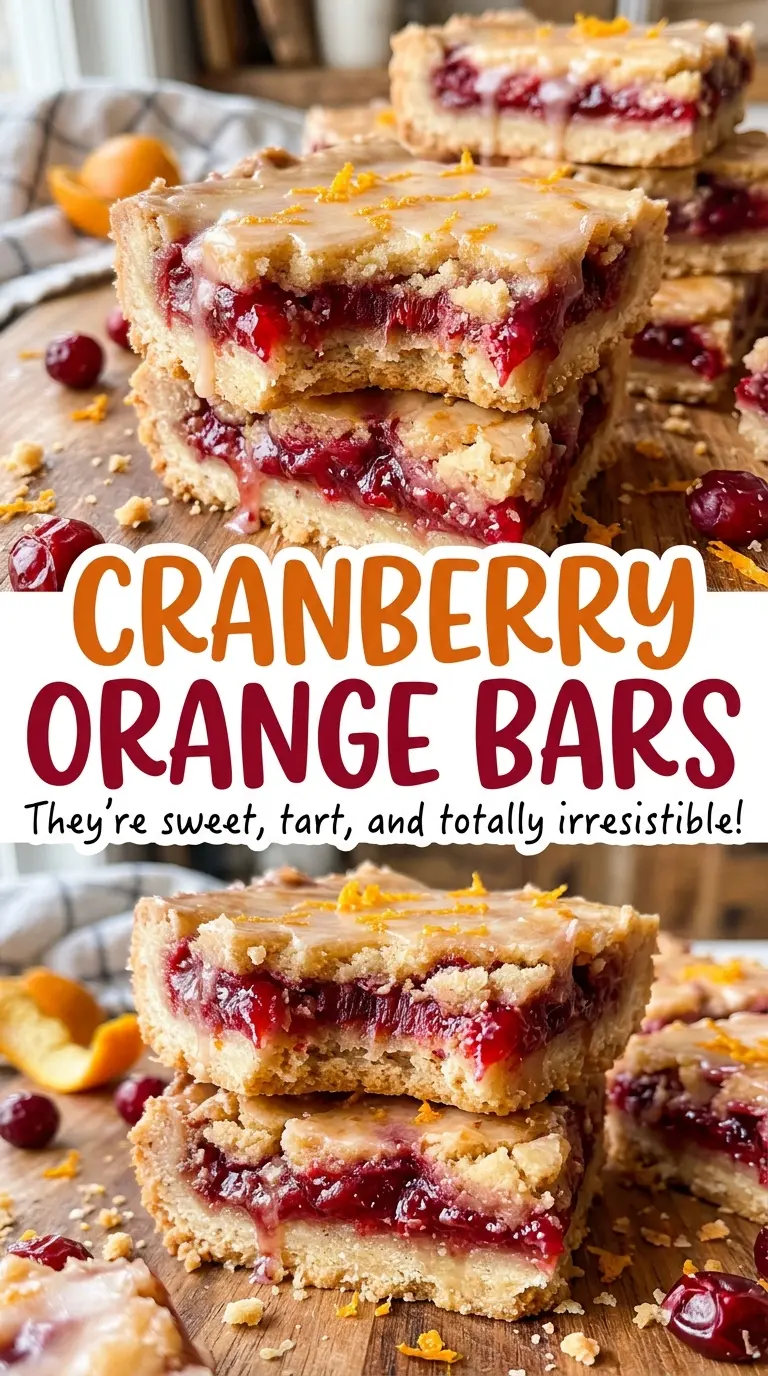
Tip: save now, cook later.As the cranberries soften in the saucepan, they start popping one by one and tint the orange juice a deep ruby red. That’s the moment these cranberry orange bars begin to smell like something more than a simple fruit filling. I like that the same buttery crumb mixture makes both the base and the topping, so there’s no second dough to prepare.
The crust gets a short bake before the fruit goes on. That gives it a head start against the juicy filling, while the reserved crumbs stay loose on top and bake into a golden, craggy layer. Cold butter matters here: work it into the flour until the crumbs hold when pressed, but don’t keep mixing once they do.
Let the bars cool all the way before cutting. The cranberry layer settles as it cools, and the edges hold together much better when they’re no longer warm. Each square has a tender crumb, a bright orange note, and a tangy cranberry middle.

Kitchen Note
Leave the parchment overhang on two sides rather than trimming it flush. Once the bars are fully cool, those paper handles make it much easier to lift the whole slab out cleanly.
Save these cranberry orange bars for a bake with a crisp crumb topping and a bright, tart cranberry center.
Why the Crust Needs Its Own Bake Before the Cranberries Go On
A cranberry filling carries much more moisture than a dry crumb topping, so the bottom layer needs time in the oven before the fruit is added. That first bake lets the pressed crumbs begin setting and gives the base a better chance of staying tender instead of turning pasty where it meets the filling. Look for lightly golden edges rather than waiting for the whole crust to brown; it will bake again once everything is assembled.
The topping benefits from the same two-stage plan, but for a different reason. The crumbs you set aside stay loose, so they can catch the heat and brown while the filling bubbles underneath. Pressing every crumb into the pan would leave you with a solid top instead of a craggy layer. Keeping some crumbs loose is what gives each bite a little contrast: a firm base, soft fruit, and a crisp top.
That balance also explains why I don’t rush the cooling. The bars finish setting in the pan after they leave the oven, and a warm cranberry layer is much softer than a cooled one. Give the layers time to settle before you cut into them.
Why the Orange Zest and Cornstarch Matter More Than Fancy Butter
- All-purpose flour — It gives the crumb mixture enough structure to hold both the pressed base and the loose topping. Standard grocery-store flour works well; self-rising flour isn’t a good swap because its leavening changes the texture.
- Cold unsalted butter — Butter creates the rich, short crumb, and keeping it cold helps it stay in small pieces as you work it into the flour. Regular supermarket butter is fine here; there’s no need for a specialty brand. Cut it into cubes just before mixing so it doesn’t soften on the counter.
- Granulated sugar — In the crust, it sweetens without making the crumb damp. In the fruit, it takes the edge off the cranberries’ tartness while letting their flavor stay clear. The light brown sugar option below makes the filling taste deeper, but I keep granulated sugar in the crust.
- Cranberries — Fresh and frozen berries both work. Choose firm-looking fresh berries if you’re shopping for them; frozen cranberries are a dependable choice when fresh ones aren’t available. The filling is ready for thickener when most of the berries have burst.
- Orange zest and juice — The zest brings a fragrant orange aroma that juice alone can’t match. Use an orange with a clean, unblemished peel for zest, and grate only the colored outer layer. Bottled orange juice works in the filling, though freshly squeezed juice gives it a brighter citrus character.
- Cornstarch — This thickens the cranberry juices so the filling holds between the crust and topping instead of running when you cut the bars. Mix it with water first; adding dry cornstarch straight to the saucepan can leave pale lumps.
From Coarse Crumbs to Clean-Cut Cranberry Orange Bars
Mix and divide the butter crumbs
Heat the oven to 350°F and line a 9-inch square baking pan with parchment, leaving an overhang on two sides. Whisk the flour, sugar, and kosher salt in a large bowl, then cut in the cold butter with a pastry cutter. Stop when the mixture looks like coarse crumbs and holds together when you squeeze a little between your fingers; if it still looks like loose flour, keep cutting the butter in rather than adding liquid.
Set aside 1 cup of the crumb mixture for the topping. Press the rest firmly into an even layer in the pan, paying attention to the corners so the base isn’t thicker in the middle.
Bake the base until its edges turn lightly golden
Bake the crust for 18 to 22 minutes. The edges should be lightly golden, while the center may still look a little paler; it will go back into the oven after you add the filling. Pulling it out too early leaves the base without that first chance to set, but baking it until deeply browned can make it dry after the second bake.
Cook the cranberries until most have burst
Combine the cranberries, granulated sugar, orange zest, and orange juice in a 2-quart saucepan over medium heat. Cook for 8 to 10 minutes, stirring occasionally, until most of the berries have burst and the mixture looks juicy and thick with softened fruit. Stir the cornstarch and water together in a small bowl, then stir that smooth mixture into the cranberries. Cook for 1 to 2 minutes, until the filling turns glossy and thickens.
Top the warm crust and bake until bubbling
Spread the cranberry filling over the warm crust, then scatter the reserved crumbs evenly across the surface. Don’t press the topping down; loose crumbs bake into a lighter, more textured layer. Bake for 25 to 30 minutes, until the topping is golden and the filling bubbles at the edges.
Cool completely before slicing
Leave the pan on a heat-safe surface and let the bars cool completely, at least 2 hours. The filling firms as it cools, which helps the layers stay together when you cut them. Lift the slab out using the parchment overhang, then cut it into 16 bars.
Three Swaps That Change the Bars Without Losing Their Crumbly Base
Make the crumb gluten-free
Replace the all-purpose flour with the same amount of a cup-for-cup gluten-free baking blend that includes xanthan gum. The crumb may be a little more delicate, so let the bars cool fully before lifting and cutting them.
Trade orange for lemon
Use the same amount of finely grated lemon zest and lemon juice in place of the orange. The filling will taste sharper and more tart, which makes a nice change if you prefer a stronger citrus note against the cranberries.
Give the filling a deeper sweetness
Swap the granulated sugar in the cranberry filling for the same amount of light brown sugar. The filling will take on a mellow molasses note and a slightly darker color; keep granulated sugar in the crust so its crumb stays dry and sandy.
Storage and Reheating
- Refrigerator: Store the cooled bars in an airtight container for up to 4 days. The crumb softens a little as it sits beside the fruit filling.
- Freezer: Freeze bars in a sealed container with parchment between layers for up to 2 months. Thaw them in the refrigerator before serving.
- Reheating: They’re good chilled or at room temperature. To warm one bar, microwave it for about 8 to 10 seconds; longer heating can make the fruit filling hot before the crumb topping warms through.
The Questions That Come Up While Baking These Bars
Cranberry Orange Bars
Ingredients
Equipment
Method
- Heat the oven to 350°F.
- Line a 9-inch square baking pan with parchment paper, leaving an overhang on two sides.
- Whisk the flour, sugar, and salt in a large bowl.
- Cut in the cold butter with a pastry cutter until the mixture forms coarse crumbs that hold together when pressed.
- Set aside 1 cup of the crumb mixture for the topping.
- Firmly press the rest into an even layer in the prepared pan.
- Bake for 18 to 22 minutes, until the edges are lightly golden.
- Combine the cranberries, sugar, orange zest, and orange juice in a 2-quart saucepan over medium heat.
- Cook for 8 to 10 minutes, stirring occasionally, until most of the cranberries have burst.
- Stir the cornstarch and water together in a small bowl.
- Stir the cornstarch mixture into the cranberries.
- Cook for 1 to 2 minutes until glossy and thickened.
- Spread the filling over the warm crust.
- Scatter the reserved crumb mixture evenly over the top.
- Bake for 25 to 30 minutes, until the topping is golden and the filling bubbles at the edges.
- Cool completely in the pan, at least 2 hours.
- Lift out using the parchment and cut into bars.