
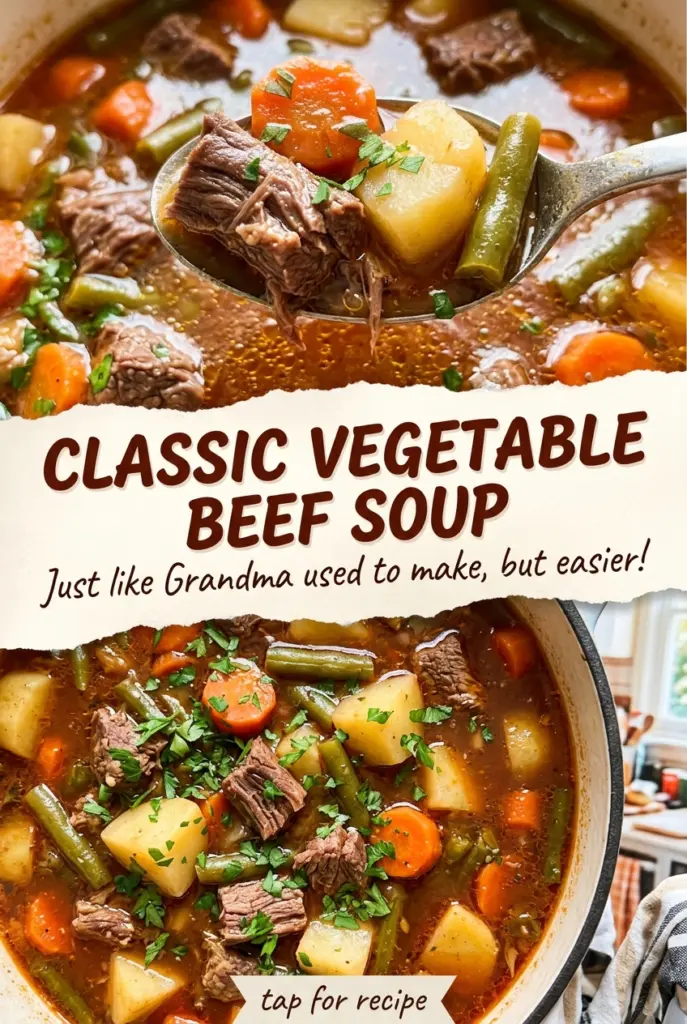
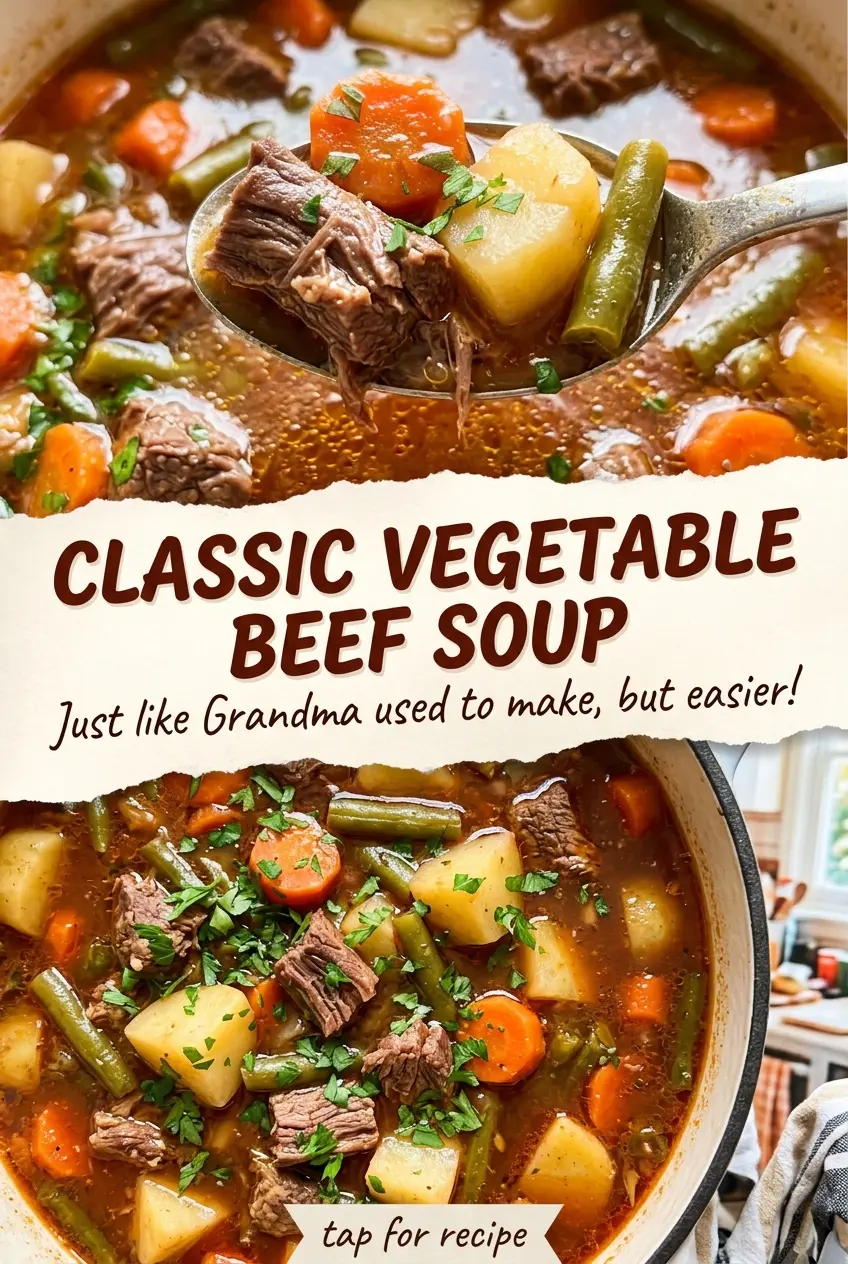
Classic Vegetable Beef Soup
The first cubes of beef hit the hot Dutch oven with a sharp sizzle, and the smell of dinner starts building before the soup has even begun to simmer. I…
Tip: save now, cook later.The first cubes of beef hit the hot Dutch oven with a sharp sizzle, and the smell of dinner starts building before the soup has even begun to simmer. I learned not to rush that first step: taking the time to brown the beef in batches gives the broth a deeper, more savory base than simply dropping everything into the pot. This classic vegetable beef soup is the kind of sturdy one-pot meal that makes good use of a long, gentle cook.
The order matters just as much as the browning. Chuck needs time in the broth to turn fork-tender, while carrots, potatoes, and green beans need a much shorter cook to stay intact. I add the frozen corn and peas right at the end, so their color and sweetness remain bright. Each spoonful has tender beef, soft potatoes, and vegetables that still have their own shape, all in a tomato-rich broth.
Kitchen Note
Pat the beef dry before seasoning it. Surface moisture makes the meat steam instead of brown, and those browned edges are what give the soup its savory start.
Save this classic vegetable beef soup for a cozy pot of tender chuck, soft potatoes, and a savory tomato-beef broth.
Why the Vegetables Don’t Go In With the Beef
Beef chuck and tender vegetables need very different amounts of time in the pot. The beef benefits from a long, gentle braise that gives its connective tissue time to soften. Carrots and potatoes, on the other hand, can lose their edges if they simmer for the whole time. Adding the vegetables after the beef is tender lets them cook in the flavorful broth without turning the soup into a pot of mush.
The final addition is timed separately, too. Frozen corn and peas are already tender enough to need only a brief simmer, and adding them at the end keeps them from fading into the broth. Think of the pot in three stages: beef for tenderness, sturdy vegetables for softness, then the frozen vegetables for a quick finish. The result is a soup where you can still tell what’s in your spoon.
What the Beef, Broth, and Vegetables Each Bring to the Pot

- Beef chuck stew meat — Chuck has enough connective tissue to become tender through a slow simmer and gives the broth a rich, beefy base. Beef labeled for stew is convenient; chuck roast cut into similar cubes works in its place. Keep the pieces close to the same size so they cook evenly.
- Low-sodium beef broth — It gives the soup its savory backbone while leaving room for the seasoned beef, tomatoes, and Worcestershire to contribute. Regular broth works, but the finished soup will taste saltier; low-sodium broth makes the seasoning easier to control. A good-quality carton helps, though a basic store brand is fine here.
- Tomato paste and diced tomatoes — The paste adds concentrated tomato flavor to the base, while canned diced tomatoes bring pieces of tomato and their juices into the broth. Use plain diced tomatoes rather than a heavily seasoned variety so the thyme and Worcestershire stay balanced. Tomato sauce is not a close stand-in for paste because it is thinner and less concentrated.
- Yukon gold potatoes — Their creamy texture suits a long-simmered soup, and they hold their shape well when cut into even cubes. Red potatoes are a practical substitute with a firmer, waxier bite. Russets tend to break down more, so the broth will be cloudier and the potato pieces less distinct.
- Carrots, celery, and green beans — These make the soup taste like a full vegetable medley rather than just beef and potatoes. Fresh carrots and celery are easy to find and hold up well during their shorter simmer. Trim the green beans and cut the vegetables into consistent pieces for more even cooking.
- Frozen corn and peas — Frozen vegetables are picked and frozen at ripeness, and they make the final step quick without requiring extra prep. Plain frozen vegetables are the right fit; seasoned blends can bring extra salt or flavors that compete with the soup.
Building the Broth Before the Vegetables Go In
Brown the Beef in Batches
Season the dried beef with kosher salt and black pepper. Heat vegetable oil in a 7-quart Dutch oven over medium-high heat, then brown the beef in batches for 3 to 4 minutes per batch, turning to brown the sides. Transfer each batch to a plate rather than crowding the pot; packed-in cubes release moisture and won’t develop the same browned surfaces. Leave the browned bits in the pot for the broth.
Soften the Onion and Toast the Tomato Paste
Add the chopped onion to the pot and cook over medium heat for 4 to 5 minutes, stirring occasionally, until softened. Stir in the minced garlic, tomato paste, and dried thyme, and cook for 1 minute. The garlic should smell fragrant, and the paste will darken slightly as it cooks. Keep stirring so the garlic doesn’t catch on the bottom.
Simmer the Beef Until Fork-Tender
Add the bay leaves, beef broth, diced tomatoes, and Worcestershire sauce, scraping the bottom of the pot to loosen the browned bits. Return the beef and any juices from the plate. Bring the soup to a boil, then cover and reduce the heat to low for a gentle simmer of 1 1/2 to 2 hours. If the surface is bubbling hard, lower the heat; the beef is ready when a fork slips into a cube easily.
Cook the Vegetables in Stages
Stir in the carrots, celery, potatoes, and green beans, then cover and simmer for 20 to 25 minutes, until the vegetables are tender. Check a potato and carrot for doneness rather than judging by the broth alone. Stir in the frozen corn and peas and simmer uncovered for 5 minutes. Remove and discard the bay leaves before serving.
Three Simple Ways to Adapt This Vegetable Beef Soup
Make It Gluten-Free
Use gluten-free beef broth and replace the Worcestershire sauce with the same amount of a certified gluten-free Worcestershire sauce. The soup keeps its tangy, savory base, though brands can vary slightly in sweetness and spice.
Skip the Corn for a Less-Sweet Bowl
Leave out the frozen corn and keep the peas. The soup will have less sweetness and a little less contrast, while the carrots and tomatoes still give the broth a rounded flavor.
Use Fresh Corn Instead of Frozen
Swap the frozen corn for an equal volume of kernels cut from fresh corn. Stir them in with the peas at the end; the kernels will cook through in the short simmer and taste a little sweeter and juicier.
Storage and Reheating
- Refrigerator: Store in a covered container for 3 to 4 days. Cool and refrigerate within 2 hours; the potatoes will soften a little as they sit.
- Freezer: Freeze in airtight containers for up to 2 to 3 months. The soup remains safe longer when continuously frozen, but the potatoes and green beans may soften after thawing.
- Reheating: Warm gently on the stovetop, stirring now and then, until the soup reaches 165°F. Avoid a hard boil, which can break up the vegetables and make the beef feel drier.
Questions That Come Up When Making Vegetable Beef Soup
Classic Vegetable Beef Soup
Ingredients
Equipment
Method
- Pat the beef dry and season it with the salt and pepper.
- Heat the oil in a 7-quart Dutch oven over medium-high heat, then brown the beef in batches for 3 to 4 minutes per batch, turning to brown the sides; transfer the beef to a plate.
- Add the onion to the pot and cook over medium heat for 4 to 5 minutes, stirring occasionally, until softened.
- Stir in the garlic, tomato paste, and thyme and cook for 1 minute.
- Add the bay leaves, broth, diced tomatoes, and Worcestershire sauce, scraping up any browned bits; return the beef and its juices to the pot.
- Bring the soup to a boil, then cover and reduce the heat to low so it simmers gently for 1 1/2 to 2 hours, until the beef is fork-tender.
- Stir in the carrots, celery, potatoes, and green beans, then cover and simmer for 20 to 25 minutes, until the vegetables are tender.
- Stir in the corn and peas and simmer uncovered for 5 minutes; remove and discard the bay leaves before serving.
