

Classic Deviled Eggs for Thanksgiving
The water reaches a full boil, the lid goes on, and then the pan comes off the burner. That quiet 12-minute rest is what gives these Classic Deviled Eggs for…
Tip: save now, cook later.The water reaches a full boil, the lid goes on, and then the pan comes off the burner. That quiet 12-minute rest is what gives these Classic Deviled Eggs for Thanksgiving tender whites and yolks that mash easily, without babysitting a pot at a rolling boil. I like this method for a holiday platter because it lets me get the eggs cooking while I work on something else.
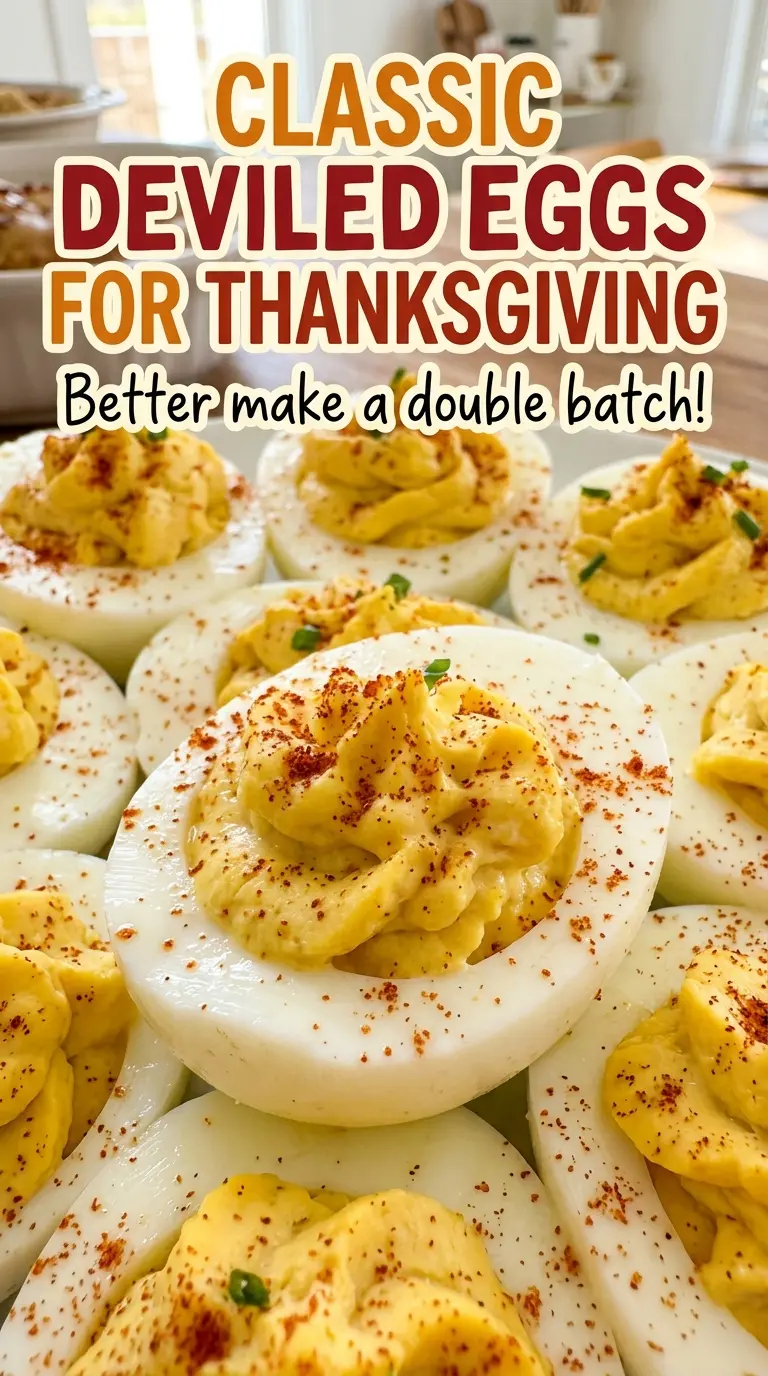
The filling is familiar in the best way: mayonnaise for a creamy base, Dijon for a little sharpness, and a small splash of vinegar to keep it from tasting heavy. I mash everything right in one bowl, then spoon or pipe it into the whites. A light dusting of paprika gives each half its classic finish, and the chilled eggs are ready to join the Thanksgiving table.

Kitchen Note
Let the eggs cool fully in the ice water before you slice them. The whites feel firmer under the knife, so the halves stay neat instead of tearing at the edges.
Save these classic Thanksgiving deviled eggs for a platter with creamy Dijon filling and a paprika finish.
Why the Eggs Finish Cooking After the Pan Leaves the Burner
Boiling eggs continuously is easy to overdo. The whites can turn firm and rubbery, while the yolk may develop a green-gray ring where it meets the white. Taking the covered pan off the heat changes the cooking pace: the eggs sit in hot water rather than being jostled by a vigorous boil for the full cooking time.
That gentler finish is especially useful when you want yolks that mash smoothly into a filling instead of crumbling into dry bits. It also makes the method easy to time: bring the water to a full boil, cover the pan, move it off the burner, and let the eggs stand. The covered saucepan holds in enough heat to cook them through during that rest. Keep the eggs in a single layer with water covering them by an inch so they heat evenly from the start.
What Gives the Filling Its Classic Tang and Creaminess
- Large eggs — They provide sturdy whites for holding the filling and yolks with enough body to mash into a creamy center. Use large eggs for the cooking timing here; changing the size can change how quickly the centers cook.
- Mayonnaise — This brings richness and helps the mashed yolks turn into a smooth, spoonable filling. A familiar, full-fat mayonnaise works well; the flavor matters more than choosing a premium brand. Plain Greek yogurt can replace it for a lighter, tangier filling, though the result won’t be as rich.
- Dijon mustard — Dijon adds a rounded, gently sharp mustard flavor without taking over the yolks. If you switch to yellow mustard, use the same amount for a more familiar, sharper taste.
- Distilled white vinegar — Its clean acidity balances the mayonnaise. Lemon juice can stand in at the same amount, but it gives the filling a faint citrus note rather than the straightforward tang of vinegar.
- Paprika — The garnish adds color and a mild peppery note. Smoked paprika works in its place if you’d like a subtle smoky finish; use a light sprinkle so it doesn’t overwhelm the filling.
From a Covered Pot to a Neat Thanksgiving Platter
Start the eggs in cold water
Arrange the eggs in a single layer in a 5-quart saucepan, then add cold water until it covers them by 1 inch. Starting with cold water lets the eggs warm along with the pan rather than meeting already-boiling water. Set the pan over high heat and watch for a full boil before covering it. Don’t use a crowded stack of eggs; a single layer gives the water room to surround each one.
Let the covered pan stand off the heat
As soon as the water reaches a full boil, cover the saucepan and remove it from the heat. Let the eggs stand for 12 minutes with the lid in place. Avoid lifting the cover to check on them, since the trapped heat is doing the cooking during this stage. Set a timer so the resting time doesn’t stretch while you move on to another task.
Cool, peel, and separate the halves
Transfer the eggs to a bowl of ice water and let them cool for 10 minutes. Once cool, peel them and slice each one lengthwise. Scoop the yolks into a bowl, taking care not to break the whites, and arrange the halves on a serving platter. If a shell clings, peel gently rather than pulling hard and tearing the white.
Mash, fill, and add the paprika
Add the mayonnaise, Dijon mustard, vinegar, salt, and pepper to the yolks. Mash until the mixture looks smooth, with no firm yolk pieces left to interrupt the creamy texture. Spoon the filling into the egg-white halves, or pipe it in for a more defined finish. Sprinkle with paprika, then refrigerate the platter until serving.
Easy Swaps That Keep These Deviled Eggs Familiar
Use smoked paprika for a deeper finish
Swap regular paprika for smoked paprika as the garnish. The eggs keep their classic look, but each bite gets a mild smoky edge; use a modest sprinkle so the aroma doesn’t crowd out the mustard.
Try whole-grain mustard for a little texture
Replace the Dijon with the same amount of whole-grain mustard. Its mustard seeds leave small flecks in the filling and make the flavor more rustic, while keeping the same savory tang.
Make a lighter, tangier filling
Use plain Greek yogurt in place of the mayonnaise. The filling will taste brighter and less rich, and it may be a little softer, so mash it thoroughly and spoon it into the whites for an easy finish.
Storage and Reheating
- Refrigerator: Keep the filled eggs covered and refrigerated for up to 2 days. The whites may dry slightly at the edges, and the filling can lose a little of its freshly mashed softness.
- Freezer: These don’t freeze well. The whites turn watery or rubbery after thawing, and the mayonnaise-based filling can separate.
- Reheating: Serve them cold; reheating isn’t needed. Warm deviled eggs lose their firm texture, and the filling can become oily.
Questions That Come Up When Making Thanksgiving Deviled Eggs
Classic Deviled Eggs for Thanksgiving
Ingredients
Equipment
Method
- Place the eggs in a single layer in a 5-quart saucepan and add cold water to cover them by 1 inch.
- Bring the water to a full boil over high heat, cover the pan, and remove it from the heat.
- Let the eggs stand for 12 minutes.
- Transfer the eggs to a bowl of ice water and let them cool for 10 minutes.
- Peel the eggs and slice them lengthwise.
- Scoop the yolks into a bowl.
- Arrange the whites on a serving platter.
- Add the mayonnaise, Dijon mustard, distilled white vinegar, kosher salt, and black pepper to the yolks and mash until smooth.
- Spoon or pipe the yolk mixture into the egg-white halves.
- Sprinkle with paprika.
- Refrigerate until serving.
