
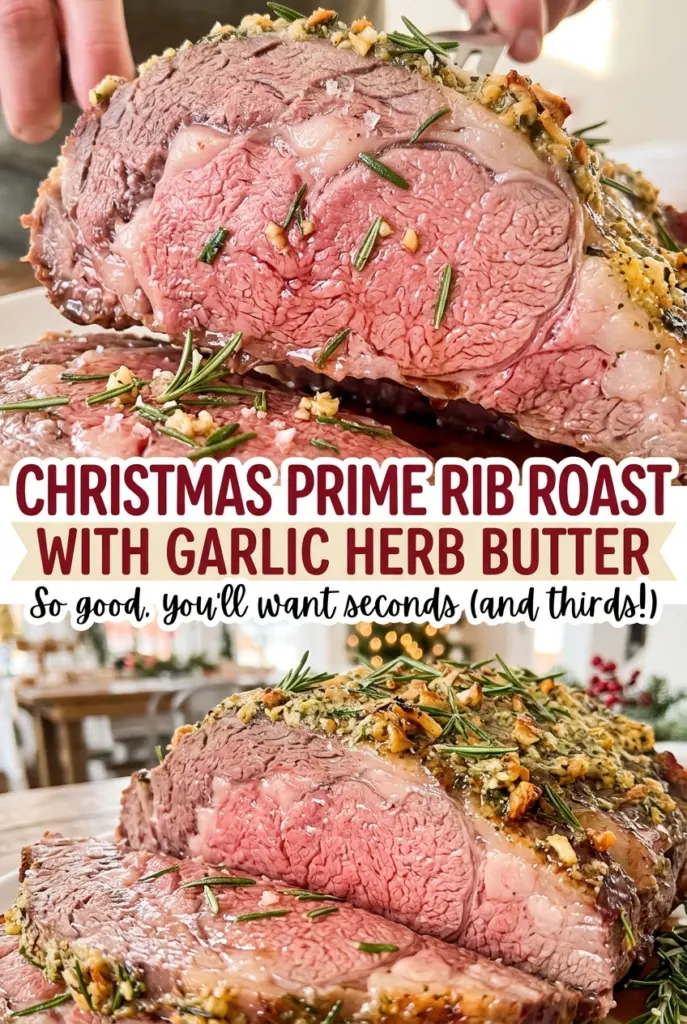
Christmas Prime Rib Roast with Garlic Herb Butter
The first thing I watch is the butter: it should cling to the roast instead of sliding off in a slick layer. Patting the beef dry gives the seasoning and…
Tip: save now, cook later.The first thing I watch is the butter: it should cling to the roast instead of sliding off in a slick layer. Patting the beef dry gives the seasoning and garlic herb butter a better surface to hold on to, and the quick start in a hot oven begins building color before the longer roast.
For this Christmas prime rib, I use a tied, bone-in roast and keep the seasoning straightforward: kosher salt, black pepper, garlic, rosemary, and thyme. The softened butter makes it easy to coat the top and sides evenly, so the herbs stay in place as the roast cooks.
The two oven temperatures give the roast a strong beginning, then a steadier finish. Give it the full rest before carving, and you’ll have a richly seasoned centerpiece with slices that are ready for the table.
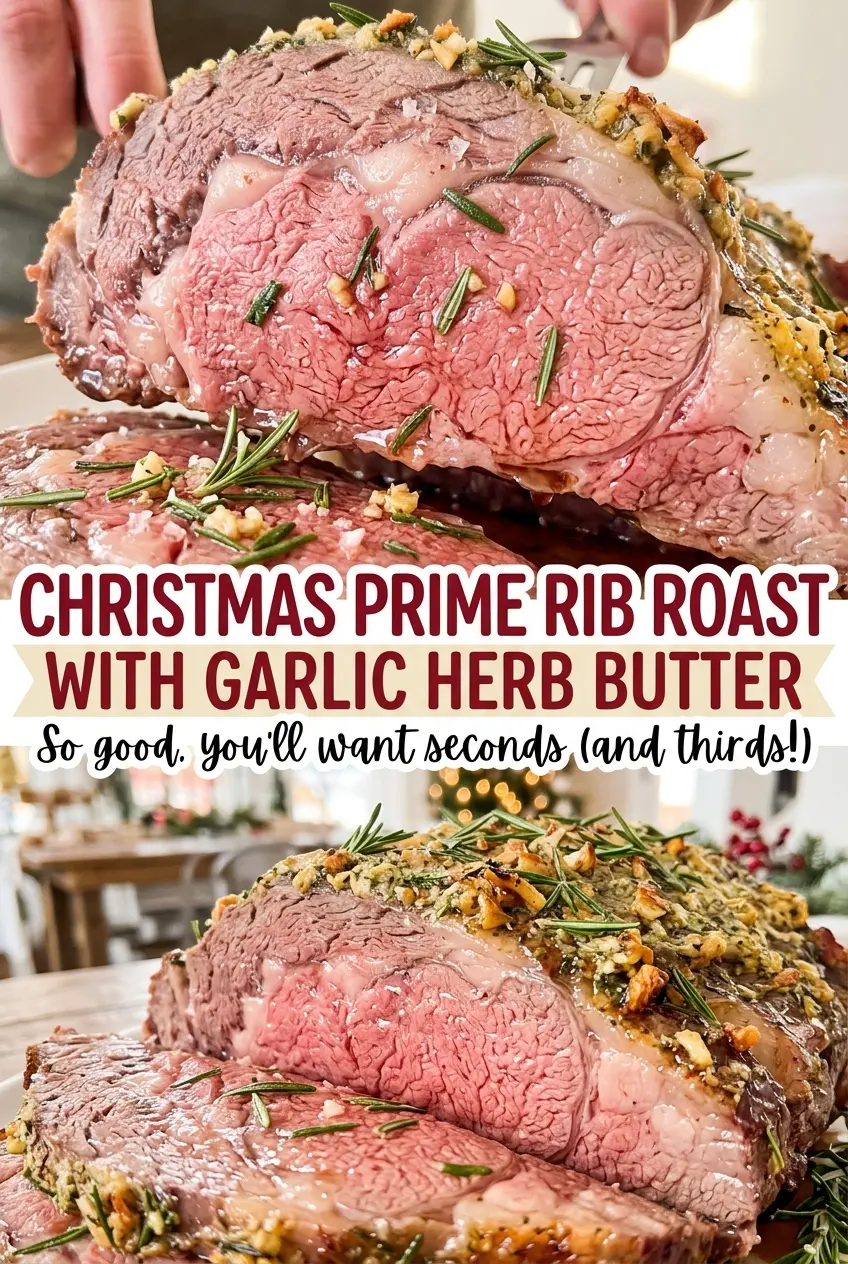
Kitchen Note
Let the butter soften until it spreads easily, but don’t melt it. Soft butter coats the roast in an even layer; melted butter tends to run off before the herbs can stay put.
Save this Christmas prime rib roast for its garlic herb butter and two-temperature roasting method—a special-occasion centerpiece with a simple, savory coating.
Why the Roast Starts Hot, Then Finishes Low
A standing rib roast has plenty of mass, so the oven temperature at the beginning and the temperature for the longer cook do different jobs. Starting at 425°F for 15 minutes gives the outside a head start on browning. Dropping to 325°F afterward lets the center continue cooking at a gentler pace, rather than keeping the roast in the highest heat for the entire cook.
Keep the oven door closed when you lower the temperature. Opening it releases heat right when the oven needs to shift into its longer, lower-temperature stretch. The roast then cooks for 1 1/2 to 2 1/2 hours, but the clock is only a guide: the thermometer reading in the thickest part, away from the bone, tells you when it has reached the target.
That placement matters because the bone isn’t the center of the meat. A reading taken too near it won’t give you the same useful measure of the thickest section. Check the temperature carefully and avoid repeatedly probing different spots; one correctly placed thermometer reading gives you the information you need without turning the roast into a pin cushion.
How the Butter, Herbs, and Bone-In Cut Shape the Roast
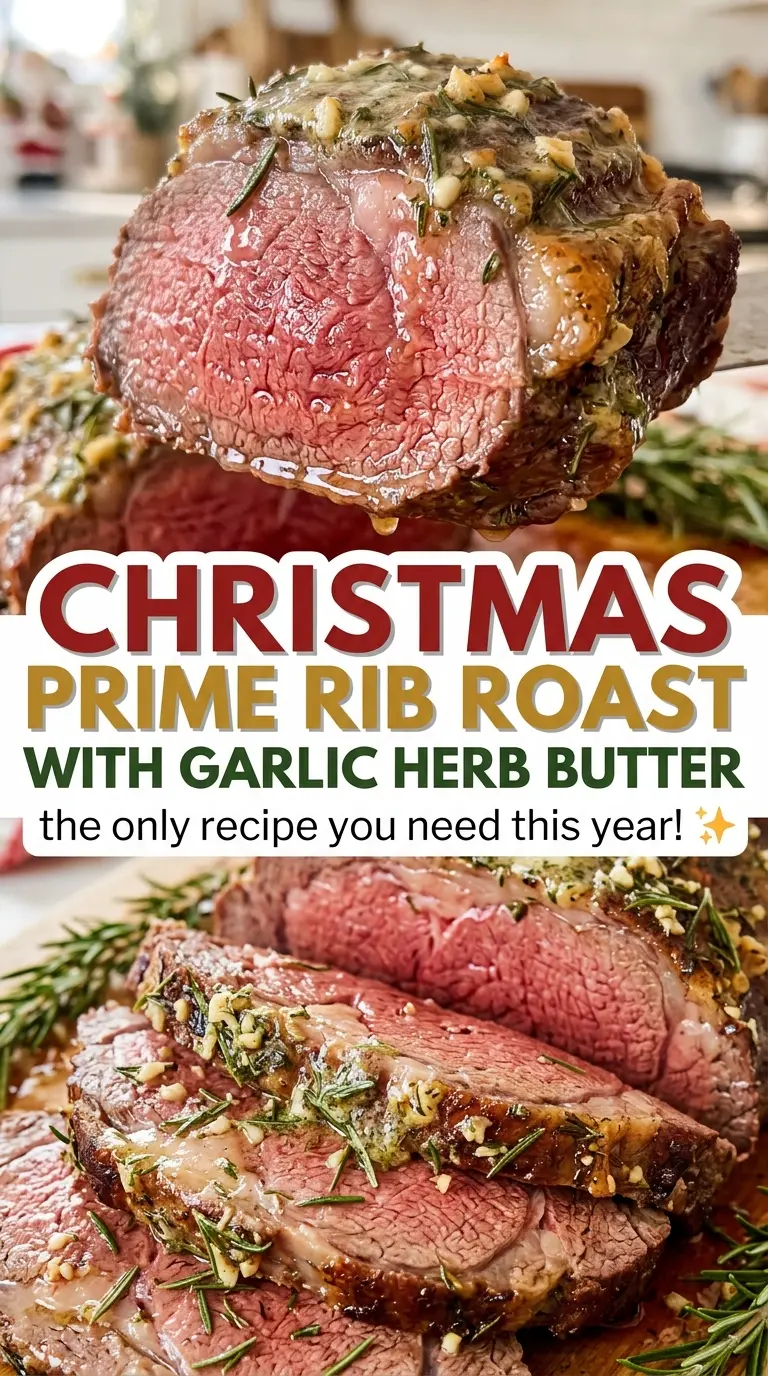
- Unsalted butter — It carries the minced garlic and fresh herbs across the surface while keeping the seasoning in your control. Choose butter that tastes fresh; there’s no need for a specialty brand. For a dairy-free version, leave out the butter mixture and use the roast’s salt and pepper seasoning instead, knowing you’ll lose the buttery herb coating.
- Garlic, rosemary, and thyme — Finely minced garlic and finely chopped fresh herbs spread more evenly through softened butter than large pieces do. Fresh rosemary and thyme give the coating its particular fragrant, savory character. If you don’t have thyme, you can leave it out and keep the garlic and rosemary; the result will lean more strongly toward rosemary. Garlic powder won’t give the same little flecks of fresh garlic in the butter.
- Bone-in beef standing rib roast — The tied roast is the center of this method, and the bones give you a clear reference point for setting it bone-side down and keeping the thermometer away from bone. A boneless roast isn’t a direct swap: its shape and cooking time can differ, so the timing here shouldn’t be carried over unchanged.
- Kosher salt and black pepper — These season the beef directly and balance the richness of the butter. Spread them over the entire surface before adding the butter so the roast is seasoned beneath the herb layer, too.
From Herb Butter to a Rested, Carvable Roast
Mix a Spreadable Garlic Herb Butter
Stir the softened butter, finely minced garlic, chopped rosemary, and chopped thyme in a small bowl until the herbs and garlic are evenly distributed. Scrape the sides and bottom of the bowl as you mix so you don’t end up with a plain patch of butter. The mixture should be soft enough to spread, not runny. If it’s still firm, give it a little more time at room temperature rather than warming it until it melts.
Season and Coat the Bone-In Roast
Set a rack in the center of the oven and heat it to 425°F. Pat the roast dry, place it bone-side down in a roasting pan, and season all over with kosher salt and black pepper. Spread the garlic herb butter over the top and sides, reaching across the surface in an even layer. If the beef is damp, the butter may slide; pat it dry before seasoning and coating.
Roast by Temperature, Then Rest Before Slicing
Roast for 15 minutes at 425°F, then lower the oven to 325°F without opening the door. Continue roasting for 1 1/2 to 2 1/2 hours, checking the thickest part away from the bone with a meat thermometer. Take the roast out when that spot reads 145°F, then transfer it to a cutting board and let it rest for 20 minutes before carving. Cutting into it early lets the resting time go to waste, so give the roast that full pause before you slice.
Two Easy Ways to Adapt the Garlic Herb Coating
A dairy-free roast without the butter coating
Skip the butter, garlic, rosemary, and thyme mixture, and season the roast with the kosher salt and black pepper. The beef will still roast using the same oven temperatures and thermometer cue, but the exterior won’t have the rich, herb-flecked layer that defines the original.
Make rosemary the only herb
Leave out the thyme and keep the garlic, butter, and rosemary in the coating. The roast will taste more distinctly woodsy and rosemary-forward, without changing the cut of beef or the roasting method.
Storage and Reheating
- Refrigerator: Refrigerate leftovers within 2 hours in a sealed container and use within 3 to 4 days. The chilled butter will firm around the beef, and the slices will feel firmer until warmed.
- Freezer: Freeze cooled portions in airtight wrapping for up to 2 to 3 months for best quality. Thaw them in the refrigerator before reheating.
- Reheating: Warm individual slices gently in the microwave at reduced power, checking between short bursts so the edges don’t dry out. Reheat leftovers to 165°F; high power for too long can make the outside tough before the middle is warm.
Questions That Come Up When Roasting Prime Rib
Christmas Prime Rib Roast with Garlic Herb Butter
Ingredients
Equipment
Method
- In a small bowl, mix the softened butter, garlic, rosemary, and thyme until evenly combined.
- Position a rack in the center of the oven and heat the oven to 425°F.
- Pat the roast dry and set it bone-side down in a roasting pan.
- Season all over with the salt and pepper.
- Spread the garlic herb butter over the top and sides.
- Roast for 15 minutes, then reduce the oven temperature to 325°F without opening the door and continue roasting for 1 1/2 to 2 1/2 hours, until a meat thermometer inserted into the thickest part away from the bone reads 145°F.
- Transfer the roast to a cutting board and rest for 20 minutes before carving.