
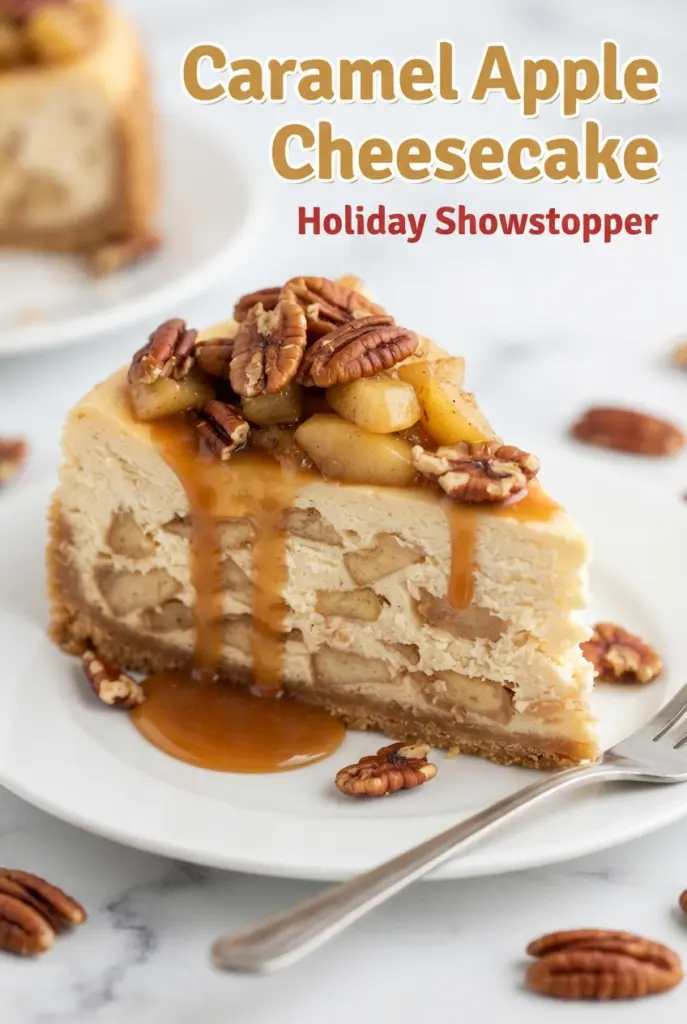
Caramel Apple Cheesecake
Caramel apple cheesecake hits that sweet spot where a classic baked cheesecake turns into something more luxurious without losing the clean, creamy slice people expect. The filling stays silky, the…
Tip: save now, cook later.Caramel apple cheesecake hits that sweet spot where a classic baked cheesecake turns into something more luxurious without losing the clean, creamy slice people expect. The filling stays silky, the cinnamon apples give it a soft, spiced bite, and the graham crust holds everything together with just enough buttery crunch. The caramel and toasted pecans on top finish it with the kind of contrast that keeps each forkful interesting all the way to the last piece.
What makes this version work is the way the apples are cooked before they go anywhere near the filling. Raw apples release too much moisture and can turn a cheesecake watery or uneven, but a quick stovetop cook softens them, concentrates the flavor, and keeps the filling from being dragged down. The other thing that matters is temperature: room-temperature dairy mixes smoother, and eggs added on low speed keep the batter from trapping air, which helps the cheesecake bake up dense and creamy instead of puffy and cracked.
Below, I’ve included the little details that matter most here — how to keep the crust from getting soggy, why the water bath earns its place, and a few practical swaps if you need to work around what’s in your kitchen.
The apples stayed tender but didn’t sink the cheesecake, and the caramel stayed thick instead of running all over the plate. I chilled it overnight and it sliced cleanly like a bakery cheesecake.
Save this caramel apple cheesecake for the kind of dessert table that needs a clean slice, a thick caramel finish, and a little toasted pecan crunch.
The Cracks Usually Start With Warm Batter and Overmixed Eggs
Cheesecake cracks for a few predictable reasons, and most of them happen before the pan ever goes into the oven. If the cream cheese is still cold, you end up beating longer to smooth it out, which adds air and creates a puffy rise that falls as it cools. If the eggs go in too fast or the mixer stays on high, the batter gets loose and foamy, and that almost always shows up later as a split across the top.
The water bath matters here because it keeps the heat gentle and steady. Cheesecake doesn’t like dry oven blasts; it likes an even bake where the edges set slowly and the center still has a little wobble when you take it out. The cheesecake is done when the outer ring looks firm and the middle still moves like set gelatin, not liquid batter. That jiggle disappears as it chills.
What Each Ingredient Is Doing in This Cheesecake
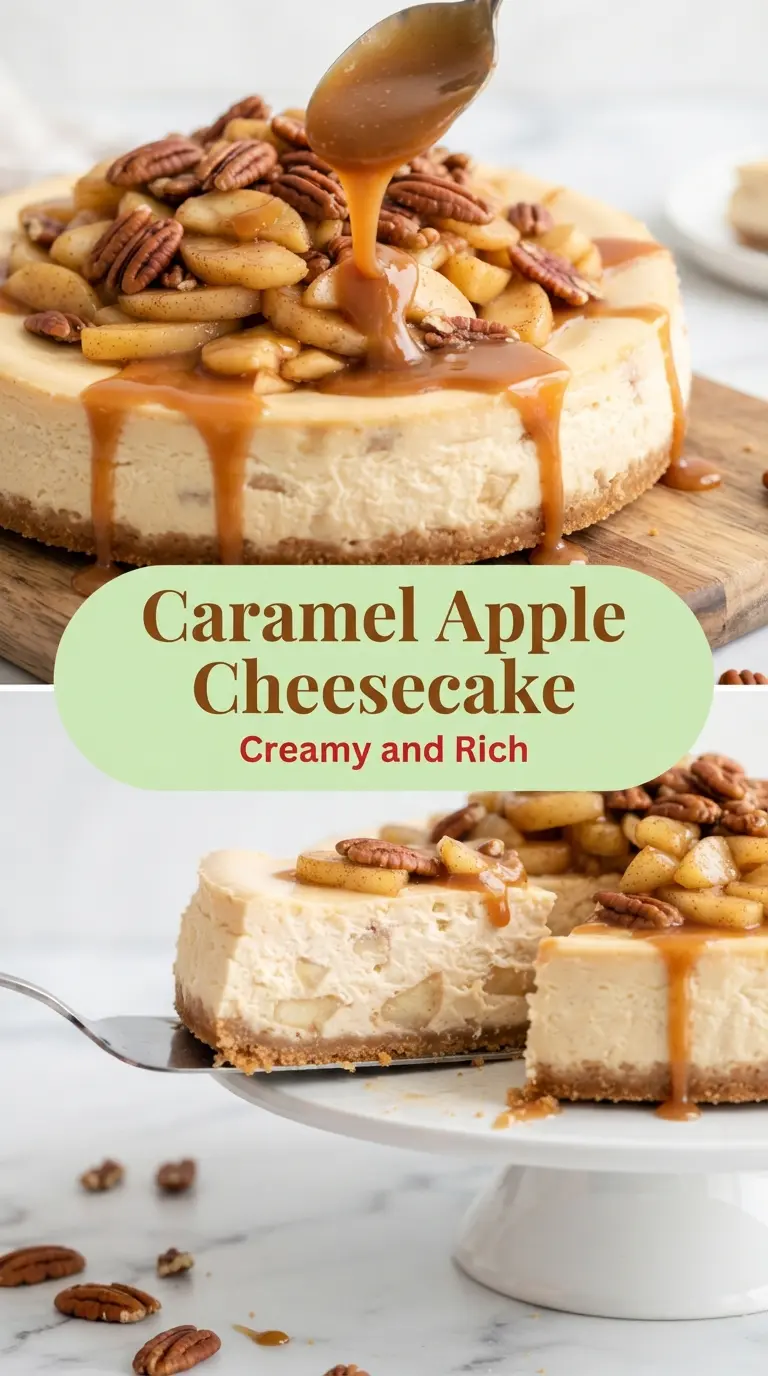
- Graham cracker crumbs — These give the crust its familiar buttery crunch and a toasty flavor that stands up to the caramel. Crushing them finely helps the crust pack tightly, which matters when you’re slicing clean pieces later.
- Brown sugar — It adds a deeper, molasses-like sweetness to both the crust and the apples. That extra depth is what keeps the dessert from tasting one-note sweet.
- Cinnamon — Using it in the crust and the apple filling layers the spice instead of dumping all of it in one place. That gives the cheesecake a warmer aroma without making the filling taste heavy.
- Cream cheese — This is the backbone of the cheesecake, so use full-fat blocks, not whipped tubs. Block cream cheese bakes into a dense, smooth filling; lower-fat versions release more water and can bake up grainy.
- Sour cream — It softens the richness and gives the filling a slight tang that keeps each bite from feeling flat. If you need a swap, full-fat plain Greek yogurt works, but the texture will be a touch less silky.
- Apples — A firm baking apple holds shape after the quick stovetop cook, so you get actual pieces of apple instead of applesauce. Softer apples can work, but they’ll break down more and muddy the cheesecake filling.
- Caramel sauce and toasted pecans — Add these at the end so the topping stays glossy and the nuts stay crisp. If the caramel is too thin, warm it just enough to pour; if it’s hot, it will run off the cheesecake instead of sitting on top.
Building the Cheesecake So It Bakes Creamy, Not Grainy
Start With a Tight, Prebaked Crust
Mix the graham crumbs, sugar, cinnamon, and melted butter until every crumb looks evenly moistened, then press the mixture firmly into the pan. A loose crust falls apart when you slice it, and an underbaked crust can turn soft once the apple filling and custard go on top. Ten minutes in the oven is enough to set it and give it structure without pushing it into hard, dry territory.
Cook the Apples Before They Go Into the Batter
The apples need to be tender before they’re folded into the filling. That short cook pulls out some moisture and concentrates the cinnamon and brown sugar, which keeps the cheesecake from turning watery around the fruit. Let them cool completely before mixing them in, because warm apples can warm the batter and change the bake.
Mix the Filling Low and Slow
Beat the cream cheese and sugar on low until the mixture is smooth, then add the sour cream, flour, and vanilla. Once the eggs go in, mix only until they disappear. Overmixing after the eggs are added is the fastest way to build air into the batter, and air is what leads to cracks, tunneling, and a cake-like texture instead of a dense cheesecake.
Bake Until the Center Still Jumps a Little
Fold half the apples into the batter, pour it over the crust, and bake in the water bath until the edges are set and the center still jiggles slightly. That jiggle is your cue to stop baking. After the oven is turned off, leaving the cheesecake inside with the door cracked helps it cool gradually, which is one of the easiest ways to keep the top smooth.
Three Ways to Adapt This Cheesecake Without Losing the Point
Gluten-Free Crust Swap
Use gluten-free graham-style crumbs in the crust and keep the rest of the recipe the same. The filling is naturally gluten-free as long as your caramel sauce is too. The crust will taste almost identical, though it may be a little more delicate when you slice it.
Dairy-Free Version
Use a plant-based cream cheese that bakes well and replace the butter with a dairy-free alternative in both the crust and apples. The texture won’t be quite as rich or tangy, but you’ll still get a sliceable cheesecake with the same apple-caramel topping.
Nuts Optional, Still Finished Well
Skip the pecans if you need a nut-free dessert and add a little extra caramel plus a pinch of flaky salt on top. You lose the toasted crunch, but the caramel still gives the cheesecake a polished finish and plenty of contrast against the creamy filling.
Storage and Reheating
- Refrigerator: Store covered for up to 5 days. The crust softens a little by day two, but the filling stays creamy.
- Freezer: This freezes well without the caramel and pecans. Wrap individual slices tightly and freeze for up to 2 months, then thaw in the refrigerator overnight.
- Reheating: Cheesecake is best served cold or just slightly cool, not heated. If you want to take the chill off, leave a slice at room temperature for 15 to 20 minutes so the texture stays smooth instead of turning loose.
Answers to the Questions Worth Asking
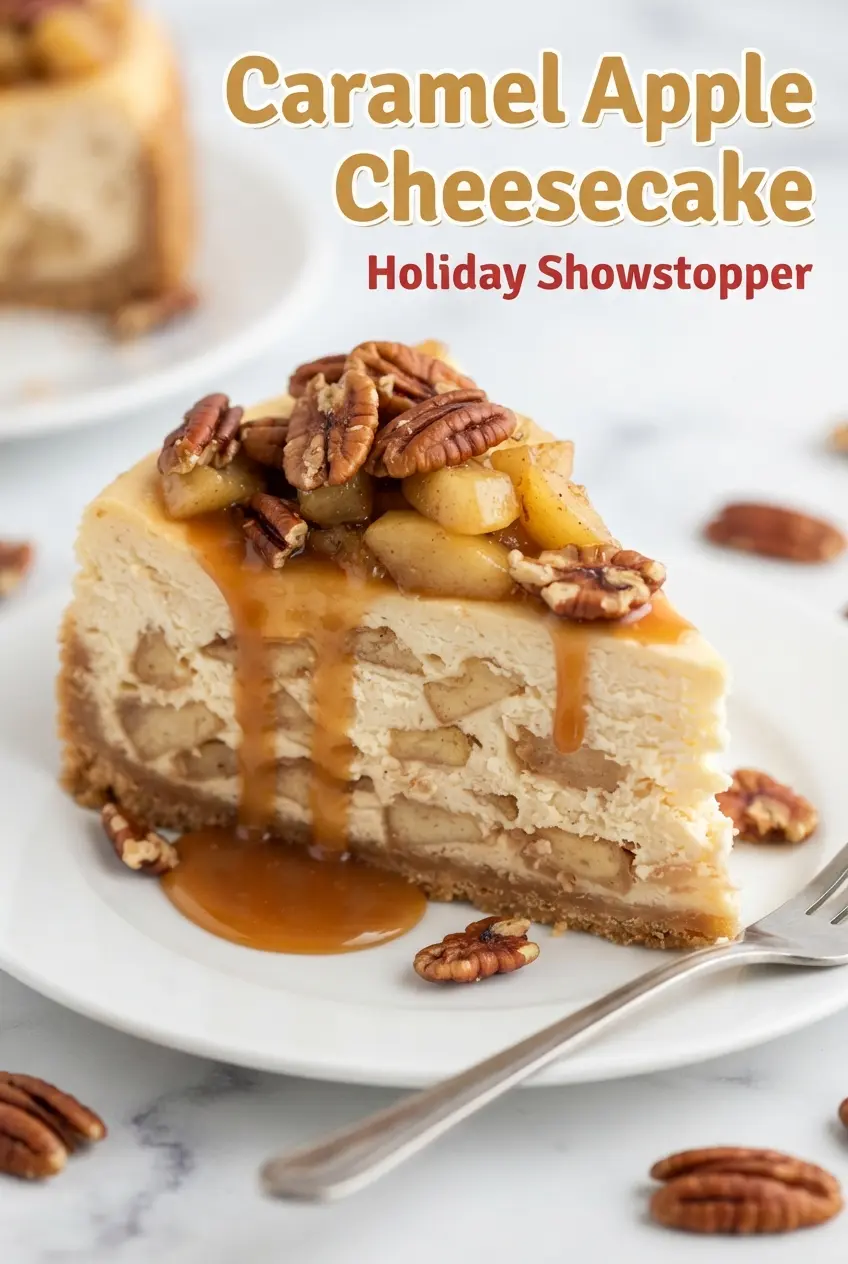
Caramel Apple Cheesecake
Ingredients
Equipment
Method
- Preheat the oven to 325 F (165 C) and wrap the outside of a 9-inch springform pan in heavy-duty foil.
- Mix the graham crumbs, packed brown sugar, ground cinnamon, and melted butter, then press into the pan and bake for 10 minutes.
- Cook the diced apples with 2 tbsp butter, 2 tbsp brown sugar, and 1 tsp cinnamon over medium heat for 5 to 6 minutes until tender.
- Cool the cooked apples completely before adding them to the cheesecake.
- Beat the cream cheese and granulated sugar on low until smooth.
- Beat in the sour cream, all-purpose flour, and vanilla extract until fully combined.
- Add the eggs one at a time, mixing on low just until each egg disappears.
- Fold in half of the cooked apples, then pour the filling over the baked crust.
- Place the springform pan in a roasting pan and add hot water halfway up the sides.
- Bake for 60 to 70 minutes until the edges are set and the center jiggles slightly, then turn off the oven.
- Crack the oven door and leave the cheesecake inside for 1 hour.
- Chill the cheesecake for at least 6 hours or overnight.
- Top with the remaining apples, drizzle with thick caramel sauce, and sprinkle with chopped toasted pecans before serving.