
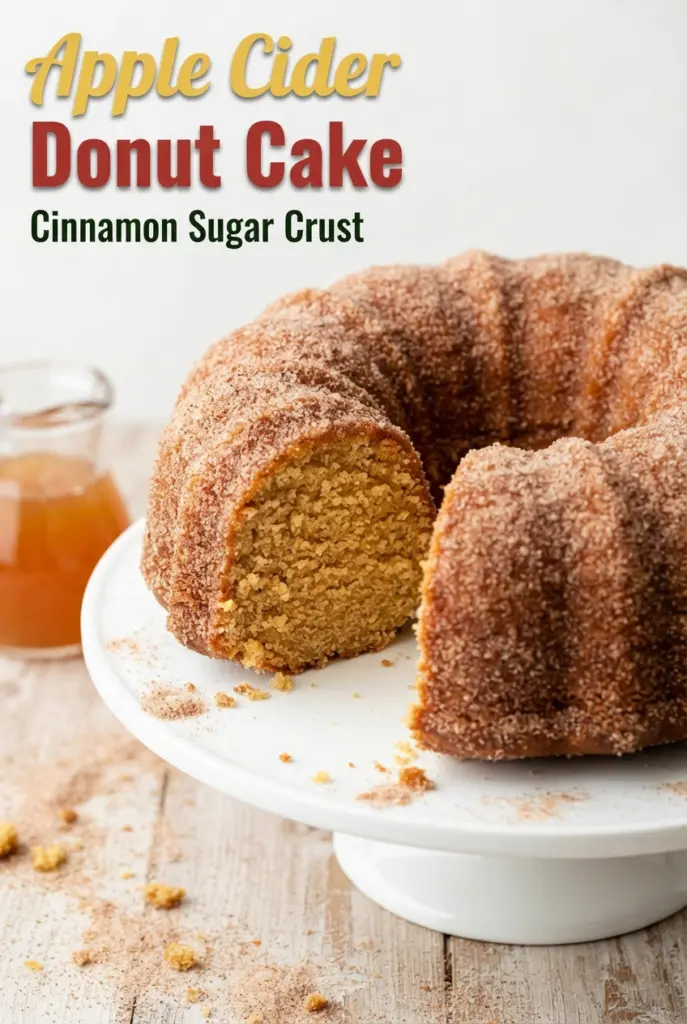
Apple Cider Donut Cake
Apple cider donut cake brings all the best parts of a cider mill donut into one pan: a tender crumb, a deep cinnamon-nutmeg aroma, and that sugary crust that crackles…
Tip: save now, cook later.Apple cider donut cake brings all the best parts of a cider mill donut into one pan: a tender crumb, a deep cinnamon-nutmeg aroma, and that sugary crust that crackles a little when you cut into it. The flavor lands somewhere between a classic bundt cake and a fresh donut, which is exactly why it disappears fast at brunch tables and holiday dessert spreads.
The part that makes this version stand out is the reduced cider. Boiling it down concentrates the apple flavor so it doesn’t get lost in the batter, and the sour cream keeps the cake plush instead of dry. The cinnamon sugar coating goes on while the cake is still warm, so it sticks in a thick layer instead of sliding off.
Below you’ll find the trick to keeping the bundt from sticking, the best way to get that cider reduction right, and a few variations if you want to adapt the cake for different diets or use what you already have on hand.
The cider reduction made the apple flavor so much stronger, and the cinnamon sugar stuck beautifully while the cake was still warm. The crumb stayed soft for two days, and it sliced clean without crumbling.
Save this apple cider donut cake for the cinnamon sugar crust and that true cider-mill flavor.
The Trick to Keeping Apple Cider Donut Cake Moist, Not Dense
The biggest mistake with this kind of cake is treating it like any other butter cake and skipping the cider reduction. Fresh cider has a lot of water in it, and if you pour it in straight from the jug, the flavor stays thin and the batter can bake up a little loose. Reducing it first concentrates the apple flavor and gives the cake a more bakery-style taste without needing apple butter or extra spices.
The other place people go wrong is overmixing after the flour goes in. This batter should look smooth but not whipped; once the dry ingredients are added, stop as soon as the flour disappears. That keeps the crumb tender instead of tight and bready. The sour cream helps here too, because the acidity softens the texture and keeps the cake from drying out in the oven.
What Each Ingredient Is Doing in This Cake
- Apple cider — Reducing it is non-negotiable if you want real apple flavor. The reduced cider gives the cake its signature taste without watering down the batter. There isn’t a shortcut that gives the same depth.
- Butter — Use softened unsalted butter for the batter and melted butter for the coating. The softened butter traps air when beaten with the sugars, which helps the cake rise with a lighter crumb, while the melted butter helps the cinnamon sugar cling to the outside.
- Brown sugar and granulated sugar — The brown sugar adds a hint of caramel note, while the granulated sugar keeps the cake from feeling too heavy. You need both to get that donut shop balance of richness and clean sweetness.
- Sour cream — This is what keeps the crumb plush. Plain full-fat yogurt can work in a pinch, but the cake will taste a touch tangier and may bake up slightly less rich.
- Cinnamon and nutmeg — These spices should support the apple, not bury it. Cinnamon gives the familiar donut flavor, while nutmeg adds the warm finish that makes the cake taste like it came from a cider mill case.
- Baking powder and baking soda — The combination gives you lift without a soapy taste. The baking soda also reacts with the sour cream for a little extra tenderness.
Building the Batter and Getting the Coating to Stick
Reducing the Cider
Pour the cider into a saucepan and let it simmer until it shrinks to about 1 cup. You want steady bubbles, not a hard boil, so the flavor concentrates without scorching. If you rush this over high heat, the cider can taste flat or start to pick up a cooked edge that shows up in the finished cake. Cool it before adding it to the batter or it can melt the butter mixture and throw off the texture.
Mixing the Cake Base
Beat the butter and sugars until the mixture looks pale and fluffy, then add the eggs one at a time so the batter stays smooth. Once the sour cream and vanilla go in, the mixture may look slightly curdled, and that’s normal. Alternate the dry ingredients with the reduced cider and stop mixing as soon as everything comes together. If you keep going, the gluten tightens and the cake loses that soft, bakery-style crumb.
Baking and Finishing the Crust
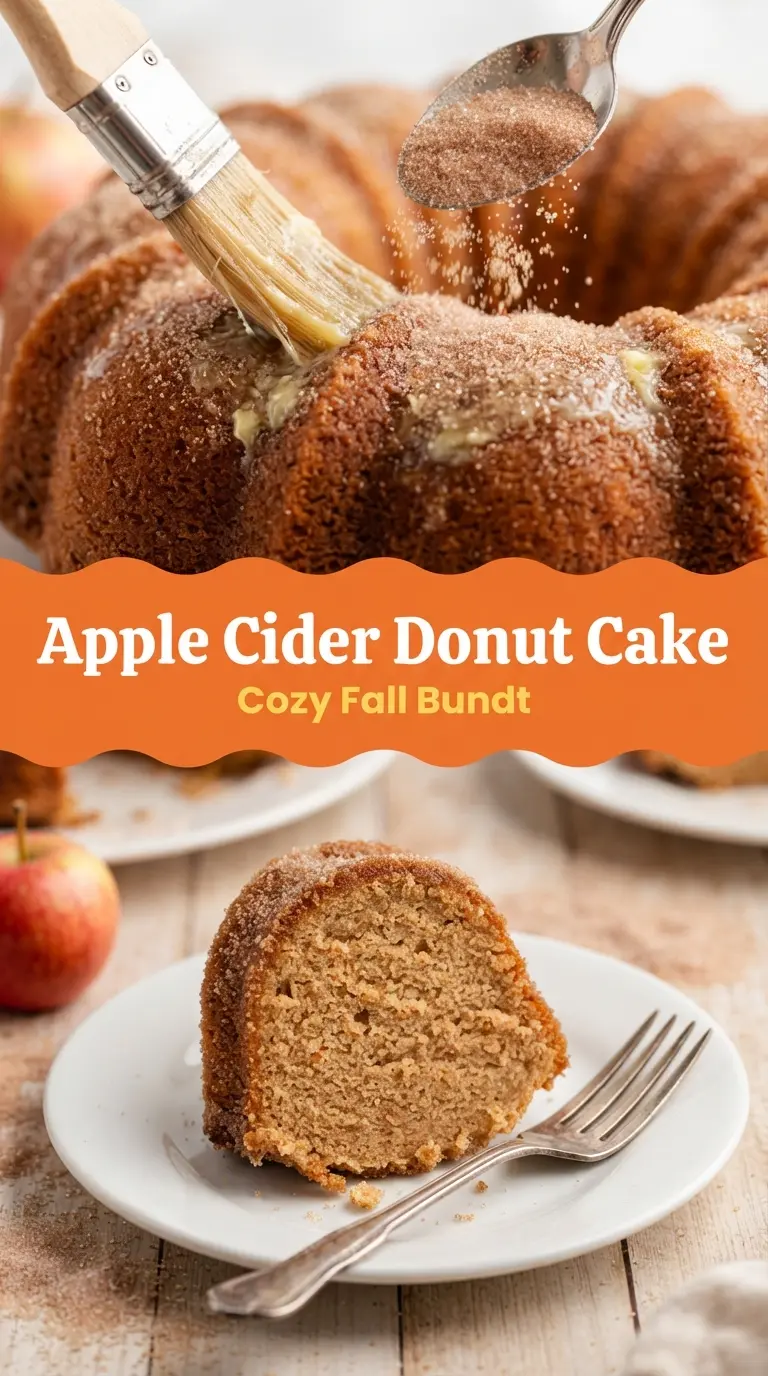
Grease and flour the bundt pan generously, especially in the center tube and all the ridges. A bundt cake with a sugary coating can stick where the shape is deepest, so every crevice needs coverage. Bake until a tester comes out clean and the top springs back lightly when pressed. Let it rest for 10 minutes, then invert it while it is still warm enough to release but firm enough to hold its shape. Brush the cake with melted butter and press on the cinnamon sugar right away so you get that classic crackly crust.
How to Adapt This Apple Cider Donut Cake for Different Tables
Dairy-Free Version
Use a plant-based butter with a neutral flavor and swap the sour cream for thick dairy-free yogurt. The cake will still be moist and spiced, but the crumb may be a little less rich and the coating may set with a slightly softer finish.
Gluten-Free Version
A good 1:1 gluten-free baking flour works here if it includes xanthan gum. The cake will be a little more delicate, so let it cool in the pan for the full 10 minutes before turning it out. That rest helps it set enough to release cleanly.
Muffin-Style Mini Cakes
This batter can be baked in a greased muffin tin for shorter bake times and individual portions. You’ll lose the dramatic bundt look, but you gain more cinnamon sugar surface area, which is no bad thing.
Storage and Reheating
- Refrigerator: Store covered for up to 4 days. The sugar crust softens a little, but the cake stays moist.
- Freezer: Freeze slices tightly wrapped for up to 2 months. The coating won’t stay crisp, so freeze the cake uncoated if you want the best texture.
- Reheating: Warm slices briefly in the microwave or in a low oven. High heat dries out the crumb and can make the sugar topping sticky instead of pleasant.
Answers to the Questions Worth Asking
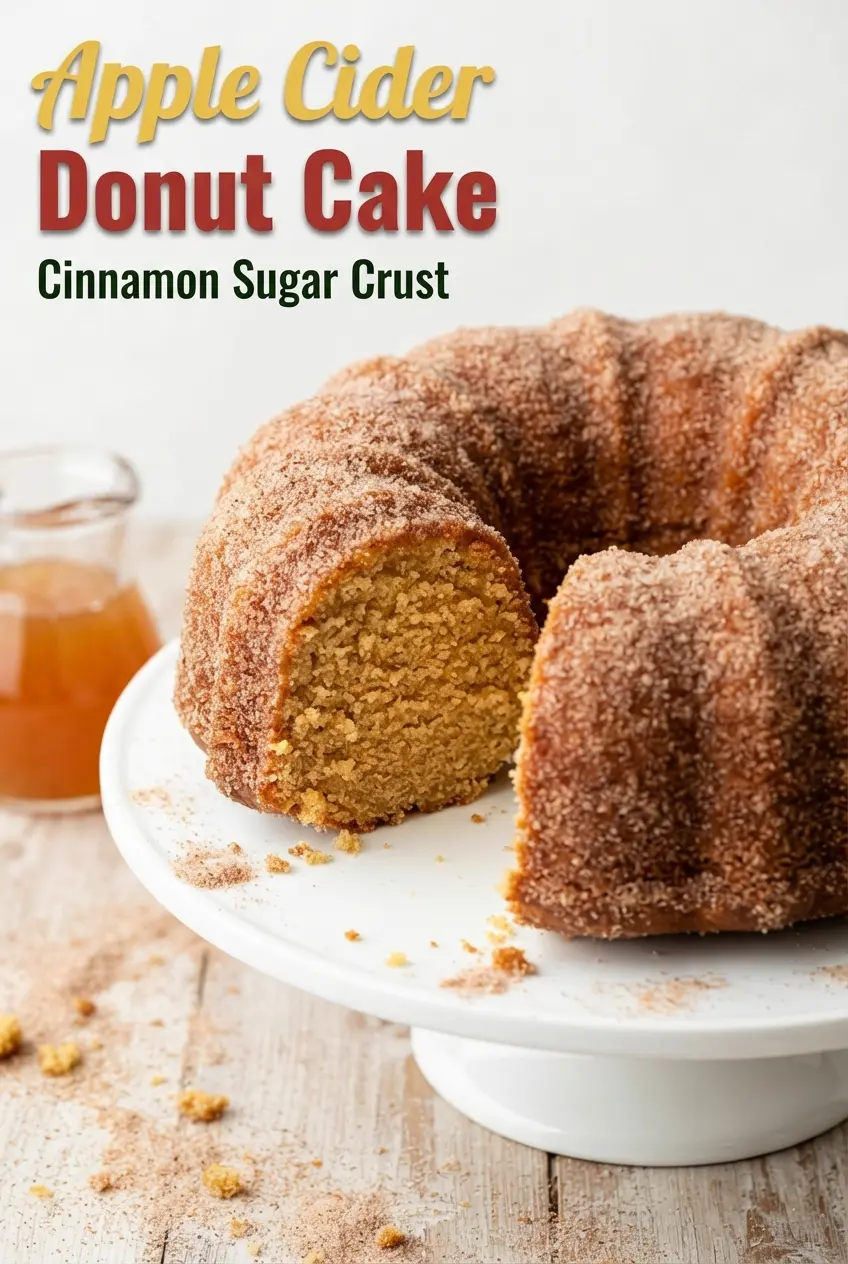
Apple Cider Donut Cake
Ingredients
Equipment
Method
- Simmer the apple cider in a saucepan for 15 to 20 minutes until reduced to 1 cup (240 ml), then cool.
- Set the reduced cider aside until it is cool enough to add to the batter without steaming the eggs.
- Preheat the oven to 350 F (175 C) and generously grease and flour a 10-cup bundt pan.
- Check that the pan is well coated so the cake releases cleanly after baking.
- Whisk the all-purpose flour, baking powder, baking soda, salt, ground cinnamon, and ground nutmeg until evenly combined.
- Beat the softened unsalted butter with the packed light brown sugar and granulated sugar until fluffy, about 3 minutes.
- Beat in the eggs one at a time, then mix in the vanilla extract and sour cream until smooth.
- Add the dry ingredients alternately with the reduced apple cider, beginning and ending with the dry ingredients, mixing until just combined.
- Spread the batter in the prepared bundt pan and bake for 50 to 60 minutes, until a toothpick comes out clean.
- Cool the cake in the pan for 10 minutes.
- Invert the cake onto a rack and let it cool until warm, not hot.
- Mix the granulated sugar for coating with the ground cinnamon for coating.
- Brush the warm cake all over with the melted unsalted butter and press the cinnamon sugar onto the surface for a crunchy coating.