
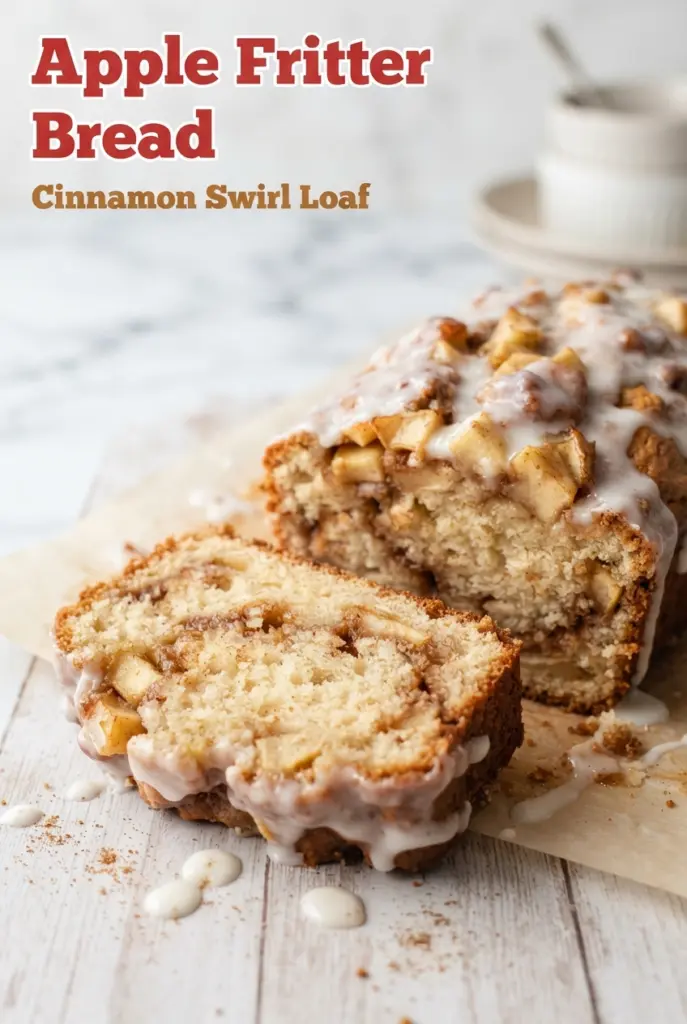
Apple Fritter Bread
Apple fritter bread bakes up with a soft, buttery crumb, pockets of cinnamon sugar, and little bursts of tender apple in every slice. The top turns golden and just a…
Tip: save now, cook later.Apple fritter bread bakes up with a soft, buttery crumb, pockets of cinnamon sugar, and little bursts of tender apple in every slice. The top turns golden and just a little crusty where the brown sugar melts into the batter, then the vanilla glaze soaks in enough to give you that bakery-style finish without making the loaf soggy. It tastes like the best part of an apple fritter, only easier to serve and much less messy to make.
What makes this version work is the layering. The apples are tossed with a little sugar first, which draws out just enough juice to help them stay flavorful without watering down the batter. The cinnamon sugar gets split between layers and swirled lightly through the top, so you get those sweet ribbons instead of one flat note running through the whole loaf. I also like using two apples instead of cramming in more fruit; too many chunks can weigh the center down and keep the loaf from baking through cleanly.
Below, I’ve included the timing detail that keeps the middle from turning gummy, plus a few swaps for when you want to change the fruit or make the loaf fit a different diet.
The apples stayed tender without disappearing, and the cinnamon sugar made these perfect little pockets through the loaf. I was worried it would be too sweet, but the glaze was just enough and it sliced clean after cooling.
Save this apple fritter bread for the days when you want a bakery-style loaf with cinnamon swirls and a vanilla glaze.
The Reason the Swirl Stays Distinct Instead of Blending Into the Batter
The biggest mistake with apple bread like this is stirring the cinnamon sugar straight into the batter. That sounds easier, but it wipes out the contrast that makes each slice worth eating. You want visible ribbons of brown sugar and cinnamon, not a uniformly spiced loaf that tastes flat by comparison.
The other thing that goes wrong is overmixing once the flour goes in. Apple fritter bread has a tender crumb, and beating it after the dry ingredients are added tightens the texture fast. Mix only until the flour disappears. The batter should look thick and a little rough before it goes into the pan.
What Each Ingredient Is Actually Doing in This Loaf
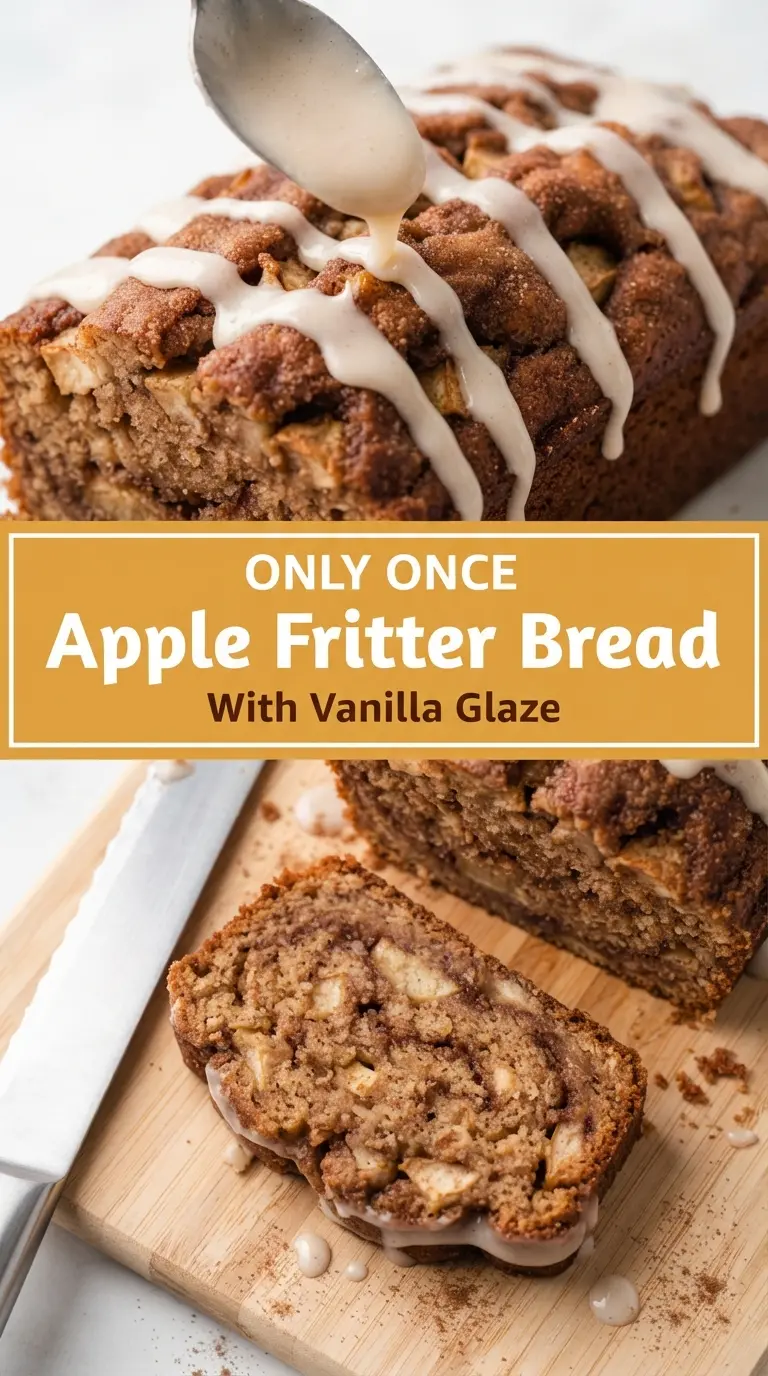
- Apples — Use firm, baking-friendly apples so the pieces hold some shape after 50 minutes in the oven. A softer apple will melt down too much and make the loaf wet in spots. Peel them if you want the cleanest texture, then dice small enough that they spread through the batter instead of sinking.
- Brown sugar and cinnamon — This is the part that gives you the fritter feel. Brown sugar adds a deeper caramel note than white sugar, and cinnamon cuts through the sweetness so the loaf doesn’t taste like plain cake with fruit in it.
- Butter — Softened butter is worth using here because it traps air when beaten with the sugar, which helps the loaf rise with a lighter crumb. If the butter is too cold, the batter stays dense. If it’s melted, you lose that structure.
- Milk — Milk loosens the batter just enough to keep it scoopable without thinning it out. Whole milk gives the richest texture, but 2% works fine. For a dairy-free version, use an unsweetened oat milk or almond milk with no other changes.
- Powdered sugar — This makes the glaze smooth and quick to whisk together. Granulated sugar won’t dissolve the same way, so it leaves a gritty finish instead of that clean drizzle on top.
How to Layer the Batter So the Apples Don’t Sink
Building the cinnamon base
Mix the brown sugar and cinnamon first so the spice is evenly distributed before it hits the batter. Toss the diced apples with their little bit of sugar and cinnamon next; that tiny coating keeps the fruit seasoned all the way through. If you skip that step, the apples can taste bland against the sweet loaf.
Making the batter without tightening it
Cream the butter and sugar until it looks pale and fluffy, then beat in the eggs and vanilla. Once the flour mixture starts going in, switch to a gentler hand and stop as soon as the streaks disappear. Overmixing here is what gives you a tough top and a heavy center.
Layering the pan for swirls, not mud
Spread half the batter in the pan first, then add half the apples and half the cinnamon sugar. Repeat with the rest, and press the top apples in lightly so they settle into the batter instead of sitting on top and drying out. A few gentle swirls with a knife are enough; if you overdo it, the layers blur together and the loaf loses that fritter look.
Knowing when it’s done
Bake until a toothpick comes out clean from the center and the top springs back when lightly touched. If the loaf is browning too fast before the middle is set, tent it with foil for the last stretch of baking. Letting it cool for 15 minutes before lifting it out matters, because a hot loaf tears easily while it’s still fragile.
Three Ways to Make This Apple Bread Fit the Day
Use pears instead of apples
Firm pears work well if you want a softer, more floral loaf. Choose pears that are ripe but not mushy, and keep the dice small because pears collapse faster than apples. The flavor turns a little gentler, but the cinnamon sugar still carries the loaf.
Make it dairy-free
Swap the butter for a plant-based baking stick and use unsweetened almond or oat milk in both the batter and glaze. The loaf will still rise and slice well, though the crumb will be a touch less rich than the original.
Skip the glaze for a less sweet loaf
If you want more of a breakfast loaf than a dessert bread, leave off the glaze and dust the cooled top with a little powdered sugar instead. You’ll lose the sticky bakery finish, but the cinnamon apple layers still read clearly.
Storage and Reheating
- Refrigerator: Keep the loaf covered for up to 4 days. The crumb stays moist, though the glaze will soften a little more by day two.
- Freezer: This loaf freezes well. Wrap individual slices tightly and freeze for up to 2 months, then thaw at room temperature or overnight in the fridge.
- Reheating: Warm slices in the microwave for 10 to 15 seconds or in a low oven until just heated through. Don’t blast it too long or the glaze turns sticky and the bread dries at the edges.
Answers to the Questions Worth Asking
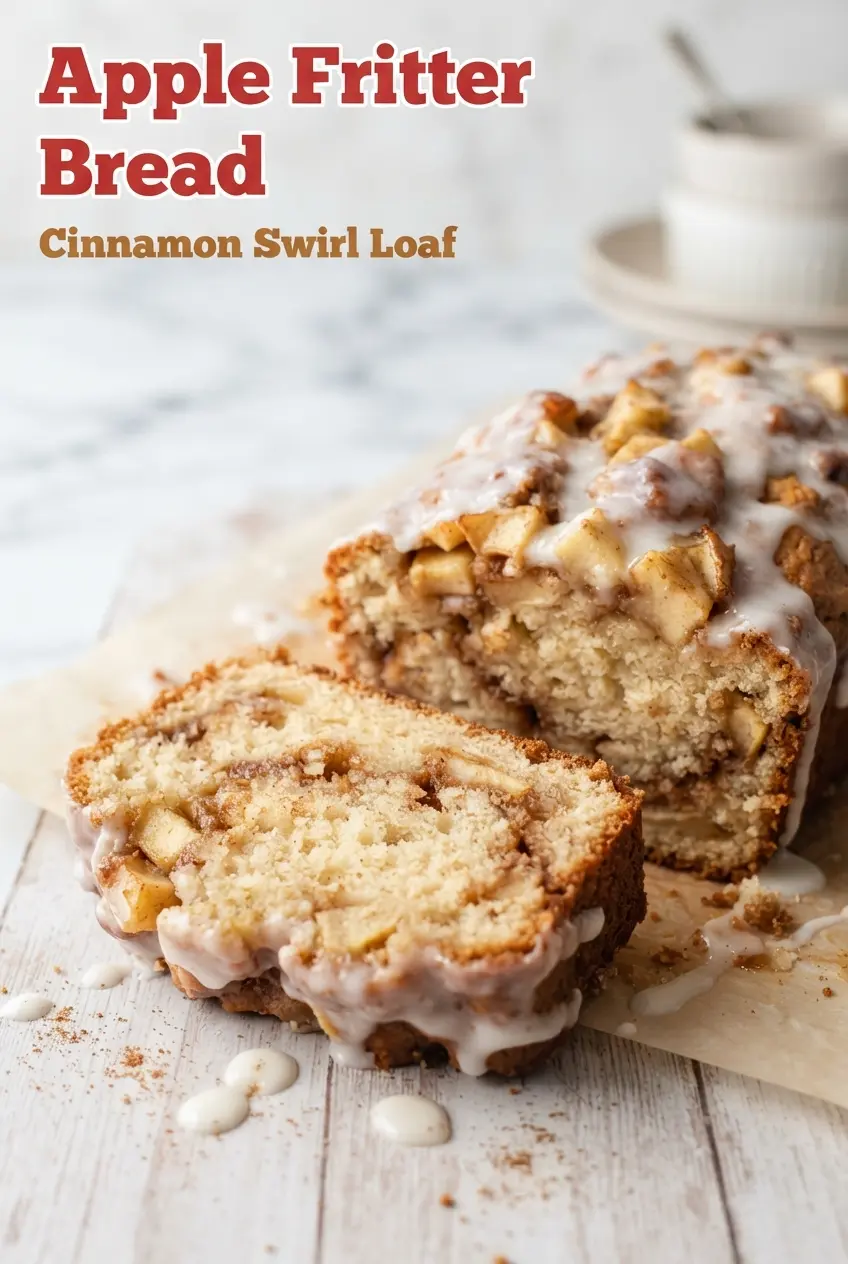
Apple Fritter Bread
Ingredients
Equipment
Method
- Preheat the oven to 350 F (175 C) and grease and line a 9x5-inch loaf pan with parchment. Set the pan aside for filling.
- Mix the light brown sugar and 1 tsp ground cinnamon in a small bowl until evenly combined. This will form your cinnamon-sugar layer.
- Toss the diced apples with 1 tbsp granulated sugar and 1/2 tsp ground cinnamon until coated. Let them sit while you make the batter.
- Beat the softened unsalted butter and 2/3 cup granulated sugar until fluffy. The mixture should lighten in color.
- Beat in the eggs one at a time, then beat in the vanilla extract. Stop once the batter looks smooth.
- Whisk the all-purpose flour, baking powder, and salt together. This helps distribute the leaveners evenly.
- Add the dry ingredients to the butter mixture alternately with the milk, mixing just until combined. Avoid overmixing so the loaf stays tender.
- Spread half the batter in the prepared loaf pan and top with half the apples and half the cinnamon sugar. Smooth the apples into an even layer.
- Add the remaining batter, then scatter the remaining apples over the top and press them in lightly. Sprinkle the remaining cinnamon sugar across the surface.
- Swirl the top with a knife a few times to distribute the cinnamon-sugar through the loaf. Look for marbled streaks.
- Bake for 50 to 60 minutes at 350 F (175 C) until a toothpick comes out clean. If the top browns too quickly, tent loosely with foil.
- Cool for 15 minutes, then lift the loaf out of the pan. The loaf should firm up slightly for clean slicing.
- Whisk the powdered sugar with 1 to 2 tbsp milk to make a drizzleable glaze. Drizzle over the warm loaf so it sinks in a little.