
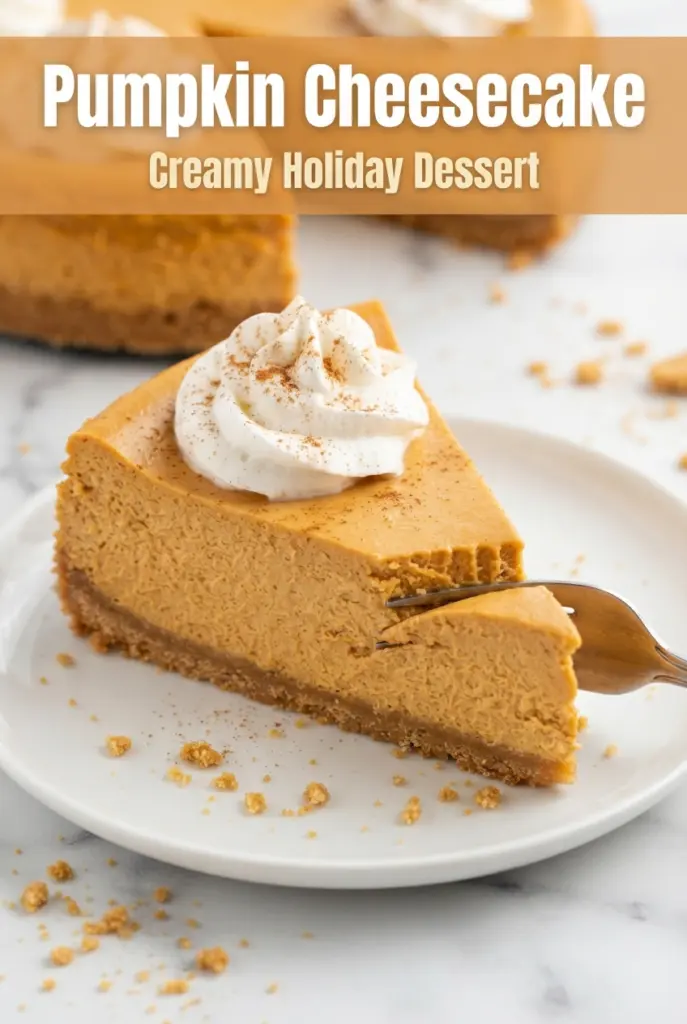
Pumpkin Cheesecake
Silky pumpkin cheesecake is the kind of dessert that gets noticed before the plates even hit the table. The filling bakes up dense and creamy, with warm spice folded into…
Tip: save now, cook later.Silky pumpkin cheesecake is the kind of dessert that gets noticed before the plates even hit the table. The filling bakes up dense and creamy, with warm spice folded into just enough pumpkin to taste like fall without turning heavy or muddy. On a cinnamon graham cracker crust, it lands with a buttery crunch that gives each bite a clean finish instead of the gummy base that so many cheesecakes end up with.
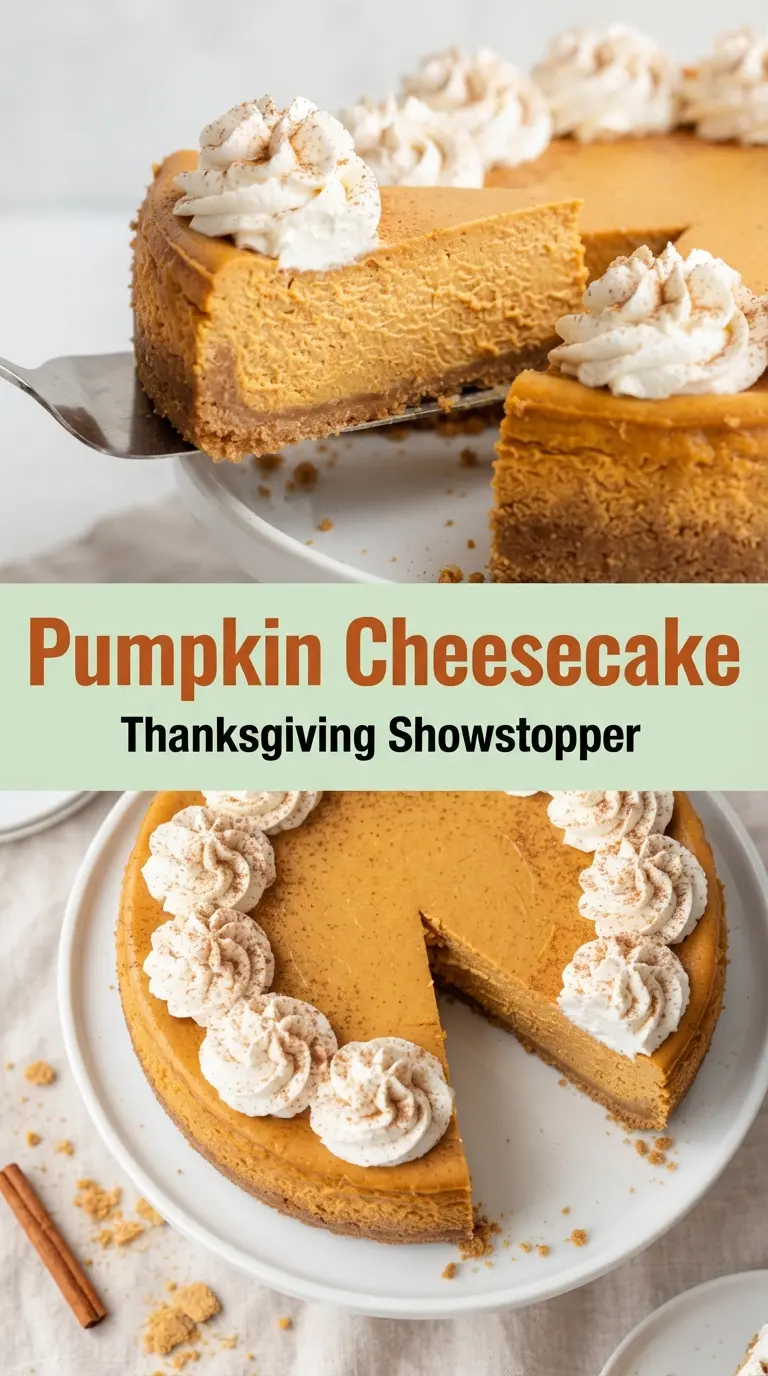
The part that makes this version worth keeping is the way it bakes low and slow in a water bath. That gentle heat keeps the custard from overcooking around the edges while the center finishes at the right pace, which is what gives you that smooth, crack-free top. Room-temperature ingredients matter here too; cold cream cheese leaves tiny lumps, and cold eggs can seize the batter just enough to make the texture less velvety than it should be.
Below, I’ve laid out the one technique that keeps the cheesecake from splitting, plus the ingredient details that matter most if you want a clean slice and a filling that tastes balanced instead of overspiced.
The filling came out so smooth and the water bath kept the top from cracking. I let it chill overnight and every slice held perfectly, even after adding whipped cream.
Save this pumpkin cheesecake for the holidays when you want a crack-free top, a buttery cinnamon crust, and a dessert that slices cleanly after an overnight chill.
The Water Bath Is What Keeps the Top Smooth
Cheesecake cracks when the outside bakes faster than the center can set. The water bath fixes that by creating gentle, even heat around the pan, which means the filling firms up without drying out. If your cheesecake has ever come out puffed in the middle, then collapsed and split as it cooled, it was probably baked too hot or without enough moisture in the oven.
The other mistake that causes trouble is overbaking. This cheesecake should still wobble slightly in the center when you pull it from the oven. That jiggle is what you want; the residual heat finishes the custard as it cools, and the long chill in the fridge gives it the structure needed for clean slices.
What Each Ingredient Is Doing in This Pumpkin Cheesecake
- Cream cheese — This is the body of the cheesecake, so full-fat blocks matter. Tubs are too soft and often contain more water, which can leave the filling loose. Let it soften at room temperature until it yields easily under a spoon; that’s what gives you a lump-free batter without beating in extra air.
- Pumpkin puree — Use plain pumpkin puree, not pumpkin pie filling. Pie filling already has sugar and spices mixed in, which throws off the balance and can make the texture loose. If your puree looks wet or watery, blot it lightly with paper towels first.
- Sour cream — This adds tang and keeps the filling from tasting flat. It also loosens the batter just enough for a smoother bake. Full-fat is best here; low-fat versions can make the cheesecake less creamy and a little less stable.
- Brown sugar and granulated sugar — The brown sugar brings depth and a little molasses note, while the granulated sugar keeps the sweetness clean. Using both keeps the flavor round without making the filling taste heavy. That balance matters because pumpkin and spice can take over fast if the batter leans too dark.
- Graham cracker crumbs — These make the crust sweet and sturdy enough to hold the custard. Cinnamon in the crust echoes the spice in the filling, so every bite tastes connected instead of separate. If you only have whole crackers, pulse them fine before mixing so the crust packs tightly.
- Flour — Just a little flour helps the filling set more evenly and reduces the chance of a soft center that never quite slices cleanly. Don’t add more than the recipe calls for; too much flour makes cheesecake taste cakier than it should.
The 20 Minutes That Set Up the Whole Cheesecake
Building the Crust
Mix the graham crumbs, brown sugar, cinnamon, and melted butter until every crumb looks evenly moistened, like damp sand. Press it firmly into the bottom and slightly up the sides of the pan; loose crumbs will crumble the first time you cut into the cake. A short bake sets the crust so it doesn’t soften under the filling.
Mixing the Filling Without Whipping in Air
Beat the cream cheese and sugars on low speed until the mixture is smooth and glossy. If you whip it hard, you’ll trap air bubbles, and those bubbles rise in the oven and can leave little cracks or a puffy center. Add the pumpkin, sour cream, flour, vanilla, and spices next, then stop the mixer as soon as the batter looks uniform.
Adding the Eggs at the End
Eggs are what turn the batter into a custard, so they go in last and only until combined. The batter should look silky, not foamy. If you beat the eggs in aggressively, the cheesecake rises too much, then sinks and tears as it cools.
Baking Until the Center Still Jigsles
Set the springform pan in a roasting pan and pour in hot water halfway up the sides. Bake until the edges are set and the center still has a gentle wobble when you nudge the pan. Turn off the oven, crack the door, and let the cheesecake rest inside for an hour so the temperature drops gradually instead of shocking the custard.
How to Adapt This Pumpkin Cheesecake for Different Needs
Gluten-Free Crust Swap
Use gluten-free graham crackers or another crisp gluten-free cookie in the crust. The filling stays the same, but the crust may be a little more delicate, so press it firmly and let it cool completely before adding the batter. You’ll still get the same spiced, creamy slice without changing the texture of the cheesecake itself.
Dairy-Free Version
This one is harder to convert cleanly because cheesecake depends on dairy for structure and richness, but you can get close with full-fat dairy-free cream cheese and coconut-based sour cream. The result will taste a little lighter and less tangy, and the texture may be softer, so chill it well before slicing.
Extra-Spiced Holiday Version
Add another 1/2 teaspoon pumpkin pie spice if you want a bolder spice note, but don’t keep building from there or the pumpkin gets buried. A little extra cinnamon on top after chilling finishes it nicely. This version leans warmer and more aromatic without changing the custard.
Storage and Reheating
- Refrigerator: Keep covered for up to 5 days. The texture stays dense and creamy, and the flavor actually settles in after the first day.
- Freezer: It freezes well. Wrap the chilled cheesecake tightly, then freeze slices or the whole cake for up to 2 months; thaw overnight in the fridge for the cleanest texture.
- Reheating: Don’t reheat this dessert. Cheesecake is meant to be served cold or cool room temperature, and heat will soften the structure and make the filling greasy.
Answers to the Questions Worth Asking
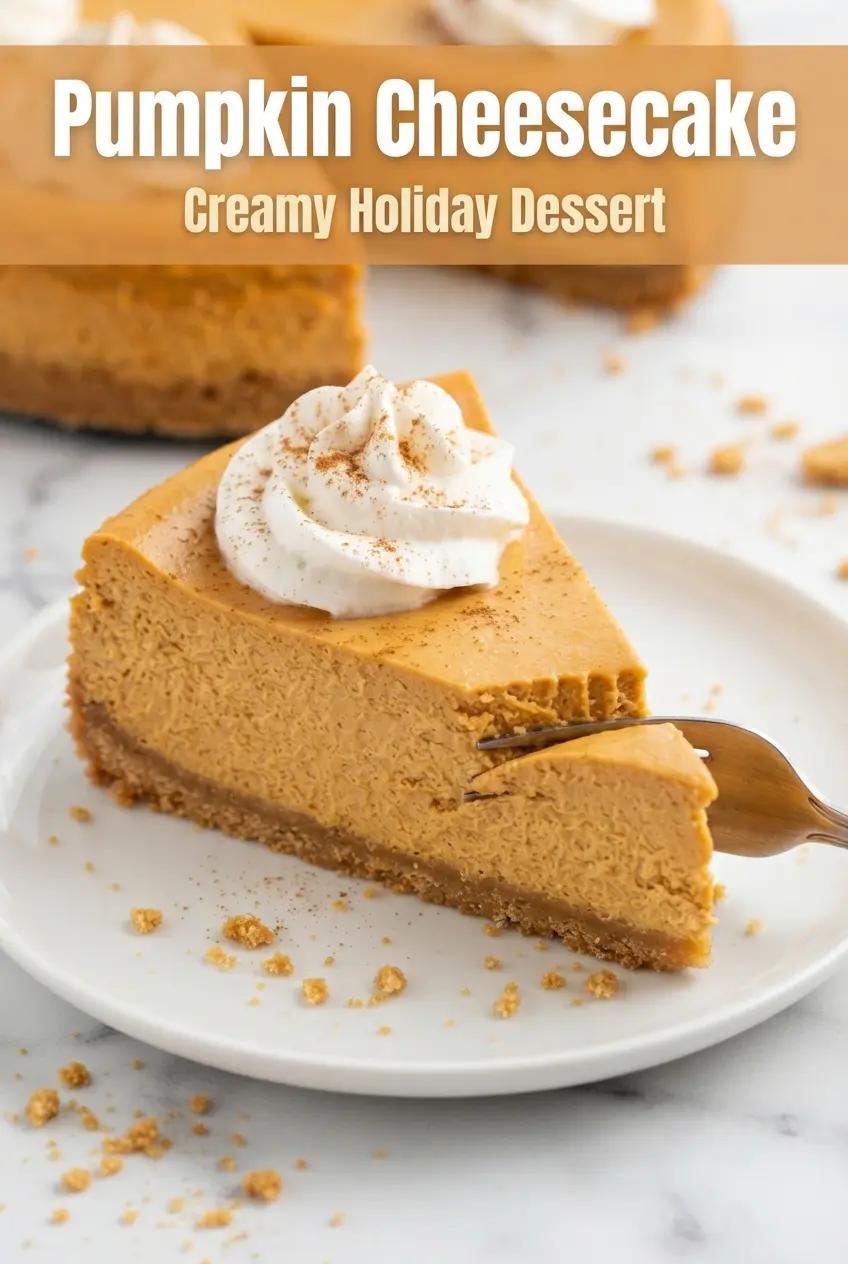
Pumpkin Cheesecake
Ingredients
Equipment
Method
- Preheat the oven to 325 F (165 C) and wrap the outside of a 9-inch springform pan in heavy-duty foil.
- Mix graham cracker crumbs, 1/4 cup packed light brown sugar, ground cinnamon, and melted butter, then press into the bottom and slightly up the sides of the pan.
- Bake the crust for 10 minutes.
- Beat cream cheese with the brown and granulated sugar on low speed until smooth.
- Beat in the pumpkin puree, sour cream, all-purpose flour, vanilla extract, pumpkin pie spice, and ground cinnamon.
- Add the eggs one at a time, mixing on low just until combined.
- Pour the filling over the crust and set the pan in a large roasting pan.
- Pour hot water into the roasting pan to come halfway up the sides of the springform.
- Bake for 70 to 80 minutes, until the edges are set and the center jiggles slightly.
- Turn off the oven, crack the door, and leave the cheesecake inside for 1 hour.
- Chill for at least 6 hours or overnight, then top with whipped cream and a sprinkle of cinnamon.