
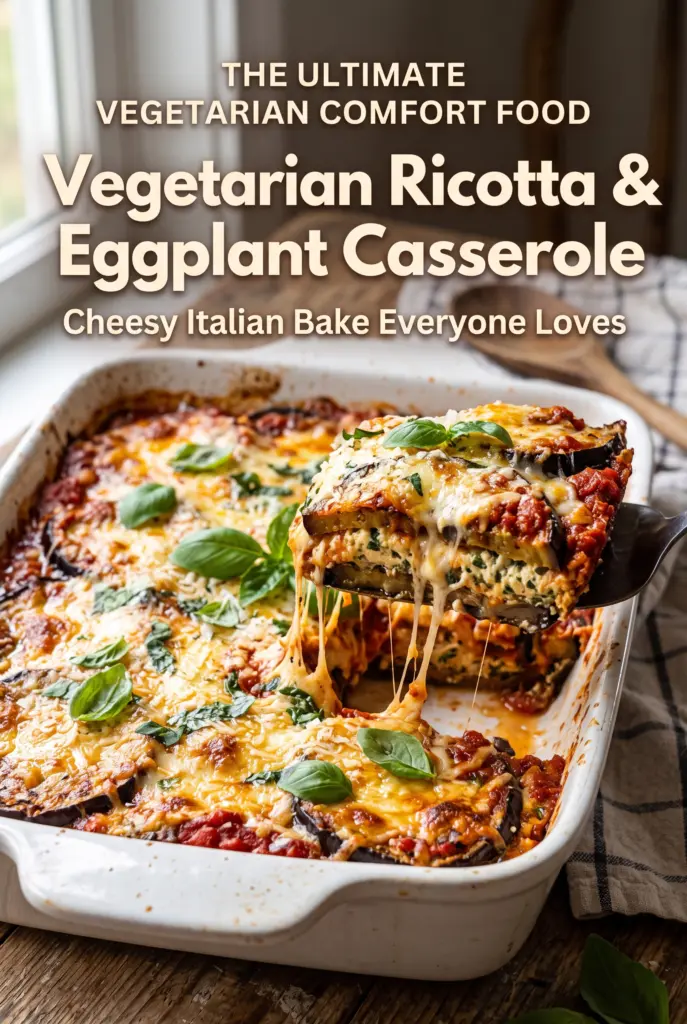
Vegetarian Ricotta & Eggplant Casserole
Roasted eggplant, creamy ricotta, and bubbling marinara make this casserole feel like the kind of dinner that gets talked about after the plates are cleared. The eggplant turns tender without…
Tip: save now, cook later.Roasted eggplant, creamy ricotta, and bubbling marinara make this casserole feel like the kind of dinner that gets talked about after the plates are cleared. The eggplant turns tender without going watery, the ricotta layer stays rich instead of heavy, and the top bakes into a browned, cheesy lid that slices cleanly once it rests. It’s the kind of meatless bake that still eats like a full meal.
The difference here is in the prep. Eggplant needs heat before it goes into the casserole, or it tends to trap moisture and turn soft in a way that blurs all the layers together. Roasting the slices first concentrates the flavor and gives the dish enough structure to hold those alternating layers of sauce, cheese, and vegetable. A little egg in the ricotta helps it set, which keeps the filling from sliding apart on the plate.
Below you’ll find the exact layering order that keeps the casserole from getting soupy, plus a few smart swaps if you need to work with what’s already in the fridge.
The eggplant held its shape and the ricotta layer set up beautifully after the rest time. I’ve made casseroles before that turned into a puddle, but this one sliced cleanly and reheated well the next day.
Save this ricotta and eggplant casserole for the nights when you want a hearty meatless bake with real structure and a golden cheesy top.
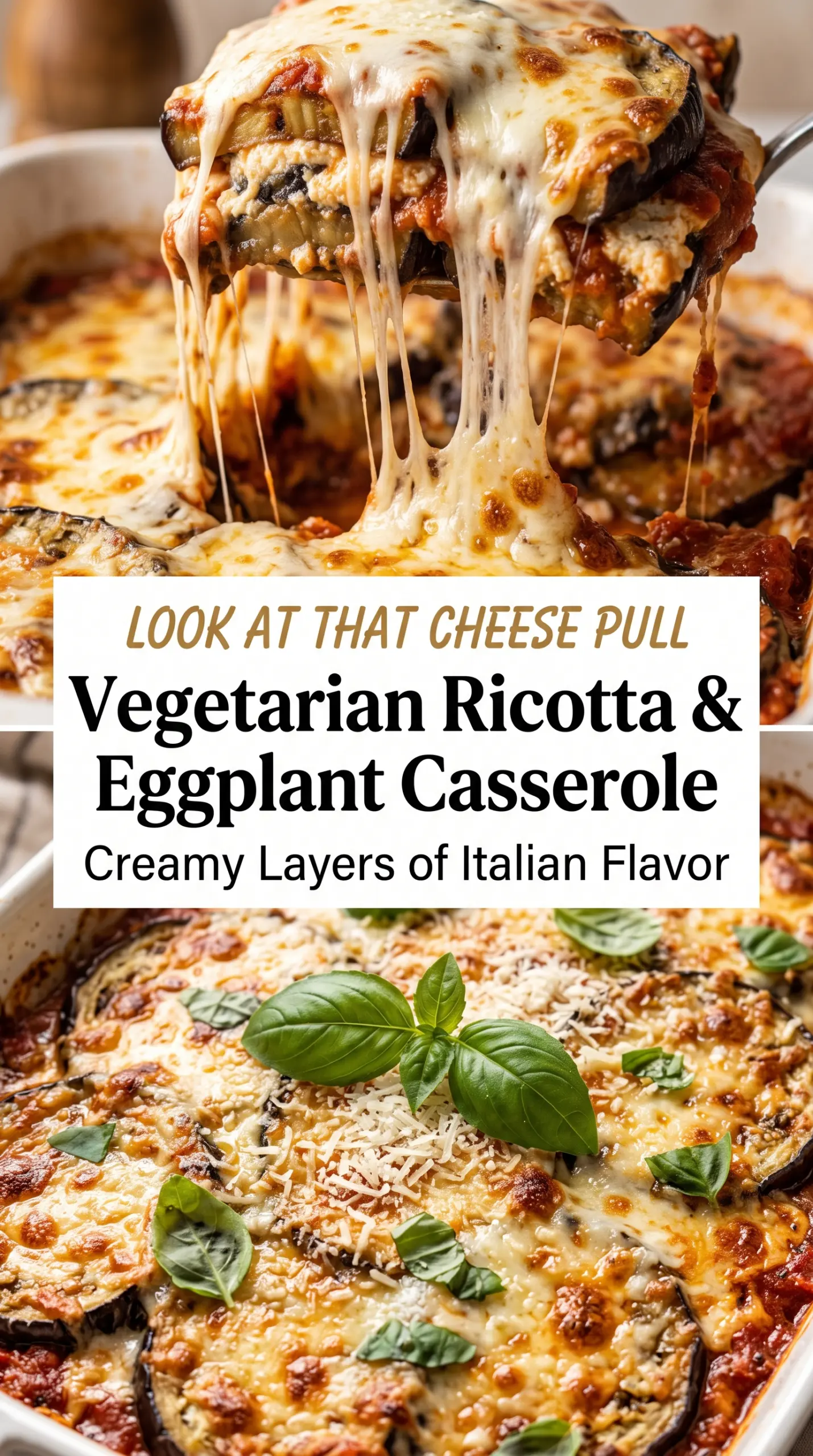
The Eggplant Step That Keeps This Casserole from Going Soft
Eggplant is the ingredient that can make or break this dish. Skip the roast, and it soaks up sauce like a sponge while staying a little limp in the middle. Roast it first and you change the texture completely: the edges dry out just enough to hold their shape, and the flesh turns tender without collapsing into the casserole.
The other common problem is excess liquid pooling at the bottom of the dish. Marinara, ricotta, and eggplant all carry moisture, so the structure matters. The solution is simple: roast the eggplant, use a thick sauce, and let the finished casserole rest before cutting. That pause is what turns a bubbling pan into neat squares.
- Eggplant — Medium eggplants work best because they have enough flesh to layer without being seedy or bitter. If yours are especially large, salt the slices and let them sit for 20 minutes before roasting, then blot them dry. That extra step pulls out some moisture and helps them brown instead of steam.
- Ricotta — Whole milk ricotta gives the filling a creamier, more stable texture than part-skim. If you use part-skim, expect a slightly drier layer and stir it well so it doesn’t look grainy. Drain it first if it seems loose right out of the container.
- Marinara — A thicker sauce works better than a thin, watery one. If your jarred sauce is loose, simmer it for a few minutes until it coats a spoon before assembling. That small step keeps the casserole from turning soupy.
- Mozzarella and Parmesan — Mozzarella gives the melt, Parmesan gives the salty top layer and a little bite. Pre-shredded mozzarella works fine here, but freshly grated Parmesan always tastes sharper and browns more evenly.
Building the Layers So the Casserole Slices Cleanly
Roasting the Eggplant First
Cut the eggplant into even 1/2-inch rounds so they roast at the same rate. Brush both sides with olive oil and season well, then roast until the slices are softened and lightly browned at the edges. If they’re pale and floppy but still wet, they need more time; under-roasted eggplant is what makes the finished casserole collapse.
Mixing the Ricotta Filling
Stir the ricotta with the egg, Parmesan, herbs, and seasonings until it looks smooth and thick. The egg is doing real work here — it helps the filling set instead of flowing out when you cut the casserole. If the mixture seems loose, it was likely overmixed or the ricotta was very wet, so give it a few extra stirs until it looks cohesive.
Layering for Structure
Start with a thin layer of marinara in the baking dish so the bottom doesn’t stick or dry out. Then alternate eggplant, ricotta, sauce, and mozzarella, keeping the layers even rather than piling everything into one heavy middle. The goal is visible layers, not a mound. End with cheese on top so it browns before the sauce underneath has a chance to dry out.
Baking and Resting
Bake uncovered until the sauce is bubbling around the edges and the top has patches of deep gold. The casserole needs a rest after baking, even though it smells done the second it leaves the oven. Ten minutes is enough for the cheese and ricotta to settle so the slices hold together instead of sliding apart.
Three Practical Ways to Adapt This Bake
Make It Gluten-Free Without Losing the Comfort
This casserole is naturally gluten-free as written, which is one of the reasons it works so well for mixed-diet dinners. Just check your marinara label, since some sauces use added starch or pasta water. The texture and layering stay exactly the same.
Dairy-Free Version
Use a plain dairy-free ricotta style alternative and a good melting plant-based mozzarella. The casserole will still layer well, but the top won’t brown quite the same way and the filling may be a little softer. Choose a thicker vegan ricotta if you can find one, since thin substitutes tend to leak into the sauce.
Add More Vegetables
A layer of sautéed spinach, mushrooms, or zucchini works well between the eggplant and ricotta. Cook the extra vegetables first so they lose moisture before they go into the dish. Raw vegetables release water in the oven and can undo the clean layers you worked for.
Make It Ahead for a Busy Night
Assemble the casserole up to a day in advance, cover it, and refrigerate it unbaked. Add a few extra minutes in the oven if it goes in cold from the fridge. This is one of those dishes that actually benefits from a short rest before baking, because the layers settle and the flavor deepens.
Storage and Reheating
- Refrigerator: Store leftovers covered for up to 4 days. The texture tightens a little as it chills, but the slices hold together well.
- Freezer: This freezes well after baking. Cut into portions, wrap tightly, and freeze for up to 2 months. Thaw overnight in the fridge before reheating.
- Reheating: Warm covered in a 350°F oven until hot through, or use the microwave for single portions. If you reheat it uncovered, the cheese dries out before the center is warm.
Answers to the Questions Worth Asking
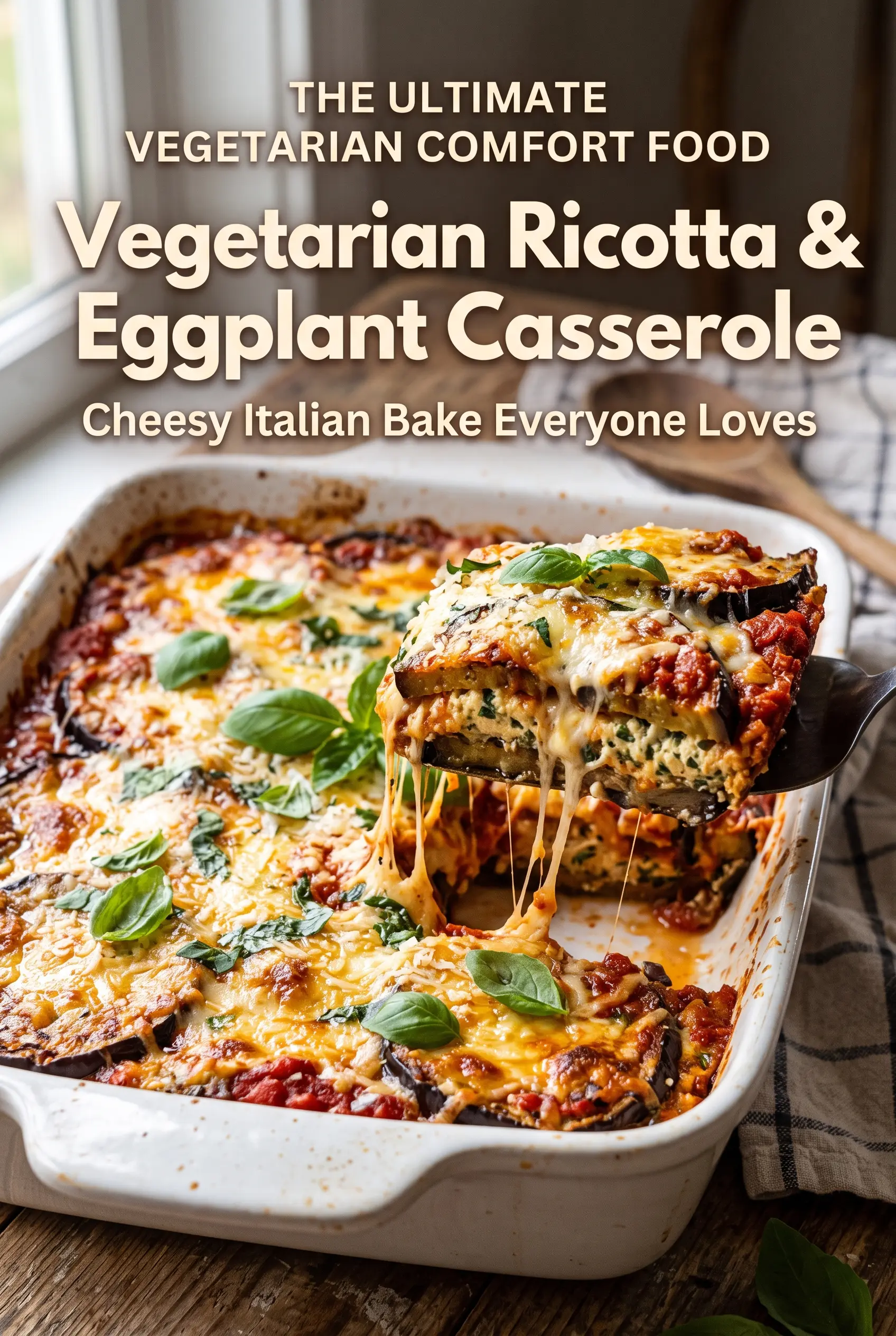
Vegetarian Ricotta & Eggplant Casserole
Ingredients
Equipment
Method
- Preheat the oven to 400°F (200°C).
- Brush both sides of the eggplant slices with olive oil and season with Italian seasoning, garlic powder, salt, and pepper.
- Arrange the eggplant on a sheet pan and roast for 20 minutes, flipping halfway through, until tender.
- In a bowl, combine the ricotta, egg, Parmesan, basil, parsley, garlic powder, and pepper until evenly mixed.
- Spread a thin layer of marinara sauce into a greased 9×13-inch baking dish.
- Layer roasted eggplant, ricotta mixture, marinara, and mozzarella in the dish.
- Repeat the layers until all ingredients are used.
- Finish with mozzarella and Parmesan on top.
- Bake uncovered for 30–35 minutes at 400°F (200°C), until bubbly and golden.
- Let the casserole rest for 10 minutes before serving to help the layers set.
- Garnish with fresh basil.